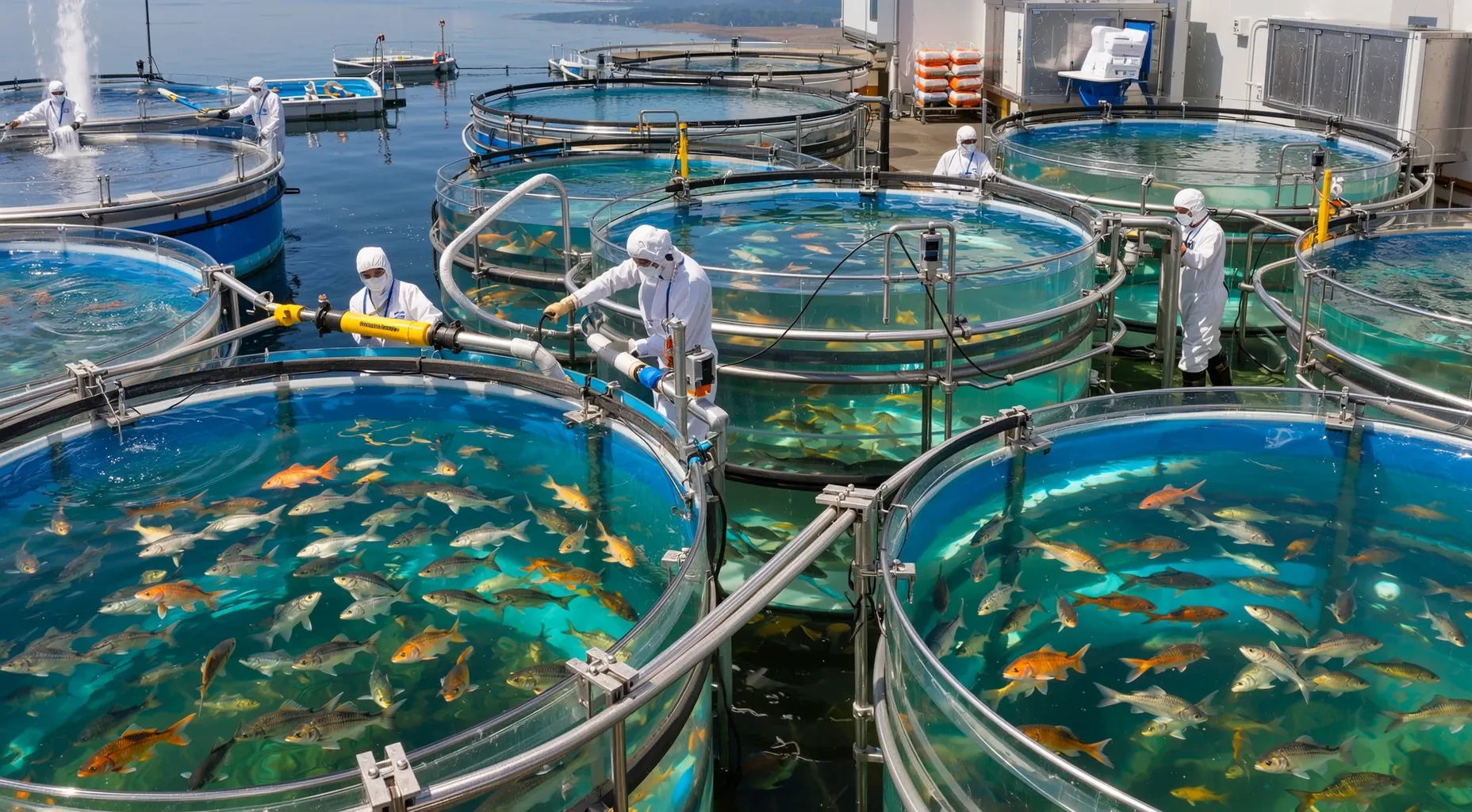
Élevage de poissons et écloseries
Description
L'industrie de l'aquaculture et des écloseries de poissons englobe les opérations dédiées à la culture aquatique de poissons à des fins alimentaires ou ornementales. Ces établissements transforment des ressources aquatiques brutes en protéines commercialisables grâce à une gestion environnementale contrôlée et à des techniques d'élevage spécialisées. Les activités commerciales principales comprennent la culture d'espèces de poissons d'eau douce telles que le poisson-chat, la truite, le poisson rouge et les poissons d'aquarium tropicaux, ainsi que l'incubation et l'élevage d'œufs de poisson pour produire des alevins destinés à croître davantage. Les exploitants vont de petits producteurs commerciaux gérant des étangs et des cages familiaux à de grandes installations industrielles utilisant des systèmes d'eau en recirculation à haut volume ou des cages flottantes en mer. De nombreuses opérations fonctionnent comme des écloseries intégrées qui fournissent des stocks de semences aux fermes locales, créant ainsi une chaîne d'approvisionnement de la reproduction à la récolte. Ce secteur se caractérise par des investissements importants dans les infrastructures, notamment les systèmes de surveillance de la qualité de l'eau, les technologies d'alimentation et les protocoles de prévention des maladies. Alors que certains producteurs se concentrent exclusivement sur les fonctions d'écloserie, d'autres gèrent l'ensemble du cycle de vie, du reproducteur à l'abattage. L'échelle de production varie considérablement, allant des opérations de niche produisant des espèces rares aux grands complexes générant des millions de livres de filets chaque année. Ce secteur joue un rôle essentiel dans la sécurité alimentaire mondiale en fournissant des produits de poisson constants et de haute qualité tout en minimisant la dépendance aux stocks de pêcheries sauvages.
Hiérarchie
| Code | Titre | Description |
|---|---|---|
| 11 | Agriculture, foresterie, pêche et chasse Secteur à 2 chiffres | Le secteur dans son ensemble Le secteur de l'agriculture, de la foresterie, de la pêche et de la chasse comprend les établissements principalement occupés à la culture de plantes, à l'élevage d'animaux, à la récolte de bois, ainsi qu'à la pêche et à la chasse d'autres animaux provenant d'une ferme, d'un ranch ou de leurs habitats naturels. Les établissements de ce secteur sont souvent décrits comme des fermes, des ranchs, des laiteries, des serres, des pépinières, des vergers ou des écloseries. Une ferme peut se composer d'une seule parcelle de terre ou de plusieurs parcelles distinctes détenues sous différents statuts. Par exemple, une parcelle peut être possédée par l'exploitant agricole et une autre louée. Elle peut être exploitée par l'exploitant seul ou avec l'aide des membres du ménage ou des employés embauchés, ou elle peut être exploitée par un partenariat, une société ou un autre type d'organisation. Lorsqu'un propriétaire foncier a un ou plusieurs locataires, fermiers sous contrat, cultivateurs ou gérants, les terres exploitées par chacun sont considérées comme une ferme. Le secteur distingue deux activités de base : la production agricole et les activités de soutien agricole. La production agricole comprend les établissements qui réalisent l'ensemble de l'exploitation agricole ou de ranch, tels que les exploitants agricoles propriétaires et les exploitants agricoles locataires. Les activités de soutien agricole comprennent les établissements qui réalisent une ou plusieurs activités associées à l'exploitation agricole, telles que la préparation des sols, la plantation, la récolte et la gestion, sur la base d'un contrat ou d'honoraires. Sont exclus du secteur de l'agriculture, de la foresterie, de la pêche et de la chasse les établissements principalement occupés à la recherche agricole (par exemple, les fermes expérimentales) et les établissements gouvernementaux principalement occupés à l'administration de programmes de réglementation et de conservation des terres, des minéraux, de la faune et de l'utilisation des forêts. Ces établissements sont classés respectivement dans l'industrie 54171, Recherche et développement dans les sciences physiques, d'ingénierie et de la vie ; et l'industrie 92412, Administration des programmes de conservation. |
| 112 | Production animale et aquaculture Sous-secteur à 3 chiffres | Les industries du sous-secteur de la production animale et de l'aquaculture élèvent ou engraissent des animaux en vue de la vente d'animaux ou de produits animaux et/ou élèvent des plantes et des animaux aquatiques dans des environnements aquatiques contrôlés ou sélectionnés en vue de la vente de plantes aquatiques, d'animaux ou de leurs produits. Ce sous-secteur comprend des établissements tels que des ranchs, des fermes et des engraisseurs, principalement engagés dans l'élevage, le pâturage, la reproduction ou l'alimentation des animaux. Ces animaux sont gardés pour les produits qu'ils produisent ou pour une vente éventuelle. Les animaux sont généralement élevés dans divers environnements, allant du confinement total ou de la captivité à l'alimentation sur un pâturage en plein air. Les industries de ce sous-secteur sont regroupées en fonction de facteurs importants, tels que la disponibilité de terres de pâturage ou de prairies, les bâtiments spécialisés, le type d'équipement et la quantité et le type de main-d'œuvre requis. Les établissements sont classés dans le sous-secteur de la production animale et de l'aquaculture lorsque la production animale (c'est-à-dire la valeur des animaux sur le marché) représente la moitié ou plus de la production agricole totale de l'établissement. Les établissements dont la production animale représente la moitié ou plus, sans qu'aucun produit animal ou famille de produits animaux d'une industrie ne représente la moitié de la production agricole de l'établissement, sont considérés comme des exploitations mixtes classées dans l'Industrie 11299, Toutes autres productions animales. |
| 1125 | Aquaculture Groupe industriel à 4 chiffres | Les industries du sous-secteur de la production animale et de l'aquaculture élèvent ou engraissent des animaux en vue de la vente d'animaux ou de produits animaux et/ou élèvent des plantes et des animaux aquatiques dans des environnements aquatiques contrôlés ou sélectionnés en vue de la vente de plantes aquatiques, d'animaux ou de leurs produits. Ce sous-secteur comprend des établissements tels que des ranchs, des fermes et des engraisseurs, principalement engagés dans l'élevage, le pâturage, la reproduction ou l'alimentation des animaux. Ces animaux sont gardés pour les produits qu'ils produisent ou pour une vente éventuelle. Les animaux sont généralement élevés dans divers environnements, allant du confinement total ou de la captivité à l'alimentation sur un pâturage en plein air. Les industries de ce sous-secteur sont regroupées en fonction de facteurs importants, tels que la disponibilité de terres de pâturage ou de prairies, les bâtiments spécialisés, le type d'équipement et la quantité et le type de main-d'œuvre requis. Les établissements sont classés dans le sous-secteur de la production animale et de l'aquaculture lorsque la production animale (c'est-à-dire la valeur des animaux sur le marché) représente la moitié ou plus de la production agricole totale de l'établissement. Les établissements dont la production animale représente la moitié ou plus, sans qu'aucun produit animal ou famille de produits animaux d'une industrie ne représente la moitié de la production agricole de l'établissement, sont considérés comme des exploitations mixtes classées dans l'Industrie 11299, Toutes autres productions animales. |
| 11251 | Aquaculture Industrie NAICS à 5 chiffres | Cette industrie comprend les établissements principalement engagés dans l'élevage et la production d'animaux ou de plantes aquatiques dans des environnements aquatiques contrôlés ou sélectionnés. Ces établissements utilisent une forme d'intervention dans le processus d'élevage pour améliorer la production, telle que la captivité, le repeuplement régulier, l'alimentation et la protection contre les prédateurs, les nuisibles et les maladies. |
| 112511 | Élevage de poissons et écloseries Détail américain à 6 chiffres | L'industrie de l'aquaculture et des écloseries de poissons englobe les opérations dédiées à la culture aquatique de poissons à des fins alimentaires ou ornementales. Ces établissements transforment des ressources aquatiques brutes en protéines commercialisables grâce à une gestion environnementale contrôlée et à des techniques d'élevage spécialisées. Les activités commerciales principales comprennent la culture d'espèces de poissons d'eau douce telles que le poisson-chat, la truite, le poisson rouge et les poissons d'aquarium tropicaux, ainsi que l'incubation et l'élevage d'œufs de poisson pour produire des alevins destinés à croître davantage. Les exploitants vont de petits producteurs commerciaux gérant des étangs et des cages familiaux à de grandes installations industrielles utilisant des systèmes d'eau en recirculation à haut volume ou des cages flottantes en mer. De nombreuses opérations fonctionnent comme des écloseries intégrées qui fournissent des stocks de semences aux fermes locales, créant ainsi une chaîne d'approvisionnement de la reproduction à la récolte. Ce secteur se caractérise par des investissements importants dans les infrastructures, notamment les systèmes de surveillance de la qualité de l'eau, les technologies d'alimentation et les protocoles de prévention des maladies. Alors que certains producteurs se concentrent exclusivement sur les fonctions d'écloserie, d'autres gèrent l'ensemble du cycle de vie, du reproducteur à l'abattage. L'échelle de production varie considérablement, allant des opérations de niche produisant des espèces rares aux grands complexes générant des millions de livres de filets chaque année. Ce secteur joue un rôle essentiel dans la sécurité alimentaire mondiale en fournissant des produits de poisson constants et de haute qualité tout en minimisant la dépendance aux stocks de pêcheries sauvages. |
Besoin d’une suite supply chain adaptée à ce secteur ?
Utilisez cette classification NAICS comme point de départ, puis reliez-la aux workflows Item pour les stocks, l’entreposage, la gestion des commandes, l’exécution et le transport.
Références de classification
- 01Les établissements principalement occupés à la pêche ou à la capture de poissons de mer dans leur habitat naturel sont classés dans l'industrie américaine 114111, Pêche de poissons de mer.
Éléments d’index
Production de poisson-appât, élevage en ferme
Production de poisson-chat, élevage en ferme
Production de poisson de nage, élevage en ferme
Poissons de nage, écloseries
Fermes piscicoles, poissons de nage
Production de poissons rouges, élevage en ferme
Écloseries, poissons de nage
Production de bar rayé hybride
Production de vairons, élevage en ferme
Production de poissons d'ornement, élevage en ferme
Production de tilapia
Production de poissons tropicaux, élevage en ferme
Production de truite, élevage en ferme
Comment Item peut aider
Le système de gestion des commandes offre une visibilité en temps réel sur l'exécution des commandes dans les écloseries et les fermes, permettant aux entreprises d'ajuster dynamiquement les calendriers d'expédition en fonction de la température de l'eau et de la maturité des récoltes.
Cet outil analyse les données historiques de rendement et les conditions environnementales pour prédire les cycles de reproduction et les besoins alimentaires optimaux, réduisant ainsi les coûts opérationnels et améliorant la constance des récoltes.
Le système de gestion des transports oriente les transporteurs en fonction de la nature sensible au temps du poisson vivant, en priorisant les arrêts à température contrôlée pour garantir la qualité du produit de l'écloserie au marché.
Outils Item.com
Ressources externes
Détail NAICS de Census.gov
Définition et portée officielles du Bureau du recensement des États-Unis pour le NAICS 112511.
Aquaculture Alliance of America
Association commerciale majeure représentant l'industrie de l'aquaculture aux États-Unis.
Département du Commerce des États-Unis, Service de recherche économique
Source gouvernementale officielle de données historiques et statistiques sur la production d'aquaculture.
Annuaire de l'industrie Aquaculture.com
Répertoire mondial des fermes et des écloseries spécialisées dans l'élevage de poissons d'eau douce.
