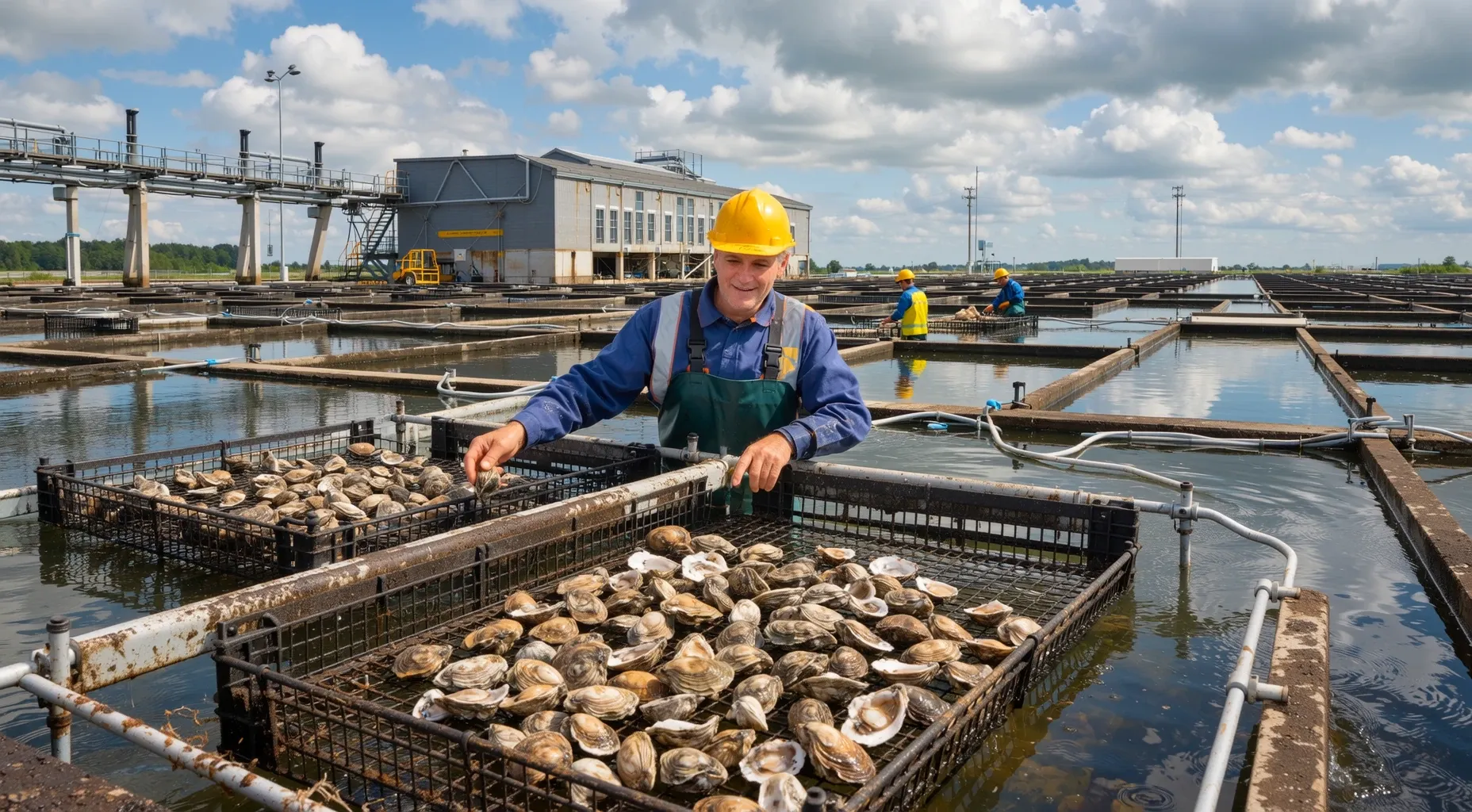
Muschelzucht
Beschreibung
Die Muschelzuchtindustrie besteht aus Unternehmen, die Wasserlebewesen für die Ernte züchten, was sich von denen unterscheidet, die lediglich Wildfänge sammeln. Diese Betriebe verwalten aktiv kontrollierte Umgebungen, um bestimmte Arten wie Austern, Muscheln, Krabben und Garnelen unter optimierten Bedingungen zu fördern. Die Abläufe umfassen typischerweise die Wasserqualitätskontrolle, den Habitatbau, tägliche Fütterungspläne und die Krankheitsüberwachung, um gesunde Wachstumszyklen zu gewährleisten. Züchter verfolgen die biologischen Entwicklungsstadien sorgfältig, um den Erntezeitpunkt mit der Marktnachfrage abzustimmen, wobei oft spezialisierte Ausrüstung für die Unterwasserfütterung und -entnahme eingesetzt wird. Der Sektor umfasst eine vielfältige Mischung aus unabhängigen Einzelunternehmern, kleinen Familienbetrieben und größeren industriellen Aquakulturkonzernen. Die Größenordnung variiert erheblich, von kleinen Küstenparzellen, die jährlich Hunderte von Tonnen produzieren, bis hin zu riesigen integrierten Anlagen, die in mehreren Gerichtsbarkeiten tätig sind. Viele Betriebe befinden sich in der Nähe nährstoffreicher Küstengewässer, wo Wasserströmungen die natürliche Filtration und Temperaturregulierung erleichtern. Einige Unternehmen integrieren mehrere Arten, um das Risiko zu mindern und die Rentabilität zu maximieren, während sich andere ausschließlich auf hochwertige Exportmärkte konzentrieren. Dieser Sektor spielt eine wichtige Rolle in den regionalen Volkswirtschaften, indem er lokale Lebensmittelquellen bereitstellt und durch Tourismus und Lieferkettenlogistik erhebliche wirtschaftliche Aktivitäten generiert. Die Branche entwickelt sich weiter, da sich die Technologie weiterentwickelt und präzisere Umweltkontrollen sowie nachhaltigere Produktionsmethoden ermöglicht, die fragile Meeresökosysteme schützen.
Hierarchie
| Code | Titel | Beschreibung |
|---|---|---|
| 11 | Land-, Forst- und Fischerei sowie Jagd 2-stelliger Sektor | Der Sektor als Ganzes Der Sektor Land-, Forst-, Fischerei- und Jagdwirtschaft umfasst Betriebe, die hauptsächlich mit dem Anbau von Feldfrüchten, der Tierhaltung, der Holzernte sowie der Ernte von Fischen und anderen Tieren aus einem Bauernhof, einer Ranch oder ihren natürlichen Lebensräumen befasst sind. Die Betriebe in diesem Sektor werden oft als Bauernhöfe, Ranchs, Milchviehanlagen, Gewächshäuser, Baumschulen, Obstgärten oder Brutstätten beschrieben. Ein Bauernhof kann aus einem einzigen Grundstück oder aus mehreren separaten Grundstücken bestehen, die unter unterschiedlichen Pachtverhältnissen gehalten werden. Beispielsweise kann ein Grundstück vom Betreiber des Hofes besessen und ein anderes gemietet sein. Er kann allein vom Betreiber oder mit Hilfe von Haushaltsmitgliedern oder Angestellten betrieben werden, oder er kann von einer Partnerschaft, einer Gesellschaft oder einer anderen Art von Organisation betrieben werden. Wenn ein Landbesitzer einen oder mehrere Pächter, Mieter, Anbauer oder Verwalter hat, gilt das von jedem betriebene Land als Bauernhof. Der Sektor unterscheidet zwei grundlegende Tätigkeiten: die landwirtschaftliche Produktion und die landwirtschaftlichen Unterstützungsleistungen. Die landwirtschaftliche Produktion umfasst Betriebe, die den gesamten Betrieb eines Bauernhofs oder einer Ranch durchführen, wie beispielsweise selbstständige Landwirte und Pächterlandwirte. Die landwirtschaftlichen Unterstützungsleistungen umfassen Betriebe, die eine oder mehrere Tätigkeiten im Zusammenhang mit dem Hofbetrieb ausführen, wie z. B. Bodenbearbeitung, Aussaat, Ernte und Bewirtschaftung, auf Vertrags- oder Honorarbasis. Von der Land-, Forst-, Fischerei- und Jagdwirtschaft sind Betriebe ausgeschlossen, die sich hauptsächlich mit landwirtschaftlicher Forschung befassen (z. B. Versuchsanbaubetriebe) und staatliche Einrichtungen, die sich hauptsächlich mit der Verwaltung von Programmen zur Regulierung und Erhaltung der Land-, Mineral-, Wildtier- und Forstnutzung befassen. Diese Betriebe werden bzw. in der Branche 54171, Forschung und Entwicklung in den Natur-, Ingenieur- und Lebenswissenschaften; und in der Branche 92412, Verwaltung von Naturschutzprogrammen, klassifiziert. |
| 112 | Tierproduktion und Aquakultur 3-stelliger Teilsektor | Die Industrien im Untersektor Tierhaltung und Aquakultur züchten oder füttern Tiere zum Verkauf von Tieren oder tierischen Produkten und/oder züchten Wasserpflanzen und -tiere in kontrollierten oder ausgewählten aquatischen Umgebungen zum Verkauf von Wasserpflanzen, -tieren oder deren Produkten. Der Untersektor umfasst Betriebe wie Weiden, Farmen und Futterstellen, die hauptsächlich mit der Haltung, dem Weiden, der Zucht oder der Fütterung von Tieren befasst sind. Diese Tiere werden für die Produkte gehalten, die sie liefern, oder für den späteren Verkauf. Die Tiere werden im Allgemeinen in verschiedenen Umgebungen gehalten, von völliger Haltung oder Gefangenschaft bis hin zur Fütterung auf einer offenen Weide. Die Industrien in diesem Untersektor werden nach wichtigen Faktoren gruppiert, wie geeignete Weide- oder Grünlandflächen, spezialisierte Gebäude, Art der Ausrüstung sowie dem Umfang und der Art des benötigten Arbeitskräfteeinsatzes. Betriebe werden im Untersektor Tierhaltung und Aquakultur klassifiziert, wenn die Tierproduktion (d. h. der Wert der Tiere für den Markt) ein halbes oder mehr der gesamten landwirtschaftlichen Produktion des Betriebs ausmacht. Betriebe mit einem halben oder mehr Tierproduktion, bei denen kein tierisches Produkt oder keine Familie tierischer Produkte einer Branche ein halbes der landwirtschaftlichen Produktion des Betriebs ausmacht, werden als gemischte Tierhaltung behandelt und in Industrie 11299, Alle übrigen Tierproduktion, eingestuft. |
| 1125 | Aquakultur 4-stellige Branchengruppe | Die Industrien im Untersektor Tierhaltung und Aquakultur züchten oder füttern Tiere zum Verkauf von Tieren oder tierischen Produkten und/oder züchten Wasserpflanzen und -tiere in kontrollierten oder ausgewählten aquatischen Umgebungen zum Verkauf von Wasserpflanzen, -tieren oder deren Produkten. Der Untersektor umfasst Betriebe wie Weiden, Farmen und Futterstellen, die hauptsächlich mit der Haltung, dem Weiden, der Zucht oder der Fütterung von Tieren befasst sind. Diese Tiere werden für die Produkte gehalten, die sie liefern, oder für den späteren Verkauf. Die Tiere werden im Allgemeinen in verschiedenen Umgebungen gehalten, von völliger Haltung oder Gefangenschaft bis hin zur Fütterung auf einer offenen Weide. Die Industrien in diesem Untersektor werden nach wichtigen Faktoren gruppiert, wie geeignete Weide- oder Grünlandflächen, spezialisierte Gebäude, Art der Ausrüstung sowie dem Umfang und der Art des benötigten Arbeitskräfteeinsatzes. Betriebe werden im Untersektor Tierhaltung und Aquakultur klassifiziert, wenn die Tierproduktion (d. h. der Wert der Tiere für den Markt) ein halbes oder mehr der gesamten landwirtschaftlichen Produktion des Betriebs ausmacht. Betriebe mit einem halben oder mehr Tierproduktion, bei denen kein tierisches Produkt oder keine Familie tierischer Produkte einer Branche ein halbes der landwirtschaftlichen Produktion des Betriebs ausmacht, werden als gemischte Tierhaltung behandelt und in Industrie 11299, Alle übrigen Tierproduktion, eingestuft. |
| 11251 | Aquakultur 5-stellige NAICS-Branche | Diese Branche umfasst Betriebe, die sich hauptsächlich mit der Zucht und Produktion von Wasserlebewesen oder Wasserpflanzen in kontrollierten oder ausgewählten aquatischen Umgebungen befassen. Diese Betriebe wenden eine Form von Eingriffen in den Zuchtprozess an, um die Produktion zu steigern, wie etwa die Haltung in Gefangenschaft, regelmäßiges Nachbesetzen, Fütterung und Schutz vor Prädatoren, Schädlingen und Krankheiten. |
| 112512 | Muschelzucht 6-stelliger US-Detailcode | Die Muschelzuchtindustrie besteht aus Unternehmen, die Wasserlebewesen für die Ernte züchten, was sich von denen unterscheidet, die lediglich Wildfänge sammeln. Diese Betriebe verwalten aktiv kontrollierte Umgebungen, um bestimmte Arten wie Austern, Muscheln, Krabben und Garnelen unter optimierten Bedingungen zu fördern. Die Abläufe umfassen typischerweise die Wasserqualitätskontrolle, den Habitatbau, tägliche Fütterungspläne und die Krankheitsüberwachung, um gesunde Wachstumszyklen zu gewährleisten. Züchter verfolgen die biologischen Entwicklungsstadien sorgfältig, um den Erntezeitpunkt mit der Marktnachfrage abzustimmen, wobei oft spezialisierte Ausrüstung für die Unterwasserfütterung und -entnahme eingesetzt wird. Der Sektor umfasst eine vielfältige Mischung aus unabhängigen Einzelunternehmern, kleinen Familienbetrieben und größeren industriellen Aquakulturkonzernen. Die Größenordnung variiert erheblich, von kleinen Küstenparzellen, die jährlich Hunderte von Tonnen produzieren, bis hin zu riesigen integrierten Anlagen, die in mehreren Gerichtsbarkeiten tätig sind. Viele Betriebe befinden sich in der Nähe nährstoffreicher Küstengewässer, wo Wasserströmungen die natürliche Filtration und Temperaturregulierung erleichtern. Einige Unternehmen integrieren mehrere Arten, um das Risiko zu mindern und die Rentabilität zu maximieren, während sich andere ausschließlich auf hochwertige Exportmärkte konzentrieren. Dieser Sektor spielt eine wichtige Rolle in den regionalen Volkswirtschaften, indem er lokale Lebensmittelquellen bereitstellt und durch Tourismus und Lieferkettenlogistik erhebliche wirtschaftliche Aktivitäten generiert. Die Branche entwickelt sich weiter, da sich die Technologie weiterentwickelt und präzisere Umweltkontrollen sowie nachhaltigere Produktionsmethoden ermöglicht, die fragile Meeresökosysteme schützen. |
Benötigen Sie eine Supply-Chain-Plattform, die zu dieser Branche passt?
Nutzen Sie diese NAICS-Klassifizierung als Ausgangspunkt und verbinden Sie sie anschließend mit Item-Workflows für Bestand, Lager, Auftragsverwaltung, Fulfillment und Transport.
Klassifizierungsreferenzen
- 01Betriebe, die sich hauptsächlich mit dem Fang oder der Entnahme von Muscheln aus ihrem natürlichen Lebensraum befassen, werden in der US-Branche 114112, Muschelfischerei, klassifiziert.
Indexeinträge
Muschelzucht, Farmzucht
Krebszucht, Farmzucht
Krebstierzucht, Farmzucht
Kulturperlzucht, Farmzucht
Fischfarmen, Schalentiere
Zuchtfarmen, Schalentiere
Weichtierzucht, Farmzucht
Muschelzucht, Farmzucht
Austernzucht, Farmzucht
Schalentier-Zuchtfarmen
Garnelenzucht, Farmzucht
Wie Item helfen kann
Analysiert historische Ertragsdaten und Markttrends, um Erntevolumina vorherzusagen und Kaufentscheidungen für Verarbeitungsanlagen und Einzelhändler zu optimieren.
