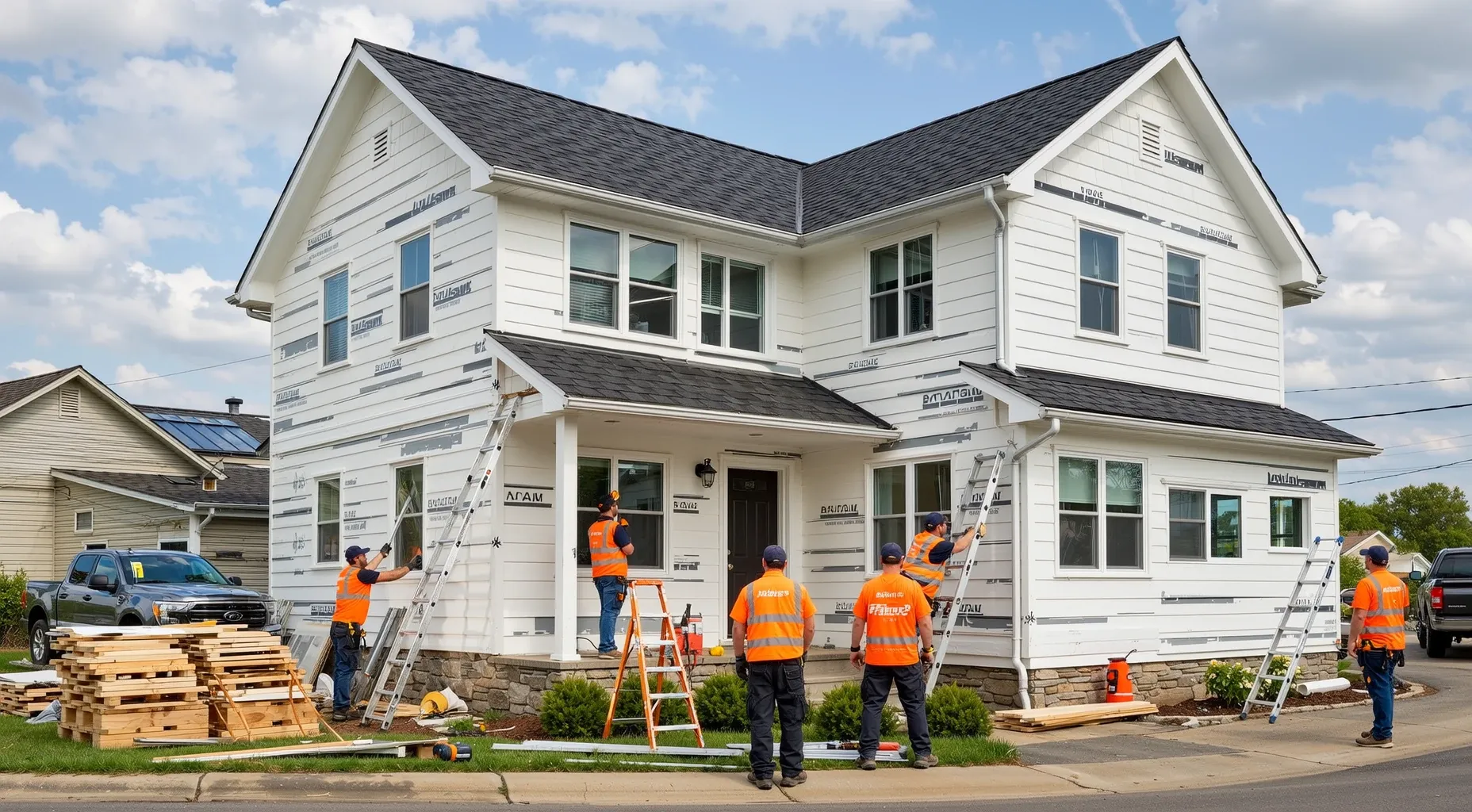
Siding Contractors
Description
This industry comprises establishments primarily engaged in installing siding of wood, aluminum, vinyl, or other exterior finish material (except brick, stone, stucco, or curtain wall). This industry also includes establishments installing gutters and downspouts. The work performed may include new work, additions, alterations, maintenance, and repairs. Illustrative Examples: Downspout, gutter, and gutter guard installation Fascia and soffit installation Siding (e.g., vinyl, wood, aluminum) installation
Hierarchy
| Code | Title | Description |
|---|---|---|
| 23 | Construction 2-digit sector | The Sector as a Whole The Construction sector comprises establishments primarily engaged in the construction of buildings or engineering projects (e.g., highways and utility systems). Establishments primarily engaged in the preparation of sites for new construction and establishments primarily engaged in subdividing land for sale as building sites also are included in this sector. Construction work done may include new work, additions, alterations, or maintenance and repairs. Activities of these establishments generally are managed at a fixed place of business, but they usually perform construction activities at multiple project sites. Production responsibilities for establishments in this sector are usually specified in (1) contracts with the owners of construction projects (prime contracts) or (2) contracts with other construction establishments (subcontracts). Establishments primarily engaged in contracts that include responsibility for all aspects of individual construction projects are commonly known as general contractors, but also may be known as design-builders, construction managers, turnkey contractors, or (in cases where two or more establishments jointly secure a general contract) joint-venture contractors. Construction managers that provide oversight and scheduling only (i.e., agency) as well as construction managers that are responsible for the entire project (i.e., at risk) are included as general contractor type establishments. Establishments of the "general contractor type" frequently arrange construction of separate parts of their projects through subcontracts with other construction establishments. Establishments primarily engaged in activities to produce a specific component (e.g., masonry, painting, and electrical work) of a construction project are commonly known as specialty trade contractors. Activities of specialty trade contractors are usually subcontracted from other construction establishments, but especially in remodeling and repair construction, the work may be done directly for the owner of the property. Establishments primarily engaged in activities to construct buildings to be sold on sites that they own are known as for-sale builders, but also may be known as speculative builders or merchant builders. For-sale builders produce buildings in a manner similar to general contractors, but their production processes also include site acquisition and securing of financial backing. For-sale builders are most often associated with the construction of residential buildings. Like general contractors, they may subcontract all or part of the actual construction work on their buildings. There are substantial differences in the types of equipment, work force skills, and other inputs required by establishments in this sector. To highlight these differences and variations in the underlying production functions, this sector is divided into three subsectors. Subsector 236, Construction of Buildings, comprises establishments of the general contractor type and for-sale builders involved in the construction of buildings. Subsector 237, Heavy and Civil Engineering Construction, comprises establishments involved in the construction of engineering projects. Subsector 238, Specialty Trade Contractors, comprises establishments engaged in specialty trade activities generally needed in the construction of all types of buildings. Force account construction is construction work performed by an enterprise primarily engaged in some business other than construction for its own account, using employees of the enterprise. This activity is not included in the construction sector unless the construction work performed is the primary activity of a separate establishment of the enterprise. The installation and the ongoing repair and maintenance of telecommunications and utility networks is excluded from construction when the establishments performing the work are not independent contractors. Although a growing proportion of this work is subcontracted to independent contractors in the Construction sector, the operating units of telecommunications and utility companies performing this work are included with the telecommunications or utility activities. |
| 238 | Specialty Trade Contractors 3-digit subsector | The Specialty Trade Contractors subsector comprises establishments whose primary activity is performing specific activities (e.g., pouring concrete, site preparation, plumbing, painting, and electrical work) involved in building construction or other activities that are similar for all types of construction, but that are not responsible for the entire project. The work performed may include new work, additions, alterations, maintenance, and repairs. The production work performed by establishments in this subsector is usually subcontracted from establishments of the general contractor type or for-sale builders, but especially in remodeling and repair construction, work also may be done directly for the owner of the property. Specialty trade contractors usually perform most of their work at the construction site, although they may have shops where they perform prefabrication and other work. Establishments primarily engaged in preparing sites for new construction are also included in this subsector. There are substantial differences in types of equipment, work force skills, and other inputs required by specialty trade contractors. Establishments in this subsector are classified based on the underlying production function for the specialty trade in which they specialize. Throughout the Specialty Trade Contractors subsector, establishments commonly provide both the parts and labor required to complete work. For example, electrical contractors supply the current-carrying and noncurrent-carrying wiring devices that are required to install a circuit. Plumbing, heating, and air-conditioning contractors also supply the parts required to complete a contract. Establishments that specialize in activities primarily related to heavy and civil engineering construction that are not normally performed on buildings, such as the painting of lines on highways, are classified in Subsector 237, Heavy and Civil Engineering Construction. Establishments that are primarily engaged in selling construction materials are classified in Sector 42, Wholesale Trade, or Sector 44-45, Retail Trade, based on the characteristics of the selling unit. |
| 2381 | Foundation, Structure, and Building Exterior Contractors 4-digit industry group | This industry group comprises establishments primarily engaged in the specialty trades needed to complete the basic structure (i.e., foundation, frame, and shell) of buildings. The work performed may include new work, additions, alterations, maintenance, and repairs. |
| 23817 | Siding Contractors 5-digit NAICS industry | See industry description for 238170. |
| 238170 | Siding Contractors 6-digit U.S. detail | This industry comprises establishments primarily engaged in installing siding of wood, aluminum, vinyl, or other exterior finish material (except brick, stone, stucco, or curtain wall). This industry also includes establishments installing gutters and downspouts. The work performed may include new work, additions, alterations, maintenance, and repairs. Illustrative Examples: Downspout, gutter, and gutter guard installation Fascia and soffit installation Siding (e.g., vinyl, wood, aluminum) installation |
Need a supply chain stack that maps to this industry?
Use this NAICS classification as the starting point, then connect it to Item workflows across inventory, warehousing, order management, fulfillment, and transportation.
Classification References
- 01Installing brick, stone, or stucco building exterior finish materials--are classified in Industry 238140, Masonry Contractors;
- 02Installing curtain wall--are classified in Industry 238190, Other Foundation, Structure, and Building Exterior Contractors; and
- 03Installing sheet metal duct work--are classified in Industry 238220, Plumbing, Heating, and Air-Conditioning Contractors.
Index Items
Aluminum siding installation
Downspout, gutter, and gutter guard installation
Eavestrough installation
Fascia and soffit installation
Flashing contractors
Gutter and downspout contractors
Gutters, seamless roof, formed and installed on site
Ice apron, roof, installation
Metal siding installation
Siding (e.g., vinyl, wood, aluminum) installation
Siding contractors
Vinyl siding, soffit and fascia, installation
Wood siding, installation
How Item Can Help
Manages real-time inventory visibility across multiple suppliers to prevent stockouts of specific siding materials and optimize reorder points based on seasonal demand.
Coordinates efficient last-mile delivery logistics for bulky siding panels to reduce truck miles and ensure materials arrive exactly when needed on-site.
Analyzes project history and material usage patterns to forecast future material needs, identify theft risks at job sites, and predict equipment failure before it causes delays.
Item.com Tools
External Resources
Census.gov NAICS Detail
Official US Census Bureau definition and scope for NAICS 238170.
NAICS Database
Official US Census Bureau page defining the 238170 industry code and its related sectors.
National Association of Home Builders
Resource hub for the siding contractor trade sector providing industry trends and contractor tools.
HomeAdvisor Pro Network
Directory listing verified siding contractors available for local home improvement projects.
