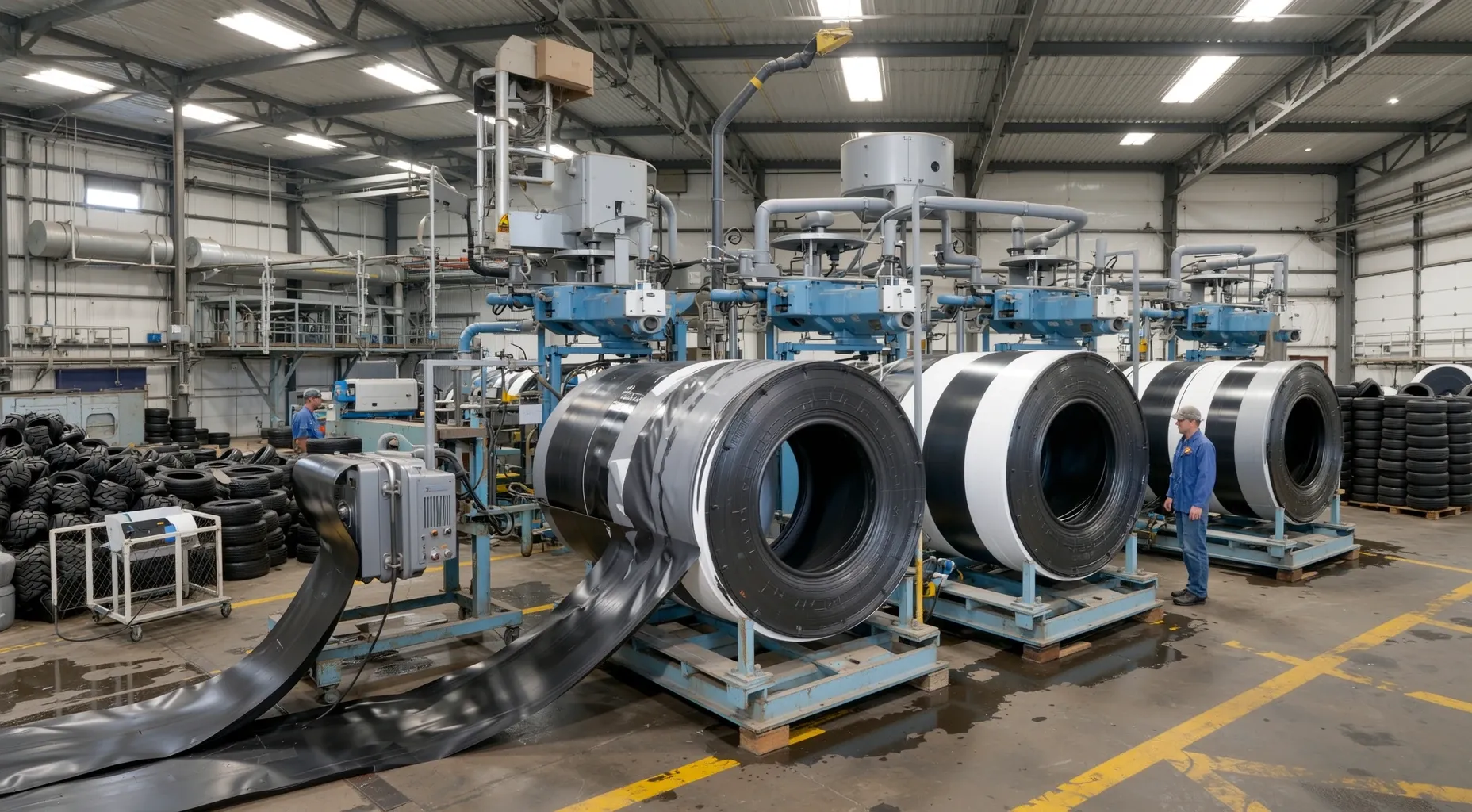
合成ゴム製造
Description
このNAICSコードに分類される企業は、合成ゴムの製造を専門としています。合成ゴムは、輸送、建設、産業機械など、数多くの用途に不可欠な多用途ポリマーです。このプロセスには、ブタジエンやスチレンなどのモノマーを、天然ゴムのような弾性特性を持ちながら、同時に熱、油、オゾンによる劣化に対する優れた耐性を持つ長鎖に重合させる複雑な化学反応が含まれます。典型的な事業活動には、高容量のバッチ処理、連続ラインオペレーション、そして、弾性や引張強度を正確なエンジニアリング基準を満たすように保証するための厳格な品質管理テストが含まれます。主要なオペレーターは、通常、複数の生産施設を戦略的に原材料サプライヤー(石油精製所など)の近くに配置する大規模な化学製造企業です。これらの企業は、プロセスエンジニア、化学者、シフト監督者、安全検査員など、数百人の従業員を雇用しています。個々の工場は、小規模な専門的なユニットから、年間数百万ポンドのゴムを生産できる大規模な統合複合施設まで、さまざまな規模の可能性がありますが、業界全体は、高度な触媒技術と自動化に大きく依存しています。この製品は、タイヤメーカー、プラスチックメーカー、特殊ゴム製品工場に販売される重要な中間製品として販売され、最終消費製品として現れることはほとんどありません。経済的な重要性は、処理される原材料の量と、基本的な石油化学原料を機能的な材料に変換することで付加価値を生み出すことによって測定されます。これにより、グローバルな移動とインフラ開発が促進されます。
Hierarchy
| Code | Title | Description |
|---|---|---|
| 32 | Resin, Synthetic Rubber, and Artificial and Synthetic Fibers and Filaments Manufacturing 2-digit sector | The Sector as a Whole The Manufacturing sector comprises establishments engaged in the mechanical, physical, or chemical transformation of materials, substances, or components into new products. The assembling of component parts of manufactured products is considered manufacturing, except in cases where the activity is appropriately classified in Sector 23, Construction. Establishments in the Manufacturing sector are often described as plants, factories, or mills and characteristically use power-driven machines and material handling equipment. However, establishments that transform materials or substances into new products by hand or in the worker's home and those engaged in selling to the general public products made on the same premises from which they are sold, such as bakeries, candy stores, and custom tailors, may also be included in this sector. Manufacturing establishments may process materials or may contract with other establishments to process their materials for them. Both types of establishments are included in manufacturing. Selected industries in the Manufacturing sector are comprised solely of establishments that process materials for other establishments on a contract or fee basis. Beyond these dedicated contract manufacturing industries, establishments that process materials for other establishments are generally classified in the Manufacturing industry of the processed materials. The materials, substances, or components transformed by manufacturing establishments are raw materials that are products of agriculture, forestry, fishing, mining, or quarrying as well as products of other manufacturing establishments. The materials used may be purchased directly from producers, obtained through customary trade channels, or secured without recourse to the market by transferring the product from one establishment to another, under the same ownership. The new product of a manufacturing establishment may be finished in the sense that it is ready for utilization or consumption, or it may be semi-finished to become an input for an establishment engaged in further manufacturing. For example, the product of the alumina refinery is the input used in the primary production of aluminum; primary aluminum is the input to an aluminum wire drawing plant; and aluminum wire is the input for a fabricated wire product manufacturing establishment. The subsectors in the Manufacturing sector generally reflect distinct production processes related to material inputs, production equipment, and employee skills. In the machinery area, where assembling is a key activity, parts and accessories for manufactured products are classified in the industry of the finished manufactured item when they are made for separate sale. For example, an attachment for a piece of metalworking machinery would be classified with metalworking machinery. However, component inputs from other manufacturing establishments are classified based on the production function of the component manufacturer. For example, electronic components are classified in Subsector 334, Computer and Electronic Product Manufacturing, and stampings are classified in Subsector 332, Fabricated Metal Product Manufacturing. Manufacturing establishments often perform one or more activities that are classified outside the Manufacturing sector of NAICS. For instance, almost all manufacturing has some captive research and development or administrative operations, such as accounting, payroll, or management. These captive services are treated the same as captive manufacturing activities. When the services are provided by separate establishments, they are classified in the NAICS sector where such services are primary, not in manufacturing. The boundaries of manufacturing and the other sectors of the classification system can be somewhat blurry. The establishments in the Manufacturing sector are engaged in the transformation of materials into new products. Their output is a new product. However, the definition of what constitutes a new product can be somewhat subjective. As clarification, the following activities are considered manufacturing in NAICS: <table width=100%><tr><td width=10%> </td><td><dl><dt style='padding-left: 10px; text-indent: -10px;'>Milk bottling and pasteurizing;</dt><dt style='padding-left: 10px; text-indent: -10px;'>Water bottling and processing;</dt><dt style='padding-left: 10px; text-indent: -10px;'>Fresh fish packaging (oyster<br/> shucking, fish filleting);</dt><dt style='padding-left: 10px; text-indent: -10px;'>Apparel jobbing (assigning<br/> materials to contract<br/> factories or shops for<br/> fabrication or other contract<br/> operations) as well as<br/> contracting on materials<br/> owned by others;</dt><dt style='padding-left: 10px; text-indent: -10px;'>Printing and related activities;</dt><dt style='padding-left: 10px; text-indent: -10px;'>Ready-mix concrete production;</dt><dt style='padding-left: 10px; text-indent: -10px;'>Leather converting;</dt><dt style='padding-left: 10px; text-indent: -10px;'>Grinding lenses to<br/> prescription;</dt><dt style='padding-left: 10px; text-indent: -10px;'>Wood preserving;</dt><dt style='padding-left: 10px; text-indent: -10px;'>Lapidary work for the trade;</dt></dl></td><td width=10%> </td><td><dl><dt style='padding-left: 10px; text-indent: -10px;'>Electroplating, plating, metal<br/> heat treating, and<br/> polishing for the trade;</dt><dt style='padding-left: 10px; text-indent: -10px;'>Fabricating signs and<br/> advertising displays;</dt><dt style='padding-left: 10px; text-indent: -10px;'>Rebuilding or remanufacturing<br/> machinery (i.e., automotive<br/> parts);</dt><dt style='padding-left: 10px; text-indent: -10px;'>Making manufactured homes<br/> (i.e., mobile homes) or<br/> prefabricated buildings,<br/> whether or not assembling/<br/> erecting at the customers'<br/> site;</dt><dt style='padding-left: 10px; text-indent: -10px;'>Ship repair and renovation;</dt><dt style='padding-left: 10px; text-indent: -10px;'>Machine shops; and</dt><dt style='padding-left: 10px; text-indent: -10px;'>Tire retreading.</dt></dl></td><td width=10%> </td></tr></table> Conversely, there are activities that are sometimes considered manufacturing, but which for NAICS are classified in another sector (i.e., not classified as manufacturing). They include: 1. Logging, classified in Sector 11, Agriculture, Forestry, Fishing and Hunting, is considered a harvesting operation; 2. Beneficiating ores and other minerals, classified in Sector 21, Mining, Quarrying, and Oil and Gas Extraction, is considered part of the activity of mining; 3. Constructing structures, assembling prefabricated buildings, and fabricating at the construction site by contractors are classified in Sector 23, Construction; 4. Breaking bulk and reselling in smaller lots, including packaging, repackaging, or bottling products, such as liquors or chemicals; assembling and selling computers on a custom basis; sorting and reselling scrap; mixing and selling paints to customer order; and cutting metals to customer order for resale are classified in Sector 42, Wholesale Trade, or Sector 44-45, Retail Trade; and 5. Publishing and the combined activity of publishing and printing, classified in Sector 51, Information, transform information into a product for which the value to the consumer lies in the information content, not in the format in which it is distributed (i.e., the book or software compact disc). |
| 325 | Resin and Synthetic Rubber Manufacturing 3-digit subsector | This subsector comprises establishments primarily engaged in one of the following: (1) manufacturing synthetic resins, plastics materials, and nonvulcanizable elastomers and mixing and blending resins on a custom basis; (2) manufacturing noncustomized synthetic resins; (3) manufacturing synthetic rubber; (4) manufacturing cellulosic (e.g., rayon, acetate) and noncellulosic (e.g., nylon, polyolefin, polyester) fibers and filaments in the form of monofilament, filament yarn, staple, or tow; or (5) manufacturing and texturizing cellulosic and noncellulosic fibers and filaments. |
| 3252 | Resin Manufacturing 4-digit industry group | This industry group comprises establishments primarily engaged in one or more of the following: (1) manufacturing synthetic resins, plastics materials, and nonvulcanizable elastomers and mixing and blending resins on a custom basis; (2) manufacturing noncustomized synthetic resins; and (3) manufacturing synthetic rubber. |
| 32521 | Resin Manufacturing 5-digit NAICS industry | This industry comprises establishments primarily engaged in one or more of the following: (1) manufacturing synthetic resins, plastics materials, and nonvulcanizable elastomers and mixing and blending resins on a custom basis; (2) manufacturing noncustomized synthetic resins; and (3) manufacturing synthetic rubber. |
| 325212 | 合成ゴム製造 6-digit U.S. detail | このNAICSコードに分類される企業は、合成ゴムの製造を専門としています。合成ゴムは、輸送、建設、産業機械など、数多くの用途に不可欠な多用途ポリマーです。このプロセスには、ブタジエンやスチレンなどのモノマーを、天然ゴムのような弾性特性を持ちながら、同時に熱、油、オゾンによる劣化に対する優れた耐性を持つ長鎖に重合させる複雑な化学反応が含まれます。典型的な事業活動には、高容量のバッチ処理、連続ラインオペレーション、そして、弾性や引張強度を正確なエンジニアリング基準を満たすように保証するための厳格な品質管理テストが含まれます。主要なオペレーターは、通常、複数の生産施設を戦略的に原材料サプライヤー(石油精製所など)の近くに配置する大規模な化学製造企業です。これらの企業は、プロセスエンジニア、化学者、シフト監督者、安全検査員など、数百人の従業員を雇用しています。個々の工場は、小規模な専門的なユニットから、年間数百万ポンドのゴムを生産できる大規模な統合複合施設まで、さまざまな規模の可能性がありますが、業界全体は、高度な触媒技術と自動化に大きく依存しています。この製品は、タイヤメーカー、プラスチックメーカー、特殊ゴム製品工場に販売される重要な中間製品として販売され、最終消費製品として現れることはほとんどありません。経済的な重要性は、処理される原材料の量と、基本的な石油化学原料を機能的な材料に変換することで付加価値を生み出すことによって測定されます。これにより、グローバルな移動とインフラ開発が促進されます。 |
Need a supply chain stack that maps to this industry?
Use this NAICS classification as the starting point, then connect it to Item workflows across inventory, warehousing, order management, fulfillment, and transportation.
Classification References
- 01天然、合成、または再利用されたゴムを中間または最終製品に加工(接着剤を除く)は、産業グループ3262、ゴム製品製造に分類され、
- 02ゴム接着剤の製造は、325520、接着剤製造に分類されます。
Index Items
アクリレートゴムの製造
アクリレート-ブタジエンゴムの製造
アクリルゴムの製造
ブタジエン含有50%を超えるコポリマーの製造
ブタジエンゴム(すなわち、ポリブタジエン)の製造
ブチルゴムの製造
塩素化ゴム、合成、製造
クロロプレンゴムの製造
クロロスルホン化ポリエチレンの製造
シクロゴム、合成、製造
エラストマー、合成ゴム、製造
エピクロロヒドリンエラストマーの製造
エチレン-プロピレンゴムの製造
エチレン-プロピレン-非共役ジエン(EPDM)ゴムの製造
フッ素ゴムの製造
フッ素カルボニル誘導体ゴムの製造
イソブチレン-イソプレンゴムの製造
イソシアネートゴムの製造
ラテックスゴム、合成、製造
ネオプレンゴムの製造
ニトリルゴムの製造
ニトリル-ブタジエンゴムの製造
ニトリル-クロロプレンゴムの製造
N型ゴムの製造
ポリエチレンゴムの製造
ポリイソブチレンゴムの製造
ポリイソブチレン-イソプレンゴムの製造
ポリメチレンゴムの製造
ポリサルファイドゴムの製造
ゴム、合成、製造
シリコーンゴムの製造
ステレオゴムの製造
S型ゴムの製造
スチレン含有50%未満のステア-ブタジエンゴムの製造
スチレン-クロロプレンゴムの製造
スチレン-イソプレンゴムの製造
合成ゴム(すなわち、可塑性のあるエラストマー)の製造
熱硬化性可塑性エラストマーの製造
チオールゴムの製造
ウレタンゴムの製造
架橋油の製造
How Item Can Help
Manages complex inventory of raw materials like sulfur and recycled rubber while tracking real-time production batches to prevent quality inconsistencies.
Coordinates multi-warehouse distribution of temperature-sensitive synthetic rubber products to reduce spoilage and ensure delivery windows for automotive suppliers.
Analyzes raw material fluctuation data to optimize procurement costs and predicts supply chain disruptions caused by geopolitical events or raw material shortages.
Item.com Tools
External Resources
Census.gov NAICS Detail
Official US Census Bureau definition and scope for NAICS 325212.
National Renewable Energy Laboratory
A government page describing research into synthetic rubber and related technologies for transportation applications.
Rubber Manufacturers Association
The primary trade association for the synthetic rubber industry providing resources on market trends and industry standards.
EPA Synfuel.org
A United States Environmental Protection Agency page providing resources and information on synthetic fuel and rubber production.
