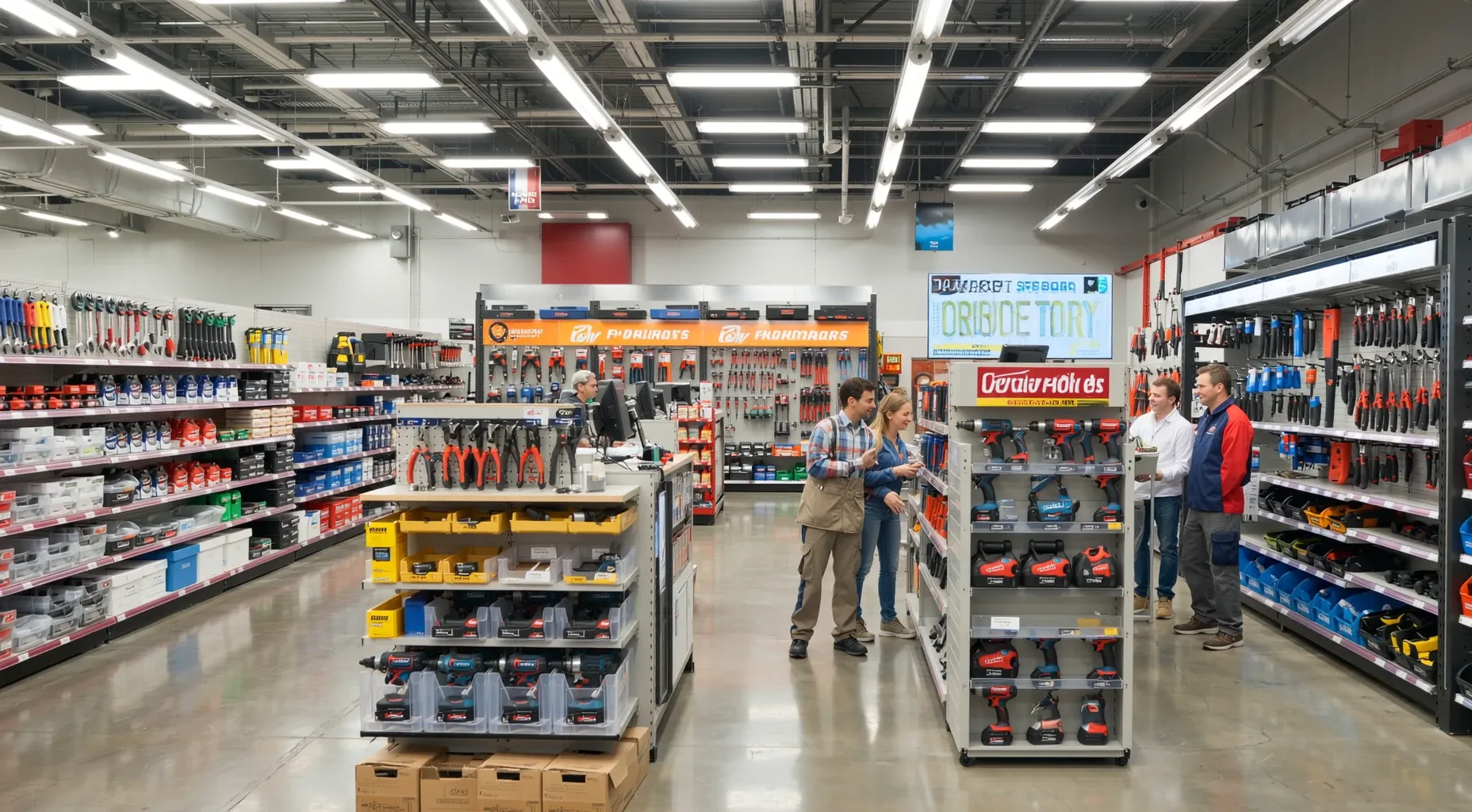
Hardware Retailers
Description
Establishments in this sector primarily operate by retailing a broad assortment of new hardware items directly to the general public. Their core business involves sourcing and displaying construction tools, fasteners, power equipment, plumbing fixtures, and building supplies within dedicated showrooms. Typical daily activities include stock management, sales transactions, providing customer assistance on product selection, and offering basic installation guidance or warranty support. These operators are often independent business owners or subsidiaries of larger chains that have opened specialized locations to serve local neighborhoods. The scale of these enterprises varies significantly, ranging from small, family-owned shops with limited inventory to large regional retail complexes carrying extensive product lines. While many focus specifically on builders, numerous establishments have expanded their offerings to include landscaping gear and home improvement materials, effectively bridging the gap between professional contractors and DIY enthusiasts. The competitive landscape is defined by the ability to provide competitive pricing, reliable product availability, and personalized service to attract walk-in traffic and online customers seeking immediate solutions for home repair and renovation projects. This dynamic environment requires constant adaptation to shifting market trends in construction materials and consumer preferences regarding professional-grade versus consumer-grade goods.
Hierarchy
| Code | Title | Description |
|---|---|---|
| 44 | Retail Trade 2-digit sector | The Sector as a Whole The Retail Trade sector comprises establishments primarily engaged in retailing merchandise, generally without transformation, and rendering services incidental to the sale of merchandise. The retailing process is the final step in the distribution of merchandise; retailers are, therefore, organized to sell merchandise in small quantities to the general public. Retail stores are fixed point-of-sale locations, located and designed to attract a high volume of walk-in customers. In general, retail stores have extensive displays of merchandise and use mass-media advertising to attract customers. Retailers often reach customers and market merchandise with methods other than, or in addition to, physical stores, such as Internet websites, the broadcasting of "infomercials," the broadcasting and publishing of direct-response advertising, the publishing of paper and electronic catalogs, door-to-door solicitation, in-home demonstration, selling from portable stalls (street vendors, except food), and distribution through vending machines. Establishments engaged in the direct sale and home delivery of products, such as home heating oil dealers and home delivery newspaper routes, are included here. Retail establishments typically sell merchandise to the general public for personal or household consumption, but some also serve business and institutional clients. These include office supply retailers, computer and software retailers, building materials dealers, plumbing supply retailers, and electrical supply retailers. In addition to retailing merchandise, some retailers are also engaged in the provision of after-sales services, such as repair and installation. For example, new automobile dealers, electronics and appliance retailers, and musical instrument and supplies retailers often provide repair services. As a general rule, establishments engaged in retailing merchandise and providing after-sales services are classified in this sector. Retail trade establishments are grouped into industries and industry groups typically based on one or more of the following criteria: (a) The merchandise line or lines carried; for example, specialty retailers are distinguished from general-line retailers. (b) The usual trade designation of the establishments. This criterion applies in cases where a retailer is well recognized by the industry and the public, but difficult to define strictly in terms of merchandise lines carried; for example, pharmacies and department stores. (c) Human resource requirements in terms of expertise; for example, the staff of an automobile dealer requires knowledge in financing, registering, and licensing issues that are not necessary in other retail industries. The buying of goods for resale is a characteristic of retail trade establishments that particularly distinguishes them from establishments in the agriculture, manufacturing, and construction industries. For example, farms that sell their products at or from the point of production are not classified in retail, but rather in agriculture. Similarly, establishments that both manufacture and sell their products to the general public are not classified in retail, but rather in manufacturing. However, establishments that engage in processing activities incidental to retailing are classified in retail. This includes optical goods retailers that grind lenses, and meat and seafood retailers that process carcasses into cuts. Wholesalers also engage in the buying of goods for resale, but they are not usually organized to serve the general public. They typically operate from a warehouse or office, and neither the design nor the location of these premises is intended to solicit a high volume of walk-in traffic. Wholesalers supply institutional, industrial, wholesale, and retail clients; their operations are, therefore, generally organized to purchase, sell, and deliver merchandise in larger quantities. However, dealers of durable nonconsumer goods, such as farm machinery and heavy-duty trucks, are included in wholesale trade even if they often sell these products in single units. |
| 444 | Building Material and Garden Equipment and Supplies Dealers 3-digit subsector | Industries in the Building Material and Garden Equipment and Supplies Dealers subsector retail new building materials, hardware, paint, and garden and outdoor power equipment and supplies. Establishments in this subsector with fixed point-of-sale locations, including home centers and retail lumber yards, may display merchandise either indoors or outdoors under covered areas. The staff is usually knowledgeable in the use of the specific products being retailed in the construction, repair, and maintenance of the home and associated grounds. |
| 4441 | Building Material and Supplies Dealers 4-digit industry group | This industry group comprises establishments primarily engaged in retailing new building materials and supplies. |
| 44414 | Hardware Retailers 5-digit NAICS industry | See industry description for 444140. |
| 444140 | Hardware Retailers 6-digit U.S. detail | Establishments in this sector primarily operate by retailing a broad assortment of new hardware items directly to the general public. Their core business involves sourcing and displaying construction tools, fasteners, power equipment, plumbing fixtures, and building supplies within dedicated showrooms. Typical daily activities include stock management, sales transactions, providing customer assistance on product selection, and offering basic installation guidance or warranty support. These operators are often independent business owners or subsidiaries of larger chains that have opened specialized locations to serve local neighborhoods. The scale of these enterprises varies significantly, ranging from small, family-owned shops with limited inventory to large regional retail complexes carrying extensive product lines. While many focus specifically on builders, numerous establishments have expanded their offerings to include landscaping gear and home improvement materials, effectively bridging the gap between professional contractors and DIY enthusiasts. The competitive landscape is defined by the ability to provide competitive pricing, reliable product availability, and personalized service to attract walk-in traffic and online customers seeking immediate solutions for home repair and renovation projects. This dynamic environment requires constant adaptation to shifting market trends in construction materials and consumer preferences regarding professional-grade versus consumer-grade goods. |
Need a supply chain stack that maps to this industry?
Use this NAICS classification as the starting point, then connect it to Item workflows across inventory, warehousing, order management, fulfillment, and transportation.
Classification References
- 01Retailing a general line of home repair and improvement materials and supplies, generally known as home centers--are classified in Industry 444110, Home Centers; and
- 02Retailing used hardware items--are classified in Industry 459510, Used Merchandise Retailers.
Index Items
Handtools, power-driven, stores
Hardware stores
Tool stores, power and hand (except outdoor)
How Item Can Help
Data Intelligence platforms provide predictive analytics to forecast demand for seasonal hardware products, allowing retailers to adjust stock levels proactively and reduce lost sales during peak buying periods.
External Resources
Census.gov NAICS Detail
Official US Census Bureau definition and scope for NAICS 444140.
National Association of Hardware Dealers
Industry association dedicated to providing resources and advocacy for US hardware stores.
Small Business Administration Hardware Retailers
Government resource offering guides, tips, and tools for launching or managing a hardware retail business.
National Retail Federation Hardware Industry
Platform providing data, trends, and insights specifically focused on the hardware retail sector.
