Port and Harbor Operations
Description
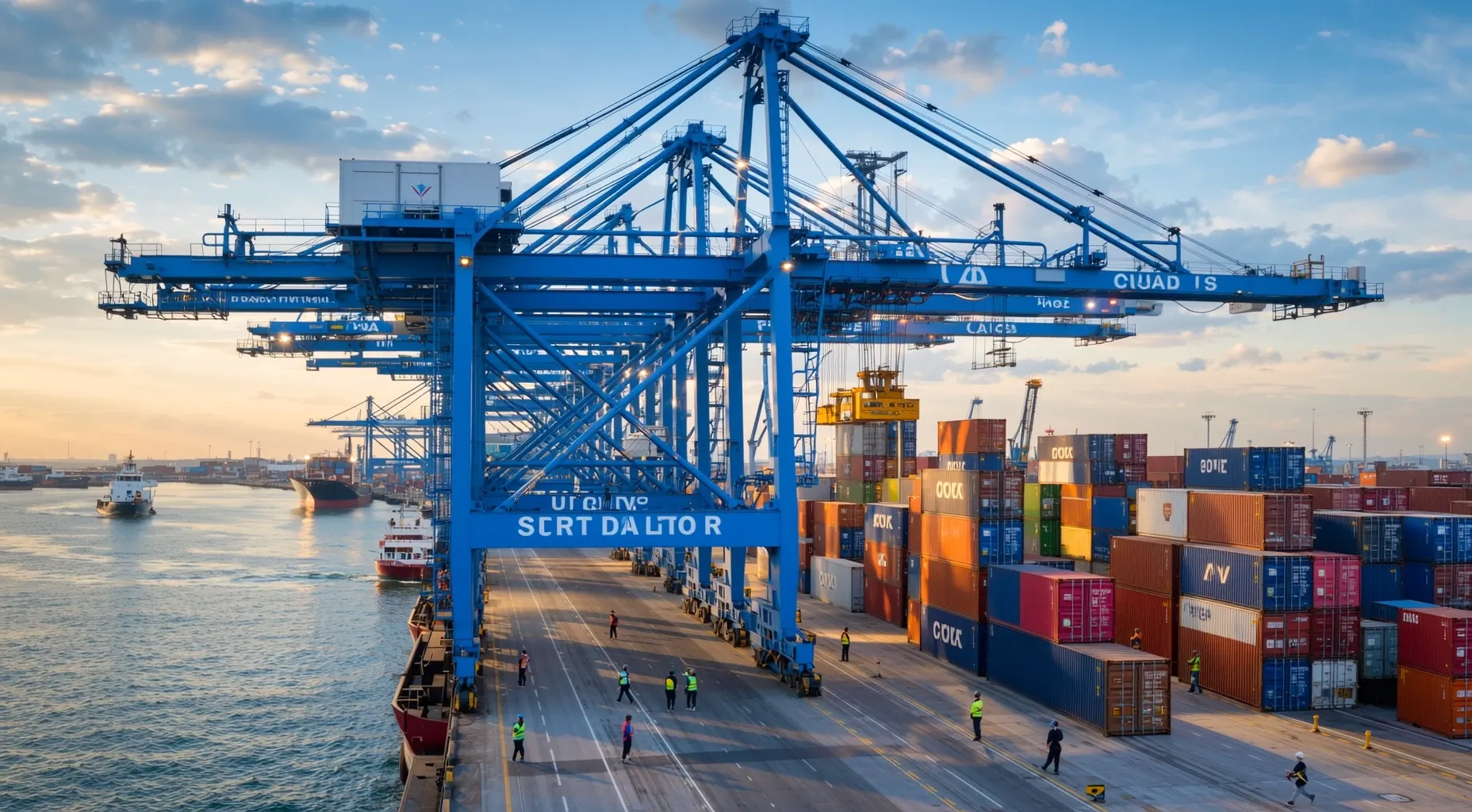
This sector encompasses establishments dedicated to the management and operation of ports, harbors, canals, and associated docking or pier facilities. These entities ensure the safe and efficient loading, unloading, and storage of vessels and their cargoes, serving as critical nodes in global supply chains. Typical business activities include port planning, navigation services, vessel berthing, cargo handling coordination, pilotage arrangements, and the maintenance of maritime infrastructure such as cranes, roads, and terminals. The industry often involves complex logistical integration with shipping lines, trucking companies, rail carriers, and freight forwarders to streamline the movement of goods. Operators range from large, publicly owned government agencies that manage major international seaports to smaller, privately owned facilities focused on specific regional waterways or inland canals. These businesses may also operate specialized services like tugboat dispatch or container terminal management. The scope of this industry is vast, affecting not only the direct movement of commodities but also supporting broader transportation networks by reducing congestion and ensuring regulatory compliance. Whether serving bustling trade hubs on coastlines or smaller inland waterways vital for barge traffic, these operators provide the essential groundwork that enables international commerce to function smoothly. Their ability to adapt to fluctuating trade volumes and environmental conditions remains a key determinant of overall economic efficiency in the transportation sector.
Hierarchy
| Code | Title | Description |
|---|---|---|
| 48 | Transportation and Warehousing 2-digit sector | The Sector as a Whole The Transportation and Warehousing sector includes industries providing transportation of passengers and cargo, warehousing and storage for goods, scenic and sightseeing transportation, and support activities related to modes of transportation. Establishments in these industries use transportation equipment or transportation-related facilities as a productive asset. The type of equipment depends on the mode of transportation. The modes of transportation are air, rail, water, road, and pipeline. The Transportation and Warehousing sector distinguishes three basic types of activities: subsectors for each mode of transportation, a subsector for warehousing and storage, and a subsector for establishments providing support activities for transportation. In addition, there are subsectors for establishments that provide passenger transportation for scenic and sightseeing purposes, postal services, and courier services. A separate subsector for support activities is established in the sector because, first, support activities for transportation are inherently multimodal, such as freight transportation arrangement, or have multimodal aspects. Secondly, there are production process similarities among the support activity industries. One of the support activities identified in the Support Activities for Transportation subsector is the routine repair and maintenance of transportation equipment (e.g., aircraft at an airport, railroad rolling stock at a railroad terminal, or ships at a harbor or port facility). Such establishments do not perform complete overhauling or rebuilding of transportation equipment (i.e., periodic restoration of transportation equipment to original design specifications) or transportation equipment conversion (i.e., major modification to systems). An establishment that primarily performs factory (or shipyard) overhauls, rebuilding, or conversions of aircraft, railroad rolling stock, or ships is classified in Subsector 336, Transportation Equipment Manufacturing, according to the type of equipment. Many of the establishments in this sector often operate on networks, with physical facilities, labor forces, and equipment spread over an extensive geographic area. Warehousing establishments in this sector are distinguished from merchant wholesaling in that the warehouse establishments do not sell the goods. Excluded from this sector are establishments primarily engaged in providing travel agent, travel arrangement, and reservation services that support transportation establishments, hotels, other businesses, and government agencies. These establishments are classified in Sector 56, Administrative and Support and Waste Management and Remediation Services. Establishments primarily engaged in providing rental and leasing of transportation equipment without operator are classified in Subsector 532, Rental and Leasing Services. Establishments primarily engaged in providing medical care with transportation are classified in Sector 62, Health Care and Social Assistance. |
| 488 | Support Activities for Transportation 3-digit subsector | Industries in the Support Activities for Transportation subsector provide services which support transportation. These services may be provided to transportation carrier establishments or to the general public. This subsector includes a wide array of establishments, including air traffic control services, marine cargo handling, and motor vehicle towing. The Support Activities for Transportation subsector includes services to transportation, separated by type of mode serviced. The Support Activities for Rail Transportation industry includes services to the rail industry (e.g., railroad switching and terminal establishments). Ship repair and maintenance services not done in a shipyard are included in the Other Support Activities for Water Transportation industry. An example would be floating drydock services in a harbor. Excluded from this subsector are establishments primarily engaged in providing factory conversion and overhaul of transportation equipment, which are classified in Subsector 336, Transportation Equipment Manufacturing. Establishments primarily engaged in providing rental and leasing of transportation equipment without operator are classified in Subsector 532, Rental and Leasing Services. Also, establishments primarily engaged in providing travel arrangement and reservation services are classified in Industry Group 5615, Travel Arrangement and Reservation Services. |
| 4883 | Support Activities for Water Transportation 4-digit industry group | This industry group comprises establishments primarily engaged in one of the following: (1) operating ports, harbors (including docking and pier facilities), or canals; (2) providing stevedoring and other marine cargo handling services (except warehousing); (3) providing navigational services to shipping; or (4) providing other services to water transportation. |
| 48831 | Port and Harbor Operations 5-digit NAICS industry | See industry description for 488310. |
| 488310 | Port and Harbor Operations 6-digit U.S. detail | This sector encompasses establishments dedicated to the management and operation of ports, harbors, canals, and associated docking or pier facilities. These entities ensure the safe and efficient loading, unloading, and storage of vessels and their cargoes, serving as critical nodes in global supply chains. Typical business activities include port planning, navigation services, vessel berthing, cargo handling coordination, pilotage arrangements, and the maintenance of maritime infrastructure such as cranes, roads, and terminals. The industry often involves complex logistical integration with shipping lines, trucking companies, rail carriers, and freight forwarders to streamline the movement of goods. Operators range from large, publicly owned government agencies that manage major international seaports to smaller, privately owned facilities focused on specific regional waterways or inland canals. These businesses may also operate specialized services like tugboat dispatch or container terminal management. The scope of this industry is vast, affecting not only the direct movement of commodities but also supporting broader transportation networks by reducing congestion and ensuring regulatory compliance. Whether serving bustling trade hubs on coastlines or smaller inland waterways vital for barge traffic, these operators provide the essential groundwork that enables international commerce to function smoothly. Their ability to adapt to fluctuating trade volumes and environmental conditions remains a key determinant of overall economic efficiency in the transportation sector. |
Need a supply chain stack that maps to this industry?
Use this NAICS classification as the starting point, then connect it to Item workflows across inventory, warehousing, order management, fulfillment, and transportation.
Classification References
- 01Providing stevedoring and other marine cargo handling services (except warehousing)--are classified in Industry 488320, Marine Cargo Handling;
- 02Providing navigational services to shipping--are classified in Industry 488330, Navigational Services to Shipping; and
- 03Operating docking and/or storage facilities, known as marinas--are classified in Industry 713930, Marinas.
Index Items
Canal maintenance services (except dredging)
Canal operation
Docking facility operations
Harbor maintenance services (except dredging)
Harbor operation
Lighthouse operation
Maintenance services, waterfront terminal (except dredging)
Port facility operation
Seaway operation
Waterfront terminal operation (e.g., docks, piers, wharves)
Wharf operation
How Item Can Help
Advanced analytics platforms predict congestion patterns and optimize port scheduling by analyzing historical throughput data to minimize wait times for vessels and trucks at the dock.
External Resources
Census.gov NAICS Detail
Official US Census Bureau definition and scope for NAICS 488310.
American Association of Port Authorities
A leading trade association for U.S. ports and harbors focusing on policy, research, and advocacy.
U.S. Department of Transportation Port & Harbor Operations
An official government resource providing data, regulations, and funding opportunities related to port infrastructure.
Global Port Community System (GPICS)
A non-profit industry directory facilitating communication and collaboration between the shipping and port communities.
