Securities and Commodity Exchanges
Description
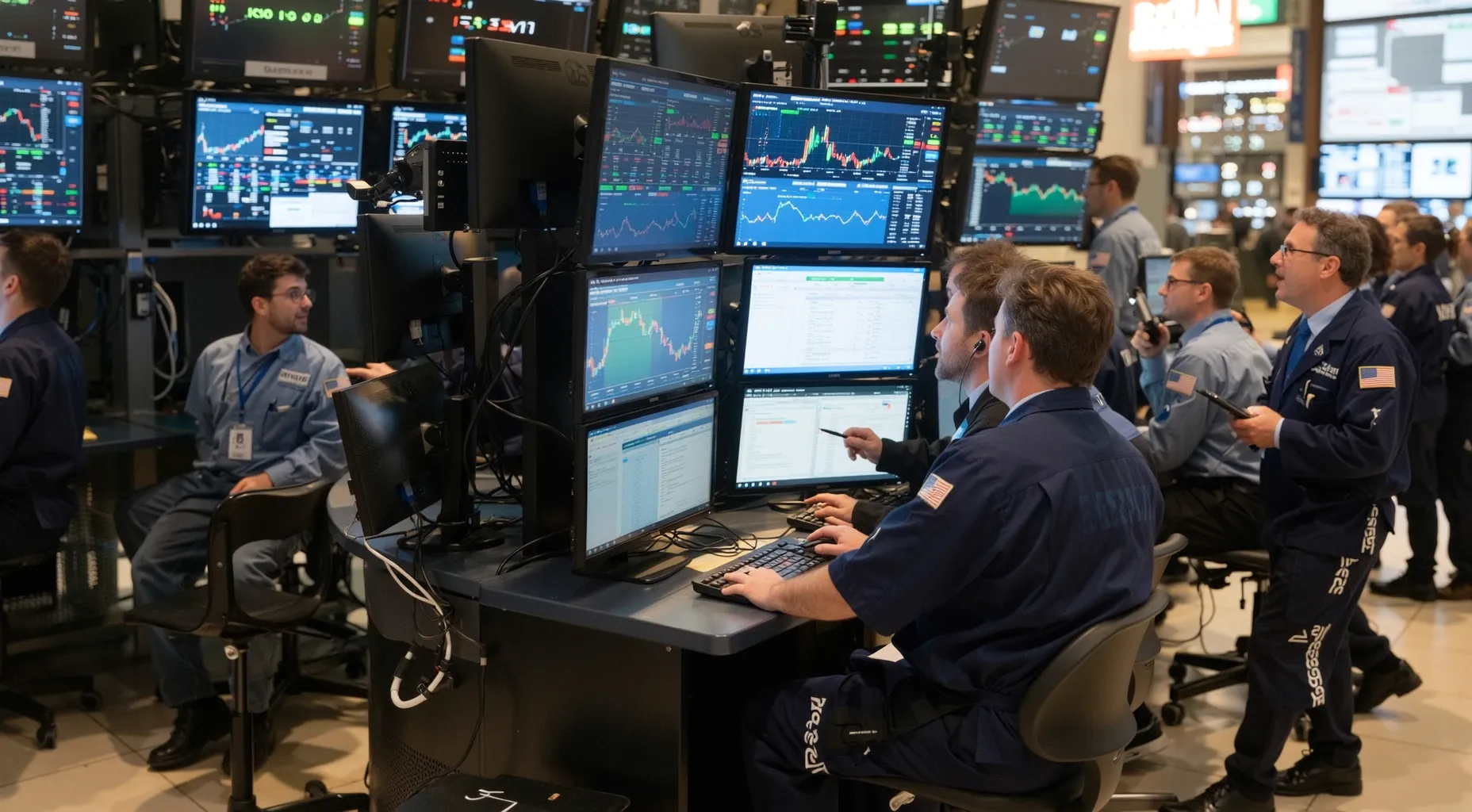
This industry comprises establishments primarily engaged in furnishing physical or electronic marketplaces for the purpose of facilitating the buying and selling of stocks, stock options, bonds, or commodity contracts.
Hierarchy
| Code | Title | Description |
|---|---|---|
| 52 | Finance and Insurance 2-digit sector | The Sector as a Whole The Finance and Insurance sector comprises establishments primarily engaged in financial transactions (transactions involving the creation, liquidation, or change in ownership of financial assets) and/or in facilitating financial transactions. Three principal types of activities are identified: 1. Raising funds by taking deposits and/or issuing securities and, in the process, incurring liabilities. Establishments engaged in this activity use raised funds to acquire financial assets by making loans and/or purchasing securities. Putting themselves at risk, they channel funds from lenders to borrowers and transform or repackage the funds with respect to maturity, scale, and risk. This activity is known as financial intermediation. 2. Pooling of risk by underwriting insurance and annuities. Establishments engaged in this activity collect fees, insurance premiums, or annuity considerations; build up reserves; invest those reserves; and make contractual payments. Fees are based on the expected incidence of the insured risk and the expected return on investment. 3. Providing specialized services facilitating or supporting financial intermediation, insurance, and employee benefit programs. In addition, monetary authorities charged with monetary control are included in this sector. The subsectors, industry groups, and industries within the Finance and Insurance sector are defined on the basis of their unique production processes. As with all industries, the production processes are distinguished by their use of specialized human resources and specialized physical capital. In addition, the way in which these establishments acquire and allocate financial capital, their source of funds, and the use of those funds provides a third basis for distinguishing characteristics of the production process. For instance, the production process in raising funds through deposit-taking is different from the process of raising funds in bond or money markets. The process of making loans to individuals also requires different production processes than does the creation of investment pools or the underwriting of securities. Most of the Finance and Insurance subsectors contain one or more industry groups of (1) intermediaries with similar patterns of raising and using funds and (2) establishments engaged in activities that facilitate, or are otherwise related to, that type of financial or insurance intermediation. Industries within this sector are defined in terms of activities for which a production process can be specified, and many of these activities are not exclusive to a particular type of financial institution. To deal with the varied activities taking place within existing financial institutions, the approach is to split these institutions into components performing specialized services. This requires defining the units engaged in providing those services and developing procedures that allow for their delineation. These units are the equivalents for finance and insurance of the establishments defined for other industries. The output of many financial services, as well as the inputs and the processes by which they are combined, cannot be observed at a single location and can only be defined at a higher level of the organizational structure of the enterprise. Additionally, a number of independent activities that represent separate and distinct production processes may take place at a single location belonging to a multilocation financial firm. Activities are more likely to be homogeneous with respect to production characteristics than are locations, at least in financial services. The classification defines activities broadly enough that it can be used both by those classifying by location and by those employing a more top-down approach to the delineation of the establishment. Establishments engaged in activities that facilitate, or are otherwise related to, the various types of intermediation are included in multiple subsectors, rather than in a separate subsector dedicated to services alone, because these services are performed by intermediaries, as well as by specialist establishments, and the extent to which the activity of the intermediaries can be separately identified is not clear. Financial industries are extensive users of electronic means for facilitating the verification of financial balances, authorizing transactions, transferring funds to and from transactors' accounts, notifying banks (or credit card issuers) of the individual transactions, and providing daily summaries. Since these transaction processing activities are integral to the production of finance and insurance services, establishments that principally provide a financial transaction processing service are classified in this sector, rather than in the data processing industry in the Information sector. Legal entities that hold portfolios of assets on behalf of others are significant and data on them are required for a variety of purposes. Thus, for NAICS, these funds, trusts, and other financial vehicles are the fifth subsector of the Finance and Insurance sector. These entities earn interest, dividends, and other property income, but have little or no employment and no revenue from the sale of services. Separate establishments and employees devoted to the management of funds are classified in Industry Group 5239, Other Financial Investment Activities. |
| 523 | Securities, Commodity Contracts, and Other Financial Investments and Related Activities 3-digit subsector | Industries in the Securities, Commodity Contracts, and Other Financial Investments and Related Activities subsector group establishments that are primarily engaged in one of the following: (1) underwriting securities issues and/or making markets for securities and commodities; (2) acting as agents (i.e., brokers) between buyers and sellers of securities and commodities; (3) providing securities and commodity exchange services; and (4) providing other services, such as managing portfolios of assets; providing investment advice; and trust, fiduciary, and custody services. |
| 5232 | Securities and Commodity Exchanges 4-digit industry group | Industries in the Securities, Commodity Contracts, and Other Financial Investments and Related Activities subsector group establishments that are primarily engaged in one of the following: (1) underwriting securities issues and/or making markets for securities and commodities; (2) acting as agents (i.e., brokers) between buyers and sellers of securities and commodities; (3) providing securities and commodity exchange services; and (4) providing other services, such as managing portfolios of assets; providing investment advice; and trust, fiduciary, and custody services. |
| 52321 | Securities and Commodity Exchanges 5-digit NAICS industry | See industry description for 523210. |
| 523210 | Securities and Commodity Exchanges 6-digit U.S. detail | This industry comprises establishments primarily engaged in furnishing physical or electronic marketplaces for the purpose of facilitating the buying and selling of stocks, stock options, bonds, or commodity contracts. |
Need a supply chain stack that maps to this industry?
Use this NAICS classification as the starting point, then connect it to Item workflows across inventory, warehousing, order management, fulfillment, and transportation.
Classification References
- 01Investment banking, securities dealing, securities brokering, commodity contracts dealing, or commodity contracts brokering--are classified in Industry Group 5231, Securities and Commodity Contracts Intermediation and Brokerage; and
- 02Operating commodity or securities exchange clearinghouses--are classified in U.S. Industry 523999, Miscellaneous Financial Investment Activities.
Index Items
Commodity contracts exchanges
Exchanges, commodity contracts
Exchanges, securities
Futures commodity contracts exchanges
Securities exchanges
Stock exchanges
Stock or commodity options exchanges
How Item Can Help
Transportation Management Systems optimize routes and costs for moving physical commodities, which complements digital trading operations and ensures timely delivery of goods associated with exchange transactions.
