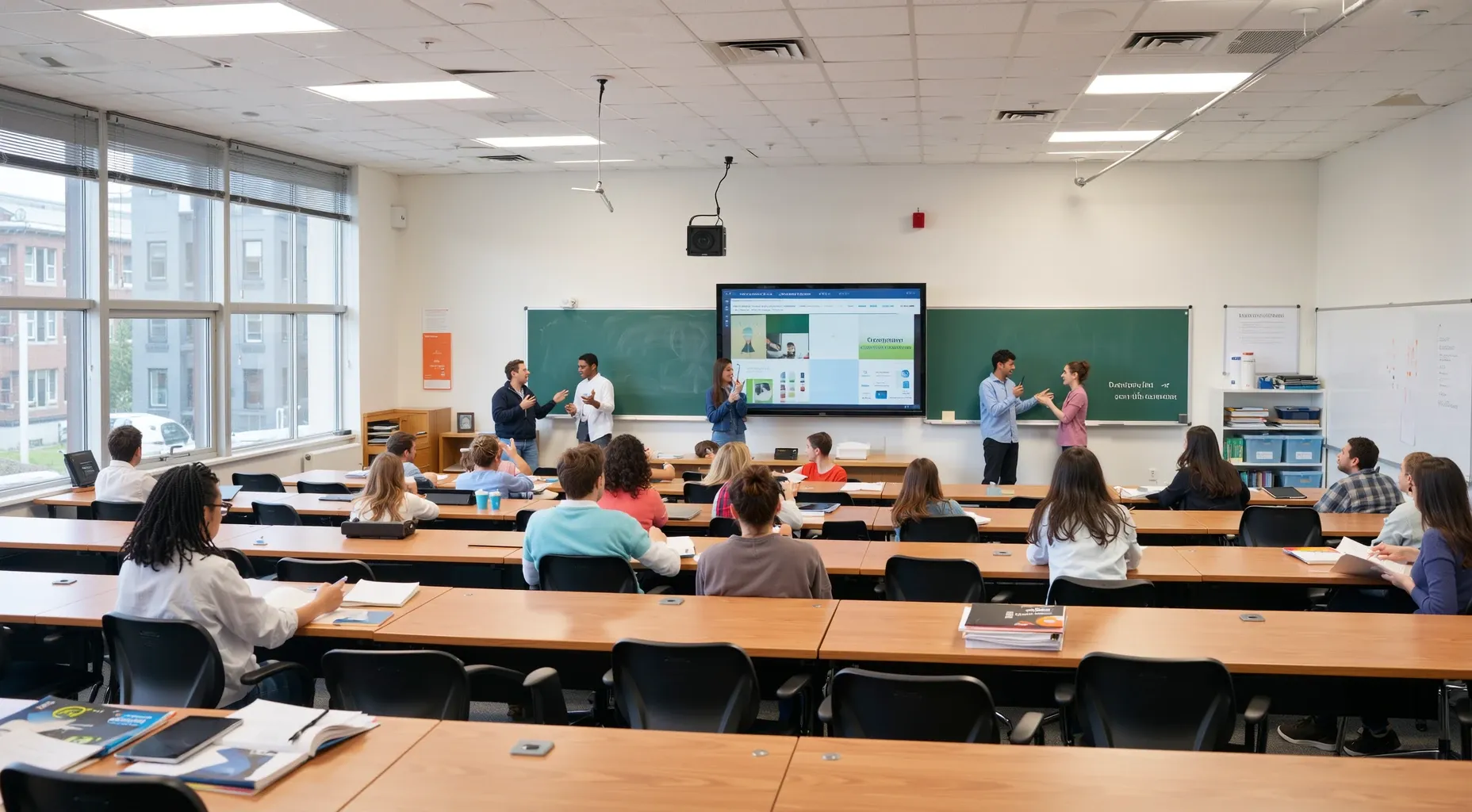
Junior Colleges
Description
This industry comprises establishments primarily engaged in furnishing academic, or academic and technical, courses and granting associate degrees, certificates, or diplomas below the baccalaureate level. The requirement for admission to an associate or equivalent degree program is at least a high school diploma or equivalent general academic training. Instruction may be provided in diverse settings, such as the establishment's or client's training facilities, educational institutions, the workplace, or the home, and through diverse means, such as correspondence, television, the Internet, or other electronic and distance-learning methods. The training provided by these establishments may include the use of simulators and simulation methods.
Hierarchy
| Code | Title | Description |
|---|---|---|
| 61 | Educational Services 2-digit sector | The Sector as a Whole The Educational Services sector comprises establishments that provide instruction and training in a wide variety of subjects. This instruction and training is provided by specialized establishments, such as schools, colleges, universities, and training centers. These establishments may be privately owned and operated for profit or not for profit, or they may be publicly owned and operated. They may also offer food and/or accommodation services to their students. Educational services are usually delivered by teachers or instructors that explain, tell, demonstrate, supervise, and direct learning. Instruction is imparted in diverse settings, such as educational institutions, the workplace, or the home, and through diverse means, such as correspondence, television, the Internet, or other electronic and distance-learning methods. The training provided by these establishments may include the use of simulators and simulation methods. It can be adapted to the particular needs of the students, for example sign language can replace verbal language for teaching students with hearing impairments. All industries in the sector share this commonality of process, namely, labor inputs of instructors with the requisite subject matter expertise and teaching ability. |
| 611 | Educational Services 3-digit subsector | Industries in the Educational Services subsector provide instruction and training in a wide variety of subjects. The instruction and training is provided by specialized establishments, such as schools, colleges, universities, and training centers. The subsector is structured according to level and type of educational services. Elementary and secondary schools, junior colleges, and colleges, universities, and professional schools correspond to a recognized series of formal levels of education designated by diplomas, associate degrees (including equivalent certificates), and degrees. The remaining industry groups are based more on the type of instruction or training offered, and the levels are not always as formally defined. The establishments are often highly specialized, many offering instruction in a very limited subject matter, for example ski lessons or one specific computer software application. Within the subsector, the level and types of training that are required of the instructors and teachers vary depending on the industry. Establishments that manage schools and other educational establishments on a contractual basis are classified in this subsector if they both manage the operation and provide the operating staff. Such establishments are classified in the Educational Services subsector based on the type of facility managed and operated. Excluded from this subsector are establishments primarily engaged in publishing educational software or other educational materials without providing instruction. These establishments are classified in Subsector 513, Publishing Industries. Establishments that manage schools and other educational establishments on a contract or fee basis without providing the operating staff are classified in Subsector 561, Administrative and Support Services. Establishments primarily engaged in providing vocational rehabilitation services and establishments primarily engaged in providing child care services are classified in Subsector 624, Social Assistance. |
| 6112 | Junior Colleges 4-digit industry group | Industries in the Educational Services subsector provide instruction and training in a wide variety of subjects. The instruction and training is provided by specialized establishments, such as schools, colleges, universities, and training centers. The subsector is structured according to level and type of educational services. Elementary and secondary schools, junior colleges, and colleges, universities, and professional schools correspond to a recognized series of formal levels of education designated by diplomas, associate degrees (including equivalent certificates), and degrees. The remaining industry groups are based more on the type of instruction or training offered, and the levels are not always as formally defined. The establishments are often highly specialized, many offering instruction in a very limited subject matter, for example ski lessons or one specific computer software application. Within the subsector, the level and types of training that are required of the instructors and teachers vary depending on the industry. Establishments that manage schools and other educational establishments on a contractual basis are classified in this subsector if they both manage the operation and provide the operating staff. Such establishments are classified in the Educational Services subsector based on the type of facility managed and operated. Excluded from this subsector are establishments primarily engaged in publishing educational software or other educational materials without providing instruction. These establishments are classified in Subsector 513, Publishing Industries. Establishments that manage schools and other educational establishments on a contract or fee basis without providing the operating staff are classified in Subsector 561, Administrative and Support Services. Establishments primarily engaged in providing vocational rehabilitation services and establishments primarily engaged in providing child care services are classified in Subsector 624, Social Assistance. |
| 61121 | Junior Colleges 5-digit NAICS industry | See industry description for 611210. |
| 611210 | Junior Colleges 6-digit U.S. detail | This industry comprises establishments primarily engaged in furnishing academic, or academic and technical, courses and granting associate degrees, certificates, or diplomas below the baccalaureate level. The requirement for admission to an associate or equivalent degree program is at least a high school diploma or equivalent general academic training. Instruction may be provided in diverse settings, such as the establishment's or client's training facilities, educational institutions, the workplace, or the home, and through diverse means, such as correspondence, television, the Internet, or other electronic and distance-learning methods. The training provided by these establishments may include the use of simulators and simulation methods. |
Need a supply chain stack that maps to this industry?
Use this NAICS classification as the starting point, then connect it to Item workflows across inventory, warehousing, order management, fulfillment, and transportation.
Classification References
- 01Establishments primarily engaged in providing technical training without offering academic courses are classified in Industry 61151, Technical and Trade Schools.
Index Items
Academies, junior college
Colleges, community
Colleges, junior
Community colleges
Community colleges offering a wide variety of academic and technical training
Junior colleges
Junior colleges offering a wide variety of academic and technical training
Schools, junior college
Schools, junior college vocational
Schools, online, junior college-level (through a website or mobile application)
How Item Can Help
Item.com's Warehouse Management System optimizes the storage and retrieval of educational equipment, laboratory supplies, and uniform inventory for junior colleges. Its real-time tracking ensures high-demand items like lab chemicals or sports gear are always available for student activities.
The Order Management System streamlines the fulfillment of student housing, course material, and facility maintenance requests across multiple online channels. It automatically assigns inventory and provides rapid delivery to campus locations, reducing wait times for essential college services.
Data Intelligence platforms analyze purchasing patterns to predict seasonal demand for academic equipment and supplies. By identifying trends in consumption, colleges can proactively restock critical inventory and negotiate better bulk rates with suppliers.
Item.com Tools
External Resources
Census.gov NAICS Detail
Official US Census Bureau definition and scope for NAICS 611210.
National Junior College Association
The primary US trade association for community and junior colleges providing resources on accreditation and best practices.
US Department of Education
Federal government page detailing the Elementary and Secondary Education Act provisions relevant to post-secondary institutions.
National Association of Independent Schools
While focused on independent schools, this directory lists various educational institutions and can help locate specific college directories.
