Automobile Driving Schools
Description
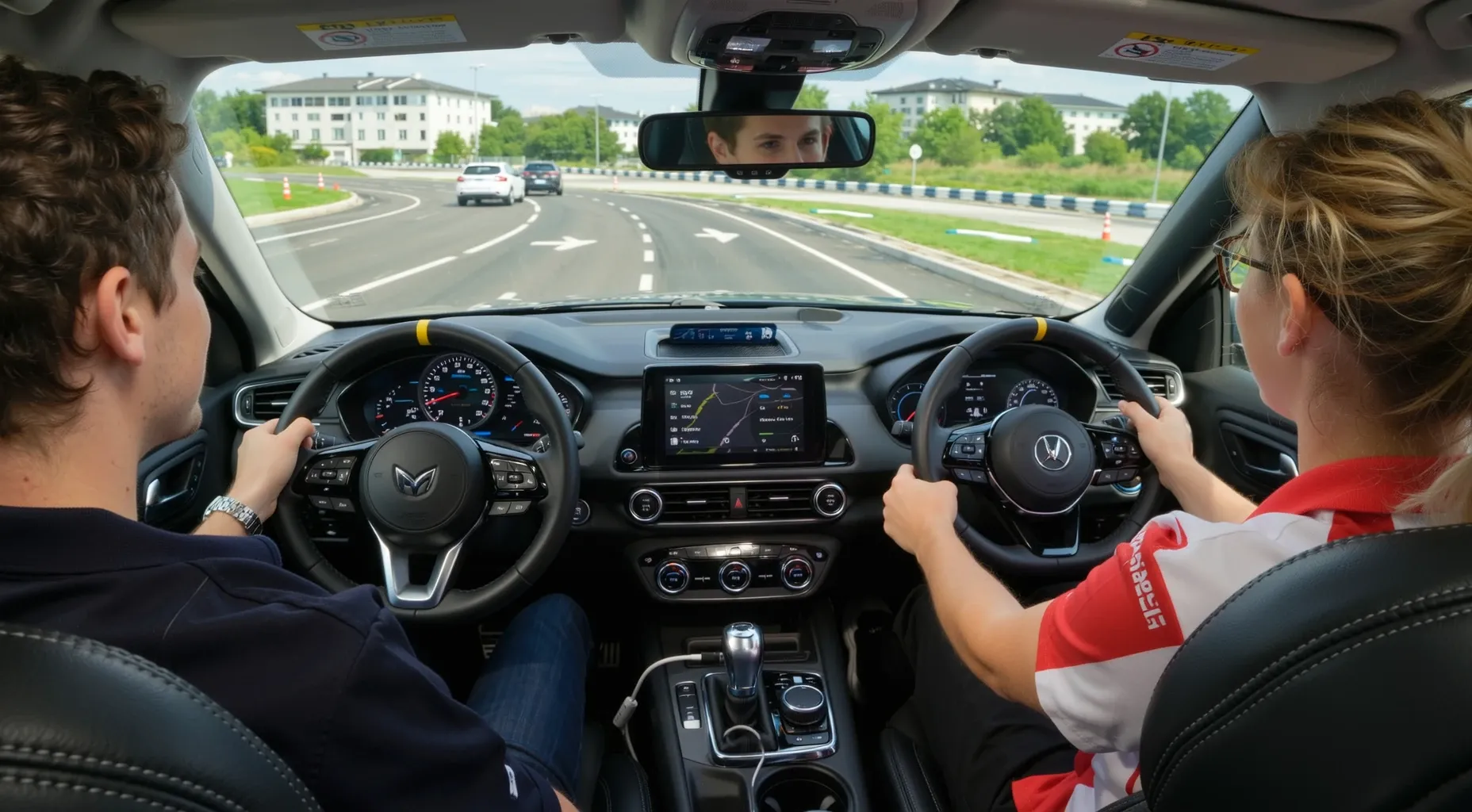
Establishments in this sector specialize in providing comprehensive driving instruction to individuals seeking a learner's permit or a standard driver's license. These facilities serve as essential training grounds where students practice maneuvers such as parallel parking, lane changing, and safe vehicle operation under the supervision of certified instructors. The primary business activity involves conducting structured lessons that range from behind-the-wheel driving to theoretical coursework covering traffic laws and defensive driving techniques. Operators within this field vary significantly in their scale and scope. Small, independent instructors often work from mobile setups or private residential properties, offering flexible one-on-one sessions tailored to individual student schedules. In contrast, large franchise chains operate dedicated driving schools with multiple lots, offering various vehicle types, advanced testing equipment, and additional services like vehicle maintenance or safety certification courses. Some entities may also provide commercial driving training for trucking companies or specialized instruction for defensive driving programs aimed at reducing accident rates. Regardless of the operator size, the common thread remains the delivery of professional education designed to ensure road safety and regulatory compliance through practical, supervised experience.
Hierarchy
| Code | Title | Description |
|---|---|---|
| 61 | Educational Services 2-digit sector | The Sector as a Whole The Educational Services sector comprises establishments that provide instruction and training in a wide variety of subjects. This instruction and training is provided by specialized establishments, such as schools, colleges, universities, and training centers. These establishments may be privately owned and operated for profit or not for profit, or they may be publicly owned and operated. They may also offer food and/or accommodation services to their students. Educational services are usually delivered by teachers or instructors that explain, tell, demonstrate, supervise, and direct learning. Instruction is imparted in diverse settings, such as educational institutions, the workplace, or the home, and through diverse means, such as correspondence, television, the Internet, or other electronic and distance-learning methods. The training provided by these establishments may include the use of simulators and simulation methods. It can be adapted to the particular needs of the students, for example sign language can replace verbal language for teaching students with hearing impairments. All industries in the sector share this commonality of process, namely, labor inputs of instructors with the requisite subject matter expertise and teaching ability. |
| 611 | Educational Services 3-digit subsector | Industries in the Educational Services subsector provide instruction and training in a wide variety of subjects. The instruction and training is provided by specialized establishments, such as schools, colleges, universities, and training centers. The subsector is structured according to level and type of educational services. Elementary and secondary schools, junior colleges, and colleges, universities, and professional schools correspond to a recognized series of formal levels of education designated by diplomas, associate degrees (including equivalent certificates), and degrees. The remaining industry groups are based more on the type of instruction or training offered, and the levels are not always as formally defined. The establishments are often highly specialized, many offering instruction in a very limited subject matter, for example ski lessons or one specific computer software application. Within the subsector, the level and types of training that are required of the instructors and teachers vary depending on the industry. Establishments that manage schools and other educational establishments on a contractual basis are classified in this subsector if they both manage the operation and provide the operating staff. Such establishments are classified in the Educational Services subsector based on the type of facility managed and operated. Excluded from this subsector are establishments primarily engaged in publishing educational software or other educational materials without providing instruction. These establishments are classified in Subsector 513, Publishing Industries. Establishments that manage schools and other educational establishments on a contract or fee basis without providing the operating staff are classified in Subsector 561, Administrative and Support Services. Establishments primarily engaged in providing vocational rehabilitation services and establishments primarily engaged in providing child care services are classified in Subsector 624, Social Assistance. |
| 6116 | Other Schools and Instruction 4-digit industry group | This industry group comprises establishments primarily engaged in offering or providing instruction (except academic schools, colleges, and universities; business, computer, and management instruction; and technical and trade instruction). Instruction may be provided in diverse settings, such as the establishment's or client's training facilities, educational institutions, the workplace, or the home, and through diverse means, such as correspondence, television, the Internet, or other electronic and distance-learning methods. The training provided by these establishments may include the use of simulators and simulation methods. |
| 61169 | All Other Schools and Instruction 5-digit NAICS industry | This industry comprises establishments primarily engaged in offering instruction (except academic schools, colleges, and universities; business, computer, and management instruction; technical and trade instruction; and fine arts, sports, recreation, and language instruction). Illustrative Examples: Academic tutoring services Public speaking training Automobile driving schools Speed reading instruction Exam preparation services |
| 611692 | Automobile Driving Schools 6-digit U.S. detail | Establishments in this sector specialize in providing comprehensive driving instruction to individuals seeking a learner's permit or a standard driver's license. These facilities serve as essential training grounds where students practice maneuvers such as parallel parking, lane changing, and safe vehicle operation under the supervision of certified instructors. The primary business activity involves conducting structured lessons that range from behind-the-wheel driving to theoretical coursework covering traffic laws and defensive driving techniques. Operators within this field vary significantly in their scale and scope. Small, independent instructors often work from mobile setups or private residential properties, offering flexible one-on-one sessions tailored to individual student schedules. In contrast, large franchise chains operate dedicated driving schools with multiple lots, offering various vehicle types, advanced testing equipment, and additional services like vehicle maintenance or safety certification courses. Some entities may also provide commercial driving training for trucking companies or specialized instruction for defensive driving programs aimed at reducing accident rates. Regardless of the operator size, the common thread remains the delivery of professional education designed to ensure road safety and regulatory compliance through practical, supervised experience. |
Need a supply chain stack that maps to this industry?
Use this NAICS classification as the starting point, then connect it to Item workflows across inventory, warehousing, order management, fulfillment, and transportation.
Classification References
- 01Establishments primarily engaged in offering truck and bus driving instruction are classified in U.S. Industry 611519, Other Technical and Trade Schools.
Index Items
Automobile driving schools
Driver education
Driver training schools (except bus, heavy equipment, truck)
Motorcycle driving schools
How Item Can Help
Optimizes the routing and consolidation of vehicle deliveries to multiple training centers, reducing fuel costs and logistics complexity.
External Resources
Census.gov NAICS Detail
Official US Census Bureau definition and scope for NAICS 611692.
American National Driving Teachers Association
Industry association dedicated to professional standards and networking for driving instructors.
National Highway Traffic Safety Administration
Government resource providing official guidelines, certification requirements, and training standards for driver education.
Association of Driving Instructors
United Kingdom-based trade association offering resources, training courses, and advocacy for driving school professionals.
