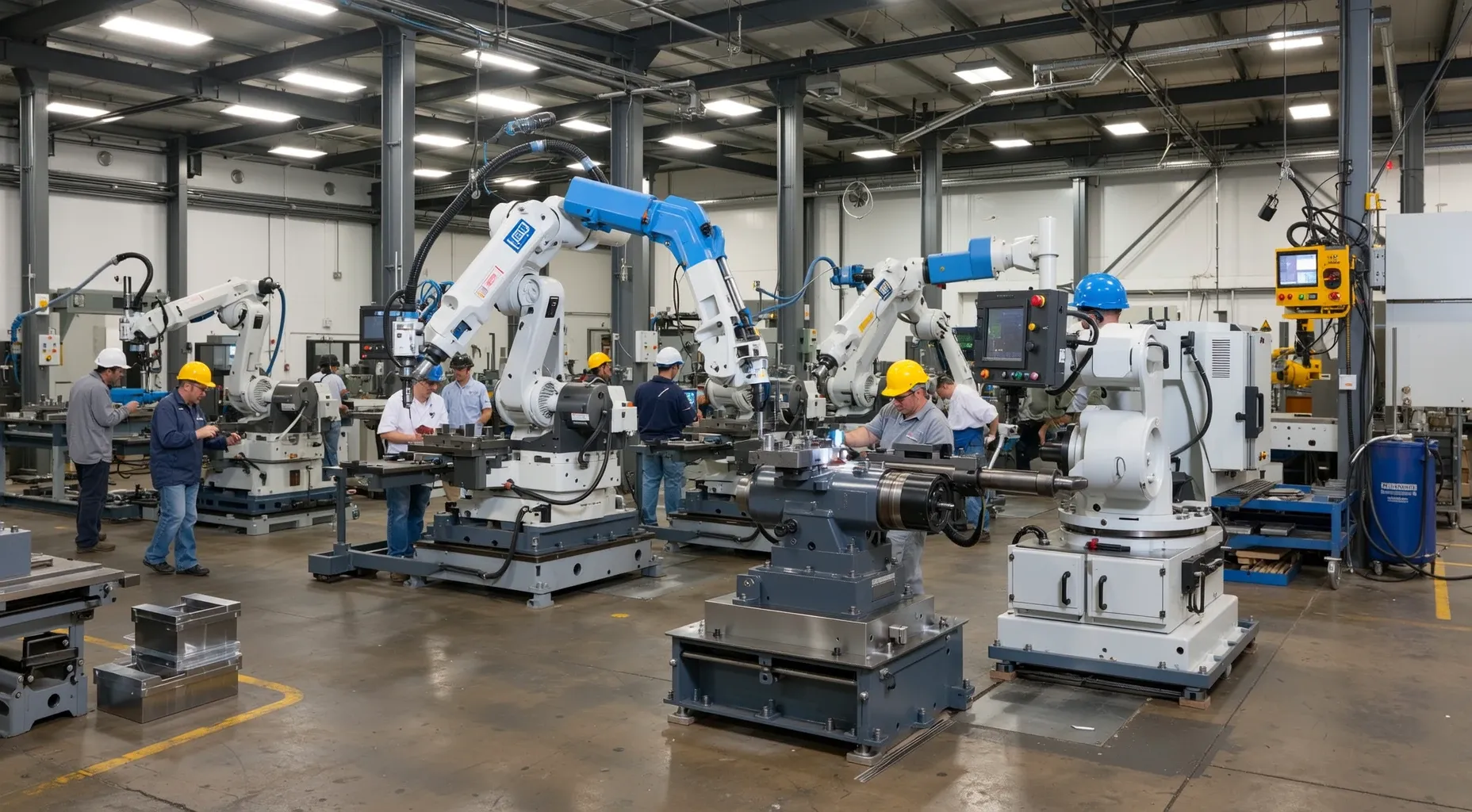
Fabricación de Armas Ligeras, Artillería y Accesorios de Artillería
Descripción
Los establecimientos dentro de este sector se especializan en el diseño, producción y ensamblaje de armamento militar esencial para las operaciones de combate, abarcando desde rifles y ametralladoras portátiles hasta piezas de artillería más grandes y munición especializada. Estas instalaciones sirven a las fuerzas armadas, agencias de aplicación de la ley y contratistas de seguridad privados creando armamento duradero capaz de soportar condiciones extremas de campo. Las actividades comerciales típicas incluyen mecanizado de precisión complejo, fabricación de materiales, pruebas de control de calidad e integración de componentes electrónicos modernos en sistemas de armas de fuego. Los operadores son a menudo fabricantes altamente especializados que poseen licencias federales estrictas, aunque algunos funcionan como productores por contrato para contratistas de defensa o como empresas de investigación y desarrollo que desarrollan equipo táctico de próxima generación. La escala de las operaciones varía significativamente, desde pequeñas empresas familiares centradas en la producción de accesorios de nicho hasta grandes complejos industriales con automatización avanzada. Esta industria desempeña un papel fundamental en la seguridad nacional y la seguridad pública, impulsando una inversión significativa en ingeniería de alta precisión y adhiriéndose a rigurosos estándares regulatorios. A diferencia de la fabricación más amplia de productos metálicos, estos negocios se centran exclusivamente en la tecnología de armas ligeras y el soporte de municiones, lo que requiere una experiencia única en balística y ciencia de materiales que los distingue de otras categorías industriales. Su producción impacta directamente los niveles de preparación y las capacidades operativas en diversos teatros de conflicto globales y misiones de seguridad nacionales.
Jerarquía
| Código | Título | Descripción |
|---|---|---|
| 33 | Fabricación Sector de 2 dígitos | El Sector en su Conjunto El sector manufacturero comprende establecimientos dedicados a la transformación mecánica, física o química de materiales, sustancias o componentes en nuevos productos. El ensamblaje de piezas de componentes de productos manufacturados se considera manufactura, excepto en casos en que la actividad se clasifica apropiadamente en el Sector 23, Construcción. Los establecimientos del sector manufacturero a menudo se describen como plantas, fábricas o molinos y característicamente utilizan máquinas accionadas por energía y equipos de manipulación de materiales. Sin embargo, también pueden incluirse en este sector los establecimientos que transforman materiales o sustancias en nuevos productos a mano o en el hogar del trabajador y aquellos dedicados a la venta al público de productos elaborados en las mismas instalaciones desde donde se venden, como panaderías, tiendas de dulces y sastrerías a medida. Los establecimientos manufactureros pueden procesar materiales o pueden contratar con otros establecimientos para procesar sus materiales por ellos. Ambos tipos de establecimientos se incluyen en la manufactura. Las industrias seleccionadas en el sector manufacturero se componen únicamente de establecimientos que procesan materiales para otros establecimientos por contrato o tarifa. Más allá de estas industrias dedicadas a la manufactura por contrato, los establecimientos que procesan materiales para otros establecimientos se clasifican generalmente en la industria manufacturera de los materiales procesados. Los materiales, sustancias o componentes transformados por los establecimientos manufactureros son materias primas que son productos de la agricultura, la silvicultura, la pesca, la minería o la cantería, así como productos de otros establecimientos manufactureros. Los materiales utilizados pueden comprarse directamente a los productores, obtenerse a través de canales comerciales habituales o asegurarse sin recurrir al mercado transfiriendo el producto de un establecimiento a otro, bajo la misma propiedad. El nuevo producto de un establecimiento manufacturero puede estar terminado en el sentido de que está listo para su utilización o consumo, o puede estar semielaborado para convertirse en una entrada para un establecimiento dedicado a una fabricación posterior. Por ejemplo, el producto de la refinería de alúmina es la entrada utilizada en la producción primaria de aluminio; el aluminio primario es la entrada para una planta de laminación de alambre de aluminio; y el alambre de aluminio es la entrada para un establecimiento de fabricación de productos de alambre fabricado. Los subsectores en el sector manufacturero generalmente reflejan procesos de producción distintos relacionados con las entradas de materiales, el equipo de producción y las habilidades de los empleados. En el área de la maquinaria, donde el ensamblaje es una actividad clave, las piezas y accesorios para productos manufacturados se clasifican en la industria del artículo manufacturado terminado cuando se fabrican para venta separada. Por ejemplo, un accesorio para una pieza de maquinaria de metalurgia se clasificaría con la maquinaria de metalurgia. Sin embargo, las entradas de componentes de otros establecimientos manufactureros se clasifican en función de la función de producción del fabricante del componente. Por ejemplo, los componentes electrónicos se clasifican en el Subsector 334, Fabricación de Productos Electrónicos y de Computación, y los estampados se clasifican en el Subsector 332, Fabricación de Productos Metálicos Fabricados. Los establecimientos manufactureros a menudo realizan una o más actividades que se clasifican fuera del sector manufacturero de NAICS. Por ejemplo, casi toda la manufactura tiene alguna operación de investigación y desarrollo o administrativa interna, como contabilidad, nóminas o gestión. Estos servicios internos se tratan de la misma manera que las actividades de manufactura internas. Cuando los servicios son proporcionados por establecimientos separados, se clasifican en el sector de NAICS donde dichos servicios son primarios, no en manufactura. Los límites de la manufactura y de los otros sectores del sistema de clasificación pueden ser algo borrosos. Los establecimientos del sector manufacturero se dedican a la transformación de materiales en nuevos productos. Su producción es un nuevo producto. Sin embargo, la definición de lo que constituye un nuevo producto puede ser algo subjetiva. Como aclaración, las siguientes actividades se consideran manufactura en NAICS: <table width=100%><tr><td width=10%> </td><td><dl><dt style='padding-left: 10px; text-indent: -10px;'>Envasado y pasteurización de leche;</dt><dt style='padding-left: 10px; text-indent: -10px;'>Envasado y procesamiento de agua;</dt><dt style='padding-left: 10px; text-indent: -10px;'>Empaque de pescado fresco (descascar ostras, filetear pescado);</dt><dt style='padding-left: 10px; text-indent: -10px;'>Trabajos de confección (asignación de materiales a fábricas o talleres por contrato para fabricación u otras operaciones por contrato) así como contratación de materiales propiedad de otros;</dt><dt style='padding-left: 10px; text-indent: -10px;'>Impresión y actividades relacionadas;</dt><dt style='padding-left: 10px; text-indent: -10px;'>Producción de concreto premezclado;</dt><dt style='padding-left: 10px; text-indent: -10px;'>Conversión de cuero;</dt><dt style='padding-left: 10px; text-indent: -10px;'>Pulido de lentes a prescripción;</dt><dt style='padding-left: 10px; text-indent: -10px;'>Preservación de madera;</dt><dt style='padding-left: 10px; text-indent: -10px;'>Trabajo lapidario para el comercio;</dt></dl></td><td width=10%> </td><td><dl><dt style='padding-left: 10px; text-indent: -10px;'>Electrochapado, galvanoplastia, tratamiento térmico de metales y pulido para el comercio;</dt><dt style='padding-left: 10px; text-indent: -10px;'>Fabricación de letreros y exhibiciones publicitarias;</dt><dt style='padding-left: 10px; text-indent: -10px;'>Reconstrucción o remanufactura de maquinaria (es decir, piezas de automóviles);</dt><dt style='padding-left: 10px; text-indent: -10px;'>Fabricación de viviendas prefabricadas (es decir, casas móviles) o edificios prefabricados, ya sea ensamblando/erigiendo en el sitio del cliente o no;</dt><dt style='padding-left: 10px; text-indent: -10px;'>Reparación y renovación de buques;</dt><dt style='padding-left: 10px; text-indent: -10px;'>Talleres mecánicos; y</dt><dt style='padding-left: 10px; text-indent: -10px;'>Recauchutado de neumáticos.</dt></dl></td><td width=10%> </td></tr></table> Por el contrario, existen actividades que a veces se consideran manufactura, pero que para NAICS se clasifican en otro sector (es decir, no se clasifican como manufactura). Estas incluyen: 1. La tala, clasificada en el Sector 11, Agricultura, Silvicultura, Pesca y Caza, se considera una operación de cosecha; 2. El beneficio de minerales y otros minerales, clasificado en el Sector 21, Minería, Cantería y Extracción de Petróleo y Gas, se considera parte de la actividad minera; 3. La construcción de estructuras, el ensamblaje de edificios prefabricados y la fabricación en el sitio de construcción por contratistas se clasifican en el Sector 23, Construcción; 4. La ruptura de lotes y la reventa en lotes más pequeños, incluyendo el envasado, reempaquetado o embotellado de productos, como licores o productos químicos; el ensamblaje y venta de computadoras a medida; la clasificación y reventa de chatarra; la mezcla y venta de pinturas bajo pedido del cliente; y el corte de metales bajo pedido del cliente para reventa se clasifican en el Sector 42, Comercio al por mayor, o en el Sector 44-45, Comercio al por menor; y 5. La publicación y la actividad combinada de publicación e impresión, clasificada en el Sector 51, Información, transforman la información en un producto cuyo valor para el consumidor reside en el contenido de la información, no en el formato en que se distribuye (es decir, el libro o el disco compacto de software). |
| 332 | Fabricación de Productos Metálicos Fabricados Subsector de 3 dígitos | Las industrias del subsector de fabricación de productos de metal transforman metales en productos intermedios o finales, distintos de maquinaria, computadoras y electrónica, y muebles de metal, o tratan metales y productos de metal fabricados en otros lugares. Los procesos importantes de metalurgia son la forja, el estampado, el doblado, la conformación y el mecanizado, utilizados para dar forma a piezas individuales de metal; y otros procesos, como la soldadura y el ensamblaje, utilizados para unir piezas separadas. Los establecimientos de este subsector pueden utilizar uno de estos procesos o una combinación de ellos. La estructura NAICS para este subsector distingue los procesos de forja y estampado en una única industria. Las industrias restantes del subsector agrupan los establecimientos en función de combinaciones similares de procesos utilizados para fabricar productos. La fabricación realizada en el subsector de fabricación de productos de metal comienza con formas de metal fabricadas. Los establecimientos de este subsector fabrican aún más las formas de metal compradas en un producto. Por ejemplo, la industria de fabricación de resortes y productos de alambre comienza con alambre y fabrica dichos artículos. Dentro del sector de manufactura hay otros establecimientos que fabrican los mismos productos que este subsector; solo que estos establecimientos comienzan la producción más atrás en el proceso de producción. Estos establecimientos tienen una operación más integrada. Por ejemplo, un establecimiento puede fabricar acero, estirarlo en alambre y hacer productos de alambre en el mismo establecimiento. Dichas operaciones se clasifican en el subsector de fabricación primaria de metales. |
| 3329 | Fabricación de Otros Productos Metálicos Fabricados Grupo industrial de 4 dígitos | Este grupo industrial comprende establecimientos dedicados principalmente a la fabricación de productos metálicos fabricados (excepto forjas y estampados, cubertería y herramientas manuales, metales arquitectónicos y estructurales, calderas, tanques, contenedores de envío, herrajes, productos de resortes y alambre, productos de taller de máquinas, productos torneados, tornillos y tuercas y pernos). |
| 33299 | Fabricación de otros productos metálicos manufacturados Industria NAICS de 5 dígitos | Esta industria comprende establecimientos dedicados principalmente a la fabricación de productos metálicos fabricados (excepto forjas y estampados, cubertería y herramientas manuales, productos metálicos arquitectónicos y estructurales, calderas, tanques, contenedores de envío, herrajes, productos de resortes y alambre, productos de taller de máquinas, productos torneados, tornillos, tuercas y pernos, y válvulas metálicas). Ejemplos ilustrativos: Fabricación de municiones Fabricación de rodamientos de bolas y de rodillos Fabricación de sanitarios de hierro y metal esmaltados Fabricación de tuberías y accesorios de tubería fabricados a partir de tubería metálica comprada Fabricación de contenedores de lámina (excepto bolsas) Fabricación de patrones industriales Fabricación de cajas fuertes metálicas Fabricación de escaleras metálicas portátiles Fabricación de armas pequeñas y otra artillería Fabricación de lana de acero |
| 332994 | Fabricación de Armas Ligeras, Artillería y Accesorios de Artillería Detalle de EE. UU. de 6 dígitos | Los establecimientos dentro de este sector se especializan en el diseño, producción y ensamblaje de armamento militar esencial para las operaciones de combate, abarcando desde rifles y ametralladoras portátiles hasta piezas de artillería más grandes y munición especializada. Estas instalaciones sirven a las fuerzas armadas, agencias de aplicación de la ley y contratistas de seguridad privados creando armamento duradero capaz de soportar condiciones extremas de campo. Las actividades comerciales típicas incluyen mecanizado de precisión complejo, fabricación de materiales, pruebas de control de calidad e integración de componentes electrónicos modernos en sistemas de armas de fuego. Los operadores son a menudo fabricantes altamente especializados que poseen licencias federales estrictas, aunque algunos funcionan como productores por contrato para contratistas de defensa o como empresas de investigación y desarrollo que desarrollan equipo táctico de próxima generación. La escala de las operaciones varía significativamente, desde pequeñas empresas familiares centradas en la producción de accesorios de nicho hasta grandes complejos industriales con automatización avanzada. Esta industria desempeña un papel fundamental en la seguridad nacional y la seguridad pública, impulsando una inversión significativa en ingeniería de alta precisión y adhiriéndose a rigurosos estándares regulatorios. A diferencia de la fabricación más amplia de productos metálicos, estos negocios se centran exclusivamente en la tecnología de armas ligeras y el soporte de municiones, lo que requiere una experiencia única en balística y ciencia de materiales que los distingue de otras categorías industriales. Su producción impacta directamente los niveles de preparación y las capacidades operativas en diversos teatros de conflicto globales y misiones de seguridad nacionales. |
¿Necesitas una plataforma de cadena de suministro adaptada a esta industria?
Usa esta clasificación NAICS como punto de partida y luego conéctala con los flujos de trabajo de Item para inventario, almacenes, gestión de pedidos, cumplimiento y transporte.
Referencias de clasificación
- 01La fabricación de tanques militares se clasifica en la Industria de EE. UU. 336992, Fabricación de Vehículos Blindados Militares, Tanques y Componentes de Tanques; y
- 02La fabricación de misiles guiados se clasifica en la Industria de EE. UU. 336414, Fabricación de Misiles Guiados y Vehículos Espaciales.
Elementos de índice
Fabricación de artillería de aeronaves
Fabricación de carros de municiones
Fabricación de artillería antiaérea
Fabricación de proyectores antisubmarinos
Fabricación de lanzacohetes antitanque
Fabricación de cañones, armas
Fabricación de pistolas BB
Fabricación de cinturones para ametralladora
Fabricación de cañones Bofors
Fabricación de cañones
Fabricación de carabinas
Fabricación de cañones catapultas
Fabricación de clips para armas
Fabricación de cilindros y clips para armas
Fabricación de pistolas de dardos
Fabricación de proyectores de cargas de profundidad
Fabricación de artillería de campo
Fabricación de armas pequeñas
Fabricación de lanzallamas
Fabricación de generadores de humo
Fabricación de lanzagranadas
Fabricación de cañones
Fabricación de kits de limpieza de armas
Fabricación de cargadores de armas
Fabricación de torretas de armas
Fabricación de armas
Fabricación de armas, BB y perdigones
Fabricación de obuses
Fabricación de eslabones de munición
Fabricación de proyectores Livens (es decir, munición)
Fabricación de cinturones para ametralladoras
Fabricación de ametralladoras
Fabricación de morteros
Fabricación de artillería naval
Fabricación de cañones Oerlikon
Fabricación de pistolas de perdigones
Fabricación de pistolas
Fabricación de proyectores (p. ej., antisub, lanzamiento de cargas de profundidad, granadas, livens, cohetes), munición
Fabricación de pistolas y proyectores pirotécnicos
Fabricación de mecanismos de retroceso de armas
Fabricación de rifles sin retroceso
Fabricación de revólveres
Fabricación de rifles (excepto juguetes)
Fabricación de rifles, BB y perdigones
Fabricación de rifles, neumáticos
Fabricación de rifles, sin retroceso
Fabricación de lanzacohetes
Fabricación de escopetas
Fabricación de armas ligeras
Fabricación de subametralladoras
Fabricación de pistolas Tampion
Fabricación de artillería de tanques
Fabricación de tubos de torpedos
Fabricación de pistolas tranquilizantes
Fabricación de torretas de armas
Herramientas de Item.com
Recursos externos
Detalle NAICS de Census.gov
Definición y alcance oficial de la Oficina del Censo de EE. UU. para NAICS 332994.
Alianza de Fabricantes de Armas Pequeñas
Una organización no partidista que se enfoca en la promoción de una cultura de armas responsable y la educación en seguridad para la industria de armas de fuego.
Fabricante de Armas Pequeñas
Un sitio web que proporciona noticias, artículos y un foro para propietarios de armas y la industria de fabricación de armas de fuego.
Asociación de la Industria de Armas Pequeñas de EE. UU.
Una organización dedicada a promover la seguridad y protección de armas de fuego y a apoyar a los fabricantes de armas pequeñas en los Estados Unidos.
