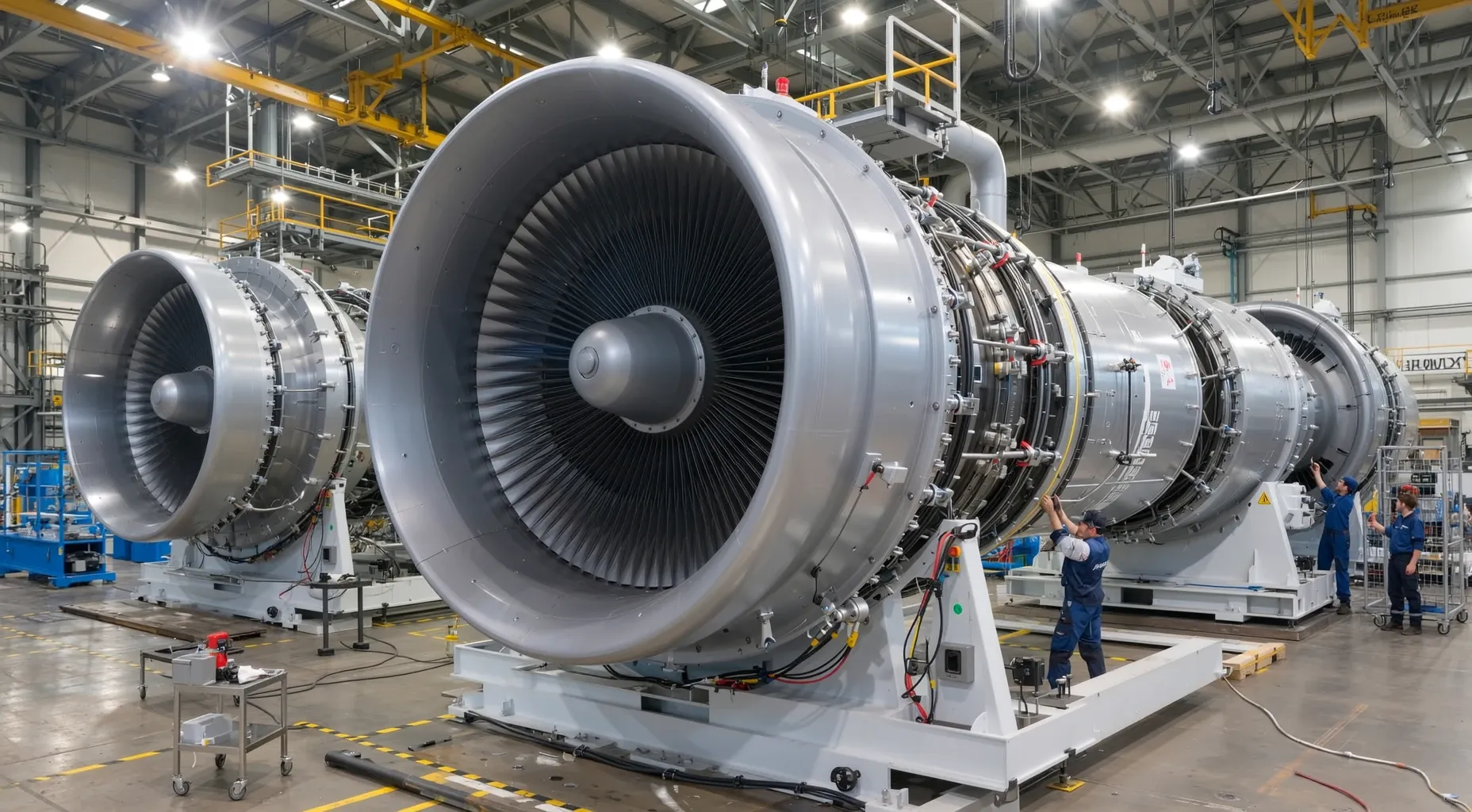
Fabricación de Unidades de Turbina y Grupo Generador de Turbina
Descripción
Los establecimientos dentro de este sector se especializan en la producción de turbinas mecánicas, excluyendo las diseñadas para aeronaves, así como en el ensamblaje de unidades completas de turbina generador. Estas instalaciones operan a gran escala, a menudo utilizando complejas cadenas de suministro para obtener metales especializados, rodamientos de precisión y sistemas de control avanzados. Las actividades comerciales típicas incluyen mecanizado de alta tecnología, fundición, forja y pruebas de calidad rigurosas para garantizar que los componentes puedan soportar calor extremo, presión y velocidades de rotación en condiciones ambientales exigentes. La industria sirve a sectores de infraestructura crítica, incluyendo la generación de energía, la extracción de petróleo y gas, y los proyectos de energía renovable. Los operadores varían desde grandes conglomerados manufactureros globales que construyen enormes turbinas de gas y vapor para redes de servicios públicos hasta empresas de tamaño mediano centradas en aplicaciones industriales más pequeñas o generadores de turbinas eólicas. Estas empresas participan frecuentemente en ingeniería personalizada para satisfacer requisitos específicos de los clientes, gestionando contratos que abarcan años e implican una inversión de capital significativa. Su producción impacta directamente en la seguridad energética nacional y la productividad industrial, impulsando la innovación tecnológica en eficiencia térmica y durabilidad. El alcance de las operaciones a menudo se extiende a la prestación de servicios de mantenimiento posventa y la modernización de instalaciones existentes, asegurando una fiabilidad operativa continua en diversos entornos industriales.
Jerarquía
| Código | Título | Descripción |
|---|---|---|
| 33 | Fabricación Sector de 2 dígitos | El Sector en su Conjunto El sector manufacturero comprende establecimientos dedicados a la transformación mecánica, física o química de materiales, sustancias o componentes en nuevos productos. El ensamblaje de piezas de componentes de productos manufacturados se considera manufactura, excepto en casos en que la actividad se clasifica apropiadamente en el Sector 23, Construcción. Los establecimientos del sector manufacturero a menudo se describen como plantas, fábricas o molinos y característicamente utilizan máquinas accionadas por energía y equipos de manipulación de materiales. Sin embargo, también pueden incluirse en este sector los establecimientos que transforman materiales o sustancias en nuevos productos a mano o en el hogar del trabajador y aquellos dedicados a la venta al público de productos elaborados en las mismas instalaciones desde donde se venden, como panaderías, tiendas de dulces y sastrerías a medida. Los establecimientos manufactureros pueden procesar materiales o pueden contratar con otros establecimientos para procesar sus materiales por ellos. Ambos tipos de establecimientos se incluyen en la manufactura. Las industrias seleccionadas en el sector manufacturero se componen únicamente de establecimientos que procesan materiales para otros establecimientos por contrato o tarifa. Más allá de estas industrias dedicadas a la manufactura por contrato, los establecimientos que procesan materiales para otros establecimientos se clasifican generalmente en la industria manufacturera de los materiales procesados. Los materiales, sustancias o componentes transformados por los establecimientos manufactureros son materias primas que son productos de la agricultura, la silvicultura, la pesca, la minería o la cantería, así como productos de otros establecimientos manufactureros. Los materiales utilizados pueden comprarse directamente a los productores, obtenerse a través de canales comerciales habituales o asegurarse sin recurrir al mercado transfiriendo el producto de un establecimiento a otro, bajo la misma propiedad. El nuevo producto de un establecimiento manufacturero puede estar terminado en el sentido de que está listo para su utilización o consumo, o puede estar semielaborado para convertirse en una entrada para un establecimiento dedicado a una fabricación posterior. Por ejemplo, el producto de la refinería de alúmina es la entrada utilizada en la producción primaria de aluminio; el aluminio primario es la entrada para una planta de laminación de alambre de aluminio; y el alambre de aluminio es la entrada para un establecimiento de fabricación de productos de alambre fabricado. Los subsectores en el sector manufacturero generalmente reflejan procesos de producción distintos relacionados con las entradas de materiales, el equipo de producción y las habilidades de los empleados. En el área de la maquinaria, donde el ensamblaje es una actividad clave, las piezas y accesorios para productos manufacturados se clasifican en la industria del artículo manufacturado terminado cuando se fabrican para venta separada. Por ejemplo, un accesorio para una pieza de maquinaria de metalurgia se clasificaría con la maquinaria de metalurgia. Sin embargo, las entradas de componentes de otros establecimientos manufactureros se clasifican en función de la función de producción del fabricante del componente. Por ejemplo, los componentes electrónicos se clasifican en el Subsector 334, Fabricación de Productos Electrónicos y de Computación, y los estampados se clasifican en el Subsector 332, Fabricación de Productos Metálicos Fabricados. Los establecimientos manufactureros a menudo realizan una o más actividades que se clasifican fuera del sector manufacturero de NAICS. Por ejemplo, casi toda la manufactura tiene alguna operación de investigación y desarrollo o administrativa interna, como contabilidad, nóminas o gestión. Estos servicios internos se tratan de la misma manera que las actividades de manufactura internas. Cuando los servicios son proporcionados por establecimientos separados, se clasifican en el sector de NAICS donde dichos servicios son primarios, no en manufactura. Los límites de la manufactura y de los otros sectores del sistema de clasificación pueden ser algo borrosos. Los establecimientos del sector manufacturero se dedican a la transformación de materiales en nuevos productos. Su producción es un nuevo producto. Sin embargo, la definición de lo que constituye un nuevo producto puede ser algo subjetiva. Como aclaración, las siguientes actividades se consideran manufactura en NAICS: <table width=100%><tr><td width=10%> </td><td><dl><dt style='padding-left: 10px; text-indent: -10px;'>Envasado y pasteurización de leche;</dt><dt style='padding-left: 10px; text-indent: -10px;'>Envasado y procesamiento de agua;</dt><dt style='padding-left: 10px; text-indent: -10px;'>Empaque de pescado fresco (descascar ostras, filetear pescado);</dt><dt style='padding-left: 10px; text-indent: -10px;'>Trabajos de confección (asignación de materiales a fábricas o talleres por contrato para fabricación u otras operaciones por contrato) así como contratación de materiales propiedad de otros;</dt><dt style='padding-left: 10px; text-indent: -10px;'>Impresión y actividades relacionadas;</dt><dt style='padding-left: 10px; text-indent: -10px;'>Producción de concreto premezclado;</dt><dt style='padding-left: 10px; text-indent: -10px;'>Conversión de cuero;</dt><dt style='padding-left: 10px; text-indent: -10px;'>Pulido de lentes a prescripción;</dt><dt style='padding-left: 10px; text-indent: -10px;'>Preservación de madera;</dt><dt style='padding-left: 10px; text-indent: -10px;'>Trabajo lapidario para el comercio;</dt></dl></td><td width=10%> </td><td><dl><dt style='padding-left: 10px; text-indent: -10px;'>Electrochapado, galvanoplastia, tratamiento térmico de metales y pulido para el comercio;</dt><dt style='padding-left: 10px; text-indent: -10px;'>Fabricación de letreros y exhibiciones publicitarias;</dt><dt style='padding-left: 10px; text-indent: -10px;'>Reconstrucción o remanufactura de maquinaria (es decir, piezas de automóviles);</dt><dt style='padding-left: 10px; text-indent: -10px;'>Fabricación de viviendas prefabricadas (es decir, casas móviles) o edificios prefabricados, ya sea ensamblando/erigiendo en el sitio del cliente o no;</dt><dt style='padding-left: 10px; text-indent: -10px;'>Reparación y renovación de buques;</dt><dt style='padding-left: 10px; text-indent: -10px;'>Talleres mecánicos; y</dt><dt style='padding-left: 10px; text-indent: -10px;'>Recauchutado de neumáticos.</dt></dl></td><td width=10%> </td></tr></table> Por el contrario, existen actividades que a veces se consideran manufactura, pero que para NAICS se clasifican en otro sector (es decir, no se clasifican como manufactura). Estas incluyen: 1. La tala, clasificada en el Sector 11, Agricultura, Silvicultura, Pesca y Caza, se considera una operación de cosecha; 2. El beneficio de minerales y otros minerales, clasificado en el Sector 21, Minería, Cantería y Extracción de Petróleo y Gas, se considera parte de la actividad minera; 3. La construcción de estructuras, el ensamblaje de edificios prefabricados y la fabricación en el sitio de construcción por contratistas se clasifican en el Sector 23, Construcción; 4. La ruptura de lotes y la reventa en lotes más pequeños, incluyendo el envasado, reempaquetado o embotellado de productos, como licores o productos químicos; el ensamblaje y venta de computadoras a medida; la clasificación y reventa de chatarra; la mezcla y venta de pinturas bajo pedido del cliente; y el corte de metales bajo pedido del cliente para reventa se clasifican en el Sector 42, Comercio al por mayor, o en el Sector 44-45, Comercio al por menor; y 5. La publicación y la actividad combinada de publicación e impresión, clasificada en el Sector 51, Información, transforman la información en un producto cuyo valor para el consumidor reside en el contenido de la información, no en el formato en que se distribuye (es decir, el libro o el disco compacto de software). |
| 333 | Fabricación de Maquinaria Subsector de 3 dígitos | Las industrias del subsector de fabricación de maquinaria crean productos finales que aplican fuerza mecánica, por ejemplo, la aplicación de engranajes y palancas, para realizar un trabajo. Algunos procesos importantes para la fabricación de maquinaria son forjado, estampado, doblado, conformado y mecanizado, que se utilizan para dar forma a piezas individuales de metal. Procesos como la soldadura y el ensamblaje se utilizan para unir piezas separadas. Aunque estos procesos son similares a los utilizados en establecimientos de fabricación de metales, la fabricación de maquinaria es diferente porque típicamente emplea múltiples procesos de conformado de metales en la fabricación de las diversas partes de la máquina. Además, las operaciones de ensamblaje complejas son una parte inherente del proceso de producción. En general, las consideraciones de diseño son muy importantes en la producción de maquinaria. Los establecimientos se especializan en fabricar maquinaria diseñada para aplicaciones particulares. Por lo tanto, el diseño se considera parte del proceso de producción con el fin de implementar NAICS. La estructura NAICS refleja esto al definir industrias y grupos industriales que fabrican maquinaria para diferentes aplicaciones. Existe una distinción amplia entre la maquinaria que se utiliza generalmente en una variedad de aplicaciones industriales (es decir, maquinaria de propósito general) y la maquinaria que está diseñada para usarse en una industria en particular (es decir, maquinaria de propósito especial). Tres grupos industriales consisten en maquinaria de propósito especial: Fabricación de Maquinaria Agrícola, de Construcción y Minera; Fabricación de Maquinaria Industrial; y Fabricación de Maquinaria para la Industria Comercial y de Servicios. Los otros grupos industriales fabrican maquinaria de propósito general: Fabricación de Equipos de Ventilación, Calefacción, Aire Acondicionado y Refrigeración Comercial; Fabricación de Maquinaria de Metalurgia; Fabricación de Equipos de Motores, Turbinas y Transmisión de Potencia; y Fabricación de Otra Maquinaria de Propósito General. |
| 3336 | Fabricación de Equipos de Motores, Turbinas y Transmisión de Potencia Grupo industrial de 4 dígitos | Las industrias del subsector de fabricación de maquinaria crean productos finales que aplican fuerza mecánica, por ejemplo, la aplicación de engranajes y palancas, para realizar un trabajo. Algunos procesos importantes para la fabricación de maquinaria son forjado, estampado, doblado, conformado y mecanizado, que se utilizan para dar forma a piezas individuales de metal. Procesos como la soldadura y el ensamblaje se utilizan para unir piezas separadas. Aunque estos procesos son similares a los utilizados en establecimientos de fabricación de metales, la fabricación de maquinaria es diferente porque típicamente emplea múltiples procesos de conformado de metales en la fabricación de las diversas partes de la máquina. Además, las operaciones de ensamblaje complejas son una parte inherente del proceso de producción. En general, las consideraciones de diseño son muy importantes en la producción de maquinaria. Los establecimientos se especializan en fabricar maquinaria diseñada para aplicaciones particulares. Por lo tanto, el diseño se considera parte del proceso de producción con el fin de implementar NAICS. La estructura NAICS refleja esto al definir industrias y grupos industriales que fabrican maquinaria para diferentes aplicaciones. Existe una distinción amplia entre la maquinaria que se utiliza generalmente en una variedad de aplicaciones industriales (es decir, maquinaria de propósito general) y la maquinaria que está diseñada para usarse en una industria en particular (es decir, maquinaria de propósito especial). Tres grupos industriales consisten en maquinaria de propósito especial: Fabricación de Maquinaria Agrícola, de Construcción y Minera; Fabricación de Maquinaria Industrial; y Fabricación de Maquinaria para la Industria Comercial y de Servicios. Los otros grupos industriales fabrican maquinaria de propósito general: Fabricación de Equipos de Ventilación, Calefacción, Aire Acondicionado y Refrigeración Comercial; Fabricación de Maquinaria de Metalurgia; Fabricación de Equipos de Motores, Turbinas y Transmisión de Potencia; y Fabricación de Otra Maquinaria de Propósito General. |
| 33361 | Fabricación de Equipos de Motores, Turbinas y Transmisión de Potencia Industria NAICS de 5 dígitos | Esta industria comprende establecimientos dedicados principalmente a la fabricación de turbinas, equipos de transmisión de potencia y motores de combustión interna (excepto automotriz de gasolina y aeronaves). Ejemplos ilustrativos: Fabricación de embragues y frenos (excepto controles industriales electromagnéticos, vehículos motorizados) Fabricación de motores diésel y semidiésel Fabricación de motores fuera de borda eléctricos Fabricación de motores de combustión interna para sistemas de tracción híbrida (excepto automotriz) Fabricación de cojinetes lisos (excepto motores de combustión interna) Fabricación de poleas de transmisión de potencia Fabricación de bujes lisos (excepto motores de combustión interna) Fabricación de cambiadores de velocidad (es decir, equipos de transmisión de potencia) Fabricación de reductores de velocidad (es decir, equipos de transmisión de potencia) Fabricación de unidades de grupos generadores de turbinas Fabricación de juntas universales (excepto aeronaves, vehículos motorizados) |
| 333611 | Fabricación de Unidades de Turbina y Grupo Generador de Turbina Detalle de EE. UU. de 6 dígitos | Los establecimientos dentro de este sector se especializan en la producción de turbinas mecánicas, excluyendo las diseñadas para aeronaves, así como en el ensamblaje de unidades completas de turbina generador. Estas instalaciones operan a gran escala, a menudo utilizando complejas cadenas de suministro para obtener metales especializados, rodamientos de precisión y sistemas de control avanzados. Las actividades comerciales típicas incluyen mecanizado de alta tecnología, fundición, forja y pruebas de calidad rigurosas para garantizar que los componentes puedan soportar calor extremo, presión y velocidades de rotación en condiciones ambientales exigentes. La industria sirve a sectores de infraestructura crítica, incluyendo la generación de energía, la extracción de petróleo y gas, y los proyectos de energía renovable. Los operadores varían desde grandes conglomerados manufactureros globales que construyen enormes turbinas de gas y vapor para redes de servicios públicos hasta empresas de tamaño mediano centradas en aplicaciones industriales más pequeñas o generadores de turbinas eólicas. Estas empresas participan frecuentemente en ingeniería personalizada para satisfacer requisitos específicos de los clientes, gestionando contratos que abarcan años e implican una inversión de capital significativa. Su producción impacta directamente en la seguridad energética nacional y la productividad industrial, impulsando la innovación tecnológica en eficiencia térmica y durabilidad. El alcance de las operaciones a menudo se extiende a la prestación de servicios de mantenimiento posventa y la modernización de instalaciones existentes, asegurando una fiabilidad operativa continua en diversos entornos industriales. |
¿Necesitas una plataforma de cadena de suministro adaptada a esta industria?
Usa esta clasificación NAICS como punto de partida y luego conéctala con los flujos de trabajo de Item para inventario, almacenes, gestión de pedidos, cumplimiento y transporte.
Referencias de clasificación
- 01La fabricación de turbinas para aeronaves se clasifica en la Industria de EE. UU. 336412, Fabricación de motores y piezas de motores de aeronaves; y
- 02La fabricación de generadores o grupos electrógenos de motores primarios (excepto turbinas) se clasifica en la Industria de EE. UU. 335312, Fabricación de motores y generadores.
Elementos de índice
Fabricación de unidades de grupos electrógenos de turbina de gas
Fabricación de turbinas de gas (excepto aeronaves)
Fabricación de grupos electrógenos, turbina (p. ej., gas, hidráulica, vapor)
Fabricación de reguladores de vapor
Fabricación de unidades de grupos electrógenos de turbina hidráulica
Fabricación de turbinas hidráulicas
Fabricación de grupos motor-generador, turbogeneradores
Fabricación de unidades de grupos electrógenos de turbina de vapor
Fabricación de turbinas de vapor
Fabricación de unidades de grupos electrógenos de turbina
Fabricación de turbinas (excepto aeronaves)
Fabricación de turbinas hidráulicas
Fabricación de grupos electrógenos de turbina eólica
Fabricación de turbinas eólicas (es decir, molinos de viento)
Fabricación de molinos de viento, generación de energía eléctrica
Cómo puede ayudar Item
Item.com WMS optimiza los diseños de almacenes de turbinas para equipos pesados mientras gestiona inventarios complejos para unidades de grupos electrógenos.
El software de gestión de patio coordina la logística de entrada y salida para grandes envíos de turbinas de vapor en diversos sitios industriales.
Las herramientas de envío optimizan las operaciones de carga para generadores de turbinas eólicas de gran tamaño, asegurando la entrega a tiempo en los sitios de construcción de centrales eléctricas.
Herramientas de Item.com
Recursos externos
NAICS 333611 Descripción y Detalle
Página oficial del Census que detalla la fabricación de turbinas y unidades de generador de turbina, incluyendo tipos de vapor, hidráulico, gas y eólico.
Recursos para Pequeñas Empresas
Guía de la SBA que define los criterios de pequeña empresa relevantes para fabricantes de turbinas y sectores de maquinaria relacionados.
Datos de la Comisión Federal Reguladora de Energía
Informe estadístico de FERC que proporciona datos de la industria sobre la generación de electricidad y el rendimiento de las turbinas relevantes para este sector.
