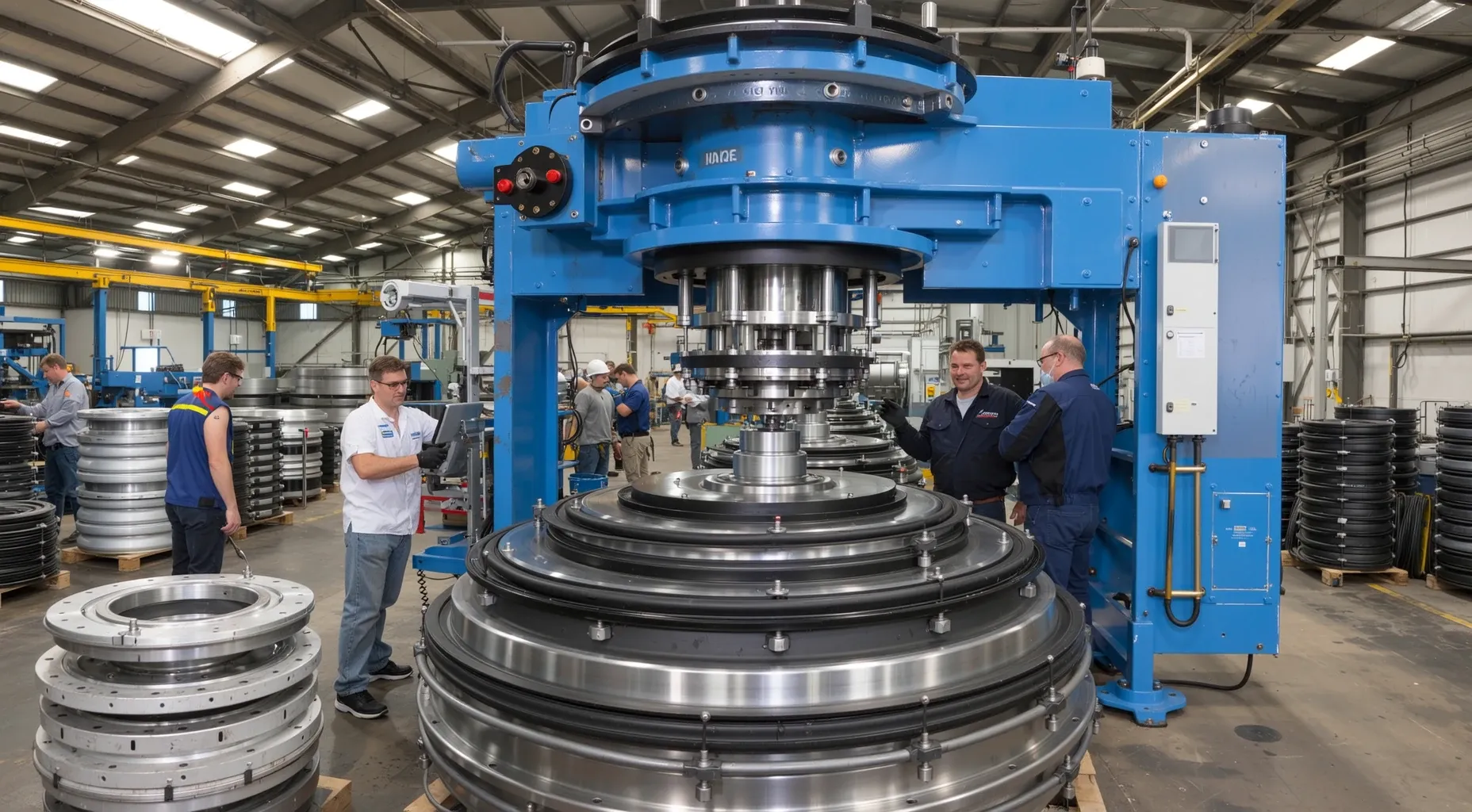
Fabricación de Juntas, Empaques y Dispositivos de Sellado
Descripción
Los establecimientos en este sector manufacturero se dedican a producir componentes esenciales que previenen fugas de fluidos y gases en diversas industrias. Estas instalaciones fabrican juntas, elementos de empaquetadura y dispositivos de sellado utilizando una amplia gama de materiales que incluyen metal, caucho, plástico, fibra de vidrio y sustancias compuestas. Las actividades comerciales típicas incluyen la adquisición de materias primas, procesos de mezcla y moldeo, tratamiento térmico, mecanizado, ensamblaje y pruebas rigurosas de control de calidad para cumplir con estrictos estándares industriales. La producción abarca desde sellos estáticos simples para maquinaria general hasta sellos dinámicos complejos diseñados para entornos de alta presión o temperaturas extremas encontrados en aplicaciones aeroespaciales, de petróleo y gas, petroquímicas y de generación de energía. Los operadores en este campo varían ampliamente en su estructura y complejidad operativa. Los pequeños talleres familiares a menudo se centran en diseños personalizados y aplicaciones de nicho para fabricantes de equipos específicos, mientras que las grandes corporaciones gestionan instalaciones de producción en masa capaces de manejar pedidos de gran volumen para mercados globales. Muchas empresas integran sus capacidades de fabricación con equipos de investigación y desarrollo para crear tecnologías de sellado patentadas que ofrecen una durabilidad superior o resistencia a agentes corrosivos específicos. La escala de las operaciones puede extenderse desde contratistas independientes que atienden a contratistas locales hasta entidades multinacionales con plantas de fabricación en todo el mundo. En consecuencia, el sector abarca una diversa gama de negocios que suministran infraestructura crítica para procesos industriales, sistemas automotrices y equipos industriales al garantizar la integridad de la contención y la eficiencia operativa.
Jerarquía
| Código | Título | Descripción |
|---|---|---|
| 33 | Fabricación Sector de 2 dígitos | El Sector en su Conjunto El sector manufacturero comprende establecimientos dedicados a la transformación mecánica, física o química de materiales, sustancias o componentes en nuevos productos. El ensamblaje de piezas de componentes de productos manufacturados se considera manufactura, excepto en casos en que la actividad se clasifica apropiadamente en el Sector 23, Construcción. Los establecimientos del sector manufacturero a menudo se describen como plantas, fábricas o molinos y característicamente utilizan máquinas accionadas por energía y equipos de manipulación de materiales. Sin embargo, también pueden incluirse en este sector los establecimientos que transforman materiales o sustancias en nuevos productos a mano o en el hogar del trabajador y aquellos dedicados a la venta al público de productos elaborados en las mismas instalaciones desde donde se venden, como panaderías, tiendas de dulces y sastrerías a medida. Los establecimientos manufactureros pueden procesar materiales o pueden contratar con otros establecimientos para procesar sus materiales por ellos. Ambos tipos de establecimientos se incluyen en la manufactura. Las industrias seleccionadas en el sector manufacturero se componen únicamente de establecimientos que procesan materiales para otros establecimientos por contrato o tarifa. Más allá de estas industrias dedicadas a la manufactura por contrato, los establecimientos que procesan materiales para otros establecimientos se clasifican generalmente en la industria manufacturera de los materiales procesados. Los materiales, sustancias o componentes transformados por los establecimientos manufactureros son materias primas que son productos de la agricultura, la silvicultura, la pesca, la minería o la cantería, así como productos de otros establecimientos manufactureros. Los materiales utilizados pueden comprarse directamente a los productores, obtenerse a través de canales comerciales habituales o asegurarse sin recurrir al mercado transfiriendo el producto de un establecimiento a otro, bajo la misma propiedad. El nuevo producto de un establecimiento manufacturero puede estar terminado en el sentido de que está listo para su utilización o consumo, o puede estar semielaborado para convertirse en una entrada para un establecimiento dedicado a una fabricación posterior. Por ejemplo, el producto de la refinería de alúmina es la entrada utilizada en la producción primaria de aluminio; el aluminio primario es la entrada para una planta de laminación de alambre de aluminio; y el alambre de aluminio es la entrada para un establecimiento de fabricación de productos de alambre fabricado. Los subsectores en el sector manufacturero generalmente reflejan procesos de producción distintos relacionados con las entradas de materiales, el equipo de producción y las habilidades de los empleados. En el área de la maquinaria, donde el ensamblaje es una actividad clave, las piezas y accesorios para productos manufacturados se clasifican en la industria del artículo manufacturado terminado cuando se fabrican para venta separada. Por ejemplo, un accesorio para una pieza de maquinaria de metalurgia se clasificaría con la maquinaria de metalurgia. Sin embargo, las entradas de componentes de otros establecimientos manufactureros se clasifican en función de la función de producción del fabricante del componente. Por ejemplo, los componentes electrónicos se clasifican en el Subsector 334, Fabricación de Productos Electrónicos y de Computación, y los estampados se clasifican en el Subsector 332, Fabricación de Productos Metálicos Fabricados. Los establecimientos manufactureros a menudo realizan una o más actividades que se clasifican fuera del sector manufacturero de NAICS. Por ejemplo, casi toda la manufactura tiene alguna operación de investigación y desarrollo o administrativa interna, como contabilidad, nóminas o gestión. Estos servicios internos se tratan de la misma manera que las actividades de manufactura internas. Cuando los servicios son proporcionados por establecimientos separados, se clasifican en el sector de NAICS donde dichos servicios son primarios, no en manufactura. Los límites de la manufactura y de los otros sectores del sistema de clasificación pueden ser algo borrosos. Los establecimientos del sector manufacturero se dedican a la transformación de materiales en nuevos productos. Su producción es un nuevo producto. Sin embargo, la definición de lo que constituye un nuevo producto puede ser algo subjetiva. Como aclaración, las siguientes actividades se consideran manufactura en NAICS: <table width=100%><tr><td width=10%> </td><td><dl><dt style='padding-left: 10px; text-indent: -10px;'>Envasado y pasteurización de leche;</dt><dt style='padding-left: 10px; text-indent: -10px;'>Envasado y procesamiento de agua;</dt><dt style='padding-left: 10px; text-indent: -10px;'>Empaque de pescado fresco (descascar ostras, filetear pescado);</dt><dt style='padding-left: 10px; text-indent: -10px;'>Trabajos de confección (asignación de materiales a fábricas o talleres por contrato para fabricación u otras operaciones por contrato) así como contratación de materiales propiedad de otros;</dt><dt style='padding-left: 10px; text-indent: -10px;'>Impresión y actividades relacionadas;</dt><dt style='padding-left: 10px; text-indent: -10px;'>Producción de concreto premezclado;</dt><dt style='padding-left: 10px; text-indent: -10px;'>Conversión de cuero;</dt><dt style='padding-left: 10px; text-indent: -10px;'>Pulido de lentes a prescripción;</dt><dt style='padding-left: 10px; text-indent: -10px;'>Preservación de madera;</dt><dt style='padding-left: 10px; text-indent: -10px;'>Trabajo lapidario para el comercio;</dt></dl></td><td width=10%> </td><td><dl><dt style='padding-left: 10px; text-indent: -10px;'>Electrochapado, galvanoplastia, tratamiento térmico de metales y pulido para el comercio;</dt><dt style='padding-left: 10px; text-indent: -10px;'>Fabricación de letreros y exhibiciones publicitarias;</dt><dt style='padding-left: 10px; text-indent: -10px;'>Reconstrucción o remanufactura de maquinaria (es decir, piezas de automóviles);</dt><dt style='padding-left: 10px; text-indent: -10px;'>Fabricación de viviendas prefabricadas (es decir, casas móviles) o edificios prefabricados, ya sea ensamblando/erigiendo en el sitio del cliente o no;</dt><dt style='padding-left: 10px; text-indent: -10px;'>Reparación y renovación de buques;</dt><dt style='padding-left: 10px; text-indent: -10px;'>Talleres mecánicos; y</dt><dt style='padding-left: 10px; text-indent: -10px;'>Recauchutado de neumáticos.</dt></dl></td><td width=10%> </td></tr></table> Por el contrario, existen actividades que a veces se consideran manufactura, pero que para NAICS se clasifican en otro sector (es decir, no se clasifican como manufactura). Estas incluyen: 1. La tala, clasificada en el Sector 11, Agricultura, Silvicultura, Pesca y Caza, se considera una operación de cosecha; 2. El beneficio de minerales y otros minerales, clasificado en el Sector 21, Minería, Cantería y Extracción de Petróleo y Gas, se considera parte de la actividad minera; 3. La construcción de estructuras, el ensamblaje de edificios prefabricados y la fabricación en el sitio de construcción por contratistas se clasifican en el Sector 23, Construcción; 4. La ruptura de lotes y la reventa en lotes más pequeños, incluyendo el envasado, reempaquetado o embotellado de productos, como licores o productos químicos; el ensamblaje y venta de computadoras a medida; la clasificación y reventa de chatarra; la mezcla y venta de pinturas bajo pedido del cliente; y el corte de metales bajo pedido del cliente para reventa se clasifican en el Sector 42, Comercio al por mayor, o en el Sector 44-45, Comercio al por menor; y 5. La publicación y la actividad combinada de publicación e impresión, clasificada en el Sector 51, Información, transforman la información en un producto cuyo valor para el consumidor reside en el contenido de la información, no en el formato en que se distribuye (es decir, el libro o el disco compacto de software). |
| 339 | Fabricación Miscelánea Subsector de 3 dígitos | Las industrias del subsector de fabricación miscelánea producen una amplia gama de productos que no pueden clasificarse fácilmente en subsectores NAICS específicos de la fabricación. Los procesos utilizados por estos establecimientos varían significativamente, tanto entre como dentro de las industrias. Por ejemplo, se utilizan una variedad de procesos de fabricación en la fabricación de artículos deportivos y atléticos que incluyen productos como raquetas de tenis y pelotas de golf. Los procesos para estos productos son diferentes entre sí, y los procesos difieren significativamente de los procesos de fabricación utilizados para hacer muñecas o juguetes, el fundido y moldeado de metales preciosos para hacer joyas, y el doblado, conformado y ensamblaje utilizados en la fabricación de productos médicos. Las industrias de este subsector se definen por lo que se fabrica en lugar de cómo se fabrica. Aunque los establecimientos individuales podrían clasificarse apropiadamente en otra parte de la estructura NAICS, se mantuvieron estas industrias basadas en productos por continuidad histórica. En la mayoría de los casos, ningún proceso o material predomina para una industria. Los establecimientos de este subsector fabrican productos tan diversos como equipos y suministros médicos, joyería, artículos deportivos, juguetes y artículos de oficina. |
| 3399 | Otros Fabricados Misceláneos Grupo industrial de 4 dígitos | Este grupo industrial comprende establecimientos dedicados principalmente a la fabricación diversa, como la fabricación de joyería y platería, la fabricación de artículos deportivos y atléticos, la fabricación de muñecas, juguetes y juegos, la fabricación de artículos de oficina (excepto papel), la fabricación de letreros y toda otra fabricación diversa. |
| 33999 | Fabricación Miscelánea de Otros Industria NAICS de 5 dígitos | Esta industria comprende establecimientos dedicados principalmente a la fabricación de manufacturas diversas (excepto equipos y suministros médicos, joyería y platería, artículos deportivos y atléticos, muñecas, juguetes, juegos, artículos de oficina y letreros). Ejemplos ilustrativos: Fabricación de árboles de Navidad artificiales Fabricación de ataúdes y cajas funerarias Fabricación de velas Fabricación de máquinas de recreo operadas con monedas o tarjetas (excepto jukebox) Fabricación de cigarrillos electrónicos Fabricación de trapeadores de suelo y de polvo Fabricación de instrumentos musicales (excepto juguetes) Fabricación de sujetadores, botones, agujas y alfileres (excepto metales preciosos o piedras y gemas preciosas y semipreciosas) Fabricación de juntas, empaques y dispositivos de sellado Fabricación de extintores portátiles Fabricación de paraguas |
| 339991 | Fabricación de Juntas, Empaques y Dispositivos de Sellado Detalle de EE. UU. de 6 dígitos | Los establecimientos en este sector manufacturero se dedican a producir componentes esenciales que previenen fugas de fluidos y gases en diversas industrias. Estas instalaciones fabrican juntas, elementos de empaquetadura y dispositivos de sellado utilizando una amplia gama de materiales que incluyen metal, caucho, plástico, fibra de vidrio y sustancias compuestas. Las actividades comerciales típicas incluyen la adquisición de materias primas, procesos de mezcla y moldeo, tratamiento térmico, mecanizado, ensamblaje y pruebas rigurosas de control de calidad para cumplir con estrictos estándares industriales. La producción abarca desde sellos estáticos simples para maquinaria general hasta sellos dinámicos complejos diseñados para entornos de alta presión o temperaturas extremas encontrados en aplicaciones aeroespaciales, de petróleo y gas, petroquímicas y de generación de energía. Los operadores en este campo varían ampliamente en su estructura y complejidad operativa. Los pequeños talleres familiares a menudo se centran en diseños personalizados y aplicaciones de nicho para fabricantes de equipos específicos, mientras que las grandes corporaciones gestionan instalaciones de producción en masa capaces de manejar pedidos de gran volumen para mercados globales. Muchas empresas integran sus capacidades de fabricación con equipos de investigación y desarrollo para crear tecnologías de sellado patentadas que ofrecen una durabilidad superior o resistencia a agentes corrosivos específicos. La escala de las operaciones puede extenderse desde contratistas independientes que atienden a contratistas locales hasta entidades multinacionales con plantas de fabricación en todo el mundo. En consecuencia, el sector abarca una diversa gama de negocios que suministran infraestructura crítica para procesos industriales, sistemas automotrices y equipos industriales al garantizar la integridad de la contención y la eficiencia operativa. |
¿Necesitas una plataforma de cadena de suministro adaptada a esta industria?
Usa esta clasificación NAICS como punto de partida y luego conéctala con los flujos de trabajo de Item para inventario, almacenes, gestión de pedidos, cumplimiento y transporte.
Elementos de índice
Fabricación de sellos mecánicos coaxiales
Fabricación de empaques de compresión
Fabricación de juntas, empaques y dispositivos de sellado
Fabricación de juntas
Fabricación de sellos de grasa
Fabricación de empaques y sellos moldeados
Fabricación de sellos de aceite
Fabricación de sellos de grasa u aceite
Cómo puede ayudar Item
Gestiona el complejo inventario de diversas materias primas y dispositivos de empaquetadura/juntas terminados con un seguimiento de lotes preciso para prevenir confusiones en aplicaciones de sellado críticas.
Optimiza los ciclos de pedido a entrega agilizando el enrutamiento para piezas de alto volumen y bajo valor que a menudo requieren embalaje especializado o dimensionamiento personalizado para equipos industriales.
Predice las fluctuaciones de la demanda para proyectos industriales estacionales e identifica riesgos en los plazos de entrega de los proveedores para mantener niveles de inventario justo a tiempo en las líneas de fabricación.
Herramientas de Item.com
Recursos externos
Detalle NAICS de Census.gov
Definición y alcance oficiales de la Oficina del Censo de EE. UU. para NAICS 339991.
Asociación de Fabricantes de Juntas y Empaques (AGPM)
Una asociación comercial líder para fabricantes en la industria de dispositivos de empaquetadura, sellado y juntas, que proporciona recursos técnicos y datos de mercado.
Asociación Nacional de Fabricantes
El recurso oficial respaldado por el gobierno de EE. UU. que presenta detalles del código NAICS, estadísticas de la industria y orientación de fabricación para este sector.
Directorio de Fabricantes ThomasNet
Un directorio industrial que conecta empresas de fabricación de juntas y empaques con proveedores y clientes a través de información de contacto verificada.
