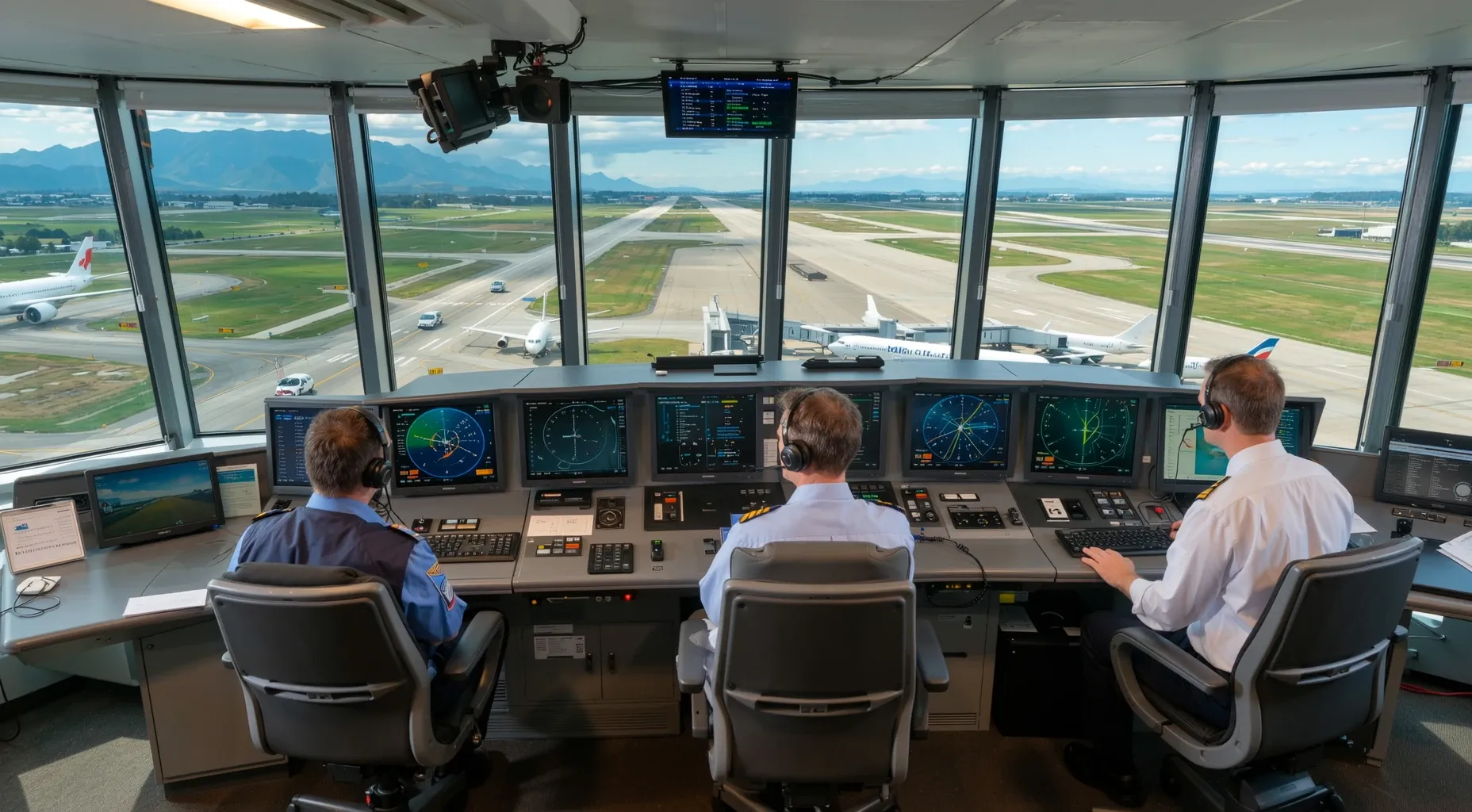
Air Traffic Control
Description
Establishments primarily engaged in air traffic control services play a critical role in ensuring the safety and efficiency of civilian aviation by regulating the flow of aircraft. These operations utilize advanced radar systems, communication networks, and sophisticated software to monitor, direct, and separate flights in high-density airspace. Their core function involves issuing instructions to pilots to maintain safe separation distances, manage landing sequences at busy airports, and handle flight clearances in enroute and terminal phases. Typical business activities focus on maintaining continuous surveillance and rapid decision-making capabilities to respond to weather conditions or air traffic emergencies. This sector encompasses various types of operators, including independent federal service providers, state-based authorities like the New York Air Traffic District, and private contractors operating under government agreements. The scope of these services extends from the immediate vicinity of airports to vast sectors of national airspace, covering both domestic and international routes. While historically limited to commercial and general aviation, the industry continues to adapt to emerging trends in unmanned aerial systems and increased traffic volumes. These essential facilities represent a significant portion of the transportation infrastructure, requiring constant investment in technology and personnel to meet the rigorous standards demanded by the aviation community worldwide.
Hierarchy
| Code | Title | Description |
|---|---|---|
| 48 | Transportation and Warehousing 2-digit sector | The Sector as a Whole The Transportation and Warehousing sector includes industries providing transportation of passengers and cargo, warehousing and storage for goods, scenic and sightseeing transportation, and support activities related to modes of transportation. Establishments in these industries use transportation equipment or transportation-related facilities as a productive asset. The type of equipment depends on the mode of transportation. The modes of transportation are air, rail, water, road, and pipeline. The Transportation and Warehousing sector distinguishes three basic types of activities: subsectors for each mode of transportation, a subsector for warehousing and storage, and a subsector for establishments providing support activities for transportation. In addition, there are subsectors for establishments that provide passenger transportation for scenic and sightseeing purposes, postal services, and courier services. A separate subsector for support activities is established in the sector because, first, support activities for transportation are inherently multimodal, such as freight transportation arrangement, or have multimodal aspects. Secondly, there are production process similarities among the support activity industries. One of the support activities identified in the Support Activities for Transportation subsector is the routine repair and maintenance of transportation equipment (e.g., aircraft at an airport, railroad rolling stock at a railroad terminal, or ships at a harbor or port facility). Such establishments do not perform complete overhauling or rebuilding of transportation equipment (i.e., periodic restoration of transportation equipment to original design specifications) or transportation equipment conversion (i.e., major modification to systems). An establishment that primarily performs factory (or shipyard) overhauls, rebuilding, or conversions of aircraft, railroad rolling stock, or ships is classified in Subsector 336, Transportation Equipment Manufacturing, according to the type of equipment. Many of the establishments in this sector often operate on networks, with physical facilities, labor forces, and equipment spread over an extensive geographic area. Warehousing establishments in this sector are distinguished from merchant wholesaling in that the warehouse establishments do not sell the goods. Excluded from this sector are establishments primarily engaged in providing travel agent, travel arrangement, and reservation services that support transportation establishments, hotels, other businesses, and government agencies. These establishments are classified in Sector 56, Administrative and Support and Waste Management and Remediation Services. Establishments primarily engaged in providing rental and leasing of transportation equipment without operator are classified in Subsector 532, Rental and Leasing Services. Establishments primarily engaged in providing medical care with transportation are classified in Sector 62, Health Care and Social Assistance. |
| 488 | Support Activities for Transportation 3-digit subsector | Industries in the Support Activities for Transportation subsector provide services which support transportation. These services may be provided to transportation carrier establishments or to the general public. This subsector includes a wide array of establishments, including air traffic control services, marine cargo handling, and motor vehicle towing. The Support Activities for Transportation subsector includes services to transportation, separated by type of mode serviced. The Support Activities for Rail Transportation industry includes services to the rail industry (e.g., railroad switching and terminal establishments). Ship repair and maintenance services not done in a shipyard are included in the Other Support Activities for Water Transportation industry. An example would be floating drydock services in a harbor. Excluded from this subsector are establishments primarily engaged in providing factory conversion and overhaul of transportation equipment, which are classified in Subsector 336, Transportation Equipment Manufacturing. Establishments primarily engaged in providing rental and leasing of transportation equipment without operator are classified in Subsector 532, Rental and Leasing Services. Also, establishments primarily engaged in providing travel arrangement and reservation services are classified in Industry Group 5615, Travel Arrangement and Reservation Services. |
| 4881 | Support Activities for Air Transportation 4-digit industry group | This industry group comprises establishments primarily engaged in providing services to the air transportation industry. These services include airport operation, servicing, repairing (except factory conversion and overhaul of aircraft), maintaining and storing aircraft, and ferrying aircraft. |
| 48811 | Airport Operations 5-digit NAICS industry | This industry comprises establishments primarily engaged in (1) operating international, national, or civil airports or public flying fields or (2) supporting airport operations (except special food services contractors), such as rental of hangar space, air traffic control (except military) services, baggage handling services, and cargo handling services. |
| 488111 | Air Traffic Control 6-digit U.S. detail | Establishments primarily engaged in air traffic control services play a critical role in ensuring the safety and efficiency of civilian aviation by regulating the flow of aircraft. These operations utilize advanced radar systems, communication networks, and sophisticated software to monitor, direct, and separate flights in high-density airspace. Their core function involves issuing instructions to pilots to maintain safe separation distances, manage landing sequences at busy airports, and handle flight clearances in enroute and terminal phases. Typical business activities focus on maintaining continuous surveillance and rapid decision-making capabilities to respond to weather conditions or air traffic emergencies. This sector encompasses various types of operators, including independent federal service providers, state-based authorities like the New York Air Traffic District, and private contractors operating under government agreements. The scope of these services extends from the immediate vicinity of airports to vast sectors of national airspace, covering both domestic and international routes. While historically limited to commercial and general aviation, the industry continues to adapt to emerging trends in unmanned aerial systems and increased traffic volumes. These essential facilities represent a significant portion of the transportation infrastructure, requiring constant investment in technology and personnel to meet the rigorous standards demanded by the aviation community worldwide. |
Need a supply chain stack that maps to this industry?
Use this NAICS classification as the starting point, then connect it to Item workflows across inventory, warehousing, order management, fulfillment, and transportation.
Classification References
- 01Establishments of the Armed Forces, including the National Guard, primarily engaged in providing military air traffic control services are classified in Industry 928110, National Security.
Index Items
Air traffic control services (except military)
How Item Can Help
Optimizes warehouse operations for spare aviation parts by automating inventory tracking and picking routes to reduce errors and delays in critical supply chains.
Enables real-time coordination across multiple carriers and vendors to streamline order fulfillment, ensuring timely delivery of aircraft components regardless of location.
Provides predictive analytics on part usage patterns to forecast demand accurately, allowing businesses to proactively reorder stock before air traffic control disruptions occur.
Item.com Tools
External Resources
Census.gov NAICS Detail
Official US Census Bureau definition and scope for NAICS 488111.
Federal Aviation Administration Air Traffic Organization
Official U.S. government page detailing Air Traffic Control services, training, and operations regulations.
National Air Traffic Controllers Association
Leading trade association for air traffic controllers providing advocacy, education, and industry news.
Global Air Traffic Control Directory
Directory listing worldwide air traffic control towers, facilities, and associated service providers.
