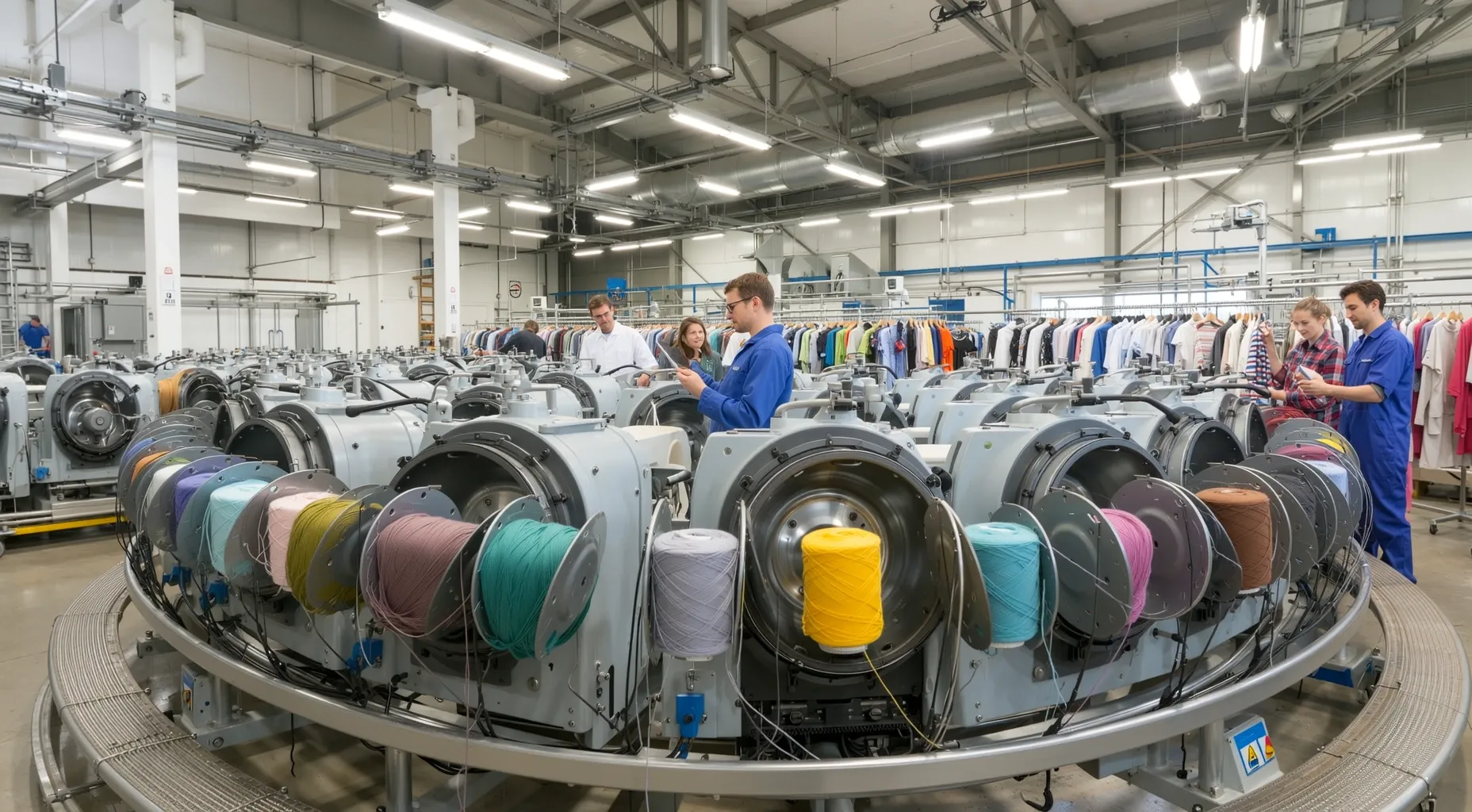
衣料品編み工場
Description
この産業は、主に衣料品を編むか、生地を編んでその後衣料品を製造する事業所で構成されています。アクセサリーを含む、衣料品やアクセサリーを編むことに従事する起業家としての機能を果たす卸売業者も含まれます。
Hierarchy
| Code | Title | Description |
|---|---|---|
| 31 | Manufacturing 2-digit sector | The Sector as a Whole The Manufacturing sector comprises establishments engaged in the mechanical, physical, or chemical transformation of materials, substances, or components into new products. The assembling of component parts of manufactured products is considered manufacturing, except in cases where the activity is appropriately classified in Sector 23, Construction. Establishments in the Manufacturing sector are often described as plants, factories, or mills and characteristically use power-driven machines and material handling equipment. However, establishments that transform materials or substances into new products by hand or in the worker's home and those engaged in selling to the general public products made on the same premises from which they are sold, such as bakeries, candy stores, and custom tailors, may also be included in this sector. Manufacturing establishments may process materials or may contract with other establishments to process their materials for them. Both types of establishments are included in manufacturing. Selected industries in the Manufacturing sector are comprised solely of establishments that process materials for other establishments on a contract or fee basis. Beyond these dedicated contract manufacturing industries, establishments that process materials for other establishments are generally classified in the Manufacturing industry of the processed materials. The materials, substances, or components transformed by manufacturing establishments are raw materials that are products of agriculture, forestry, fishing, mining, or quarrying as well as products of other manufacturing establishments. The materials used may be purchased directly from producers, obtained through customary trade channels, or secured without recourse to the market by transferring the product from one establishment to another, under the same ownership. The new product of a manufacturing establishment may be finished in the sense that it is ready for utilization or consumption, or it may be semi-finished to become an input for an establishment engaged in further manufacturing. For example, the product of the alumina refinery is the input used in the primary production of aluminum; primary aluminum is the input to an aluminum wire drawing plant; and aluminum wire is the input for a fabricated wire product manufacturing establishment. The subsectors in the Manufacturing sector generally reflect distinct production processes related to material inputs, production equipment, and employee skills. In the machinery area, where assembling is a key activity, parts and accessories for manufactured products are classified in the industry of the finished manufactured item when they are made for separate sale. For example, an attachment for a piece of metalworking machinery would be classified with metalworking machinery. However, component inputs from other manufacturing establishments are classified based on the production function of the component manufacturer. For example, electronic components are classified in Subsector 334, Computer and Electronic Product Manufacturing, and stampings are classified in Subsector 332, Fabricated Metal Product Manufacturing. Manufacturing establishments often perform one or more activities that are classified outside the Manufacturing sector of NAICS. For instance, almost all manufacturing has some captive research and development or administrative operations, such as accounting, payroll, or management. These captive services are treated the same as captive manufacturing activities. When the services are provided by separate establishments, they are classified in the NAICS sector where such services are primary, not in manufacturing. The boundaries of manufacturing and the other sectors of the classification system can be somewhat blurry. The establishments in the Manufacturing sector are engaged in the transformation of materials into new products. Their output is a new product. However, the definition of what constitutes a new product can be somewhat subjective. As clarification, the following activities are considered manufacturing in NAICS: <table width=100%><tr><td width=10%> </td><td><dl><dt style='padding-left: 10px; text-indent: -10px;'>Milk bottling and pasteurizing;</dt><dt style='padding-left: 10px; text-indent: -10px;'>Water bottling and processing;</dt><dt style='padding-left: 10px; text-indent: -10px;'>Fresh fish packaging (oyster<br/> shucking, fish filleting);</dt><dt style='padding-left: 10px; text-indent: -10px;'>Apparel jobbing (assigning<br/> materials to contract<br/> factories or shops for<br/> fabrication or other contract<br/> operations) as well as<br/> contracting on materials<br/> owned by others;</dt><dt style='padding-left: 10px; text-indent: -10px;'>Printing and related activities;</dt><dt style='padding-left: 10px; text-indent: -10px;'>Ready-mix concrete production;</dt><dt style='padding-left: 10px; text-indent: -10px;'>Leather converting;</dt><dt style='padding-left: 10px; text-indent: -10px;'>Grinding lenses to<br/> prescription;</dt><dt style='padding-left: 10px; text-indent: -10px;'>Wood preserving;</dt><dt style='padding-left: 10px; text-indent: -10px;'>Lapidary work for the trade;</dt></dl></td><td width=10%> </td><td><dl><dt style='padding-left: 10px; text-indent: -10px;'>Electroplating, plating, metal<br/> heat treating, and<br/> polishing for the trade;</dt><dt style='padding-left: 10px; text-indent: -10px;'>Fabricating signs and<br/> advertising displays;</dt><dt style='padding-left: 10px; text-indent: -10px;'>Rebuilding or remanufacturing<br/> machinery (i.e., automotive<br/> parts);</dt><dt style='padding-left: 10px; text-indent: -10px;'>Making manufactured homes<br/> (i.e., mobile homes) or<br/> prefabricated buildings,<br/> whether or not assembling/<br/> erecting at the customers'<br/> site;</dt><dt style='padding-left: 10px; text-indent: -10px;'>Ship repair and renovation;</dt><dt style='padding-left: 10px; text-indent: -10px;'>Machine shops; and</dt><dt style='padding-left: 10px; text-indent: -10px;'>Tire retreading.</dt></dl></td><td width=10%> </td></tr></table> Conversely, there are activities that are sometimes considered manufacturing, but which for NAICS are classified in another sector (i.e., not classified as manufacturing). They include: 1. Logging, classified in Sector 11, Agriculture, Forestry, Fishing and Hunting, is considered a harvesting operation; 2. Beneficiating ores and other minerals, classified in Sector 21, Mining, Quarrying, and Oil and Gas Extraction, is considered part of the activity of mining; 3. Constructing structures, assembling prefabricated buildings, and fabricating at the construction site by contractors are classified in Sector 23, Construction; 4. Breaking bulk and reselling in smaller lots, including packaging, repackaging, or bottling products, such as liquors or chemicals; assembling and selling computers on a custom basis; sorting and reselling scrap; mixing and selling paints to customer order; and cutting metals to customer order for resale are classified in Sector 42, Wholesale Trade, or Sector 44-45, Retail Trade; and 5. Publishing and the combined activity of publishing and printing, classified in Sector 51, Information, transform information into a product for which the value to the consumer lies in the information content, not in the format in which it is distributed (i.e., the book or software compact disc). |
| 315 | Apparel Knitting Mills 3-digit subsector | Industries in the Apparel Manufacturing subsector group establishments with two distinct manufacturing processes: (1) cut and sew (i.e., purchasing fabric and cutting and sewing to make a garment) and (2) the manufacture of garments in establishments that first knit fabric and then cut and sew the fabric into a garment. The Apparel Manufacturing subsector includes a diverse range of establishments manufacturing full lines of ready-to-wear apparel and custom apparel: apparel contractors, performing cutting or sewing operations on materials owned by others; jobbers, performing entrepreneurial functions involved in apparel manufacturing; and tailors, manufacturing custom garments for individual clients. Knitting fabric, when done alone, is classified in the Textile Mills subsector, but when knitting is combined with the production of complete garments, the activity is classified in the Apparel Manufacturing subsector. |
| 3151 | Apparel Knitting Mills 4-digit industry group | Industries in the Apparel Manufacturing subsector group establishments with two distinct manufacturing processes: (1) cut and sew (i.e., purchasing fabric and cutting and sewing to make a garment) and (2) the manufacture of garments in establishments that first knit fabric and then cut and sew the fabric into a garment. The Apparel Manufacturing subsector includes a diverse range of establishments manufacturing full lines of ready-to-wear apparel and custom apparel: apparel contractors, performing cutting or sewing operations on materials owned by others; jobbers, performing entrepreneurial functions involved in apparel manufacturing; and tailors, manufacturing custom garments for individual clients. Knitting fabric, when done alone, is classified in the Textile Mills subsector, but when knitting is combined with the production of complete garments, the activity is classified in the Apparel Manufacturing subsector. |
| 31512 | Apparel Knitting Mills 5-digit NAICS industry | See industry description for 315120. |
| 315120 | 衣料品編み工場 6-digit U.S. detail | この産業は、主に衣料品を編むか、生地を編んでその後衣料品を製造する事業所で構成されています。アクセサリーを含む、衣料品やアクセサリーを編むことに従事する起業家としての機能を果たす卸売業者も含まれます。 |
Need a supply chain stack that maps to this industry?
Use this NAICS classification as the starting point, then connect it to Item workflows across inventory, warehousing, order management, fulfillment, and transportation.
Classification References
- 01衣料、下着、およびナイトウェアの製造(購入した生地から)--は産業グループ3152、カット&ソーアウェア製造に分類されます。
- 02衣料製品のみの仕上げ--は産業313310、テキスタイルおよびファブリック仕上げ工場に分類されます。
- 03靴下ソックスの製造(購入した靴下から)--は産業316210、靴下製造に分類されます。
- 04外科用ヒソックの製造--は米国産業339113、外科用医療機器および供給品の製造に分類されます。
Index Items
アンクレット、透け素材の靴下またはソックス、編み物または編み物と仕上げ
スポーツウェア(アパレル編み物工場で製造)
スポーツソックス(編み物または編み物と仕上げ)
水着(アパレル編み物工場で製造)
バスローブ(アパレル編み物工場で製造)
ビーチウェア(アパレル編み物工場で製造)
ブラウス(アパレル編み物工場で製造)
ボディストッキング(アパレル編み物工場で製造)
男の子の靴下製造
ブリーフ、下着(アパレル編み物工場で製造)
かかとハイの透け素材の靴下(編み物または編み物と仕上げ)
キャップ(アパレル編み物工場で製造)
ケミース(アパレル編み物工場で製造)
子供の靴下製造
事務用の礼服(アパレル編み物工場で製造)
襟と袖セット(アパレル編み物工場で製造)
クルーソックス(編み物または編み物と仕上げ)
パンツ、アパレル(アパレル編み物工場で製造)
ドレスとセミドレス手袋(アパレル編み物工場で製造)
ドレス(アパレル編み物工場で製造)
手編みのドレス製造
エンブレムドレス(アパレル編み物工場で製造)
足袋、足の短い、編み物または編み物と仕上げ
女の子の靴下製造
手袋、編み物(アパレル編み物工場で製造)
帽子(アパレル編み物工場で製造)
靴下、透け素材、女性、ミセス、および子供の、フルレングスと膝丈、編み物または編み物と仕上げ
靴下、女性、子供、および赤ちゃんの、製造
ハウスコート(アパレル編み物工場で製造)
ジャケット(アパレル編み物工場で製造)
ジャージー(アパレル編み物工場で製造)
ジョギングスーツ(アパレル編み物工場で製造)
編み物手袋(アパレル編み物工場で製造)
レギンス(編み物または編み物と仕上げ)
レオタード(アパレル編み物工場で製造)
リラックス用のローブとドレス(アパレル編み物工場で製造)
メンズソックス(編み物または編み物と仕上げ)
ミトン、編み物(アパレル編み物工場で製造)
マフラー(アパレル編み物工場で製造)
ネクタイ(アパレル編み物工場で製造)
ネクタイ(アパレル編み物工場で製造)
ネギリー(アパレル編み物工場で製造)
ナイトガウン(アパレル編み物工場で製造)
ナイトシャツ(アパレル編み物工場で製造)
ナイトウェア(アパレル編み物工場で製造)
ナイロンの靴下、透け素材、女性、ミセス、および子供の、フルレングスと膝丈、編み物または編み物と仕上げ
ナイロン、透け素材、女性、ミセス、および子供の、フルレングスと膝丈、編み物または編み物と仕上げ
アパレル編み物工場で手編みのアウター
パジャマ(アパレル編み物工場で製造)
パンティー(アパレル編み物工場で製造)
パンツ、スポーツ、アパレル編み物工場で製造
パンツ、アウター、アパレル編み物工場で製造
パンティー、女性と子供の、編み物または編み物と仕上げ
ポロシャツ(アパレル編み物工場で製造)
祈りのスカーフ(アパレル編み物工場で製造)
ローブ、リラックス、アパレル編み物工場で製造
スカーフ(アパレル編み物工場で製造)
シャツ、アウター、アパレル編み物工場で製造
シャツ、下着、アパレル編み物工場で製造
ショート、アウター、アパレル編み物工場で製造
ショート、下着、アパレル編み物工場で製造
スキーパンツ(アパレル編み物工場で製造)
スキースーツ(アパレル編み物工場で製造)
スカート(アパレル編み物工場で製造)
スラックス、ジーンズ、カジュアル、アパレル編み物工場で製造
スリッパソックス(ソックス工場で製造)
スリップ(アパレル編み物工場で製造)
スノースーツ(アパレル編み物工場で製造)
靴下(編み物または編み物と仕上げ)
靴下、メンズと子供の、製造
スリッパソックス(ソックス工場で製造)
スポーツウェア(アパレル編み物工場で製造)
スポーツシャツ(アパレル編み物工場で製造)
ストッキング、透け素材、製造
ストッキング、透け素材、女性、ミセス、および子供の、フルレングスと膝丈、編み物または編み物と仕上げ
スーツ(アパレル編み物工場で製造)
スポーツバンド(アパレル編み物工場で製造)
スウェットパンツ(アパレル編み物工場で製造)
スウェットスーツ(アパレル編み物工場で製造)
スウェットジャケット(アパレル編み物工場で製造)
スウェットベスト(アパレル編み物工場で製造)
スウェット(アパレル編み物工場で製造)
スイムスーツ(アパレル編み物工場で製造)
タンクトップ、アウター、アパレル編み物工場で製造
タンクトップ、下着、アパレル編み物工場で製造
テニスシャツ(アパレル編み物工場で製造)
テニススカート(アパレル編み物工場で製造)
タイ(アパレル編み物工場で製造)
タイツ(編み物または編み物と仕上げ)
パンツ(アパレル編み物工場で製造)
Tシャツ、アウター、アパレル編み物工場で製造
Tシャツ、下着、アパレル編み物工場で製造
下着(アパレル編み物工場で製造)
下着シャツ(アパレル編み物工場で製造)
下着ショート(アパレル編み物工場で製造)
ユニフォーム、非裁縫、アパレル編み物工場で製造
ユニスーツ(アパレル編み物工場で製造)
ウォーミングスーツ(アパレル編み物工場で製造)
ワークグローブとミトン、編み物(アパレル編み物工場で製造)
How Item Can Help
The Warehouse Management System optimizes the handling of bulky and perishable knit inventory by providing real-time stock visibility and automated shelf labeling. This reduces picking errors and improves turnover rates for seasonal apparel lines.
The Order Management System aggregates demand from multiple online and brick-and-mortar channels to prioritize fast-moving styles. It automatically routes orders to the optimal fulfillment location to minimize shipping times and costs.
The Transportation Management System optimizes delivery routes for high-volume freight carriers moving bulk fabric or finished garments. This reduces fuel costs and ensures timely deliveries to retail partners regardless of distance.
Item.com Tools
External Resources
Census.gov NAICS Detail
Official US Census Bureau definition and scope for NAICS 315120.
American Apparel & Textile Manufacturers Association
The national trade association for the apparel and textile industry providing resources for knitting mills.
US Census Bureau Industry Classification System
Official government data source defining the definition and economic characteristics of apparel knitting mills.
Textile & Apparel Technology
A specialized industry directory and news source focusing on equipment and trends for apparel knitting operations.
