産業ガス製造
説明
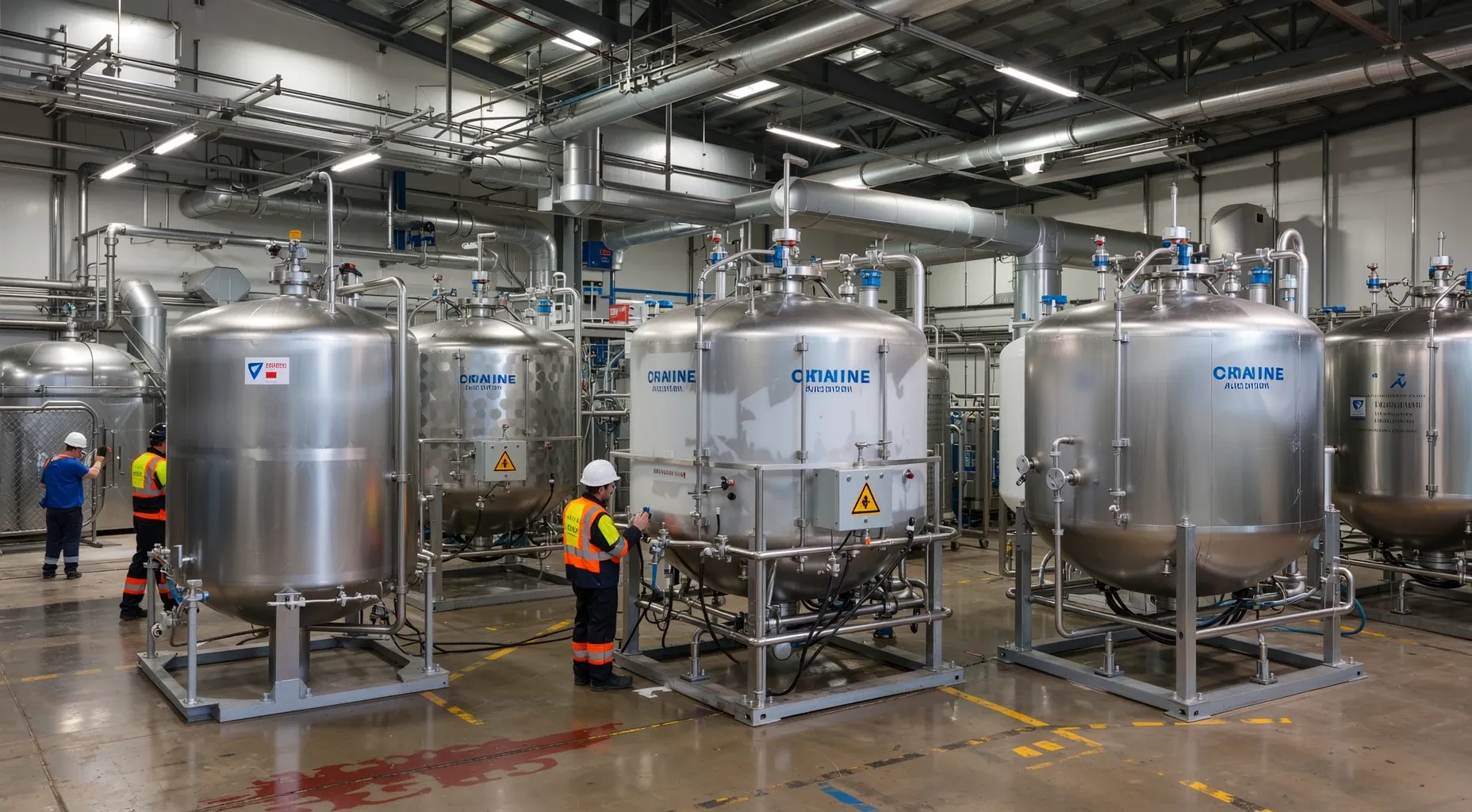
産業ガス製造施設では、様々な産業部門で使用される多種多様な有機ガスおよび無機ガスが生産されています。これらの施設は、ガスを圧縮、液化、貯蔵するための大規模プラント、研究開発ラボ、サービスステーションを運営しています。生産には、エレクトロニクス、製薬、石油化学産業に不可欠な特殊ガス、バルク製品、高純度試薬を生成するための複雑な化学プロセスが関わります。典型的な事業活動には、原材料の調達、化学合成、精製、圧縮、そして巨大な地下空洞または敷地内タンクでの液化貯蔵が含まれます。事業者は、グローバルなサプライチェーンを持つ巨大多国籍企業から、製造プラントへのオンデマンド充填サービスを提供する地域ディストリビューターまで多岐にわたります。この業界では、エンジニアリング、安全管理、オペレーションの分野で数千人の熟練労働者が雇用されています。その範囲は、敷地内製造と、ガスシリンダーやタンクを顧客に配送する輸送サービスの両方をカバーしています。漏洩を防ぎ封じ込めを確実にするため、安全および環境規制が運用基準に大きく影響を与えています。主要な生産者は効率性と持続可能性に注力する一方、小規模な事業者は特定のガス純度レベルを必要とするニッチな用途を専門とすることが多いです。この分野は、よりクリーンな製造技術と特殊なガス投入物への需要に伴い、進化を続けています。
階層
| コード | タイトル | 説明 |
|---|---|---|
| 32 | Manufacturing 2桁セクター | The Sector as a Whole The Manufacturing sector comprises establishments engaged in the mechanical, physical, or chemical transformation of materials, substances, or components into new products. The assembling of component parts of manufactured products is considered manufacturing, except in cases where the activity is appropriately classified in Sector 23, Construction. Establishments in the Manufacturing sector are often described as plants, factories, or mills and characteristically use power-driven machines and material handling equipment. However, establishments that transform materials or substances into new products by hand or in the worker's home and those engaged in selling to the general public products made on the same premises from which they are sold, such as bakeries, candy stores, and custom tailors, may also be included in this sector. Manufacturing establishments may process materials or may contract with other establishments to process their materials for them. Both types of establishments are included in manufacturing. Selected industries in the Manufacturing sector are comprised solely of establishments that process materials for other establishments on a contract or fee basis. Beyond these dedicated contract manufacturing industries, establishments that process materials for other establishments are generally classified in the Manufacturing industry of the processed materials. The materials, substances, or components transformed by manufacturing establishments are raw materials that are products of agriculture, forestry, fishing, mining, or quarrying as well as products of other manufacturing establishments. The materials used may be purchased directly from producers, obtained through customary trade channels, or secured without recourse to the market by transferring the product from one establishment to another, under the same ownership. The new product of a manufacturing establishment may be finished in the sense that it is ready for utilization or consumption, or it may be semi-finished to become an input for an establishment engaged in further manufacturing. For example, the product of the alumina refinery is the input used in the primary production of aluminum; primary aluminum is the input to an aluminum wire drawing plant; and aluminum wire is the input for a fabricated wire product manufacturing establishment. The subsectors in the Manufacturing sector generally reflect distinct production processes related to material inputs, production equipment, and employee skills. In the machinery area, where assembling is a key activity, parts and accessories for manufactured products are classified in the industry of the finished manufactured item when they are made for separate sale. For example, an attachment for a piece of metalworking machinery would be classified with metalworking machinery. However, component inputs from other manufacturing establishments are classified based on the production function of the component manufacturer. For example, electronic components are classified in Subsector 334, Computer and Electronic Product Manufacturing, and stampings are classified in Subsector 332, Fabricated Metal Product Manufacturing. Manufacturing establishments often perform one or more activities that are classified outside the Manufacturing sector of NAICS. For instance, almost all manufacturing has some captive research and development or administrative operations, such as accounting, payroll, or management. These captive services are treated the same as captive manufacturing activities. When the services are provided by separate establishments, they are classified in the NAICS sector where such services are primary, not in manufacturing. The boundaries of manufacturing and the other sectors of the classification system can be somewhat blurry. The establishments in the Manufacturing sector are engaged in the transformation of materials into new products. Their output is a new product. However, the definition of what constitutes a new product can be somewhat subjective. As clarification, the following activities are considered manufacturing in NAICS: <table width=100%><tr><td width=10%> </td><td><dl><dt style='padding-left: 10px; text-indent: -10px;'>Milk bottling and pasteurizing;</dt><dt style='padding-left: 10px; text-indent: -10px;'>Water bottling and processing;</dt><dt style='padding-left: 10px; text-indent: -10px;'>Fresh fish packaging (oyster<br/> shucking, fish filleting);</dt><dt style='padding-left: 10px; text-indent: -10px;'>Apparel jobbing (assigning<br/> materials to contract<br/> factories or shops for<br/> fabrication or other contract<br/> operations) as well as<br/> contracting on materials<br/> owned by others;</dt><dt style='padding-left: 10px; text-indent: -10px;'>Printing and related activities;</dt><dt style='padding-left: 10px; text-indent: -10px;'>Ready-mix concrete production;</dt><dt style='padding-left: 10px; text-indent: -10px;'>Leather converting;</dt><dt style='padding-left: 10px; text-indent: -10px;'>Grinding lenses to<br/> prescription;</dt><dt style='padding-left: 10px; text-indent: -10px;'>Wood preserving;</dt><dt style='padding-left: 10px; text-indent: -10px;'>Lapidary work for the trade;</dt></dl></td><td width=10%> </td><td><dl><dt style='padding-left: 10px; text-indent: -10px;'>Electroplating, plating, metal<br/> heat treating, and<br/> polishing for the trade;</dt><dt style='padding-left: 10px; text-indent: -10px;'>Fabricating signs and<br/> advertising displays;</dt><dt style='padding-left: 10px; text-indent: -10px;'>Rebuilding or remanufacturing<br/> machinery (i.e., automotive<br/> parts);</dt><dt style='padding-left: 10px; text-indent: -10px;'>Making manufactured homes<br/> (i.e., mobile homes) or<br/> prefabricated buildings,<br/> whether or not assembling/<br/> erecting at the customers'<br/> site;</dt><dt style='padding-left: 10px; text-indent: -10px;'>Ship repair and renovation;</dt><dt style='padding-left: 10px; text-indent: -10px;'>Machine shops; and</dt><dt style='padding-left: 10px; text-indent: -10px;'>Tire retreading.</dt></dl></td><td width=10%> </td></tr></table> Conversely, there are activities that are sometimes considered manufacturing, but which for NAICS are classified in another sector (i.e., not classified as manufacturing). They include: 1. Logging, classified in Sector 11, Agriculture, Forestry, Fishing and Hunting, is considered a harvesting operation; 2. Beneficiating ores and other minerals, classified in Sector 21, Mining, Quarrying, and Oil and Gas Extraction, is considered part of the activity of mining; 3. Constructing structures, assembling prefabricated buildings, and fabricating at the construction site by contractors are classified in Sector 23, Construction; 4. Breaking bulk and reselling in smaller lots, including packaging, repackaging, or bottling products, such as liquors or chemicals; assembling and selling computers on a custom basis; sorting and reselling scrap; mixing and selling paints to customer order; and cutting metals to customer order for resale are classified in Sector 42, Wholesale Trade, or Sector 44-45, Retail Trade; and 5. Publishing and the combined activity of publishing and printing, classified in Sector 51, Information, transform information into a product for which the value to the consumer lies in the information content, not in the format in which it is distributed (i.e., the book or software compact disc). |
| 325 | Industrial Gas Manufacturing 3桁サブセクター | The Industrial Gas subsector is based on the transformation of raw materials by a chemical process and the formulation of products. This subsector distinguishes the production of basic gases that comprise the first industry group from the production of intermediate and end products produced by further processing of basic gases that make up the remaining industry groups. This subsector does not include all industries transforming raw materials by a chemical process. It is common for some chemical processing to occur during mining operations. These beneficiating operations, such as copper concentrating, are classified in Sector 21, Mining, Quarrying, and Oil and Gas Extraction. Furthermore, the refining of crude petroleum is included in Subsector 324, Petroleum and Coal Products Manufacturing. In addition, the manufacturing of aluminum oxide is included in Subsector 334, Computer and Electronic Product Manufacturing, and stampings are classified in Subsector 332, Fabricated Metal Product Manufacturing. The grouping of industries into subsectors may take into account the association of the activities performed with other activities in the subsector. |
| 3251 | Industrial Gases 4桁産業グループ | See industry description for 325120. |
| 32512 | Industrial Gases 5桁NAICS産業 | This industry group comprises establishments primarily engaged in manufacturing gases using basic processes, such as thermal cracking and distillation. Gases manufactured in this industry group are usually separate chemical elements or separate chemically-defined compounds. |
| 325120 | 産業ガス製造 6桁米国詳細コード | 産業ガス製造施設では、様々な産業部門で使用される多種多様な有機ガスおよび無機ガスが生産されています。これらの施設は、ガスを圧縮、液化、貯蔵するための大規模プラント、研究開発ラボ、サービスステーションを運営しています。生産には、エレクトロニクス、製薬、石油化学産業に不可欠な特殊ガス、バルク製品、高純度試薬を生成するための複雑な化学プロセスが関わります。典型的な事業活動には、原材料の調達、化学合成、精製、圧縮、そして巨大な地下空洞または敷地内タンクでの液化貯蔵が含まれます。事業者は、グローバルなサプライチェーンを持つ巨大多国籍企業から、製造プラントへのオンデマンド充填サービスを提供する地域ディストリビューターまで多岐にわたります。この業界では、エンジニアリング、安全管理、オペレーションの分野で数千人の熟練労働者が雇用されています。その範囲は、敷地内製造と、ガスシリンダーやタンクを顧客に配送する輸送サービスの両方をカバーしています。漏洩を防ぎ封じ込めを確実にするため、安全および環境規制が運用基準に大きく影響を与えています。主要な生産者は効率性と持続可能性に注力する一方、小規模な事業者は特定のガス純度レベルを必要とするニッチな用途を専門とすることが多いです。この分野は、よりクリーンな製造技術と特殊なガス投入物への需要に伴い、進化を続けています。 |
この業界に対応したサプライチェーン基盤が必要ですか?
このNAICS分類を出発点にし、在庫、倉庫、受注管理、フルフィルメント、輸送にわたるItemワークフローへ接続できます。
分類参照
- 01塩素ガス製造--は325180、その他の基本無機化学製品製造業に分類され、
- 02精製された石油または液化炭化水素から製造されるエタンおよびブタンガス製造--は325110、石油化学製品製造業に分類されます。
索引項目
一酸化炭素製造
アルゴン製造
工業用(圧縮、液化、固体)、バイガス製造(例:圧縮、液化、固体)
二酸化炭素製造
クロロジフルオロメタン製造
クロロフルオロカーボン(CFC)ガス製造
圧縮および液化された工業用ガス製造
ジクロロジフルオロメタン製造
ドライアイス(例:固体二酸化炭素)製造
フッ素化された炭化水素ガス製造
フッ素化炭化水素ガス製造
工業用(圧縮、液化、固体)ガス製造
ヘリウム製造
天然ガスからのヘリウム回収
ハイドロクロロフルオロカーボン(HCFC)ガス製造
ハイドロフルオロカーボン(HFC)ガス製造
水素製造
ドライアイス製造
工業用ガス製造
液体空気製造
モノクロロジフルオロメタン製造
ネオン製造
窒素製造
窒素酸化物製造
酸素製造
Itemが支援できること
本システムは、大型タンカーやトラックの物流計画を自動化し、燃料費を削減するとともに、建設現場や製造工場へのジャストインタイム配送を保証します。
