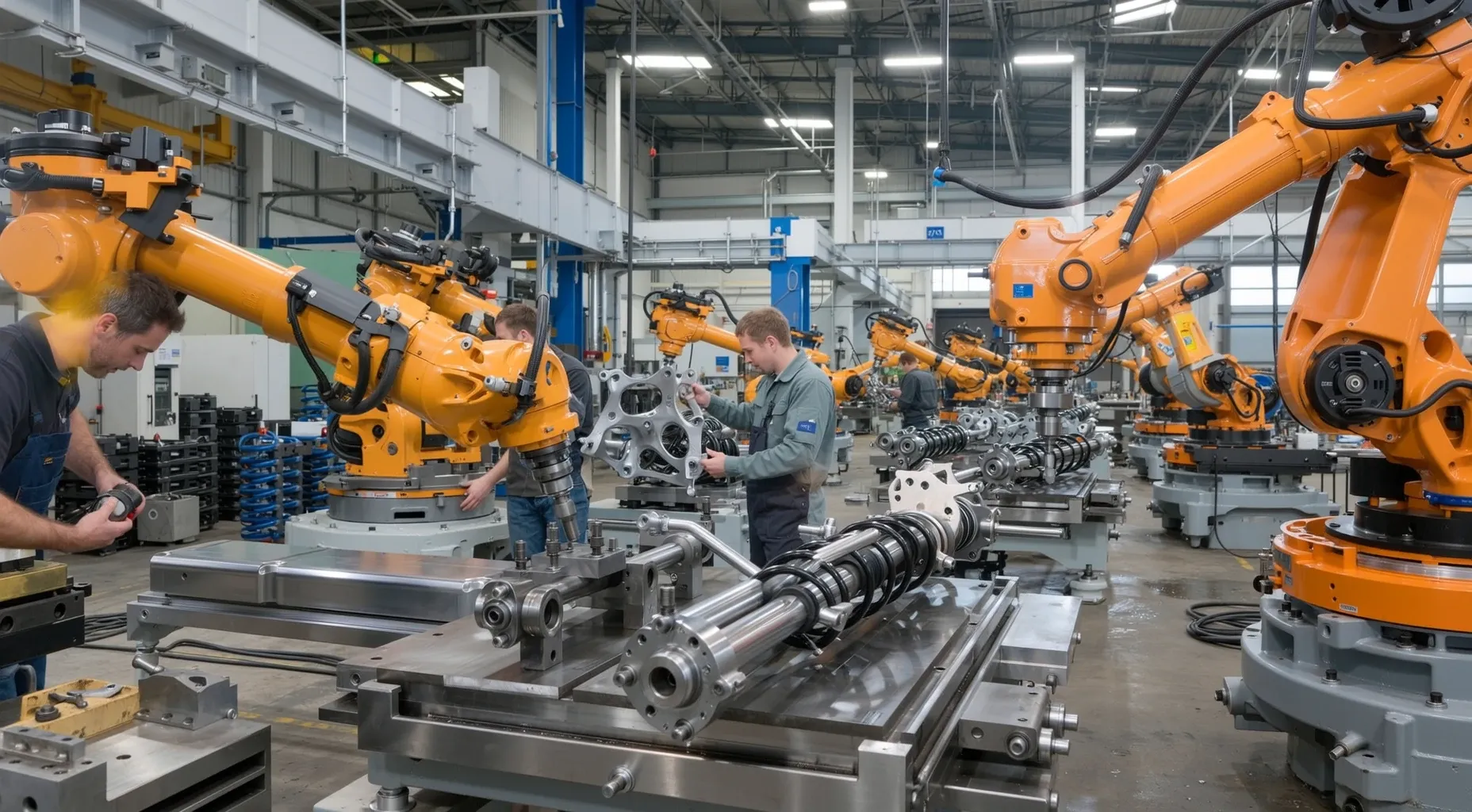
自動車のステアリングおよびサスペンション部品(スプリングを除く)の製造
説明
この産業は、主に自動車のステアリング機構およびサスペンション部品(スプリングを除く)の製造または再製造に従事する事業所から構成されます。 具体例: ラックアンドピニオンステアリングアセンブリの製造 ショックアブソーバー(自動車、トラック、バス用)の製造 ステアリングコラム(自動車、トラック、バス用)の製造 ステアリングホイール(自動車、トラック、バス用)の製造 ストラット(自動車、トラック、バス用)の製造 パワーステアリングポンプの製造
階層
| コード | タイトル | 説明 |
|---|---|---|
| 33 | Manufacturing 2桁セクター | The Sector as a Whole The Manufacturing sector comprises establishments engaged in the mechanical, physical, or chemical transformation of materials, substances, or components into new products. The assembling of component parts of manufactured products is considered manufacturing, except in cases where the activity is appropriately classified in Sector 23, Construction. Establishments in the Manufacturing sector are often described as plants, factories, or mills and characteristically use power-driven machines and material handling equipment. However, establishments that transform materials or substances into new products by hand or in the worker's home and those engaged in selling to the general public products made on the same premises from which they are sold, such as bakeries, candy stores, and custom tailors, may also be included in this sector. Manufacturing establishments may process materials or may contract with other establishments to process their materials for them. Both types of establishments are included in manufacturing. Selected industries in the Manufacturing sector are comprised solely of establishments that process materials for other establishments on a contract or fee basis. Beyond these dedicated contract manufacturing industries, establishments that process materials for other establishments are generally classified in the Manufacturing industry of the processed materials. The materials, substances, or components transformed by manufacturing establishments are raw materials that are products of agriculture, forestry, fishing, mining, or quarrying as well as products of other manufacturing establishments. The materials used may be purchased directly from producers, obtained through customary trade channels, or secured without recourse to the market by transferring the product from one establishment to another, under the same ownership. The new product of a manufacturing establishment may be finished in the sense that it is ready for utilization or consumption, or it may be semi-finished to become an input for an establishment engaged in further manufacturing. For example, the product of the alumina refinery is the input used in the primary production of aluminum; primary aluminum is the input to an aluminum wire drawing plant; and aluminum wire is the input for a fabricated wire product manufacturing establishment. The subsectors in the Manufacturing sector generally reflect distinct production processes related to material inputs, production equipment, and employee skills. In the machinery area, where assembling is a key activity, parts and accessories for manufactured products are classified in the industry of the finished manufactured item when they are made for separate sale. For example, an attachment for a piece of metalworking machinery would be classified with metalworking machinery. However, component inputs from other manufacturing establishments are classified based on the production function of the component manufacturer. For example, electronic components are classified in Subsector 334, Computer and Electronic Product Manufacturing, and stampings are classified in Subsector 332, Fabricated Metal Product Manufacturing. Manufacturing establishments often perform one or more activities that are classified outside the Manufacturing sector of NAICS. For instance, almost all manufacturing has some captive research and development or administrative operations, such as accounting, payroll, or management. These captive services are treated the same as captive manufacturing activities. When the services are provided by separate establishments, they are classified in the NAICS sector where such services are primary, not in manufacturing. The boundaries of manufacturing and the other sectors of the classification system can be somewhat blurry. The establishments in the Manufacturing sector are engaged in the transformation of materials into new products. Their output is a new product. However, the definition of what constitutes a new product can be somewhat subjective. As clarification, the following activities are considered manufacturing in NAICS: <table width=100%><tr><td width=10%> </td><td><dl><dt style='padding-left: 10px; text-indent: -10px;'>Milk bottling and pasteurizing;</dt><dt style='padding-left: 10px; text-indent: -10px;'>Water bottling and processing;</dt><dt style='padding-left: 10px; text-indent: -10px;'>Fresh fish packaging (oyster<br/> shucking, fish filleting);</dt><dt style='padding-left: 10px; text-indent: -10px;'>Apparel jobbing (assigning<br/> materials to contract<br/> factories or shops for<br/> fabrication or other contract<br/> operations) as well as<br/> contracting on materials<br/> owned by others;</dt><dt style='padding-left: 10px; text-indent: -10px;'>Printing and related activities;</dt><dt style='padding-left: 10px; text-indent: -10px;'>Ready-mix concrete production;</dt><dt style='padding-left: 10px; text-indent: -10px;'>Leather converting;</dt><dt style='padding-left: 10px; text-indent: -10px;'>Grinding lenses to<br/> prescription;</dt><dt style='padding-left: 10px; text-indent: -10px;'>Wood preserving;</dt><dt style='padding-left: 10px; text-indent: -10px;'>Lapidary work for the trade;</dt></dl></td><td width=10%> </td><td><dl><dt style='padding-left: 10px; text-indent: -10px;'>Electroplating, plating, metal<br/> heat treating, and<br/> polishing for the trade;</dt><dt style='padding-left: 10px; text-indent: -10px;'>Fabricating signs and<br/> advertising displays;</dt><dt style='padding-left: 10px; text-indent: -10px;'>Rebuilding or remanufacturing<br/> machinery (i.e., automotive<br/> parts);</dt><dt style='padding-left: 10px; text-indent: -10px;'>Making manufactured homes<br/> (i.e., mobile homes) or<br/> prefabricated buildings,<br/> whether or not assembling/<br/> erecting at the customers'<br/> site;</dt><dt style='padding-left: 10px; text-indent: -10px;'>Ship repair and renovation;</dt><dt style='padding-left: 10px; text-indent: -10px;'>Machine shops; and</dt><dt style='padding-left: 10px; text-indent: -10px;'>Tire retreading.</dt></dl></td><td width=10%> </td></tr></table> Conversely, there are activities that are sometimes considered manufacturing, but which for NAICS are classified in another sector (i.e., not classified as manufacturing). They include: 1. Logging, classified in Sector 11, Agriculture, Forestry, Fishing and Hunting, is considered a harvesting operation; 2. Beneficiating ores and other minerals, classified in Sector 21, Mining, Quarrying, and Oil and Gas Extraction, is considered part of the activity of mining; 3. Constructing structures, assembling prefabricated buildings, and fabricating at the construction site by contractors are classified in Sector 23, Construction; 4. Breaking bulk and reselling in smaller lots, including packaging, repackaging, or bottling products, such as liquors or chemicals; assembling and selling computers on a custom basis; sorting and reselling scrap; mixing and selling paints to customer order; and cutting metals to customer order for resale are classified in Sector 42, Wholesale Trade, or Sector 44-45, Retail Trade; and 5. Publishing and the combined activity of publishing and printing, classified in Sector 51, Information, transform information into a product for which the value to the consumer lies in the information content, not in the format in which it is distributed (i.e., the book or software compact disc). |
| 336 | Motor Vehicle Steering and Suspension Components (except Spring) Manufacturing 3桁サブセクター | This industry group comprises establishments primarily engaged in manufacturing motor vehicle gasoline engines and engine parts, motor vehicle electrical and electronic equipment, motor vehicle steering and suspension components (except springs), motor vehicle brake systems, motor vehicle transmission and power train parts, motor vehicle seating and interior trim, motor vehicle metal stampings, and other motor vehicle parts and accessories. This industry group includes establishments that rebuild motor vehicle parts. |
| 3363 | Motor Vehicle Steering and Suspension Components (except Spring) Manufacturing 4桁産業グループ | See industry description for 3363 |
| 33633 | Motor Vehicle Steering and Suspension Components (except Spring) Manufacturing 5桁NAICS産業 | See industry description for 336330. |
| 336330 | 自動車のステアリングおよびサスペンション部品(スプリングを除く)の製造 6桁米国詳細コード | この産業は、主に自動車のステアリング機構およびサスペンション部品(スプリングを除く)の製造または再製造に従事する事業所から構成されます。 具体例: ラックアンドピニオンステアリングアセンブリの製造 ショックアブソーバー(自動車、トラック、バス用)の製造 ステアリングコラム(自動車、トラック、バス用)の製造 ステアリングホイール(自動車、トラック、バス用)の製造 ストラット(自動車、トラック、バス用)の製造 パワーステアリングポンプの製造 |
この業界に対応したサプライチェーン基盤が必要ですか?
このNAICS分類を出発点にし、在庫、倉庫、受注管理、フルフィルメント、輸送にわたるItemワークフローへ接続できます。
分類参照
- 01主にスプリングの製造に従事する事業所は、Industry 33261、スプリングおよびワイヤー製品製造に分類されます。
索引項目
自動車、トラックおよびバスのステアリングアセンブリおよび部品の製造
自動車、トラックおよびバスのサスペンションアセンブリおよび部品(スプリングを除く)の製造
パワーステアリングホースアセンブリの製造
パワーステアリングポンプの製造
ラックおよびピニオンステアリングアセンブリの製造
ショックアブソーバー、自動車、トラック、バスの製造
ステアリングボックス、手動およびパワアシスト、製造
ステアリングカラム、自動車、トラック、バス、製造
ステアリングホイール、自動車、トラック、バス、製造
ストラット、自動車、トラック、バス、製造
ホイール、ステアリング、自動車、トラック、バス、製造
Itemが支援できること
TMSは、分散型のサプライヤーネットワーク全体で効率的なルートを計画し、貨物コストを削減することにより、重くかさばるサスペンション部品の輸送に必要な複雑なロジスティクスを最適化します。
OMSは、このセクターに典型的な高頻度・低単価SKUミックスに対して、フルフィルメントロジックを自動化し、リアルタイムの在庫可視性を提供することで、受注から入金までのサイクルを合理化します。
AI駆動型分析により、需要の急増を予測し、製造上のボトルネックを特定することで、企業はスタビライザーバーやリンケージなどの重要部品の生産スケジュールを動的に調整できます。
