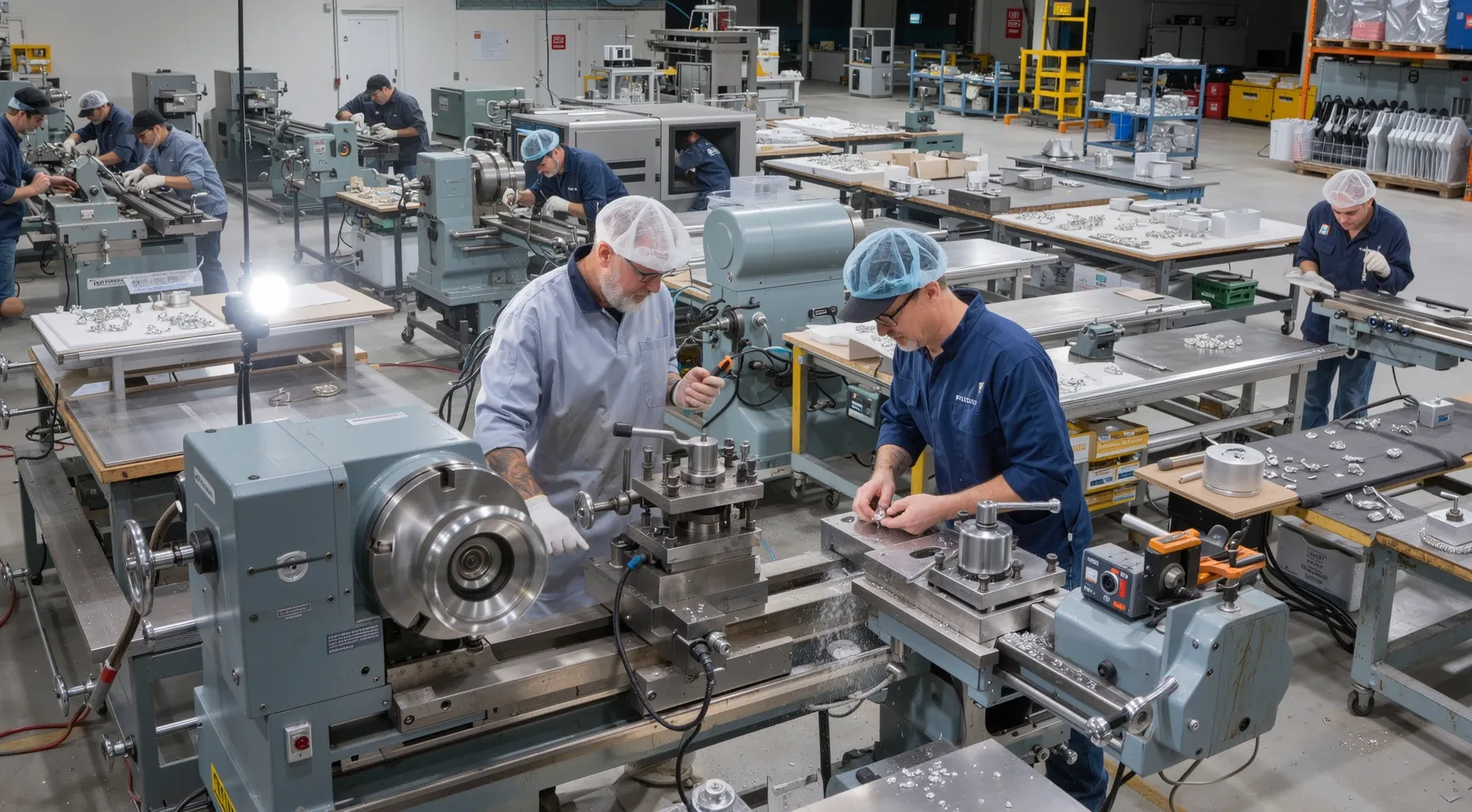
宝飾品および銀器製造
説明
この産業は、主に以下の1つ以上の事業に従事する事業所から構成されています。(1)高級宝飾品およびコスチュームジュエリーの製造、彫刻、打ち出し、エッチング;(2)金属製個人用品(例:コンパクトやシガレットケースなどの身に着けたり携帯したりする小型品)の製造、彫刻、打ち出し、エッチング;(3)貴金属製ソリッド、貴金属メッキ製、またはピューター製のカトラリーおよびその他の空洞製品の製造、彫刻、打ち出し、エッチング;(4)硬貨のスタンピング;(5)未組み立てのジュエリー部品やストックショップ製品(例:シート、ワイヤー、チューブ)の製造;(6)貴石または半貴石の切断、スラブ化、研磨、彫刻、エッチング、研磨、またはファセット加工;(7)宝石の再切断、再研磨、およびセッティング;(8)養殖真珠およびコスチュームパール(模造真珠)のドリル加工、鋸引き、および剥皮。この産業には、貴金属製ソリッド、貴金属メッキ製、および貴金属メッキ製のジュエリーおよび個人用品の製造を主たる事業とする事業所が含まれます。
階層
| コード | タイトル | 説明 |
|---|---|---|
| 33 | Jewelry and Silverware Manufacturing 2桁セクター | The Sector as a Whole The Manufacturing sector comprises establishments engaged in the mechanical, physical, or chemical transformation of materials, substances, or components into new products. The assembling of component parts of manufactured products is considered manufacturing, except in cases where the activity is appropriately classified in Sector 23, Construction. Establishments in the Manufacturing sector are often described as plants, factories, or mills and characteristically use power-driven machines and material handling equipment. However, establishments that transform materials or substances into new products by hand or in the worker's home and those engaged in selling to the general public products made on the same premises from which they are sold, such as bakeries, candy stores, and custom tailors, may also be included in this sector. Manufacturing establishments may process materials or may contract with other establishments to process their materials for them. Both types of establishments are included in manufacturing. Selected industries in the Manufacturing sector are comprised solely of establishments that process materials for other establishments on a contract or fee basis. Beyond these dedicated contract manufacturing industries, establishments that process materials for other establishments are generally classified in the Manufacturing industry of the processed materials. The materials, substances, or components transformed by manufacturing establishments are raw materials that are products of agriculture, forestry, fishing, mining, or quarrying as well as products of other manufacturing establishments. The materials used may be purchased directly from producers, obtained through customary trade channels, or secured without recourse to the market by transferring the product from one establishment to another, under the same ownership. The new product of a manufacturing establishment may be finished in the sense that it is ready for utilization or consumption, or it may be semi-finished to become an input for an establishment engaged in further manufacturing. For example, the product of the alumina refinery is the input used in the primary production of aluminum; primary aluminum is the input to an aluminum wire drawing plant; and aluminum wire is the input for a fabricated wire product manufacturing establishment. The subsectors in the Manufacturing sector generally reflect distinct production processes related to material inputs, production equipment, and employee skills. In the machinery area, where assembling is a key activity, parts and accessories for manufactured products are classified in the industry of the finished manufactured item when they are made for separate sale. For example, an attachment for a piece of metalworking machinery would be classified with metalworking machinery. However, component inputs from other manufacturing establishments are classified based on the production function of the component manufacturer. For example, electronic components are classified in Subsector 334, Computer and Electronic Product Manufacturing, and stampings are classified in Subsector 332, Fabricated Metal Product Manufacturing. Manufacturing establishments often perform one or more activities that are classified outside the Manufacturing sector of NAICS. For instance, almost all manufacturing has some captive research and development or administrative operations, such as accounting, payroll, or management. These captive services are treated the same as captive manufacturing activities. When the services are provided by separate establishments, they are classified in the NAICS sector where such services are primary, not in manufacturing. The boundaries of manufacturing and the other sectors of the classification system can be somewhat blurry. The establishments in the Manufacturing sector are engaged in the transformation of materials into new products. Their output is a new product. However, the definition of what constitutes a new product can be somewhat subjective. As clarification, the following activities are considered manufacturing in NAICS: <table width=100%><tr><td width=10%> </td><td><dl><dt style='padding-left: 10px; text-indent: -10px;'>Milk bottling and pasteurizing;</dt><dt style='padding-left: 10px; text-indent: -10px;'>Water bottling and processing;</dt><dt style='padding-left: 10px; text-indent: -10px;'>Fresh fish packaging (oyster<br/> shucking, fish filleting);</dt><dt style='padding-left: 10px; text-indent: -10px;'>Apparel jobbing (assigning<br/> materials to contract<br/> factories or shops for<br/> fabrication or other contract<br/> operations) as well as<br/> contracting on materials<br/> owned by others;</dt><dt style='padding-left: 10px; text-indent: -10px;'>Printing and related activities;</dt><dt style='padding-left: 10px; text-indent: -10px;'>Ready-mix concrete production;</dt><dt style='padding-left: 10px; text-indent: -10px;'>Leather converting;</dt><dt style='padding-left: 10px; text-indent: -10px;'>Grinding lenses to<br/> prescription;</dt><dt style='padding-left: 10px; text-indent: -10px;'>Wood preserving;</dt><dt style='padding-left: 10px; text-indent: -10px;'>Lapidary work for the trade;</dt></dl></td><td width=10%> </td><td><dl><dt style='padding-left: 10px; text-indent: -10px;'>Electroplating, plating, metal<br/> heat treating, and<br/> polishing for the trade;</dt><dt style='padding-left: 10px; text-indent: -10px;'>Fabricating signs and<br/> advertising displays;</dt><dt style='padding-left: 10px; text-indent: -10px;'>Rebuilding or remanufacturing<br/> machinery (i.e., automotive<br/> parts);</dt><dt style='padding-left: 10px; text-indent: -10px;'>Making manufactured homes<br/> (i.e., mobile homes) or<br/> prefabricated buildings,<br/> whether or not assembling/<br/> erecting at the customers'<br/> site;</dt><dt style='padding-left: 10px; text-indent: -10px;'>Ship repair and renovation;</dt><dt style='padding-left: 10px; text-indent: -10px;'>Machine shops; and</dt><dt style='padding-left: 10px; text-indent: -10px;'>Tire retreading.</dt></dl></td><td width=10%> </td></tr></table> Conversely, there are activities that are sometimes considered manufacturing, but which for NAICS are classified in another sector (i.e., not classified as manufacturing). They include: 1. Logging, classified in Sector 11, Agriculture, Forestry, Fishing and Hunting, is considered a harvesting operation; 2. Beneficiating ores and other minerals, classified in Sector 21, Mining, Quarrying, and Oil and Gas Extraction, is considered part of the activity of mining; 3. Constructing structures, assembling prefabricated buildings, and fabricating at the construction site by contractors are classified in Sector 23, Construction; 4. Breaking bulk and reselling in smaller lots, including packaging, repackaging, or bottling products, such as liquors or chemicals; assembling and selling computers on a custom basis; sorting and reselling scrap; mixing and selling paints to customer order; and cutting metals to customer order for resale are classified in Sector 42, Wholesale Trade, or Sector 44-45, Retail Trade; and 5. Publishing and the combined activity of publishing and printing, classified in Sector 51, Information, transform information into a product for which the value to the consumer lies in the information content, not in the format in which it is distributed (i.e., the book or software compact disc). |
| 339 | Miscellaneous Manufacturing 3桁サブセクター | Industries in the Miscellaneous Manufacturing subsector make a wide range of products that cannot readily be classified in specific NAICS subsectors in manufacturing. Processes used by these establishments vary significantly, both among and within industries. For example, a variety of manufacturing processes are used in manufacturing sporting and athletic goods that include products such as tennis rackets and golf balls. The processes for these products differ from each other, and the processes differ significantly from the fabrication processes used in making dolls or toys, the melting and shaping of precious metals to make jewelry, and the bending, forming, and assembly used in making medical products. The industries in this subsector are defined by what is made rather than how it is made. Although individual establishments might be appropriately classified elsewhere in the NAICS structure, for historical continuity, these product-based industries were maintained. In most cases, no one process or material predominates for an industry. Establishments in this subsector manufacture products as diverse as medical equipment and supplies, jewelry, sporting goods, toys, and office supplies. |
| 3399 | Other Miscellaneous Manufacturing 4桁産業グループ | This industry group comprises establishments primarily engaged in miscellaneous manufacturing, such as jewelry and silverware manufacturing, sporting and athletic goods manufacturing, doll, toy, and game manufacturing, office supplies (except paper) manufacturing, sign manufacturing, and all other miscellaneous manufacturing. |
| 33991 | Jewelry and Silverware Manufacturing 5桁NAICS産業 | Industries in this industry include the manufacturing of jewelry and silverware. This includes the production of items such as rings, necklaces, bracelets, earrings, and silverware sets. These products are typically made from precious metals such as gold, silver, platinum, and other materials such as gemstones, pearls, and enamel. |
| 339910 | 宝飾品および銀器製造 6桁米国詳細コード | この産業は、主に以下の1つ以上の事業に従事する事業所から構成されています。(1)高級宝飾品およびコスチュームジュエリーの製造、彫刻、打ち出し、エッチング;(2)金属製個人用品(例:コンパクトやシガレットケースなどの身に着けたり携帯したりする小型品)の製造、彫刻、打ち出し、エッチング;(3)貴金属製ソリッド、貴金属メッキ製、またはピューター製のカトラリーおよびその他の空洞製品の製造、彫刻、打ち出し、エッチング;(4)硬貨のスタンピング;(5)未組み立てのジュエリー部品やストックショップ製品(例:シート、ワイヤー、チューブ)の製造;(6)貴石または半貴石の切断、スラブ化、研磨、彫刻、エッチング、研磨、またはファセット加工;(7)宝石の再切断、再研磨、およびセッティング;(8)養殖真珠およびコスチュームパール(模造真珠)のドリル加工、鋸引き、および剥皮。この産業には、貴金属製ソリッド、貴金属メッキ製、および貴金属メッキ製のジュエリーおよび個人用品の製造を主たる事業とする事業所が含まれます。 |
この業界に対応したサプライチェーン基盤が必要ですか?
このNAICS分類を出発点にし、在庫、倉庫、受注管理、フルフィルメント、輸送にわたるItemワークフローへ接続できます。
分類参照
- 01貴金属で作られたカトラリーおよび食器類(貴金属を除く)は、U.S. Industry 332215、金属製のキッチン用品、カトラリー、食器類の(貴金属を除く)製造に分類されます。
- 02貴金属で作られた非貴金属製の食器類(カトラリーおよび食器類を除く)は、U.S. Industry 332999、その他の miscellaneous 金属製品の製造に分類されます。
- 03貴金属および貴金属製のカトラリー、食器類、その他の食器類の彫刻、刻印、またはエッチングは、U.S. Industry 332812、金属のコーティング、彫刻(ジュエリーおよび食器類を除く)、および製造業への関連サービスに分類されます。
- 04貴金属製のジュエリーのコーティングは、U.S. Industry 332813、電気めっき、コーティング、研磨、酸化、および着色に分類されます。
- 05合成石の製造は、U.S. Industry 327999、その他の miscellaneous 非金属鉱物製品の製造に分類されます。
- 06人用の商品(金属を除く)を身につけるためのもの、例えばコンパクトやタバコケースは、Industry 316990、その他の皮革および関連製品の製造に分類されます。
索引項目
ブレスレット、貴金属、製造
ボタン、貴金属、貴金属、半貴金属、製造
カードケース、貴金属、製造
ケース、ジュエリー、金属、製造
チェーンまたはネックレス、貴金属、製造
チェックブックカバー、貴金属、製造
シガーケース、貴金属、製造
タバコケース、貴金属、製造
コインケース、貴金属、製造
ブラシケース、貴金属、製造
コンパクト、貴金属、製造
化粧バッグ、貴金属、製造
コスチュームジュエリーの製造
カフリンク、貴金属、製造
カトラリー、貴金属(貴金属製を除く)、製造
ダイヤモンドのカットおよび研磨
真珠の穴あけ
貴金属製のカトラリー、食器類の彫刻、刻印、またはエッチング
貴金属製のジュエリーの彫刻、刻印、またはエッチング
コスチュームジュエリーの彫刻、刻印、またはエッチング
ジュエリー用品、製造業者の
貴金属製のジュエリーの付属品および材料の製造
コスチュームジュエリー、製造
天然または培養された真珠、製造
貴金属製のジュエリー、製造
キーケース、貴金属、製造
石工業の製造
ライター、シガーおよびタバコ、貴金属でコーティング、製造
ノベルティ、貴金属(貴金属製を除く)、製造
真珠の穴あけ、剥離、または切断
コスチュームジュエリー、製造
人用の商品(金属)、製造
pewter 食器類の製造
ピンとブローチ、貴金属、製造
ポケットブック、貴金属、男性または女性用、製造
バッグ、貴金属または貴金属でコーティング、製造
十字架やその他の小さな宗教用品、貴金属、製造
縫製ケース、貴金属、製造
コインのスタンプ
ストラップ、時計、貴金属、製造
テーブルカトラリー、貴金属、製造
タバコ用ポーチ、貴金属、製造
トイレキットおよびケース、貴金属、製造
トロフィー、貴金属(貴金属製を除く)、製造
財布、貴金属、製造
時計バンド、金属、製造
Itemが支援できること
銀製品を含む多様なジュエリーの複雑な在庫レベルを管理し、保税倉庫や小売棚などの複数の保管場所をサポートします。
オムニチャネルストアフロント間で注文を同期し、カスタムジュエリーのリクエストに対してシームレスな在庫状況と迅速なフルフィルメントを保証します。
生産サイクル開始前に、季節的な需要変動を予測して在庫水準を最適化し、トレンドの銀食器デザインを特定します。
