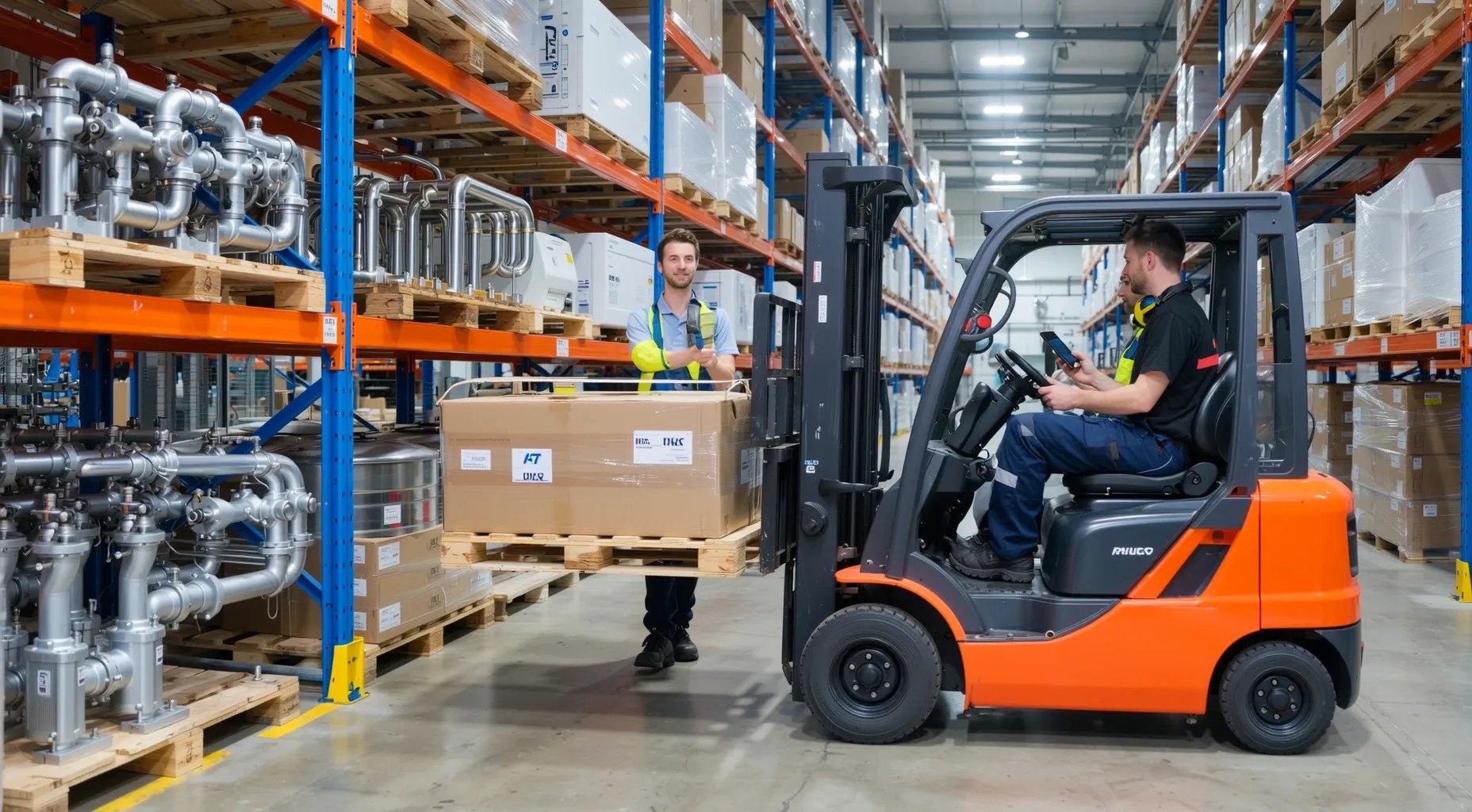
水回り設備および機器の卸売 (ヒドロニクス)
Description
水回り設備および機器の卸売セクターにおける企業は、メーカーと設置業者間の重要な仲介業者として機能し、主にヒドロニクス市場に焦点を当てています。これらの企業は、商業および産業用暖房システムに必要な特殊部品の卸売流通に主に従事し、一般的な配管用品とは区別されます。主な活動には、工場から原材料および完成品の購入、在庫管理、および大規模な取引を請負業者および施設管理者(直接消費者ではなく)に販売することが含まれます。オペレーターは、限られた地理的範囲を持つ小規模な地域別ディストリビューターから、複数の州にまたがる多様な都市および農村市場をサービスする大規模な全国企業まで、さまざまな規模の企業が存在します。この業界は、在庫の資本集約的な性質と、ちょうど良いタイミングの配送モデルへの依存により、しばしば厳しいマージンで運営されます。範囲は大きく異なり、一部の企業は蒸気暖房または給湯器などの特定の技術に特化している一方、他の企業はポンプ、バルブ、制御システムを含む幅広い製品を提供しています。このセグメントは、より広範な建設およびメンテナンス経済にとって不可欠であり、専門的な熱設備が、建設作業員に効率的に届くようにしています。
Hierarchy
| Code | Title | Description |
|---|---|---|
| 42 | Wholesale Trade 2-digit sector | The Sector as a Whole The Wholesale Trade sector comprises establishments engaged in wholesaling merchandise, generally without transformation, and rendering services incidental to the sale of merchandise. The merchandise described in this sector includes the outputs of agriculture, mining, manufacturing, and certain information industries, such as publishing. The wholesaling process is an intermediate step in the distribution of merchandise. Wholesalers are organized to sell or arrange the purchase or sale of (a) goods for resale (i.e., goods sold to other wholesalers or retailers), (b) capital or durable nonconsumer goods, and (c) raw and intermediate materials and supplies used in production. Wholesalers sell merchandise to other businesses and normally operate from a warehouse or office. These warehouses and offices are characterized by having little or no display of merchandise. In addition, neither the design nor the location of the premises is intended to solicit walk-in traffic. Wholesalers do not normally use advertising directed to the general public. Customers are generally reached initially via telephone, in-person marketing, or by specialized advertising that may include Internet and other electronic means. Follow-up orders are either vendor-initiated or client-initiated, generally based on previous sales, and typically exhibit strong ties between sellers and buyers. In fact, transactions are often conducted between wholesalers and clients that have long-standing business relationships. This sector comprises two main types of wholesalers: merchant wholesalers that sell goods on their own account and agents and brokers that arrange sales and purchases for others generally for a commission or fee. (1) Establishments that sell goods on their own account are known as wholesale merchants, distributors, jobbers, drop shippers, and import/export merchants. Also included as wholesale merchants are sales offices and sales branches (but not retail stores) maintained by manufacturing, refining, or mining enterprises apart from their plants or mines for the purpose of marketing their products, and group purchasing organizations primarily purchasing and selling goods on their own account. Merchant wholesale establishments typically maintain their own warehouse, where they receive and handle goods for their customers. Goods are generally sold without transformation, but may include integral functions, such as sorting, packaging, labeling, and other marketing services. (2) Establishments arranging for the purchase or sale of goods owned by others or purchasing goods, generally on a commission basis are known as business-to-business electronic markets, agents and brokers, commission merchants, import/export agents and brokers, auction companies, group purchasing organizations (acting as agents), and manufacturers' representatives. These establishments operate from offices and generally do not own or handle the goods they sell. Some wholesale establishments may be connected with a single manufacturer and promote and sell the particular manufacturer's products to a wide range of other wholesalers or retailers. Other wholesalers may be connected to a retail chain, or limited number of retail chains, and only provide a variety of products needed by that particular retail operation(s). These wholesalers may obtain the products from a wide range of manufacturers. Still other wholesalers may not take title to the goods, but act as agents and brokers for a commission. Although, in general, wholesaling normally denotes sales in large volumes, durable nonconsumer goods may be sold in single units. Sales of capital or durable nonconsumer goods used in the production of goods and services, such as farm machinery, medium- and heavy-duty trucks, and industrial machinery, are always included in wholesale trade. |
| 423 | Merchant Wholesalers, Durable Goods 3-digit subsector | Industries in the Merchant Wholesalers, Durable Goods subsector sell capital or durable goods to other businesses. Merchant wholesalers generally take title to the goods that they sell; in other words, they buy and sell goods on their own account. Durable goods are new or used items generally with a normal life expectancy of three years or more. Durable goods merchant wholesale trade establishments are engaged in wholesaling products, such as motor vehicles, furniture, construction materials, machinery and equipment (including household-type appliances), metals and minerals (except petroleum), sporting goods, toys and hobby goods, recyclable materials, and parts. Agents and brokers primarily engaged in wholesaling durable goods, generally on a commission or fee basis, are classified in Subsector 425, Wholesale Trade Agents and Brokers. |
| 4237 | Hardware, and Plumbing and Heating Equipment and Supplies Merchant Wholesalers 4-digit industry group | This industry group comprises establishments primarily engaged in the merchant wholesale distribution of hardware; plumbing and heating equipment and supplies (hydronics); warm air heating and air-conditioning equipment and supplies; and refrigeration equipment and supplies. |
| 42372 | Plumbing and Heating Equipment and Supplies (Hydronics) Merchant Wholesalers 5-digit NAICS industry | See industry description for 423720. |
| 423720 | 水回り設備および機器の卸売 (ヒドロニクス) 6-digit U.S. detail | 水回り設備および機器の卸売セクターにおける企業は、メーカーと設置業者間の重要な仲介業者として機能し、主にヒドロニクス市場に焦点を当てています。これらの企業は、商業および産業用暖房システムに必要な特殊部品の卸売流通に主に従事し、一般的な配管用品とは区別されます。主な活動には、工場から原材料および完成品の購入、在庫管理、および大規模な取引を請負業者および施設管理者(直接消費者ではなく)に販売することが含まれます。オペレーターは、限られた地理的範囲を持つ小規模な地域別ディストリビューターから、複数の州にまたがる多様な都市および農村市場をサービスする大規模な全国企業まで、さまざまな規模の企業が存在します。この業界は、在庫の資本集約的な性質と、ちょうど良いタイミングの配送モデルへの依存により、しばしば厳しいマージンで運営されます。範囲は大きく異なり、一部の企業は蒸気暖房または給湯器などの特定の技術に特化している一方、他の企業はポンプ、バルブ、制御システムを含む幅広い製品を提供しています。このセグメントは、より広範な建設およびメンテナンス経済にとって不可欠であり、専門的な熱設備が、建設作業員に効率的に届くようにしています。 |
Need a supply chain stack that maps to this industry?
Use this NAICS classification as the starting point, then connect it to Item workflows across inventory, warehousing, order management, fulfillment, and transportation.
Classification References
- 01給湯器、暖房、空調設備の販売および設置--は産業238220、給湯器、暖房、空調設備の請負業者に分類されています。
- 02温水暖房および空調設備の商社卸売--は産業423730、温水暖房および空調設備の商社卸売業者に分類されています。
- 03家庭用ガスおよび電気機器(給湯器および暖炉を除く)、ルームエアコン、洗濯乾燥機、および/または家庭用オーディオまたはビデオ機器の商社卸売--は産業423620、家庭用家電、電気製品、および消費者電子機器の商社卸売業者に分類されています。
Index Items
浴槽の商社卸売業者
ボイラー(例:暖房、給湯、電力、蒸気)の商社卸売業者
真鍮製品、配管用品、商社卸売業者
燃焼器、燃料油および軽油、商社卸売業者
コンベクターの商社卸売業者
飲料水噴水(冷蔵式を除く)の商社卸売業者
ガス暖炉、商社卸売業者
プレハブガス暖炉、商社卸売業者
継手およびバルブ、配管用品、商社卸売業者
噴水、飲料(冷蔵式を除く)、商社卸売業者
暖炉(強制空気式を除く)、暖房、商社卸売業者
ガス暖炉、商社卸売業者
ガス給湯器、商社卸売業者
給湯器、暖房、商社卸売業者
ヒドロニック暖房設備および用品の商社卸売業者
洗面台用品の商社卸売業者
油燃焼器、暖房、商社卸売業者
パイプおよびボイラーカバーの商社卸売業者
配管継手およびバルブ、配管用品、商社卸売業者
配管用品真鍮製品の商社卸売業者
配管および暖房バルブの商社卸売業者
配管設備、商社卸売業者
配管用品、商社卸売業者
配管用品、商社卸売業者
ヒーター、電気式、商社卸売業者
衛生陶器、磁器またはエナメル鉄、商社卸売業者
シンクの商社卸売業者
太陽熱ヒートパネルおよび設備、商社卸売業者
スパ設備、商社卸売業者
暖炉(調理用を除く)、暖房、商社卸売業者
トイレの便器およびタンク、商社卸売業者
小便器、商社卸売業者
バルブ、配管および暖房、商社卸売業者
給湯器、ガスおよび電気、商社卸売業者
家庭用浄水設備、商社卸売業者
水軟化および条件付け設備、商社卸売業者
How Item Can Help
Item.com's Warehouse Management System optimizes inventory levels for specific hydronic equipment by predicting seasonal spikes in demand, reducing overstock and stockouts while maximizing storage efficiency.
The Order Management System streamlines complex multi-vendor orders for plumbing supplies, automating approval workflows to cut delivery times and ensuring accurate fulfillment across different regional branches.
Data Intelligence tools analyze historical sales patterns and supplier lead times to identify potential supply chain bottlenecks, allowing businesses to proactively reorder critical components before stockruns occur.
External Resources
Census.gov NAICS Detail
Official US Census Bureau definition and scope for NAICS 423720.
National Plumbing Supply Association
Industry association representing plumbing equipment wholesalers and manufacturers.
U.S. Census Bureau NAICS Detail
Official government page with detailed statistics for plumbing equipment and supplies merchant wholesalers.
Trade Manager Plumbing Distributors
Industry directory listing specific businesses that fall under the plumbing equipment and supplies merchant wholesaler NAICS code.
