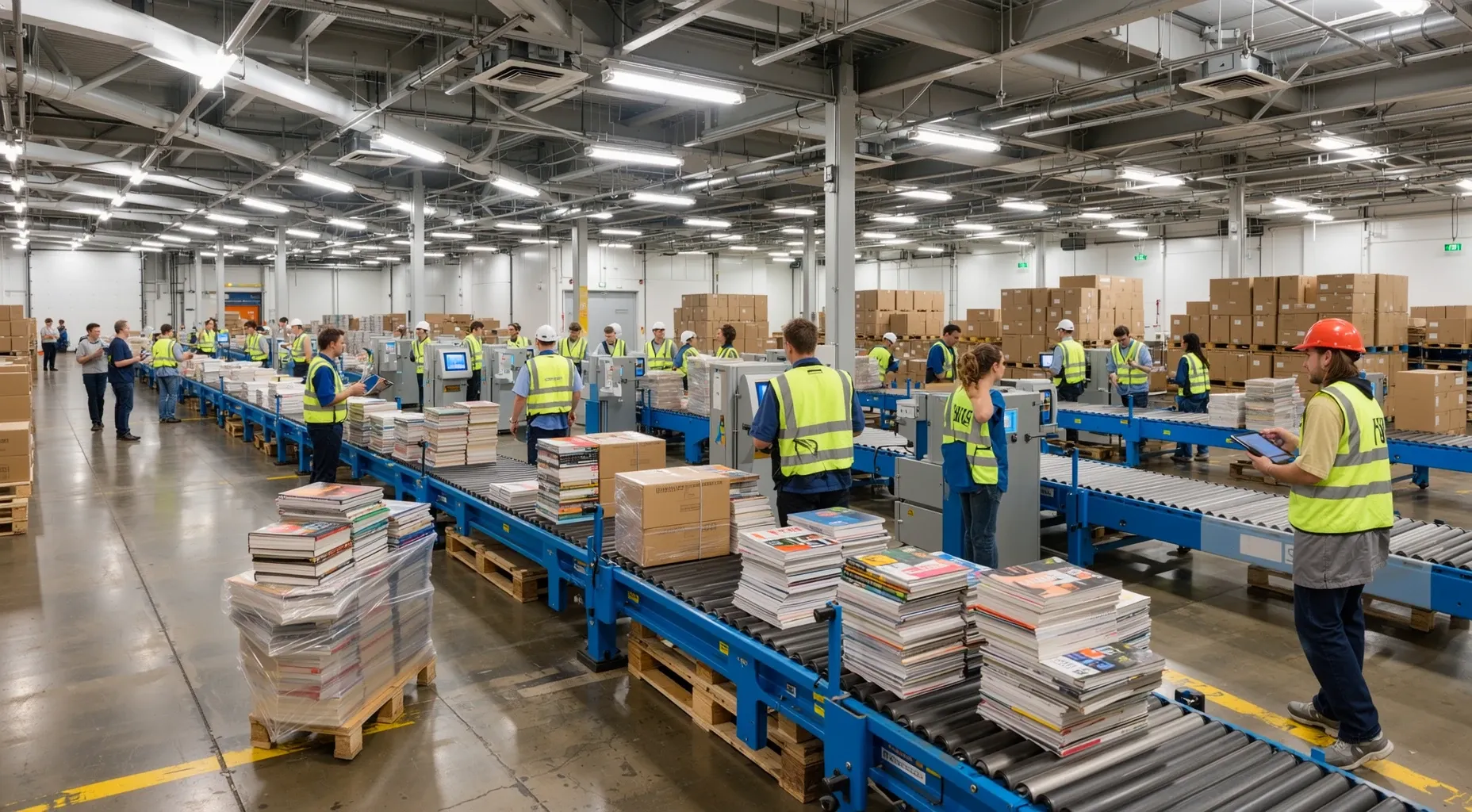
書籍、雑誌、新聞の卸売業者
Description
この産業に分類される企業は、書籍、雑誌、ジャーナル、および日次または週次新聞を含む印刷物を卸売で流通させることに重点を置いています。これらの卸売業者は、出版社とさまざまな小売業者との間の仲介者として機能し、定期刊行物の最終消費者への安定した供給を保証します。彼らの主な事業活動は、出版社または国内および国際の卸売業者から大量の出版物を購入することです。次に、これらの商品を独立した書店、新聞スタンド、図書館、学校、および大規模小売業者に販売します。このセクターのオペレーターは、限られた在庫を持つ小規模な個人経営の企業から、全国またはグローバル市場をサービスする大規模な多店舗企業まで、さまざまな規模と構造で異なります。一部の企業は、学術的なテキストに特化している一方、他の企業は、小説、ノンフィクション、およびニュースメディアの幅広い品揃えを取り扱っています。これらの事業の範囲は、単に商品を移動することを超えており、多くの企業は、新鮮な日次新聞の配送スケジュールを管理し、棚をタイムリーに補充するために、専門的な物流ネットワークを開発しています。情報と文学の流れを促進することで、彼らはコミュニティの文化的および教育インフラの重要な役割を果たしています。彼らのビジネスモデルは、競争の激しい市場で利益率を維持するために、大量割引と効率的なサプライチェーン管理に大きく依存しています。
Hierarchy
| Code | Title | Description |
|---|---|---|
| 42 | Wholesale Trade 2-digit sector | The Sector as a Whole The Wholesale Trade sector comprises establishments engaged in wholesaling merchandise, generally without transformation, and rendering services incidental to the sale of merchandise. The merchandise described in this sector includes the outputs of agriculture, mining, manufacturing, and certain information industries, such as publishing. The wholesaling process is an intermediate step in the distribution of merchandise. Wholesalers are organized to sell or arrange the purchase or sale of (a) goods for resale (i.e., goods sold to other wholesalers or retailers), (b) capital or durable nonconsumer goods, and (c) raw and intermediate materials and supplies used in production. Wholesalers sell merchandise to other businesses and normally operate from a warehouse or office. These warehouses and offices are characterized by having little or no display of merchandise. In addition, neither the design nor the location of the premises is intended to solicit walk-in traffic. Wholesalers do not normally use advertising directed to the general public. Customers are generally reached initially via telephone, in-person marketing, or by specialized advertising that may include Internet and other electronic means. Follow-up orders are either vendor-initiated or client-initiated, generally based on previous sales, and typically exhibit strong ties between sellers and buyers. In fact, transactions are often conducted between wholesalers and clients that have long-standing business relationships. This sector comprises two main types of wholesalers: merchant wholesalers that sell goods on their own account and agents and brokers that arrange sales and purchases for others generally for a commission or fee. (1) Establishments that sell goods on their own account are known as wholesale merchants, distributors, jobbers, drop shippers, and import/export merchants. Also included as wholesale merchants are sales offices and sales branches (but not retail stores) maintained by manufacturing, refining, or mining enterprises apart from their plants or mines for the purpose of marketing their products, and group purchasing organizations primarily purchasing and selling goods on their own account. Merchant wholesale establishments typically maintain their own warehouse, where they receive and handle goods for their customers. Goods are generally sold without transformation, but may include integral functions, such as sorting, packaging, labeling, and other marketing services. (2) Establishments arranging for the purchase or sale of goods owned by others or purchasing goods, generally on a commission basis are known as business-to-business electronic markets, agents and brokers, commission merchants, import/export agents and brokers, auction companies, group purchasing organizations (acting as agents), and manufacturers' representatives. These establishments operate from offices and generally do not own or handle the goods they sell. Some wholesale establishments may be connected with a single manufacturer and promote and sell the particular manufacturer's products to a wide range of other wholesalers or retailers. Other wholesalers may be connected to a retail chain, or limited number of retail chains, and only provide a variety of products needed by that particular retail operation(s). These wholesalers may obtain the products from a wide range of manufacturers. Still other wholesalers may not take title to the goods, but act as agents and brokers for a commission. Although, in general, wholesaling normally denotes sales in large volumes, durable nonconsumer goods may be sold in single units. Sales of capital or durable nonconsumer goods used in the production of goods and services, such as farm machinery, medium- and heavy-duty trucks, and industrial machinery, are always included in wholesale trade. |
| 424 | Merchant Wholesalers, Nondurable Goods 3-digit subsector | Industries in the Merchant Wholesalers, Nondurable Goods subsector sell nondurable goods to other businesses. Nondurable goods are items generally with a normal life expectancy of less than three years. Nondurable goods merchant wholesale trade establishments are engaged in wholesaling products, such as paper and paper products, chemicals and chemical products, drugs, textiles and textile products, apparel, footwear, groceries, farm products, petroleum and petroleum products, alcoholic beverages, books, magazines, newspapers, flowers and nursery stock, and tobacco products. The detailed industries within the subsector are organized in the classification structure based on the products sold. Agents and brokers primarily engaged in wholesaling nondurable goods, generally on a commission or fee basis, are classified in Subsector 425, Wholesale Trade Agents and Brokers. |
| 4249 | Miscellaneous Nondurable Goods Merchant Wholesalers 4-digit industry group | This industry group comprises establishments primarily engaged in the merchant wholesale distribution of nondurable goods, such as farm supplies; books, periodicals, and newspapers; flowers; nursery stock; paints; varnishes; tobacco and tobacco products; and other miscellaneous nondurable goods, such as cut Christmas trees and pet supplies. |
| 42492 | Book, Periodical, and Newspaper Merchant Wholesalers 5-digit NAICS industry | Book, Periodical, and Newspaper Merchant Wholesalers |
| 424920 | 書籍、雑誌、新聞の卸売業者 6-digit U.S. detail | この産業に分類される企業は、書籍、雑誌、ジャーナル、および日次または週次新聞を含む印刷物を卸売で流通させることに重点を置いています。これらの卸売業者は、出版社とさまざまな小売業者との間の仲介者として機能し、定期刊行物の最終消費者への安定した供給を保証します。彼らの主な事業活動は、出版社または国内および国際の卸売業者から大量の出版物を購入することです。次に、これらの商品を独立した書店、新聞スタンド、図書館、学校、および大規模小売業者に販売します。このセクターのオペレーターは、限られた在庫を持つ小規模な個人経営の企業から、全国またはグローバル市場をサービスする大規模な多店舗企業まで、さまざまな規模と構造で異なります。一部の企業は、学術的なテキストに特化している一方、他の企業は、小説、ノンフィクション、およびニュースメディアの幅広い品揃えを取り扱っています。これらの事業の範囲は、単に商品を移動することを超えており、多くの企業は、新鮮な日次新聞の配送スケジュールを管理し、棚をタイムリーに補充するために、専門的な物流ネットワークを開発しています。情報と文学の流れを促進することで、彼らはコミュニティの文化的および教育インフラの重要な役割を果たしています。彼らのビジネスモデルは、競争の激しい市場で利益率を維持するために、大量割引と効率的なサプライチェーン管理に大きく依存しています。 |
Need a supply chain stack that maps to this industry?
Use this NAICS classification as the starting point, then connect it to Item workflows across inventory, warehousing, order management, fulfillment, and transportation.
Index Items
古書、地図、書籍、パンフレット、雑誌、地図(地球儀、学校、壁用を除く)、新聞代理店、新聞、パンフレット、雑誌、教科書
How Item Can Help
Optimizes inventory levels for bulky and perishable books and newspapers by managing storage locations, picking accuracy, and reducing shrinkage during high-velocity distribution cycles.
Synchronizes sales channels to prevent overselling of periodicals while automating order routing to the nearest fulfillment center, ensuring faster delivery to retailers demanding quick turnaround.
Analyzes sales trends and subscription patterns to forecast demand for new book titles and seasonal publications, enabling dynamic pricing strategies and proactive stock replenishment for wholesale partners.
