映画館 (ドライブインを除く)
Description
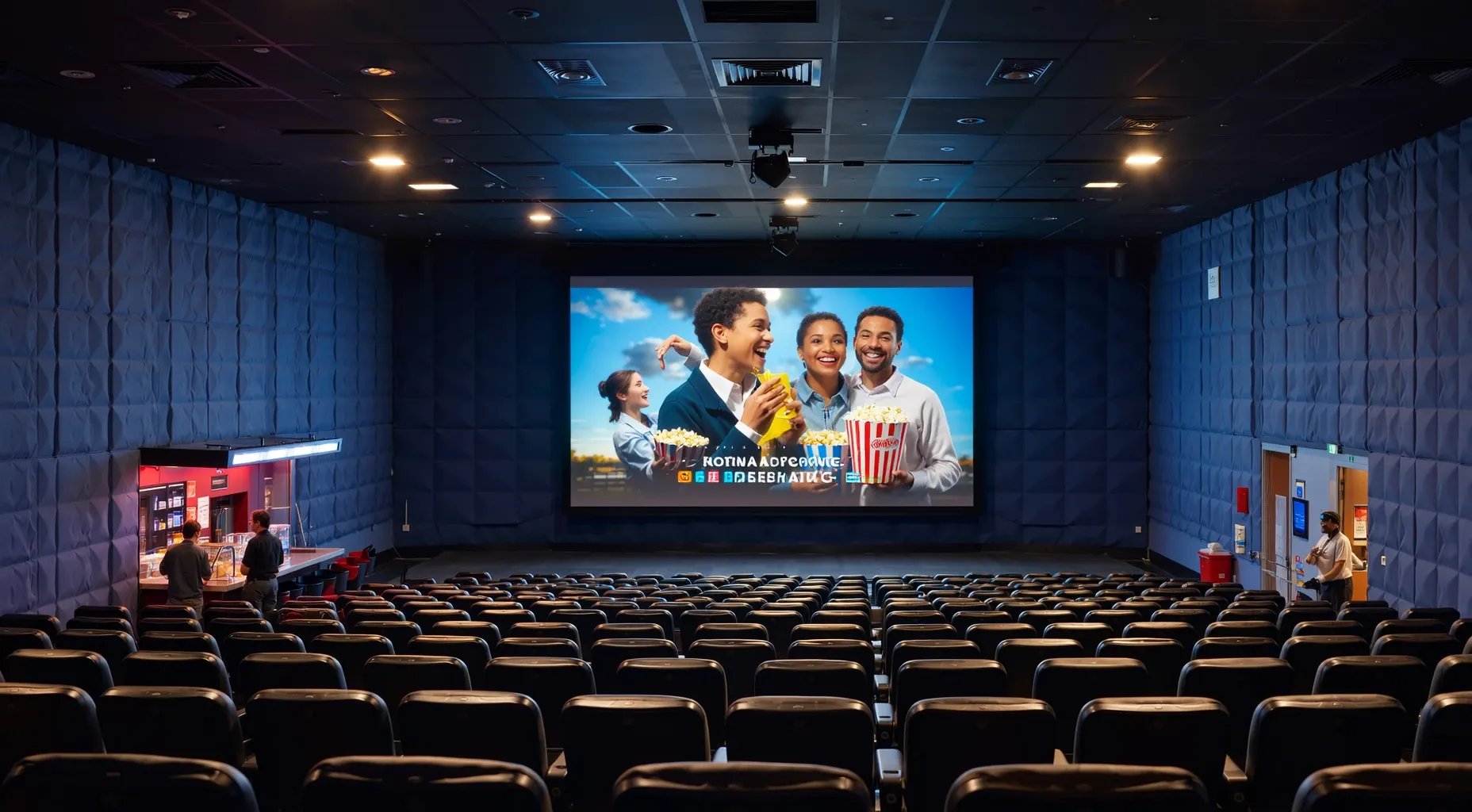
映画館は、大規模なスクリーンで映画を鑑賞するための重要な文化的な空間であり、観客が集まり、最新のプロジェクション技術と快適な座席を備えた屋内環境で映画を鑑賞します。ドライブインとは異なり、映画館は没入型の屋内環境を提供し、最高の視聴体験を最大限に高めるように設計されています。一般的なビジネス活動には、スタジオや配給業者からビデオまたはデジタルライセンスをレンタルすること、メインストリームのブロックバスターからインディペンデントなドキュメンタリーまで、さまざまなジャンルの映画を上映すること、および食品、飲料、および商品を販売するコンシションスタンドを運営することが含まれます。オペレーターは、限られたスクリーンを持つ小さな地域映画館から、複数の会場とリクライニングチェアやIMAX形式などのプレミアム座席を備えた大規模な都市複合施設まで、さまざまな規模で異なります。標準的な上映に加えて、これらの施設は、ニッチな視聴者を対象としたキュレーションされたコンテンツを求める、プレミア、レトロスペクティブ、および映画フェスティバルの展示など、特別なイベントを開催することがよくあります。一部の映画館は、劇場に直接来られない視聴者向けにストリーミングコードを販売することで、物理的な配布とデジタル配布の境界線を曖昧にしています。これらのオペレーターは、地域のエンターテインメント経済を維持し、ライブ映画イベントに固有のコミュニティの雰囲気を維持する上で重要な役割を果たしています。彼らの戦略的な場所は、定例の午後や夜のプログラムで群衆を引きつけ、年間を通してスケジュールを埋めることがよくあります。
Hierarchy
| Code | Title | Description |
|---|---|---|
| 51 | Information 2-digit sector | The Sector as a Whole The Information sector comprises establishments engaged in the following processes: (a) producing and distributing information and cultural products, (b) providing the means to transmit or distribute these products as well as data or communications, and (c) processing data. The main components of this sector are motion picture and sound recording industries; publishing industries, including software publishing; broadcasting and content providers; telecommunications industries; computing infrastructure providers, data processing, Web hosting, and related services; and Web search portals, libraries, archives, and other information services. The unique characteristics of information and cultural products, and of the processes involved in their production and distribution, distinguish the Information sector from the goods-producing and service-producing sectors. Some of these characteristics are: 1. Unlike traditional goods, an ''information or cultural product,'' such as an online newspaper or a television program, does not necessarily have tangible qualities, nor is it necessarily associated with a particular form. A movie can be viewed at a movie theater or through television broadcast, video-on-demand, or streaming services. A sound recording can be aired on radio, embedded in multimedia products, streamed, or sold at a record store. 2. Unlike traditional services, the delivery of these products does not require direct contact between the supplier and the consumer. 3. The value of these products to the consumer lies in their informational, educational, cultural, or entertainment content, not in the format in which they are distributed. Most of these products are protected from unlawful reproduction by copyright laws. 4. The intangible property aspect of information and cultural products makes the processes involved in their production and distribution very different from goods and services. Only those possessing the rights to these works are authorized to reproduce, alter, improve, and distribute them. Acquiring and using these rights often involves significant costs. In addition, technology has revolutionized the distribution of these products. It is possible to distribute them in a physical form, via broadcast, or online. 5. Distributors of information and cultural products can easily add value to the products they distribute. For instance, broadcasters add advertising not contained in the original product. This capacity means that unlike traditional goods distributors, they derive revenue not from sale of the distributed product to the final consumer, but from those who pay for the privilege of adding information to the original product. Similarly, a directory and mailing list publisher can acquire the rights to thousands of previously published newspaper and periodical articles and add new value by providing search and software and organizing the information in a way that facilitates research and retrieval. These products often command a much higher price than the original information. Excluded from this sector are establishments primarily engaged in custom design of software; mass reproducing software or other prerecorded audio and video material on magnetic or optical media; producing live artistic and cultural works or productions; and performing in or creating artistic and cultural works or productions as independent (i.e., freelance) individuals. |
| 512 | Motion Picture and Video Production 3-digit subsector | Industries in the Motion Picture and Video Production subsector group establishments involved in the production and distribution of motion pictures, videos, television programs, or commercials. While producers and distributors of motion pictures and videos issue works for sale as traditional publishers do, the processes are sufficiently different to warrant placing establishments engaged in these activities in a separate subsector. Production is typically a complex process that involves several distinct types of establishments that are engaged in activities, such as contracting with performers, creating the film or video content, and providing technical postproduction services. Distribution is often to exhibitors, such as theaters and broadcasters, rather than through the wholesale and retail distribution chain. When the product is in a mass-produced form, NAICS treats production and distribution as the major economic activity as it does in the Publishing Industries subsector, rather than as a subsidiary activity to the manufacture of such products. This subsector does not include establishments primarily engaged in the wholesale distribution of video and sound recordings, such as compact discs and audio tapes; these establishments are included in the Wholesale Trade sector. Reproduction of video and sound recordings that is carried out separately from establishments engaged in production and distribution is treated in NAICS as a manufacturing activity. Establishments that primarily acquire the rights to distribute video and sound recordings to the public via television or radio broadcast or streaming distribution services are classified in Subsector 516, Broadcasting and Content Providers. Establishments using facilities and infrastructure that they operate to distribute cable and satellite television subscription programming are included in Subsector 517, Telecommunications. |
| 5121 | Motion Picture and Video Production 4-digit industry group | This industry group comprises establishments primarily engaged in the production and/or distribution of motion pictures, videos, television programs, or commercials; in the exhibition of motion pictures; or in the provision of postproduction and related services. |
| 51213 | Motion Picture and Video Production 5-digit NAICS industry | This industry comprises establishments primarily engaged in operating motion picture theaters and/or exhibiting motion pictures or videos at film festivals, and so forth. |
| 512131 | 映画館 (ドライブインを除く) 6-digit U.S. detail | 映画館は、大規模なスクリーンで映画を鑑賞するための重要な文化的な空間であり、観客が集まり、最新のプロジェクション技術と快適な座席を備えた屋内環境で映画を鑑賞します。ドライブインとは異なり、映画館は没入型の屋内環境を提供し、最高の視聴体験を最大限に高めるように設計されています。一般的なビジネス活動には、スタジオや配給業者からビデオまたはデジタルライセンスをレンタルすること、メインストリームのブロックバスターからインディペンデントなドキュメンタリーまで、さまざまなジャンルの映画を上映すること、および食品、飲料、および商品を販売するコンシションスタンドを運営することが含まれます。オペレーターは、限られたスクリーンを持つ小さな地域映画館から、複数の会場とリクライニングチェアやIMAX形式などのプレミアム座席を備えた大規模な都市複合施設まで、さまざまな規模で異なります。標準的な上映に加えて、これらの施設は、ニッチな視聴者を対象としたキュレーションされたコンテンツを求める、プレミア、レトロスペクティブ、および映画フェスティバルの展示など、特別なイベントを開催することがよくあります。一部の映画館は、劇場に直接来られない視聴者向けにストリーミングコードを販売することで、物理的な配布とデジタル配布の境界線を曖昧にしています。これらのオペレーターは、地域のエンターテインメント経済を維持し、ライブ映画イベントに固有のコミュニティの雰囲気を維持する上で重要な役割を果たしています。彼らの戦略的な場所は、定例の午後や夜のプログラムで群衆を引きつけ、年間を通してスケジュールを埋めることがよくあります。 |
Need a supply chain stack that maps to this industry?
Use this NAICS classification as the starting point, then connect it to Item workflows across inventory, warehousing, order management, fulfillment, and transportation.
Index Items
映画館
映画フェスティバルの主催者
映画上映
航空会社向け映画上映
移動式映画上映
屋内映画館
映画館 (ドライブインを除く)
映画館 (ドライブインを除く)
屋内映画館
How Item Can Help
Item.com's Warehouse Management System optimizes inventory levels for physical copies of films, ensuring theaters have the right media readily available while reducing storage costs.
The Order Management System streamlines ticket purchasing by integrating with local booking platforms to instantly confirm seat availability and process payments without manual intervention.
Advanced analytics tools analyze ticket sales patterns to predict customer preferences, enabling theaters to dynamically adjust movie pricing and create personalized marketing campaigns for patrons.
External Resources
Census.gov NAICS Detail
Official US Census Bureau definition and scope for NAICS 512131.
Amateur Motion Picture Association
Trade association representing independent theaters and filmmakers.
National Association of Theater Owners
Industry group providing advocacy, resources, and certification for cinema operators.
U.S. Department of Commerce, Economic Census
Government statistical directory defining and categorizing motion picture theater businesses.
