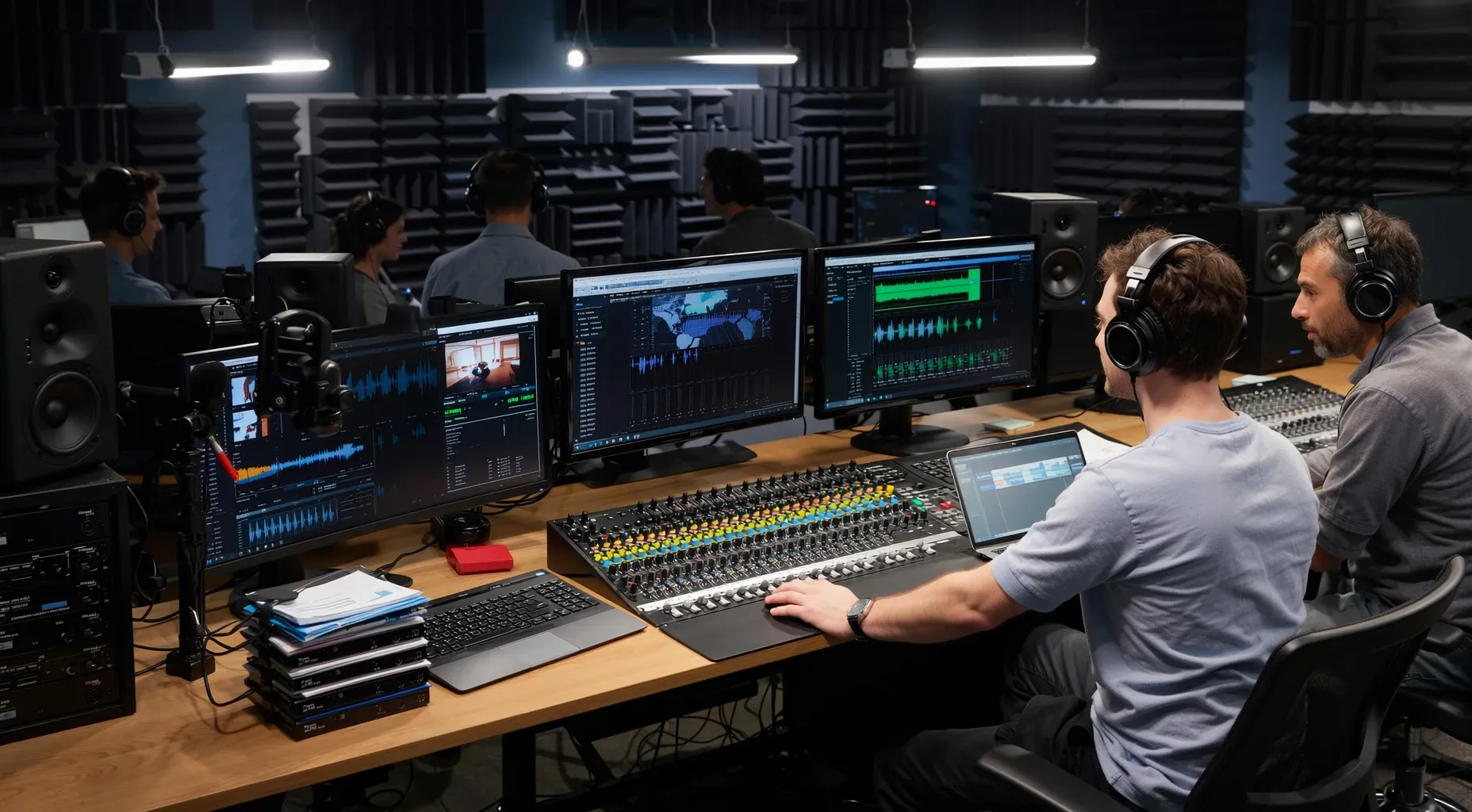
その他の音響録音産業
Description
この産業は、主に音響録音サービス(レコーディング、流通、音楽出版、スタジオでの音響録音を除く)を提供する事業を主な対象とする。
Hierarchy
| Code | Title | Description |
|---|---|---|
| 51 | Information 2-digit sector | The Sector as a Whole The Information sector comprises establishments engaged in the following processes: (a) producing and distributing information and cultural products, (b) providing the means to transmit or distribute these products as well as data or communications, and (c) processing data. The main components of this sector are motion picture and sound recording industries; publishing industries, including software publishing; broadcasting and content providers; telecommunications industries; computing infrastructure providers, data processing, Web hosting, and related services; and Web search portals, libraries, archives, and other information services. The unique characteristics of information and cultural products, and of the processes involved in their production and distribution, distinguish the Information sector from the goods-producing and service-producing sectors. Some of these characteristics are: 1. Unlike traditional goods, an ''information or cultural product,'' such as an online newspaper or a television program, does not necessarily have tangible qualities, nor is it necessarily associated with a particular form. A movie can be viewed at a movie theater or through television broadcast, video-on-demand, or streaming services. A sound recording can be aired on radio, embedded in multimedia products, streamed, or sold at a record store. 2. Unlike traditional services, the delivery of these products does not require direct contact between the supplier and the consumer. 3. The value of these products to the consumer lies in their informational, educational, cultural, or entertainment content, not in the format in which they are distributed. Most of these products are protected from unlawful reproduction by copyright laws. 4. The intangible property aspect of information and cultural products makes the processes involved in their production and distribution very different from goods and services. Only those possessing the rights to these works are authorized to reproduce, alter, improve, and distribute them. Acquiring and using these rights often involves significant costs. In addition, technology has revolutionized the distribution of these products. It is possible to distribute them in a physical form, via broadcast, or online. 5. Distributors of information and cultural products can easily add value to the products they distribute. For instance, broadcasters add advertising not contained in the original product. This capacity means that unlike traditional goods distributors, they derive revenue not from sale of the distributed product to the final consumer, but from those who pay for the privilege of adding information to the original product. Similarly, a directory and mailing list publisher can acquire the rights to thousands of previously published newspaper and periodical articles and add new value by providing search and software and organizing the information in a way that facilitates research and retrieval. These products often command a much higher price than the original information. Excluded from this sector are establishments primarily engaged in custom design of software; mass reproducing software or other prerecorded audio and video material on magnetic or optical media; producing live artistic and cultural works or productions; and performing in or creating artistic and cultural works or productions as independent (i.e., freelance) individuals. |
| 512 | Other Sound Recording Industries 3-digit subsector | Industries in the Other Sound Recording Industries subsector group establishments involved in the production and distribution of musical recordings, publishing music, or providing sound recording and related services. While producers and distributors of musical recordings issue works for sale as traditional publishers do, the processes are sufficiently different to warrant placing establishments engaged in these activities in a separate subsector. Production is typically a complex process that involves several distinct types of establishments that are engaged in activities, such as contracting with performers, creating the film or sound content, and providing technical postproduction services. Distribution is often to exhibitors, such as theaters and broadcasters, rather than through the wholesale and retail distribution chain. When the product is in a mass-produced form, NAICS treats production and distribution as the major economic activity as it does in the Publishing Industries subsector, rather than as a subsidiary activity to the manufacture of such products. This subsector does not include establishments primarily engaged in the wholesale distribution of video and sound recordings, such as compact discs and audio tapes; these establishments are included in the Wholesale Trade sector. Reproduction of video and sound recordings that is carried out separately from establishments engaged in production and distribution is treated in NAICS as a manufacturing activity. Establishments that primarily acquire the rights to distribute video and sound recordings to the public via television or radio broadcast or streaming distribution services are classified in Subsector 516, Broadcasting and Content Providers. Establishments using facilities and infrastructure that they operate to distribute cable and satellite television subscription programming are included in Subsector 517, Telecommunications. |
| 5122 | Other Sound Recording Industries 4-digit industry group | This industry group comprises establishments primarily engaged in producing and distributing musical recordings, publishing music, or providing sound recording and related services. |
| 51229 | Other Sound Recording Industries 5-digit NAICS industry | See industry description for 512290. |
| 512290 | その他の音響録音産業 6-digit U.S. detail | この産業は、主に音響録音サービス(レコーディング、流通、音楽出版、スタジオでの音響録音を除く)を提供する事業を主な対象とする。 |
Need a supply chain stack that maps to this industry?
Use this NAICS classification as the starting point, then connect it to Item workflows across inventory, warehousing, order management, fulfillment, and transportation.
Classification References
- 01音楽作品の様々なメディアでの使用を促進および承認することは、業界 512230、音楽出版社に分類されます。
- 02音楽パフォーマンスの録音のための施設および技術的な専門知識の提供は、業界 512240、サウンドレコーディングスタジオに分類されます。
- 03録音および/またはリリース、プロモーション、およびサウンドレコーディングの流通は、業界 512250、レコード生産および流通に分類されます。
- 04録音された製品の大量複製は、業界 334610、磁気および光学メディアの製造および複製に分類されます。
- 05パフォーマンス芸術の公演の組織およびプロモーションは、業界グループ 7113、パフォーマンス、スポーツ、および類似イベントのプロモーターに分類されます。
Index Items
会議または会議のオーディオ録音
プロデューサー、録音ラジオ番組(独立系プロデューサーを除く)
ラジオ番組録音生産(独立系プロデューサーを除く)
テープまたはディスクに録音された書籍(出版社を除く)
セミナーおよび会議、オーディオ録音
ストックミュージックおよびその他のオーディオサービス
ストックサウンドライブラリ(例:一般的な背景音、ストックミュージック)
How Item Can Help
Item.com's Warehouse Management System streamlines the physical movement and storage of fragile audio equipment and recording media by automating inventory tracking and optimizing pick paths.
The Order Management System provides end-to-end visibility for tracking shipments from manufacturing plants to studios, ensuring time-sensitive materials like tapes or vinyl are delivered on schedule.
This tool analyzes shipment and inventory patterns to predict peak demand during major music release seasons, helping businesses proactively adjust stock levels and reduce costs.
External Resources
Census.gov NAICS Detail
Official US Census Bureau definition and scope for NAICS 512290.
Recording Industry Association of America
Leading trade association providing resources and advocacy for the global recording industry.
US Census Bureau NAICS Lookup
Official government dataset page explaining NAICS 512290 and related sound recording statistics.
MusicBusinessGlobal - Sound Recording
Comprehensive industry news and directory site covering the economics and trends of sound recording.
