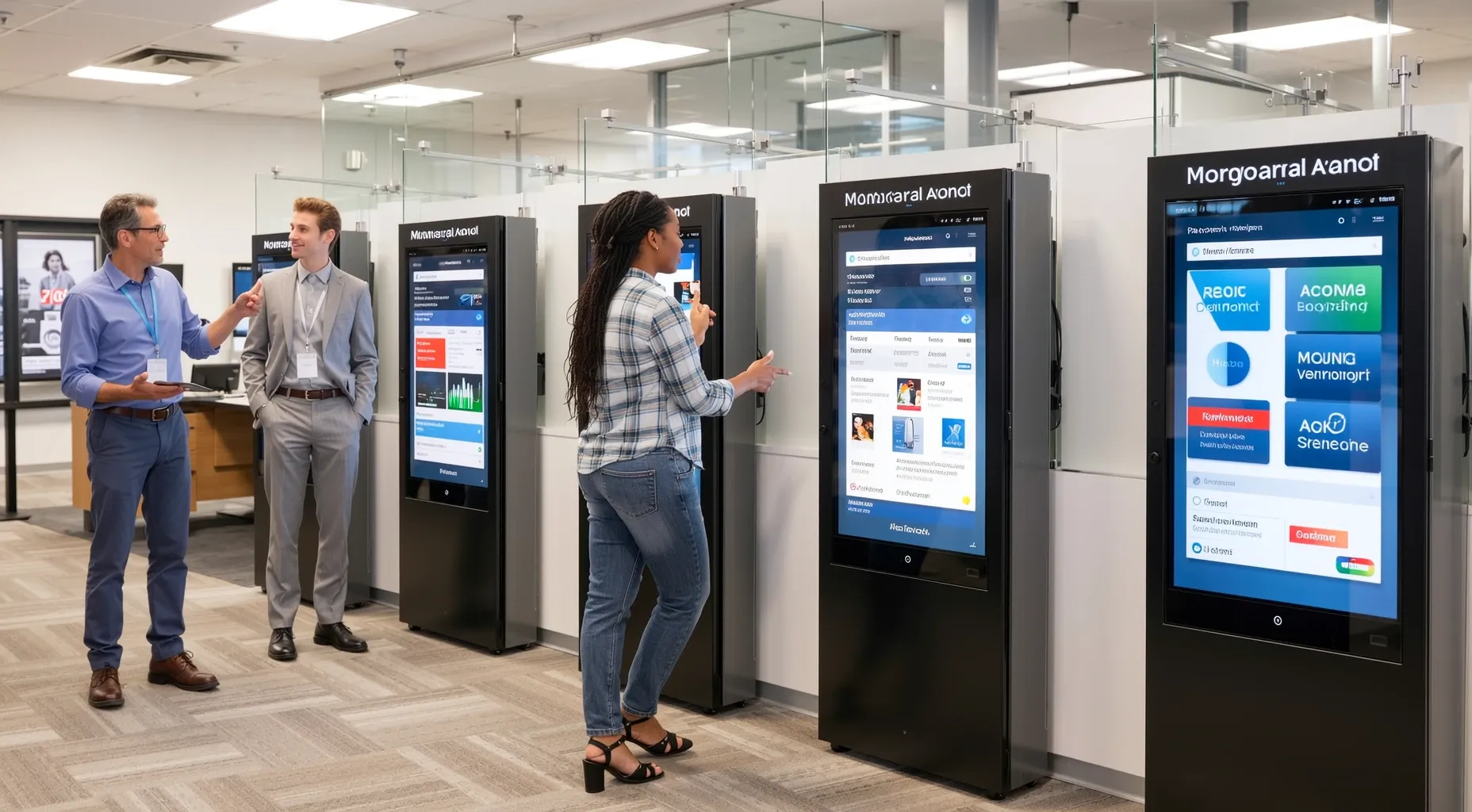
ワイヤレス通信サービスの代理店
Description
この米国産業は、主にワイヤレス通信事業者の代理店および卸売業者として、ワイヤレスプランを手数料で販売することに重点を置いた事業所で構成されています。 例: MVNO(モバイル仮想ネットワークオペレーター)の代理店 ワイヤレス通信事業者の代理店 セルラー電話店、セルラー電話サービスの代理店としてセルラー電話プランを販売 モバイル電話店、モバイル電話サービスの代理店としてモバイル電話プランを販売 ワイヤレス通信事業者の代理店として、ワイヤレス通信事業者の代理店としてワイヤレス通信プランを販売
Hierarchy
| Code | Title | Description |
|---|---|---|
| 51 | Information 2-digit sector | The Sector as a Whole The Information sector comprises establishments engaged in the following processes: (a) producing and distributing information and cultural products, (b) providing the means to transmit or distribute these products as well as data or communications, and (c) processing data. The main components of this sector are motion picture and sound recording industries; publishing industries, including software publishing; broadcasting and content providers; telecommunications industries; computing infrastructure providers, data processing, Web hosting, and related services; and Web search portals, libraries, archives, and other information services. The unique characteristics of information and cultural products, and of the processes involved in their production and distribution, distinguish the Information sector from the goods-producing and service-producing sectors. Some of these characteristics are: 1. Unlike traditional goods, an ''information or cultural product,'' such as an online newspaper or a television program, does not necessarily have tangible qualities, nor is it necessarily associated with a particular form. A movie can be viewed at a movie theater or through television broadcast, video-on-demand, or streaming services. A sound recording can be aired on radio, embedded in multimedia products, streamed, or sold at a record store. 2. Unlike traditional services, the delivery of these products does not require direct contact between the supplier and the consumer. 3. The value of these products to the consumer lies in their informational, educational, cultural, or entertainment content, not in the format in which they are distributed. Most of these products are protected from unlawful reproduction by copyright laws. 4. The intangible property aspect of information and cultural products makes the processes involved in their production and distribution very different from goods and services. Only those possessing the rights to these works are authorized to reproduce, alter, improve, and distribute them. Acquiring and using these rights often involves significant costs. In addition, technology has revolutionized the distribution of these products. It is possible to distribute them in a physical form, via broadcast, or online. 5. Distributors of information and cultural products can easily add value to the products they distribute. For instance, broadcasters add advertising not contained in the original product. This capacity means that unlike traditional goods distributors, they derive revenue not from sale of the distributed product to the final consumer, but from those who pay for the privilege of adding information to the original product. Similarly, a directory and mailing list publisher can acquire the rights to thousands of previously published newspaper and periodical articles and add new value by providing search and software and organizing the information in a way that facilitates research and retrieval. These products often command a much higher price than the original information. Excluded from this sector are establishments primarily engaged in custom design of software; mass reproducing software or other prerecorded audio and video material on magnetic or optical media; producing live artistic and cultural works or productions; and performing in or creating artistic and cultural works or productions as independent (i.e., freelance) individuals. |
| 517 | Telecommunications 3-digit subsector | Industries in the Telecommunications subsector group establishments that provide telecommunications and the services related to that activity (e.g., telephony, including Voice over Internet Protocol (VoIP); cable and satellite television distribution services; Internet access; telecommunications reselling services). The Telecommunications subsector is primarily engaged in operating and/or providing access to facilities for the transmission of voice, data, text, sound, and video. Transmission facilities may be based on a single technology or a combination of technologies. Establishments primarily engaged as independent contractors in the installation and maintenance of telecommunications systems are classified in Sector 23, Construction. |
| 5171 | Wired and Wireless Telecommunications (except Satellite) 4-digit industry group | This industry group comprises establishments primarily engaged in (1) operating transmission facilities and infrastructure that they own and/or lease, and providing telecommunications services using wired and wireless telecommunications networks; (2) reselling wired and wireless telecommunications services (except satellite); and (3) acting as agents for wireless telecommunications services. |
| 51712 | Telecommunications Resellers and Agents for Wireless Telecommunication Services 5-digit NAICS industry | This industry comprises establishments primarily engaged in (1) purchasing access and network capacity from owners and operators of telecommunications networks and reselling wired and wireless telecommunications services to businesses and households (except satellite telecommunications) or (2) acting as agents for wireless telecommunications carriers and resellers, selling wireless plans on a commission basis. Establishments in this industry do not operate as telecommunications carriers. Mobile virtual network operators (MVNOs) are included in this industry. Illustrative Examples: Agents for wireless telecommunications carriers Cellular telephone stores, selling cellular phone service plans on an agent basis Mobile phone stores, selling mobile phone service plans on an agent basis Wired telecommunications resellers Wireless phone service plan sales agents, selling on behalf of wireless telecommunications carriers Wireless telecommunications resellers (except satellite telecommunications) |
| 517122 | ワイヤレス通信サービスの代理店 6-digit U.S. detail | この米国産業は、主にワイヤレス通信事業者の代理店および卸売業者として、ワイヤレスプランを手数料で販売することに重点を置いた事業所で構成されています。 例: MVNO(モバイル仮想ネットワークオペレーター)の代理店 ワイヤレス通信事業者の代理店 セルラー電話店、セルラー電話サービスの代理店としてセルラー電話プランを販売 モバイル電話店、モバイル電話サービスの代理店としてモバイル電話プランを販売 ワイヤレス通信事業者の代理店として、ワイヤレス通信事業者の代理店としてワイヤレス通信プランを販売 |
Need a supply chain stack that maps to this industry?
Use this NAICS classification as the starting point, then connect it to Item workflows across inventory, warehousing, order management, fulfillment, and transportation.
Classification References
- 01無線通信ネットワークの運用および保守--は、U.S.産業517112、無線通信事業者(衛星を除く)に分類されます。
- 02無線通信サービス(衛星通信および無線通信事業者の代理店および小売業者を除く)の販売(ネットワークを運営しない場合)--は、U.S.産業517121、通信販売業者に分類されます。
- 03セル電話およびアクセサリーの販売(サービスプランの販売を除く)--は、セクター42、卸売貿易、またはセクター44-45、小売貿易に分類されます。
Index Items
モバイル仮想ネットワークオペレーター(MVNO)の代理店
無線通信事業者の代理店
セル電話サービスプランを代理店として販売するセル電話店
セル電話サービスプランを代理店として販売するモバイル電話店
無線通信事業者の代理として無線電話サービスプランを販売する無線電話販売代理店
無線電話サービスプランを代理店として販売する無線電話店
How Item Can Help
Data Intelligence platforms analyze real-time market trends and carrier demand fluctuations to help agents forecast inventory needs and adjust their stock levels proactively.
External Resources
Census.gov NAICS Detail
Official US Census Bureau definition and scope for NAICS 517122.
American Wireless Association
The leading trade association for the wireless communications industry representing over 20,000 companies.
Bureau of Labor Statistics Telecommunications Workers
Official government data page detailing employment statistics and occupational outlook for telecommunications workers.
FCC Wireless Industry Resources
Federal Communications Commission portal providing regulations, rules, and resources for wireless telecommunications services providers.
