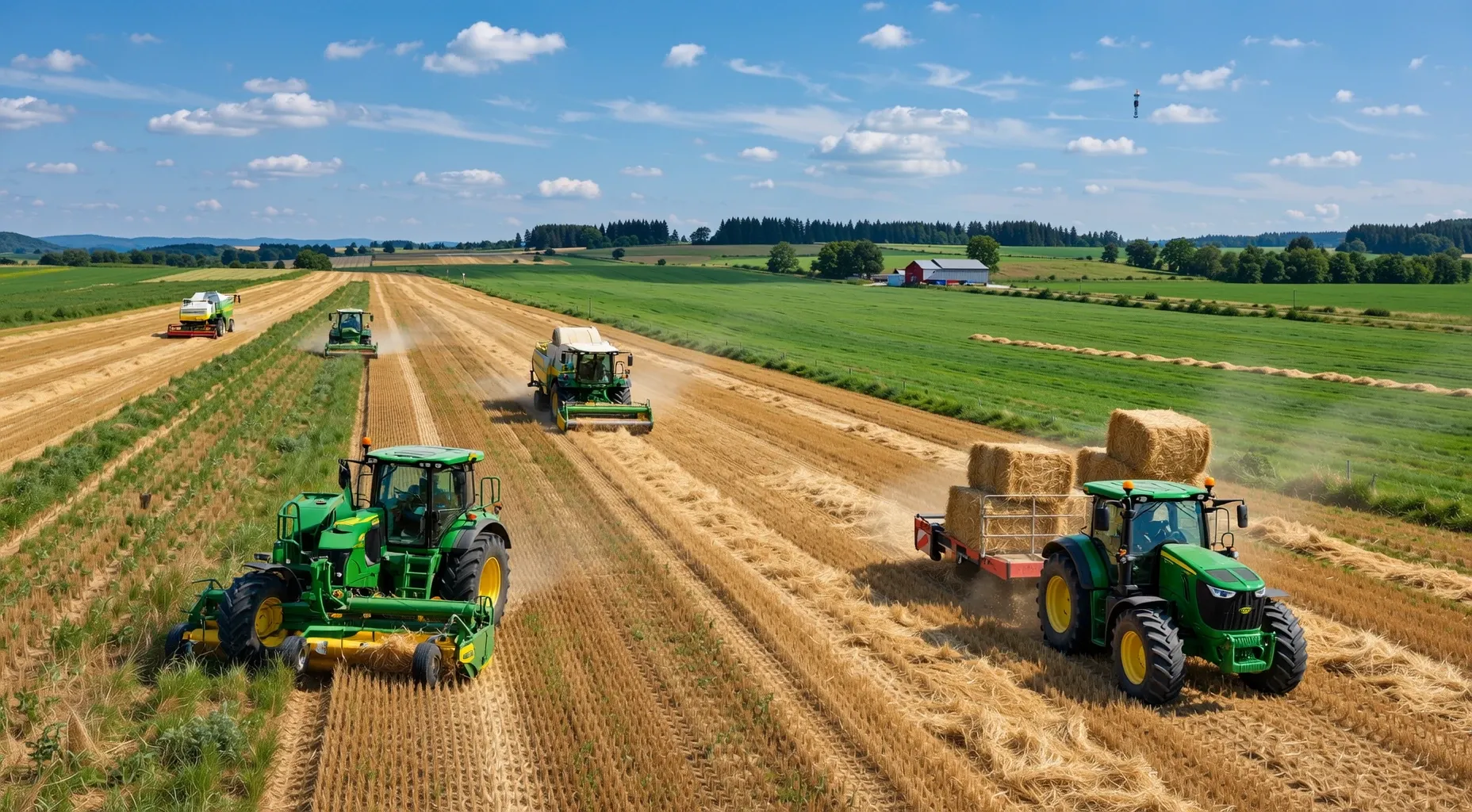
Hay Farming
Beschreibung
Die Aktivitäten in diesem Sektor konzentrieren sich auf den Anbau und die Ernte von Futterpflanzen, die speziell für Tierfutter und nicht für den menschlichen Verzehr bestimmt sind. Die Hauptgeschäfte umfassen das Pflanzen, Bewirtschaften und Ernten großer Mengen von Gräsern, Hülsenfrüchten wie Alfalfa und Klee oder gemischten Arten während günstiger Wachstumsperioden. Diese Betriebe erfordern erhebliche Landbesitz oder langfristige Pachtverträge, ausgeklügelte Bewässerungssysteme und Präzisionsmaschinen wie Mähwerke und Ballenpressen, um die Ernte zu Ballen oder Stroh zu verarbeiten. Während einige Tätigkeiten kleine Familienbetriebe sind, die sich auf manuelle Arbeit verlassen, werden viele von großen Agrarunternehmen verwaltet, die automatisierte Ausrüstung nutzen, um hohe Produktionsanforderungen zu erfüllen. Die Größenordnung dieser Betriebe variiert stark, von lokalen Gemeinschaftsgärten, die benachbarte Viehhalter versorgen, bis hin zu weitläufigen kommerziellen Plantagen, die regionale Fleischverarbeitungsbetriebe oder Milchgenossenschaften versorgen. Die saisonale Abstimmung ist entscheidend, da Wetterbedingungen den Ertrag und die Qualität stark beeinflussen, was Versicherungen und Wettermanagement zu wesentlichen Geschäftsaktivitäten macht. Die finanzielle Gesundheit hängt oft von günstigen Erntepreisen und der Fähigkeit ab, Ernten für einen späteren Verkauf zu lagern. Dieser Sektor bleibt ein Eckpfeiler der Agrarwirtschaft und sichert eine kontinuierliche Nahrungsmittelversorgung für Weidevieh, Pferde und Geflügel und unterstützt gleichzeitig die ländliche Beschäftigung sowie die landwirtschaftlichen Lebensgrundlagen in verschiedenen geografischen Regionen.
Hierarchie
| Code | Titel | Beschreibung |
|---|---|---|
| 11 | Land-, Forst- und Fischerei sowie Jagd 2-stelliger Sektor | Der Sektor als Ganzes Der Sektor Land-, Forst-, Fischerei- und Jagdwirtschaft umfasst Betriebe, die hauptsächlich mit dem Anbau von Feldfrüchten, der Tierhaltung, der Holzernte sowie der Ernte von Fischen und anderen Tieren aus einem Bauernhof, einer Ranch oder ihren natürlichen Lebensräumen befasst sind. Die Betriebe in diesem Sektor werden oft als Bauernhöfe, Ranchs, Milchviehanlagen, Gewächshäuser, Baumschulen, Obstgärten oder Brutstätten beschrieben. Ein Bauernhof kann aus einem einzigen Grundstück oder aus mehreren separaten Grundstücken bestehen, die unter unterschiedlichen Pachtverhältnissen gehalten werden. Beispielsweise kann ein Grundstück vom Betreiber des Hofes besessen und ein anderes gemietet sein. Er kann allein vom Betreiber oder mit Hilfe von Haushaltsmitgliedern oder Angestellten betrieben werden, oder er kann von einer Partnerschaft, einer Gesellschaft oder einer anderen Art von Organisation betrieben werden. Wenn ein Landbesitzer einen oder mehrere Pächter, Mieter, Anbauer oder Verwalter hat, gilt das von jedem betriebene Land als Bauernhof. Der Sektor unterscheidet zwei grundlegende Tätigkeiten: die landwirtschaftliche Produktion und die landwirtschaftlichen Unterstützungsleistungen. Die landwirtschaftliche Produktion umfasst Betriebe, die den gesamten Betrieb eines Bauernhofs oder einer Ranch durchführen, wie beispielsweise selbstständige Landwirte und Pächterlandwirte. Die landwirtschaftlichen Unterstützungsleistungen umfassen Betriebe, die eine oder mehrere Tätigkeiten im Zusammenhang mit dem Hofbetrieb ausführen, wie z. B. Bodenbearbeitung, Aussaat, Ernte und Bewirtschaftung, auf Vertrags- oder Honorarbasis. Von der Land-, Forst-, Fischerei- und Jagdwirtschaft sind Betriebe ausgeschlossen, die sich hauptsächlich mit landwirtschaftlicher Forschung befassen (z. B. Versuchsanbaubetriebe) und staatliche Einrichtungen, die sich hauptsächlich mit der Verwaltung von Programmen zur Regulierung und Erhaltung der Land-, Mineral-, Wildtier- und Forstnutzung befassen. Diese Betriebe werden bzw. in der Branche 54171, Forschung und Entwicklung in den Natur-, Ingenieur- und Lebenswissenschaften; und in der Branche 92412, Verwaltung von Naturschutzprogrammen, klassifiziert. |
| 111 | Ernteproduktion 3-stelliger Teilsektor | Die Industrien im Untersektor der Pflanzenproduktion bauen hauptsächlich Nahrungsmittel und Fasern an. Der Untersektor umfasst Betriebe wie landwirtschaftliche Betriebe, Obstgärten, Weinberge, Gewächshäuser und Baumschulen, die hauptsächlich mit dem Anbau von Pflanzen, Kulturen, Weinreben oder Bäumen und deren Samen befasst sind. Die Industrien in diesem Untersektor werden nach Ähnlichkeit der Produktionsaktivität gruppiert, einschließlich biologischer und physiologischer Merkmale sowie wirtschaftlicher Anforderungen, der Dauer der Vegetationsperiode, des Grades der Fruchtfolge, des Umfangs der Input-Spezialisierung, des Arbeitskräftebedarfs und des Kapitalbedarfs. Der Produktionsprozess ist typischerweise abgeschlossen, wenn das Rohprodukt oder die Ware, die angebaut wurde, den „Hofausgang“ für den Markt erreicht, das heißt, am Punkt des ersten Verkaufs oder der Preisbestimmung. Betriebe werden im Untersektor der Pflanzenproduktion klassifiziert, wenn der Pflanzenanbau (d. h. der Wert der Pflanzen für den Markt) ein halbes oder mehr des gesamten landwirtschaftlichen Produktionsvolumens des Betriebs ausmacht. Innerhalb des Untersektors werden Betriebe in einer bestimmten Industrie klassifiziert, wenn ein Produkt oder eine Produktfamilie (d. h. Ölsaat- und Getreideanbau, Gemüse- und Melonenanbau, Obst- und Nussbaumkulturen) ein halbes oder mehr der landwirtschaftlichen Produktion des Betriebs ausmacht. Betriebe mit einem halben oder mehr Pflanzenanbau, bei denen kein Produkt oder keine Produktfamilie einer Industrie ein halbes des landwirtschaftlichen Produktionsvolumens des Betriebs ausmacht, werden als allgemeiner Mischpflanzenanbau behandelt und in Industrie 11199, Alle anderen Pflanzenanbau, eingestuft. Die Industrien im Untersektor der Pflanzenproduktion umfassen Betriebe, die besitzen, betreiben und verwalten, sowie solche, die nur betreiben und verwalten. Diejenigen, die nur verwalten, werden im Untersektor 115, Unterstützende Tätigkeiten für Land- und Forstwirtschaft, klassifiziert. Betriebe, die Wasserpflanzen in kontrollierten oder ausgewählten aquatischen Umgebungen züchten, werden im Untersektor 112, Tierhaltung und Aquakultur, klassifiziert. |
| 1119 | Sonstige Pflanzenbau 4-stellige Branchengruppe | Diese Industriegruppe umfasst Betriebe, die sich hauptsächlich mit (1) dem Anbau von Pflanzen (mit Ausnahme von Ölsaaten und/oder Getreide; Gemüse und/oder Melonen; Obst und Nuss; sowie Gewächshaus-, Baumschule- und/oder Blumenkulturen) befassen, wie Tabak, Baumwolle, Zuckerrohr, Heu, Zuckerrüben, Erdnüsse, Agaven, Kräuter und Gewürze sowie Samen für Heu und Gras, oder (2) dem Anbau einer Kombination von Pflanzen (mit Ausnahme einer Kombination aus Ölsaaten und Getreide sowie einer Kombination aus Obst und Nüssen). |
| 11194 | Hay Farming 5-stellige NAICS-Branche | Siehe Branchenbeschreibung für 111940. |
| 111940 | Hay Farming 6-stelliger US-Detailcode | Die Aktivitäten in diesem Sektor konzentrieren sich auf den Anbau und die Ernte von Futterpflanzen, die speziell für Tierfutter und nicht für den menschlichen Verzehr bestimmt sind. Die Hauptgeschäfte umfassen das Pflanzen, Bewirtschaften und Ernten großer Mengen von Gräsern, Hülsenfrüchten wie Alfalfa und Klee oder gemischten Arten während günstiger Wachstumsperioden. Diese Betriebe erfordern erhebliche Landbesitz oder langfristige Pachtverträge, ausgeklügelte Bewässerungssysteme und Präzisionsmaschinen wie Mähwerke und Ballenpressen, um die Ernte zu Ballen oder Stroh zu verarbeiten. Während einige Tätigkeiten kleine Familienbetriebe sind, die sich auf manuelle Arbeit verlassen, werden viele von großen Agrarunternehmen verwaltet, die automatisierte Ausrüstung nutzen, um hohe Produktionsanforderungen zu erfüllen. Die Größenordnung dieser Betriebe variiert stark, von lokalen Gemeinschaftsgärten, die benachbarte Viehhalter versorgen, bis hin zu weitläufigen kommerziellen Plantagen, die regionale Fleischverarbeitungsbetriebe oder Milchgenossenschaften versorgen. Die saisonale Abstimmung ist entscheidend, da Wetterbedingungen den Ertrag und die Qualität stark beeinflussen, was Versicherungen und Wettermanagement zu wesentlichen Geschäftsaktivitäten macht. Die finanzielle Gesundheit hängt oft von günstigen Erntepreisen und der Fähigkeit ab, Ernten für einen späteren Verkauf zu lagern. Dieser Sektor bleibt ein Eckpfeiler der Agrarwirtschaft und sichert eine kontinuierliche Nahrungsmittelversorgung für Weidevieh, Pferde und Geflügel und unterstützt gleichzeitig die ländliche Beschäftigung sowie die landwirtschaftlichen Lebensgrundlagen in verschiedenen geografischen Regionen. |
Benötigen Sie eine Supply-Chain-Plattform, die zu dieser Branche passt?
Nutzen Sie diese NAICS-Klassifizierung als Ausgangspunkt und verbinden Sie sie anschließend mit Item-Workflows für Bestand, Lager, Auftragsverwaltung, Fulfillment und Transport.
Klassifizierungsreferenzen
- 01Getreideheu anbauen – wird in der Industriegruppe 1111, Ölsaat- und Getreideanbau, eingestuft; und
- 02Gras- und Heusamen anbauen – wird in der US-Industrie 111998, Sonstige landwirtschaftliche Kulturen, eingestuft.
Indexeinträge
Luzernheu-Anbau
Kleeheu-Anbau
Grasheu-Anbau
Heu-Anbau (z. B. Luzernheu, Kleeheu, Grasheu)
Gemischter Heuanbau
Wie Item helfen kann
Transportmanagement-Tools berechnen optimale Routen für Schwerlastflotten, minimieren Kraftstoffkosten und liefern große Ladungen pünktlich an die Händler.
Item.com-Tools
Externe Ressourcen
Census.gov NAICS-Details
Offizielle Definition und Geltungsbereich des US Census Bureau für NAICS 111940.
Nationaler Verein für Heu und Futterwaren
Große Branchenverband, der Ressourcen für Heuproduzenten und Futterhändler bereitstellt.
USDA Heu- und Futterstatistiken
Offizielles Regierungsportal mit Daten, Nachrichten und Berichten zur Heuproduktion und zu Markttrends in den USA.
Hay and Forage Marketing Association
Internationale Organisation, die die Heu- und Futterindustrie durch Bildungs- und Handelsressourcen unterstützt.
