Culture de betteraves sucrières
Description
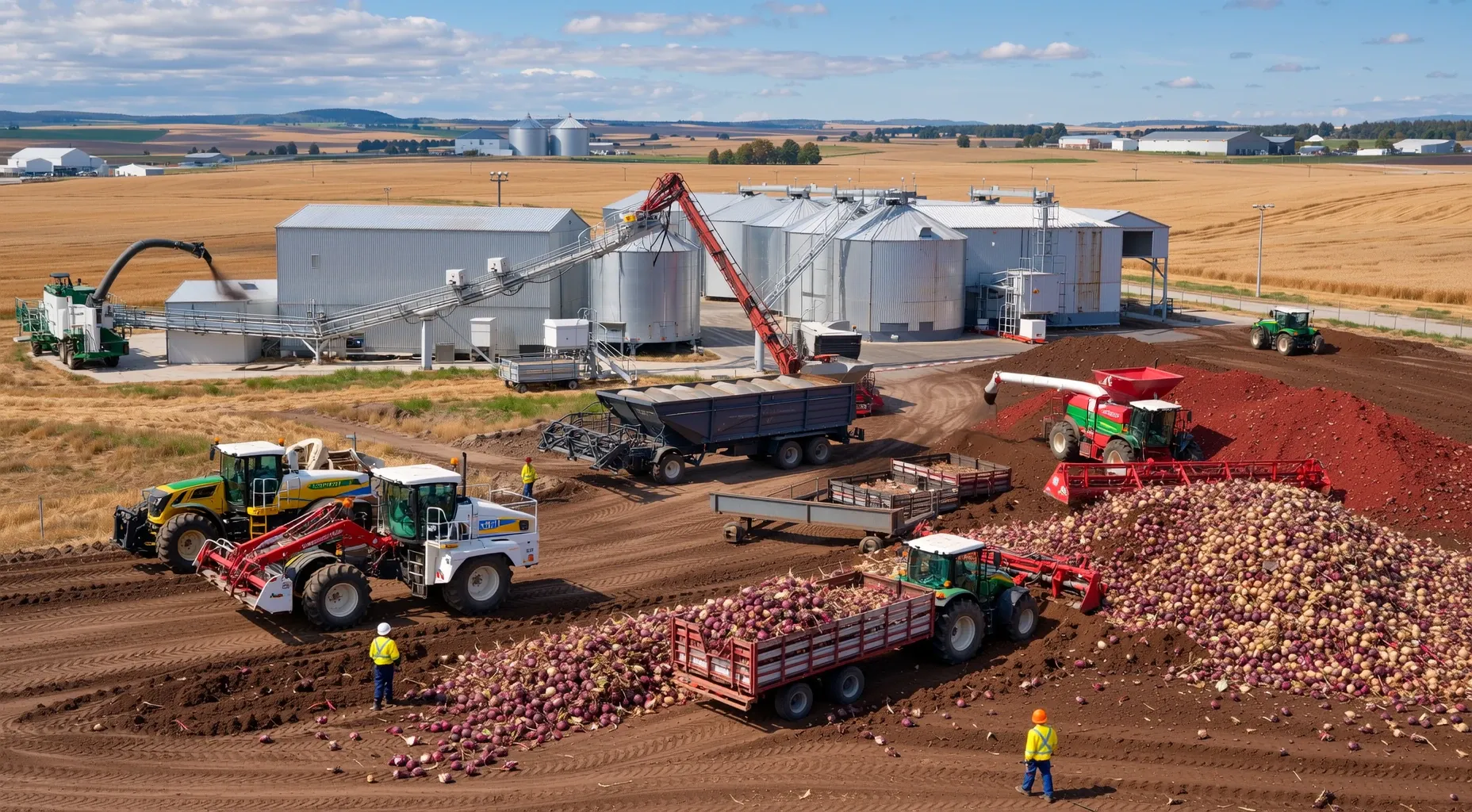
La culture de la betterave sucrière constitue un segment essentiel de la chaîne d'approvisionnement en sucre du pays, dédié à la culture de ce légume-racine spécifique nécessaire à l'extraction de saccharose. Contrairement au maïs ou au blé, les betteraves sucrières sont de grosses racines rondes qui nécessitent une gestion agricole intensive, incluant une préparation précise du sol, le semis et l'irrigation pour garantir une masse racinaire et une teneur en sucre maximales. Les exploitants agricoles gèrent des cycles de culture complexes impliquant le labourage, le semis, l'espacement des rangs et le contrôle des nuisibles tout au long de la saison de croissance. Une fois récoltées, les racines sont laissées dans le champ pendant une courte période pour sécher avant d'être chargées dans des camions de transport pour être acheminées vers les usines de transformation. Ces établissements varient considérablement en taille, allant des petites exploitations familiales équipées de machinerie mécanisée aux grandes entreprises commerciales employant des effectifs importants. L'échelle de l'exploitation détermine souvent le volume de sucre produit, qui peut atteindre des centaines de milliers de tonnes par an. La géographie joue un rôle crucial, car cette activité est concentrée dans des régions spécifiques où le climat et le type de sol sont les plus propices à des rendements élevés. L'industrie soutient un vaste réseau d'entreprises auxiliaires, fournissant des engrais, des machines et des services de transport. En fin de compte, ces fermes constituent l'intrant agricole fondamental pour les secteurs de l'alimentation et des boissons, influençant directement la disponibilité et le prix du sucre de table et des matières premières pour l'éthanol dans toute l'économie.
Hiérarchie
| Code | Titre | Description |
|---|---|---|
| 11 | Agriculture, foresterie, pêche et chasse Secteur à 2 chiffres | Le secteur dans son ensemble Le secteur de l'agriculture, de la foresterie, de la pêche et de la chasse comprend les établissements principalement occupés à la culture de plantes, à l'élevage d'animaux, à la récolte de bois, ainsi qu'à la pêche et à la chasse d'autres animaux provenant d'une ferme, d'un ranch ou de leurs habitats naturels. Les établissements de ce secteur sont souvent décrits comme des fermes, des ranchs, des laiteries, des serres, des pépinières, des vergers ou des écloseries. Une ferme peut se composer d'une seule parcelle de terre ou de plusieurs parcelles distinctes détenues sous différents statuts. Par exemple, une parcelle peut être possédée par l'exploitant agricole et une autre louée. Elle peut être exploitée par l'exploitant seul ou avec l'aide des membres du ménage ou des employés embauchés, ou elle peut être exploitée par un partenariat, une société ou un autre type d'organisation. Lorsqu'un propriétaire foncier a un ou plusieurs locataires, fermiers sous contrat, cultivateurs ou gérants, les terres exploitées par chacun sont considérées comme une ferme. Le secteur distingue deux activités de base : la production agricole et les activités de soutien agricole. La production agricole comprend les établissements qui réalisent l'ensemble de l'exploitation agricole ou de ranch, tels que les exploitants agricoles propriétaires et les exploitants agricoles locataires. Les activités de soutien agricole comprennent les établissements qui réalisent une ou plusieurs activités associées à l'exploitation agricole, telles que la préparation des sols, la plantation, la récolte et la gestion, sur la base d'un contrat ou d'honoraires. Sont exclus du secteur de l'agriculture, de la foresterie, de la pêche et de la chasse les établissements principalement occupés à la recherche agricole (par exemple, les fermes expérimentales) et les établissements gouvernementaux principalement occupés à l'administration de programmes de réglementation et de conservation des terres, des minéraux, de la faune et de l'utilisation des forêts. Ces établissements sont classés respectivement dans l'industrie 54171, Recherche et développement dans les sciences physiques, d'ingénierie et de la vie ; et l'industrie 92412, Administration des programmes de conservation. |
| 111 | Production agricole Sous-secteur à 3 chiffres | Les industries du sous-secteur de la production végétale cultivent principalement des cultures pour l'alimentation et les fibres. Ce sous-secteur comprend des établissements tels que des fermes, des vergers, des oliveraies, des serres et des pépinières, principalement engagés dans la culture de plantes, de cultures, de vignes ou d'arbres ainsi que de leurs semences. Les industries de ce sous-secteur sont regroupées en fonction de la similarité de l'activité de production, y compris les caractéristiques biologiques et physiologiques et les exigences économiques, la durée de la saison de croissance, le degré de rotation des cultures, l'étendue de la spécialisation des intrants, les besoins en main-d'œuvre et les exigences en capital. Le processus de production est généralement achevé lorsque le produit brut ou la matière première cultivée atteint le « point de sortie de la ferme » pour le marché, c'est-à-dire au point de première vente ou de détermination du prix. Les établissements sont classés dans le sous-secteur de la production végétale lorsque la production végétale (c'est-à-dire la valeur des cultures pour le marché) représente la moitié ou plus de la production agricole totale de l'établissement. Au sein du sous-secteur, les établissements sont classés dans une industrie spécifique lorsqu'un produit ou une famille de produits (c'est-à-dire la culture de graines oléagineuses et de céréales, la culture de légumes et de melons, la culture de fruits et de noix) représente la moitié ou plus de la production agricole de l'établissement. Les établissements dont la production végétale représente la moitié ou plus sans qu'un produit ou une famille de produits d'une industrie ne représente la moitié de la production agricole de l'établissement sont considérés comme des exploitations mixtes générales et sont classés dans l'Industrie 11199, Toutes autres cultures. Les industries du sous-secteur de la production végétale comprennent les établissements qui possèdent, exploitent et gèrent, ainsi que ceux qui exploitent et gèrent. Ceux qui ne font que gérer sont classés dans le Sous-secteur 115, Activités de soutien à l'agriculture et à la foresterie. Les établissements qui élèvent des plantes aquatiques dans des environnements aquatiques contrôlés ou sélectionnés sont classés dans le Sous-secteur 112, Production animale et aquaculture. |
| 1119 | Autres cultures agricoles Groupe industriel à 4 chiffres | Ce groupe industriel comprend les établissements principalement engagés dans (1) la culture de produits (à l'exception des oléagineux et/ou des céréales ; des légumes et/ou des melons ; des fruits et des noix ; et des produits de serre, de pépinière et/ou de floriculture), tels que le tabac, le coton, la canne à sucre, le foin, les betteraves sucrières, les arachides, l'agave, les herbes et les épices, ainsi que les semences de foin et d'herbe, ou (2) la culture d'une combinaison de cultures (à l'exception d'une combinaison d'oléagineux et de céréales et d'une combinaison de fruits et de noix). |
| 11199 | Toutes autres cultures agricoles Industrie NAICS à 5 chiffres | Cette industrie comprend les établissements principalement engagés dans (1) la culture de cultures (à l'exception des oléagineux et/ou des céréales ; des légumes et/ou des melons ; des fruits et/ou des noix ; des produits de serre, de pépinière et/ou de floriculture ; du tabac ; du coton ; de la canne à sucre ; ou du foin) ou (2) la culture d'une combinaison de cultures (à l'exception d'une combinaison d'oléagineux et de céréales ; et d'une combinaison de fruits et de noix) sans qu'une culture ou une famille de cultures ne représente la moitié de la production agricole de l'établissement (c'est-à-dire la valeur des cultures destinées au marché). Exemples illustratifs : * Culture d'agave * Culture d'épices * Culture mixte générale (à l'exception des oléagineux et des céréales ; des légumes et des melons ; des combinaisons de fruits et de noix) * Culture de thé * Culture de semences de foin * Récolte de sève d'érable * Culture de cacahuètes * Culture de betteraves sucrières * Culture de semences de graminées |
| 111991 | Culture de betteraves sucrières Détail américain à 6 chiffres | La culture de la betterave sucrière constitue un segment essentiel de la chaîne d'approvisionnement en sucre du pays, dédié à la culture de ce légume-racine spécifique nécessaire à l'extraction de saccharose. Contrairement au maïs ou au blé, les betteraves sucrières sont de grosses racines rondes qui nécessitent une gestion agricole intensive, incluant une préparation précise du sol, le semis et l'irrigation pour garantir une masse racinaire et une teneur en sucre maximales. Les exploitants agricoles gèrent des cycles de culture complexes impliquant le labourage, le semis, l'espacement des rangs et le contrôle des nuisibles tout au long de la saison de croissance. Une fois récoltées, les racines sont laissées dans le champ pendant une courte période pour sécher avant d'être chargées dans des camions de transport pour être acheminées vers les usines de transformation. Ces établissements varient considérablement en taille, allant des petites exploitations familiales équipées de machinerie mécanisée aux grandes entreprises commerciales employant des effectifs importants. L'échelle de l'exploitation détermine souvent le volume de sucre produit, qui peut atteindre des centaines de milliers de tonnes par an. La géographie joue un rôle crucial, car cette activité est concentrée dans des régions spécifiques où le climat et le type de sol sont les plus propices à des rendements élevés. L'industrie soutient un vaste réseau d'entreprises auxiliaires, fournissant des engrais, des machines et des services de transport. En fin de compte, ces fermes constituent l'intrant agricole fondamental pour les secteurs de l'alimentation et des boissons, influençant directement la disponibilité et le prix du sucre de table et des matières premières pour l'éthanol dans toute l'économie. |
Besoin d’une suite supply chain adaptée à ce secteur ?
Utilisez cette classification NAICS comme point de départ, puis reliez-la aux workflows Item pour les stocks, l’entreposage, la gestion des commandes, l’exécution et le transport.
Références de classification
- 01Les établissements principalement occupés à cultiver des betteraves (à l'exception des betteraves sucrières) sont classés dans l'industrie américaine 111219, Culture de légumes autres (à l'exception des pommes de terre) et de melons.
Éléments d’index
Culture de betteraves sucrières
Comment Item peut aider
Analyse les historiques de récolte et les tendances météorologiques pour prévoir les rendements des cultures et optimiser les stratégies de réapprovisionnement des stocks pour la chaîne d'approvisionnement.
