Beef Cattle Ranching and Farming
Description
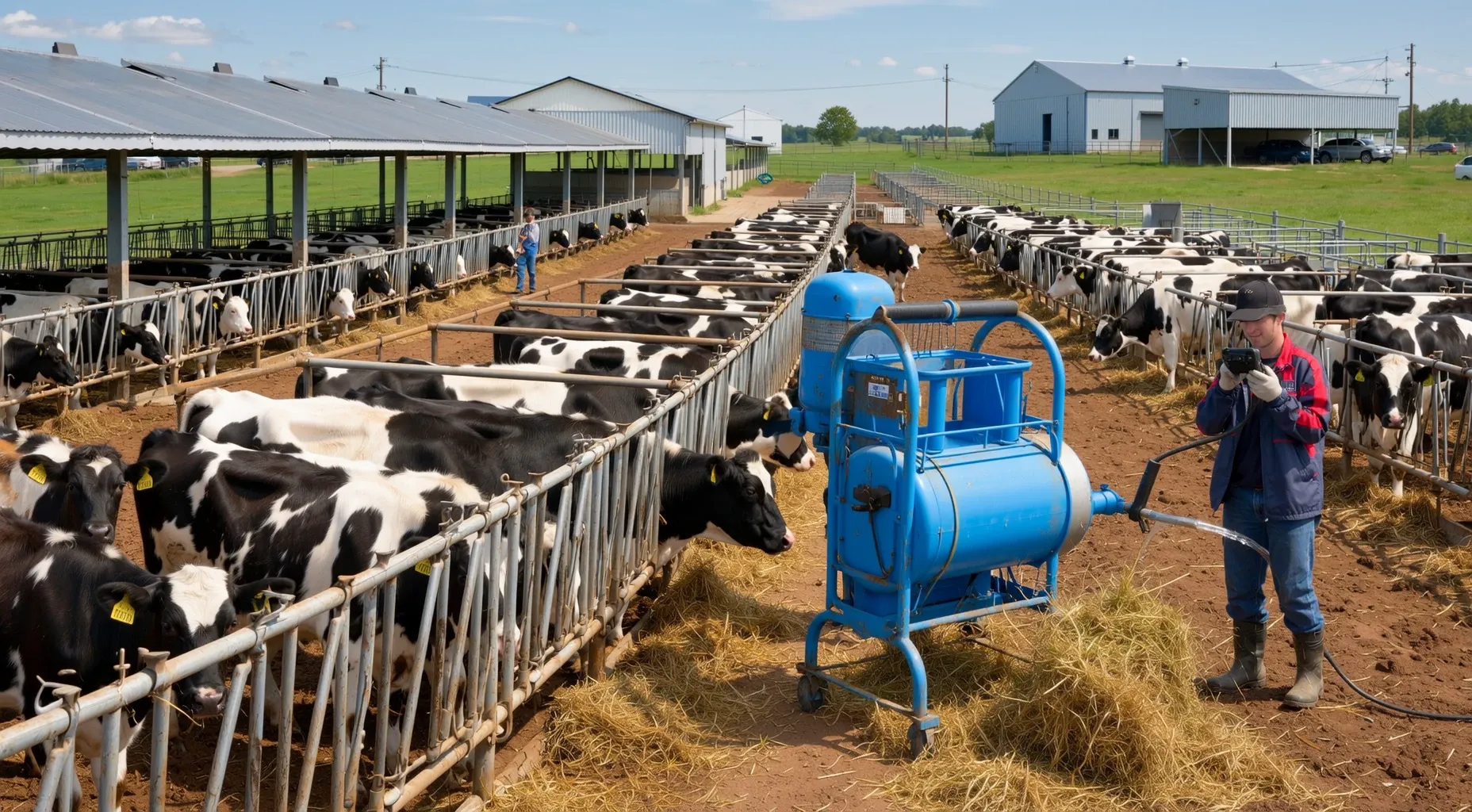
Beef cattle ranching and farming represent a fundamental pillar of American agriculture, focused on the rearing and feeding of live beef cattle for commercial slaughter. Unlike confined feedlots where cattle are often finished rapidly, these operations typically span vast tracts of land and involve the long-term management of herds from weaning point through to market weight. Operators manage breeding and production costs, maintain herd genetic quality, and oversee feeding programs to ensure animals reach optimal condition before processing. While family-owned farms dominate this sector, large corporate entities also engage in cattle production across multiple regions. These businesses frequently integrate drylot finishing operations into their ranches or lease grazing land to supplement on-farm forage. The scale of these enterprises varies dramatically, ranging from small family operations managing fewer than fifty head of cattle to massive industrial ranches with tens of thousands of animals. Many producers also sell breeding stock to other ranchers or specialized feedlots, adding a secondary revenue stream beyond meat production. The industry relies heavily on livestock insurance to mitigate risks associated with natural disasters, disease outbreaks, and market price fluctuations. Through careful land stewardship and herd management, these farms contribute significantly to both national food security and rural economic stability while maintaining critical biodiversity in grassland ecosystems.
Hierarchy
| Code | Title | Description |
|---|---|---|
| 11 | Agriculture, Forestry, Fishing and Hunting 2-digit sector | The Sector as a Whole The Agriculture, Forestry, Fishing and Hunting sector comprises establishments primarily engaged in growing crops, raising animals, harvesting timber, and harvesting fish and other animals from a farm, ranch, or their natural habitats. The establishments in this sector are often described as farms, ranches, dairies, greenhouses, nurseries, orchards, or hatcheries. A farm may consist of a single tract of land or a number of separate tracts which may be held under different tenures. For example, one tract may be owned by the farm operator and another rented. It may be operated by the operator alone or with the assistance of members of the household or hired employees, or it may be operated by a partnership, corporation, or other type of organization. When a landowner has one or more tenants, renters, croppers, or managers, the land operated by each is considered a farm. The sector distinguishes two basic activities: agricultural production and agricultural support activities. Agricultural production includes establishments performing the complete farm or ranch operation, such as farm owner-operators and tenant farm operators. Agricultural support activities include establishments that perform one or more activities associated with farm operation, such as soil preparation, planting, harvesting, and management, on a contract or fee basis. Excluded from the Agriculture, Forestry, Fishing and Hunting sector are establishments primarily engaged in agricultural research (e.g., experimental farms) and government establishments primarily engaged in administering programs for regulating and conserving land, mineral, wildlife, and forest use. These establishments are classified in Industry 54171, Research and Development in the Physical, Engineering, and Life Sciences; and Industry 92412, Administration of Conservation Programs, respectively. |
| 112 | Animal Production and Aquaculture 3-digit subsector | Industries in the Animal Production and Aquaculture subsector raise or fatten animals for the sale of animals or animal products and/or raise aquatic plants and animals in controlled or selected aquatic environments for the sale of aquatic plants, animals, or their products. The subsector includes establishments, such as ranches, farms, and feedlots, primarily engaged in keeping, grazing, breeding, or feeding animals. These animals are kept for the products they produce or for eventual sale. The animals are generally raised in various environments, from total confinement or captivity to feeding on an open range pasture. The industries in this subsector are grouped by important factors, such as suitable grazing or pasture land, specialized buildings, type of equipment, and the amount and types of labor required. Establishments are classified in the Animal Production and Aquaculture subsector when animal production (i.e., value of animals for market) accounts for one-half or more of the establishment's total agricultural production. Establishments with one-half or more animal production with no one animal product or family of animal products of an industry accounting for one-half of the establishment's agricultural production are treated as combination animal farming classified in Industry 11299, All Other Animal Production. |
| 1121 | Cattle Ranching and Farming 4-digit industry group | This industry group comprises establishments primarily engaged in raising cattle, milking dairy cattle, or feeding cattle for fattening. |
| 11211 | Beef Cattle Ranching and Farming, including Feedlots 5-digit NAICS industry | This industry comprises establishments primarily engaged in raising cattle (including cattle for dairy herd replacements), or feeding cattle for fattening. |
| 112111 | Beef Cattle Ranching and Farming 6-digit U.S. detail | Beef cattle ranching and farming represent a fundamental pillar of American agriculture, focused on the rearing and feeding of live beef cattle for commercial slaughter. Unlike confined feedlots where cattle are often finished rapidly, these operations typically span vast tracts of land and involve the long-term management of herds from weaning point through to market weight. Operators manage breeding and production costs, maintain herd genetic quality, and oversee feeding programs to ensure animals reach optimal condition before processing. While family-owned farms dominate this sector, large corporate entities also engage in cattle production across multiple regions. These businesses frequently integrate drylot finishing operations into their ranches or lease grazing land to supplement on-farm forage. The scale of these enterprises varies dramatically, ranging from small family operations managing fewer than fifty head of cattle to massive industrial ranches with tens of thousands of animals. Many producers also sell breeding stock to other ranchers or specialized feedlots, adding a secondary revenue stream beyond meat production. The industry relies heavily on livestock insurance to mitigate risks associated with natural disasters, disease outbreaks, and market price fluctuations. Through careful land stewardship and herd management, these farms contribute significantly to both national food security and rural economic stability while maintaining critical biodiversity in grassland ecosystems. |
Need a supply chain stack that maps to this industry?
Use this NAICS classification as the starting point, then connect it to Item workflows across inventory, warehousing, order management, fulfillment, and transportation.
Classification References
- 01Establishments primarily engaged in milking dairy cattle are classified in Industry 112120, Dairy Cattle and Milk Production.
Index Items
Backgrounding, cattle
Beef cattle ranching or farming
Calf (e.g., feeder, stocker, veal) production
Cattle conditioning operations
Cattle farming or ranching
Dairy heifer replacement production
Feeder calf production
Stocker calf production
Veal calf production
How Item Can Help
The Warehouse Management System optimizes inventory levels for fluctuating seasonal demand while accurately tracking perishable livestock feed batches. It streamlines receiving and shipping processes to minimize spoilage and ensure rapid order fulfillment for beef retailers.
Order Management Systems synchronize inventory across multiple locations to handle high-volume, time-sensitive orders from grocery chains and direct-to-consumer sales. This real-time visibility prevents stockouts and allows for dynamic pricing strategies based on perishability risks.
Predictive analytics tools analyze historical sales patterns and market trends to forecast future feed requirements and cattle market values. These insights enable ranchers to adjust breeding cycles, nutrition plans, and operational budgets proactively for maximum efficiency.
Item.com Tools
External Resources
Census.gov NAICS Detail
Official US Census Bureau definition and scope for NAICS 112111.
American Beef Association
A major trade association representing beef producers and providing market data and advocacy.
USDA Beef Checkoff
The primary government-funded organization for beef research, education, and global promotion.
National Cattlemen's Beef Association
The largest national beef association in the U.S. representing producers, processors, and retailers.
