Dual-Purpose Cattle Ranching and Farming
Description
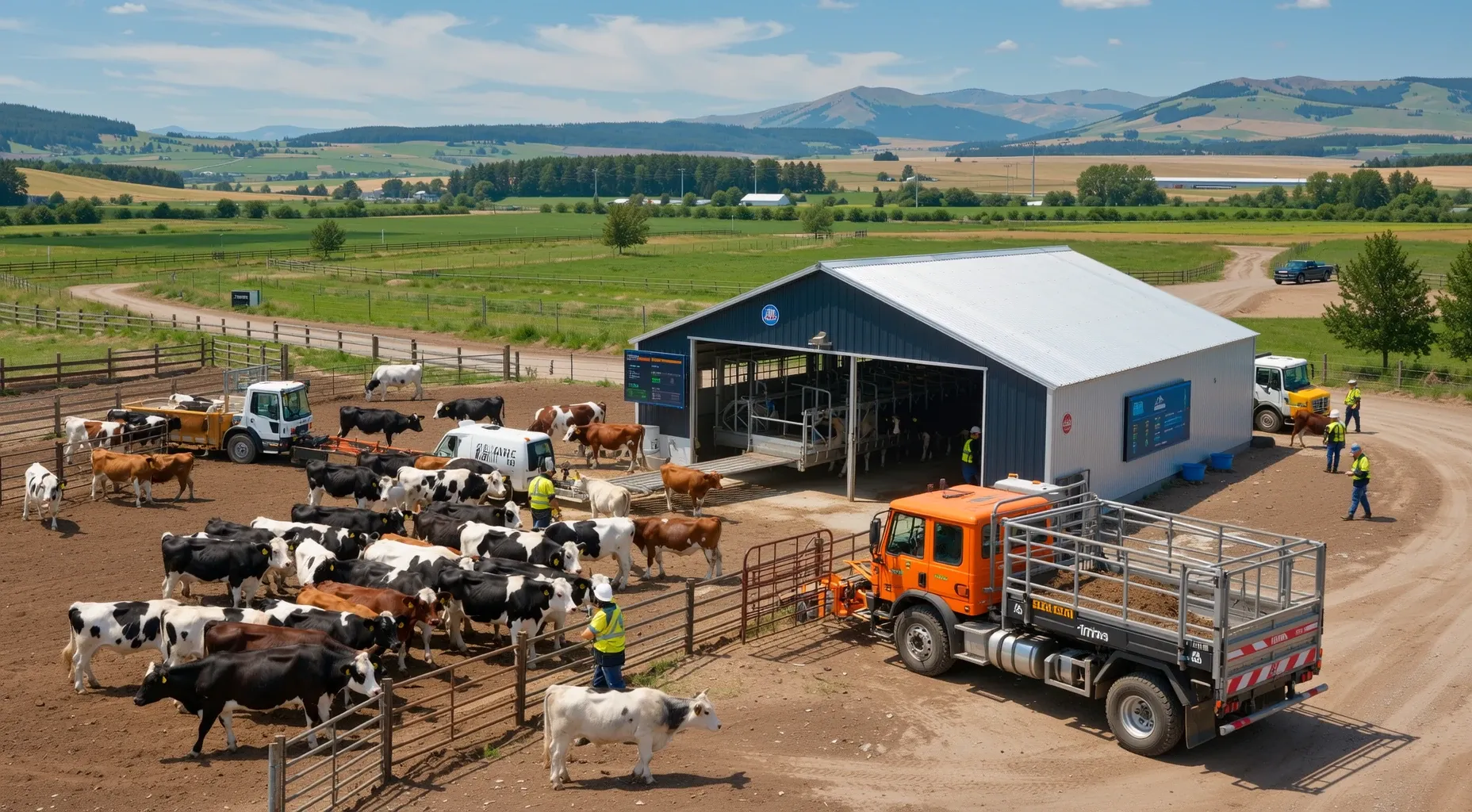
Establishments in this sector raise cattle that serve both milking and meat production, blending dairy and beef farming into a single operational strategy. Unlike pure dairy or pure beef operations, these farms manage herds where animals may transition from lactation to slaughter or be maintained year-round for dual output. Typical business activities include purchasing feed and supplements, caring for newborn calves, managing herd health, and coordinating with local markets for both cheese, yogurt, and beef sales. Operators often range from family-run smallholders to larger agribusinesses, utilizing varying levels of mechanization depending on land size and market access. The industry scope covers everything from local pasture-based systems to extensive ranches requiring sophisticated feeding operations. Many producers in this sector focus on sustainability, integrating crop cultivation to create additional revenue streams while maintaining biodiversity on their land. By producing two primary commodities, these enterprises achieve greater economic resilience against fluctuations in the price of either beef or milk. The dual-purpose model allows for flexible resource allocation, enabling farms to adjust their production goals based on seasonal demands or changing market conditions without needing separate facilities or entirely different management structures.
Hierarchy
| Code | Title | Description |
|---|---|---|
| 11 | Agriculture, Forestry, Fishing and Hunting 2-digit sector | The Sector as a Whole The Agriculture, Forestry, Fishing and Hunting sector comprises establishments primarily engaged in growing crops, raising animals, harvesting timber, and harvesting fish and other animals from a farm, ranch, or their natural habitats. The establishments in this sector are often described as farms, ranches, dairies, greenhouses, nurseries, orchards, or hatcheries. A farm may consist of a single tract of land or a number of separate tracts which may be held under different tenures. For example, one tract may be owned by the farm operator and another rented. It may be operated by the operator alone or with the assistance of members of the household or hired employees, or it may be operated by a partnership, corporation, or other type of organization. When a landowner has one or more tenants, renters, croppers, or managers, the land operated by each is considered a farm. The sector distinguishes two basic activities: agricultural production and agricultural support activities. Agricultural production includes establishments performing the complete farm or ranch operation, such as farm owner-operators and tenant farm operators. Agricultural support activities include establishments that perform one or more activities associated with farm operation, such as soil preparation, planting, harvesting, and management, on a contract or fee basis. Excluded from the Agriculture, Forestry, Fishing and Hunting sector are establishments primarily engaged in agricultural research (e.g., experimental farms) and government establishments primarily engaged in administering programs for regulating and conserving land, mineral, wildlife, and forest use. These establishments are classified in Industry 54171, Research and Development in the Physical, Engineering, and Life Sciences; and Industry 92412, Administration of Conservation Programs, respectively. |
| 112 | Animal Production and Aquaculture 3-digit subsector | Industries in the Animal Production and Aquaculture subsector raise or fatten animals for the sale of animals or animal products and/or raise aquatic plants and animals in controlled or selected aquatic environments for the sale of aquatic plants, animals, or their products. The subsector includes establishments, such as ranches, farms, and feedlots, primarily engaged in keeping, grazing, breeding, or feeding animals. These animals are kept for the products they produce or for eventual sale. The animals are generally raised in various environments, from total confinement or captivity to feeding on an open range pasture. The industries in this subsector are grouped by important factors, such as suitable grazing or pasture land, specialized buildings, type of equipment, and the amount and types of labor required. Establishments are classified in the Animal Production and Aquaculture subsector when animal production (i.e., value of animals for market) accounts for one-half or more of the establishment's total agricultural production. Establishments with one-half or more animal production with no one animal product or family of animal products of an industry accounting for one-half of the establishment's agricultural production are treated as combination animal farming classified in Industry 11299, All Other Animal Production. |
| 1121 | Cattle Ranching and Farming 4-digit industry group | This industry group comprises establishments primarily engaged in raising cattle, milking dairy cattle, or feeding cattle for fattening. |
| 11213 | Dual-Purpose Cattle Ranching and Farming 5-digit NAICS industry | See industry description for 112130. |
| 112130 | Dual-Purpose Cattle Ranching and Farming 6-digit U.S. detail | Establishments in this sector raise cattle that serve both milking and meat production, blending dairy and beef farming into a single operational strategy. Unlike pure dairy or pure beef operations, these farms manage herds where animals may transition from lactation to slaughter or be maintained year-round for dual output. Typical business activities include purchasing feed and supplements, caring for newborn calves, managing herd health, and coordinating with local markets for both cheese, yogurt, and beef sales. Operators often range from family-run smallholders to larger agribusinesses, utilizing varying levels of mechanization depending on land size and market access. The industry scope covers everything from local pasture-based systems to extensive ranches requiring sophisticated feeding operations. Many producers in this sector focus on sustainability, integrating crop cultivation to create additional revenue streams while maintaining biodiversity on their land. By producing two primary commodities, these enterprises achieve greater economic resilience against fluctuations in the price of either beef or milk. The dual-purpose model allows for flexible resource allocation, enabling farms to adjust their production goals based on seasonal demands or changing market conditions without needing separate facilities or entirely different management structures. |
Need a supply chain stack that maps to this industry?
Use this NAICS classification as the starting point, then connect it to Item workflows across inventory, warehousing, order management, fulfillment, and transportation.
Classification References
- 01Milking dairy cattle--are classified in Industry 112120, Dairy Cattle and Milk Production;
- 02Raising cattle or feeding cattle for fattening--are classified in Industry 11211, Beef Cattle Ranching and Farming, including Feedlots; and
- 03Operating stockyards for transportation and not buying, selling, or auctioning livestock--are classified in U.S. Industry 488999, All Other Support Activities for Transportation.
Item.com Tools
External Resources
Census.gov NAICS Detail
Official US Census Bureau definition and scope for NAICS 112130.
National Cattlemen's Beef Association
Official government-supported grant program dedicated to expanding dual-purpose beef production.
USDA Farm Service Agency
Resource center providing technical assistance and financial aid for farmers raising dual-purpose cattle.
National Association of Dual Purpose Cattle Breeders
Industry organization dedicated to the marketing and development of dual-purpose cattle breeds and their value to small farms.
