Sheep Farming
Description
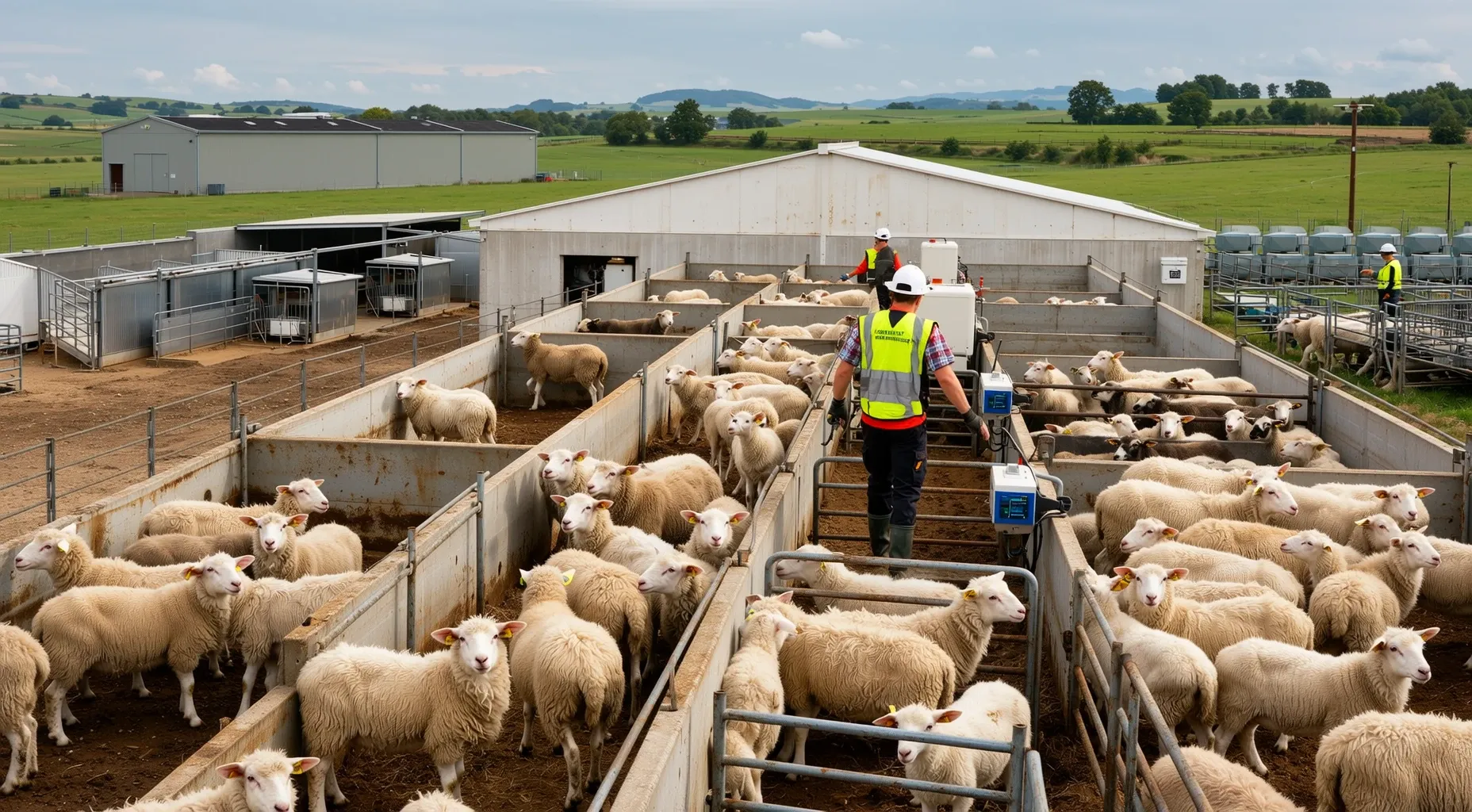
Sheep farming encompasses a diverse array of agricultural operations focused on raising sheep and lambs for various purposes, including meat production, wool generation, or feeding for fattening. These enterprises involve complex management practices that extend beyond simple animal care to include land management, pasture maintenance, and strategic breeding programs. Operators may range from small family-run herds to large commercial operations, depending on their capital resources, geographic location, and access to local markets. Typical activities include purchasing breeding stock, monitoring health and nutrition, shearing animals for wool, and managing grazing schedules to optimize growth rates. Many farms also participate in specialized production methods such as transhumance, where animals are moved between seasonal pastures to ensure sustainable grazing conditions. The industry plays a vital role in rural economies by supporting local textile manufacturing and food processing sectors. In addition to direct sales, some operations engage in value-added activities like producing wool textiles or specialty meats. The scale of these businesses varies significantly, with smaller entities often serving regional markets while larger corporations supply national chains or international export networks. Successful sheep farming requires deep knowledge of animal behavior, veterinary needs, and environmental factors, making it a technically demanding profession that continues to attract skilled agricultural managers.
Hierarchy
| Code | Title | Description |
|---|---|---|
| 11 | Agriculture, Forestry, Fishing and Hunting 2-digit sector | The Sector as a Whole The Agriculture, Forestry, Fishing and Hunting sector comprises establishments primarily engaged in growing crops, raising animals, harvesting timber, and harvesting fish and other animals from a farm, ranch, or their natural habitats. The establishments in this sector are often described as farms, ranches, dairies, greenhouses, nurseries, orchards, or hatcheries. A farm may consist of a single tract of land or a number of separate tracts which may be held under different tenures. For example, one tract may be owned by the farm operator and another rented. It may be operated by the operator alone or with the assistance of members of the household or hired employees, or it may be operated by a partnership, corporation, or other type of organization. When a landowner has one or more tenants, renters, croppers, or managers, the land operated by each is considered a farm. The sector distinguishes two basic activities: agricultural production and agricultural support activities. Agricultural production includes establishments performing the complete farm or ranch operation, such as farm owner-operators and tenant farm operators. Agricultural support activities include establishments that perform one or more activities associated with farm operation, such as soil preparation, planting, harvesting, and management, on a contract or fee basis. Excluded from the Agriculture, Forestry, Fishing and Hunting sector are establishments primarily engaged in agricultural research (e.g., experimental farms) and government establishments primarily engaged in administering programs for regulating and conserving land, mineral, wildlife, and forest use. These establishments are classified in Industry 54171, Research and Development in the Physical, Engineering, and Life Sciences; and Industry 92412, Administration of Conservation Programs, respectively. |
| 112 | Animal Production and Aquaculture 3-digit subsector | Industries in the Animal Production and Aquaculture subsector raise or fatten animals for the sale of animals or animal products and/or raise aquatic plants and animals in controlled or selected aquatic environments for the sale of aquatic plants, animals, or their products. The subsector includes establishments, such as ranches, farms, and feedlots, primarily engaged in keeping, grazing, breeding, or feeding animals. These animals are kept for the products they produce or for eventual sale. The animals are generally raised in various environments, from total confinement or captivity to feeding on an open range pasture. The industries in this subsector are grouped by important factors, such as suitable grazing or pasture land, specialized buildings, type of equipment, and the amount and types of labor required. Establishments are classified in the Animal Production and Aquaculture subsector when animal production (i.e., value of animals for market) accounts for one-half or more of the establishment's total agricultural production. Establishments with one-half or more animal production with no one animal product or family of animal products of an industry accounting for one-half of the establishment's agricultural production are treated as combination animal farming classified in Industry 11299, All Other Animal Production. |
| 1124 | Sheep and Goat Farming 4-digit industry group | This industry group comprises establishments primarily engaged in raising sheep, lambs, and goats, or feeding lambs for fattening. |
| 11241 | Sheep Farming 5-digit NAICS industry | See industry description for 112410. |
| 112410 | Sheep Farming 6-digit U.S. detail | Sheep farming encompasses a diverse array of agricultural operations focused on raising sheep and lambs for various purposes, including meat production, wool generation, or feeding for fattening. These enterprises involve complex management practices that extend beyond simple animal care to include land management, pasture maintenance, and strategic breeding programs. Operators may range from small family-run herds to large commercial operations, depending on their capital resources, geographic location, and access to local markets. Typical activities include purchasing breeding stock, monitoring health and nutrition, shearing animals for wool, and managing grazing schedules to optimize growth rates. Many farms also participate in specialized production methods such as transhumance, where animals are moved between seasonal pastures to ensure sustainable grazing conditions. The industry plays a vital role in rural economies by supporting local textile manufacturing and food processing sectors. In addition to direct sales, some operations engage in value-added activities like producing wool textiles or specialty meats. The scale of these businesses varies significantly, with smaller entities often serving regional markets while larger corporations supply national chains or international export networks. Successful sheep farming requires deep knowledge of animal behavior, veterinary needs, and environmental factors, making it a technically demanding profession that continues to attract skilled agricultural managers. |
Need a supply chain stack that maps to this industry?
Use this NAICS classification as the starting point, then connect it to Item workflows across inventory, warehousing, order management, fulfillment, and transportation.
Classification References
- 01Establishments primarily engaged in operating stockyards for transportation and not buying, selling, or auctioning livestock are classified in U.S. Industry 488999, All Other Support Activities for Transportation.
Index Items
Dairy sheep farming
Feedlots (except stockyards for transportation), lamb
Lamb feedlots (except stockyards for transportation)
Milking dairy sheep
Sheep farming (e.g., meat, milk, wool production)
How Item Can Help
The WMS streamlines the storage and retrieval of raw wool bales and sheep while tracking inventory levels, reducing manual errors and optimizing warehouse space.
The OMS coordinates sales orders from various retailers, ensuring accurate order processing and faster fulfillment for perishable or time-sensitive livestock products.
This tool analyzes historical production data to predict demand trends, optimize herd size, and identify inefficiencies in the farming cycle to improve profitability.
Item.com Tools
External Resources
Census.gov NAICS Detail
Official US Census Bureau definition and scope for NAICS 112410.
American Sheep Industry Association
The primary trade association representing the American sheep industry.
USDA Agricultural Resource Management Survey
USDA government database providing annual economic statistics on sheep operations.
SheepFutures
An online industry directory connecting producers, feeders, and processors of lamb and mutton.
