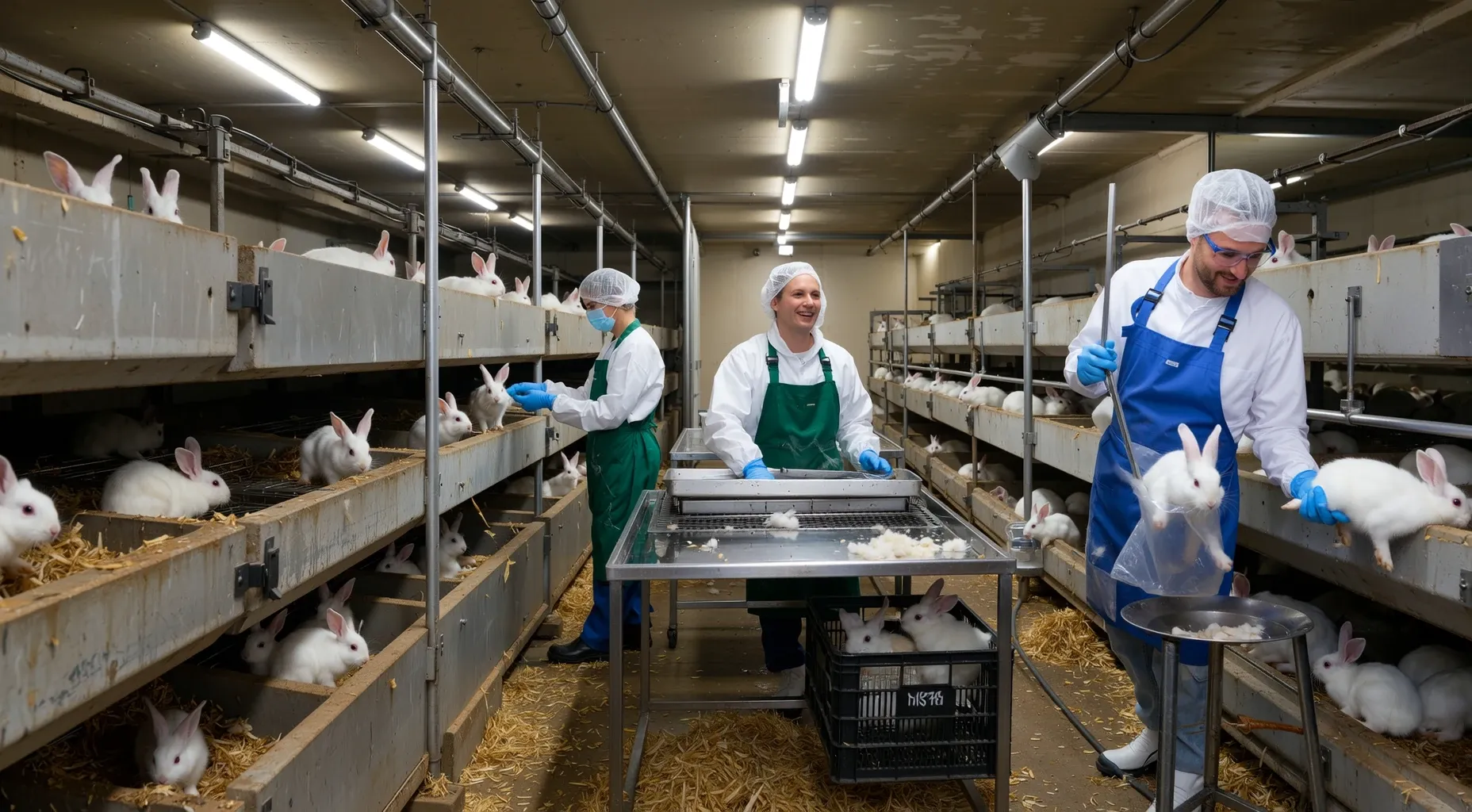
Fur-Bearing Animal and Rabbit Production
Description
Industry 112930 encompasses establishments dedicated to raising animals such as rabbits, raccoons, beavers, mink, otters, and foxes. These operations focus on producing animals either for direct sale as live pets or for harvesting their pelts for manufacturing purposes. Typical business activities include providing specialized care for breeding stock and young animals, feeding routines designed to ensure optimal coat quality, health monitoring to prevent disease, and managing indoor housing conditions suitable for these species. Operators often collaborate with veterinarians and nutritionists to maintain high standards of animal welfare while maximizing production efficiency. The sector attracts a diverse range of business entities, from small family-owned farms to larger commercial producers operating on an industrial scale. These enterprises vary significantly in size, with some utilizing traditional methods involving natural habitats and others employing advanced climate control systems and automated feeding technology. While many facilities produce a limited number of animals annually, larger operations specialize in year-round production to meet consistent market demands for pelts and live animals. Some producers integrate vertical operations by processing the fur on-site to add value, whereas others act as brokers sourcing raw materials from various regional farms. The scope of the industry reflects regional variations in climate and economic opportunities, serving both local pet markets and global fur textile industries.
Hierarchy
| Code | Title | Description |
|---|---|---|
| 11 | Agriculture, Forestry, Fishing and Hunting 2-digit sector | The Sector as a Whole The Agriculture, Forestry, Fishing and Hunting sector comprises establishments primarily engaged in growing crops, raising animals, harvesting timber, and harvesting fish and other animals from a farm, ranch, or their natural habitats. The establishments in this sector are often described as farms, ranches, dairies, greenhouses, nurseries, orchards, or hatcheries. A farm may consist of a single tract of land or a number of separate tracts which may be held under different tenures. For example, one tract may be owned by the farm operator and another rented. It may be operated by the operator alone or with the assistance of members of the household or hired employees, or it may be operated by a partnership, corporation, or other type of organization. When a landowner has one or more tenants, renters, croppers, or managers, the land operated by each is considered a farm. The sector distinguishes two basic activities: agricultural production and agricultural support activities. Agricultural production includes establishments performing the complete farm or ranch operation, such as farm owner-operators and tenant farm operators. Agricultural support activities include establishments that perform one or more activities associated with farm operation, such as soil preparation, planting, harvesting, and management, on a contract or fee basis. Excluded from the Agriculture, Forestry, Fishing and Hunting sector are establishments primarily engaged in agricultural research (e.g., experimental farms) and government establishments primarily engaged in administering programs for regulating and conserving land, mineral, wildlife, and forest use. These establishments are classified in Industry 54171, Research and Development in the Physical, Engineering, and Life Sciences; and Industry 92412, Administration of Conservation Programs, respectively. |
| 112 | Animal Production and Aquaculture 3-digit subsector | Industries in the Animal Production and Aquaculture subsector raise or fatten animals for the sale of animals or animal products and/or raise aquatic plants and animals in controlled or selected aquatic environments for the sale of aquatic plants, animals, or their products. The subsector includes establishments, such as ranches, farms, and feedlots, primarily engaged in keeping, grazing, breeding, or feeding animals. These animals are kept for the products they produce or for eventual sale. The animals are generally raised in various environments, from total confinement or captivity to feeding on an open range pasture. The industries in this subsector are grouped by important factors, such as suitable grazing or pasture land, specialized buildings, type of equipment, and the amount and types of labor required. Establishments are classified in the Animal Production and Aquaculture subsector when animal production (i.e., value of animals for market) accounts for one-half or more of the establishment's total agricultural production. Establishments with one-half or more animal production with no one animal product or family of animal products of an industry accounting for one-half of the establishment's agricultural production are treated as combination animal farming classified in Industry 11299, All Other Animal Production. |
| 1129 | Other Animal Production 4-digit industry group | This industry group comprises establishments primarily engaged in raising animals and insects (except cattle, hogs and pigs, poultry, sheep and goats, and aquaculture) for sale or product production. These establishments are primarily engaged in raising one of the following: bees, horses and other equines, rabbits and other fur-bearing animals, and so forth, and producing products, such as honey and other bee products. Establishments primarily engaged in raising a combination of animals with no one animal or family of animals accounting for one-half of the establishment's agricultural production (i.e., value of animals for market) are included in this industry group. |
| 11293 | Fur-Bearing Animal and Rabbit Production 5-digit NAICS industry | See industry description for 112930. |
| 112930 | Fur-Bearing Animal and Rabbit Production 6-digit U.S. detail | Industry 112930 encompasses establishments dedicated to raising animals such as rabbits, raccoons, beavers, mink, otters, and foxes. These operations focus on producing animals either for direct sale as live pets or for harvesting their pelts for manufacturing purposes. Typical business activities include providing specialized care for breeding stock and young animals, feeding routines designed to ensure optimal coat quality, health monitoring to prevent disease, and managing indoor housing conditions suitable for these species. Operators often collaborate with veterinarians and nutritionists to maintain high standards of animal welfare while maximizing production efficiency. The sector attracts a diverse range of business entities, from small family-owned farms to larger commercial producers operating on an industrial scale. These enterprises vary significantly in size, with some utilizing traditional methods involving natural habitats and others employing advanced climate control systems and automated feeding technology. While many facilities produce a limited number of animals annually, larger operations specialize in year-round production to meet consistent market demands for pelts and live animals. Some producers integrate vertical operations by processing the fur on-site to add value, whereas others act as brokers sourcing raw materials from various regional farms. The scope of the industry reflects regional variations in climate and economic opportunities, serving both local pet markets and global fur textile industries. |
Need a supply chain stack that maps to this industry?
Use this NAICS classification as the starting point, then connect it to Item workflows across inventory, warehousing, order management, fulfillment, and transportation.
Classification References
- 01Establishments primarily engaged in the trapping or hunting of wild fur-bearing animals are classified in Industry 114210, Hunting and Trapping.
Index Items
Chinchilla production
Fox production
Fur-bearing animal production
Mink production
Rabbit production
How Item Can Help
Data Intelligence analyzes historical sales and current market trends to forecast demand, enabling producers to adjust breeding and feeding schedules for maximum efficiency.
