Finfish Fishing
Description
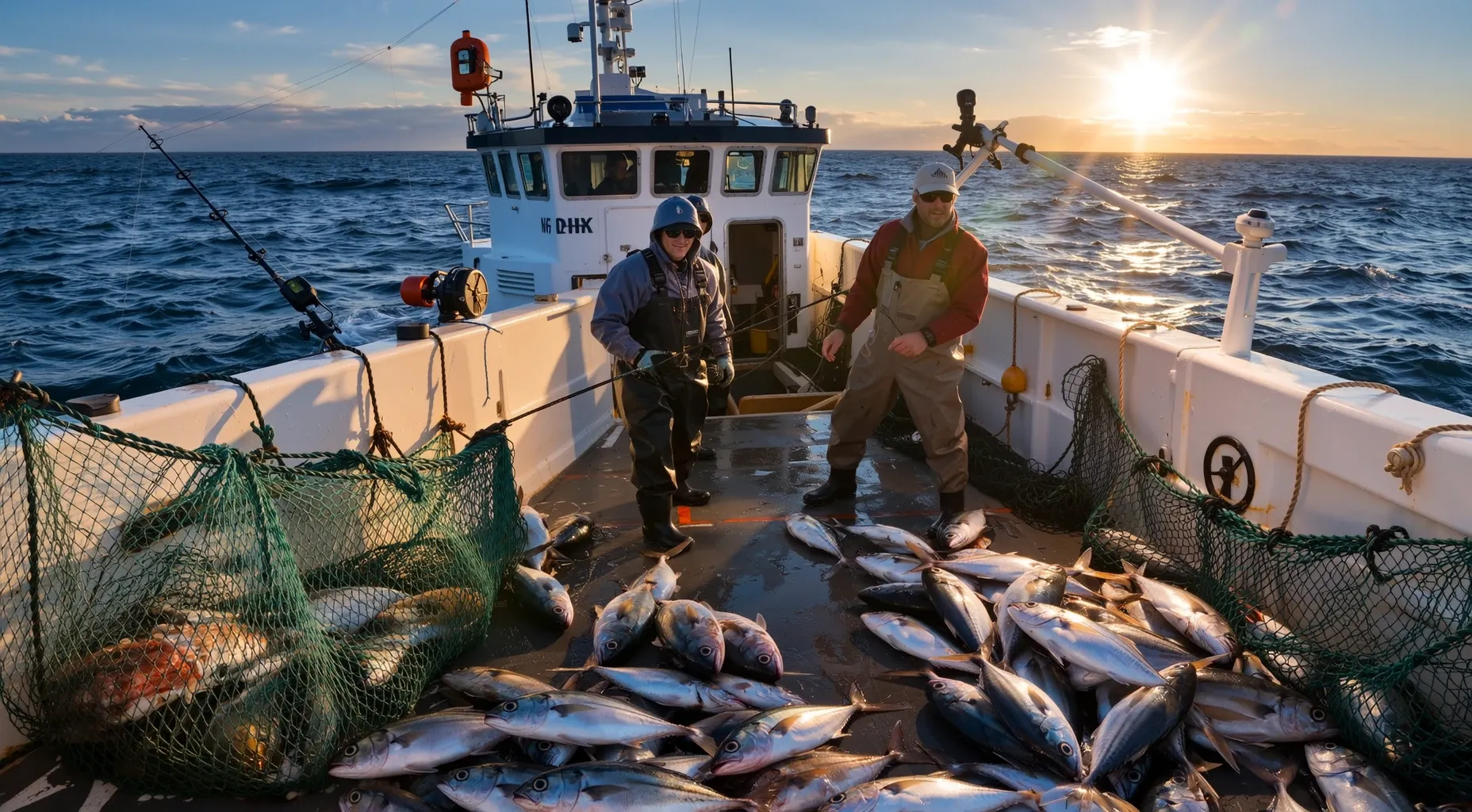
Finfish fishing represents the commercial sector dedicated to harvesting fish from saltwater and freshwater environments for sale to consumers. Operators primarily utilize commercial vessels equipped with specialized nets, trawls, longlines, or gill nets to target specific species such as salmon, tuna, bluefish, and trout. The core activity involves locating fish schools using sonar and GPS technology, deploying catch gear, and transporting the biomass to processing facilities or live markets. These operations often extend from small family-owned boatyards to large industrial fleets managing fleets of hundreds of vessels across national waters. Business functions encompass navigation, crew management, fuel consumption, and strict adherence to regulatory catch limits set by federal and state authorities. Anglers in this sector frequently spend significant capital on vessel maintenance, insurance, and licensing to ensure legal compliance. The industry operates globally, with many fishermen traveling long distances to distant fishing grounds to maximize efficiency and yield. By connecting natural aquatic resources to the global food supply chain, these establishments drive the commercial value of wild-caught seafood while playing a critical role in marine ecology management and sustainable resource utilization.
Hierarchy
| Code | Title | Description |
|---|---|---|
| 11 | Agriculture, Forestry, Fishing and Hunting 2-digit sector | The Sector as a Whole The Agriculture, Forestry, Fishing and Hunting sector comprises establishments primarily engaged in growing crops, raising animals, harvesting timber, and harvesting fish and other animals from a farm, ranch, or their natural habitats. The establishments in this sector are often described as farms, ranches, dairies, greenhouses, nurseries, orchards, or hatcheries. A farm may consist of a single tract of land or a number of separate tracts which may be held under different tenures. For example, one tract may be owned by the farm operator and another rented. It may be operated by the operator alone or with the assistance of members of the household or hired employees, or it may be operated by a partnership, corporation, or other type of organization. When a landowner has one or more tenants, renters, croppers, or managers, the land operated by each is considered a farm. The sector distinguishes two basic activities: agricultural production and agricultural support activities. Agricultural production includes establishments performing the complete farm or ranch operation, such as farm owner-operators and tenant farm operators. Agricultural support activities include establishments that perform one or more activities associated with farm operation, such as soil preparation, planting, harvesting, and management, on a contract or fee basis. Excluded from the Agriculture, Forestry, Fishing and Hunting sector are establishments primarily engaged in agricultural research (e.g., experimental farms) and government establishments primarily engaged in administering programs for regulating and conserving land, mineral, wildlife, and forest use. These establishments are classified in Industry 54171, Research and Development in the Physical, Engineering, and Life Sciences; and Industry 92412, Administration of Conservation Programs, respectively. |
| 114 | Fishing, Hunting and Trapping 3-digit subsector | Industries in the Fishing, Hunting and Trapping subsector harvest fish and other wild animals from their natural habitats and are dependent upon a continued supply of the natural resource. The harvesting of fish is the predominant economic activity of this subsector and it usually requires specialized vessels that, by the nature of their size, configuration and equipment, are not suitable for any other type of production, such as transportation. Hunting and trapping activities utilize a wide variety of production processes and are classified in the same subsector as fishing because the availability of resources and the constraints imposed, such as conservation requirements and proper habitat maintenance, are similar. |
| 1141 | Fishing 4-digit industry group | Industries in the Fishing, Hunting and Trapping subsector harvest fish and other wild animals from their natural habitats and are dependent upon a continued supply of the natural resource. The harvesting of fish is the predominant economic activity of this subsector and it usually requires specialized vessels that, by the nature of their size, configuration and equipment, are not suitable for any other type of production, such as transportation. Hunting and trapping activities utilize a wide variety of production processes and are classified in the same subsector as fishing because the availability of resources and the constraints imposed, such as conservation requirements and proper habitat maintenance, are similar. |
| 11411 | Fishing 5-digit NAICS industry | This industry comprises establishments primarily engaged in the commercial catching or taking of finfish, shellfish, or miscellaneous marine products from a natural habitat, such as the catching of bluefish, eels, salmon, tuna, clams, crabs, lobsters, mussels, oysters, shrimp, frogs, sea urchins, and turtles. |
| 114111 | Finfish Fishing 6-digit U.S. detail | Finfish fishing represents the commercial sector dedicated to harvesting fish from saltwater and freshwater environments for sale to consumers. Operators primarily utilize commercial vessels equipped with specialized nets, trawls, longlines, or gill nets to target specific species such as salmon, tuna, bluefish, and trout. The core activity involves locating fish schools using sonar and GPS technology, deploying catch gear, and transporting the biomass to processing facilities or live markets. These operations often extend from small family-owned boatyards to large industrial fleets managing fleets of hundreds of vessels across national waters. Business functions encompass navigation, crew management, fuel consumption, and strict adherence to regulatory catch limits set by federal and state authorities. Anglers in this sector frequently spend significant capital on vessel maintenance, insurance, and licensing to ensure legal compliance. The industry operates globally, with many fishermen traveling long distances to distant fishing grounds to maximize efficiency and yield. By connecting natural aquatic resources to the global food supply chain, these establishments drive the commercial value of wild-caught seafood while playing a critical role in marine ecology management and sustainable resource utilization. |
Need a supply chain stack that maps to this industry?
Use this NAICS classification as the starting point, then connect it to Item workflows across inventory, warehousing, order management, fulfillment, and transportation.
Classification References
- 01Farm raising finfish--are classified in U.S. Industry 112511, Finfish Farming and Fish Hatcheries; and
- 02Gathering and processing (known as "floating factory ships") seafood into canned seafood products--are classified in Industry 311710, Seafood Product Preparation and Packaging.
Index Items
Anchovy fishing
Bluefish fishing
Cod catching
Cod fishing
Croaker fishing
Dolphin fishing
Eel fishing
Finfish fishing (e.g., flounder, salmon, trout)
Fisheries, finfish
Flounder fishing
Grouper fishing
Haddock fishing
Hake fishing
Halibut fishing
Herring fishing
Lingcod fishing
Mackerel fishing
Mahimahi fishing
Menhaden fishing
Mullet fishing
Perch fishing
Pilchard fishing
Pollock fishing
Porgy fishing
Ray fishing
Rockfish fishing
Sablefish fishing
Salmon fishing
Sea bass fishing
Sea herring fishing
Sea trout fishing
Shark fishing
Snapper fishing
Swordfish fishing
Tilefish fishing
Trout fishing
Tuna fishing
Whiting fishing
How Item Can Help
Item.com's WMS provides real-time visibility into fresh and frozen inventory levels, allowing fisheries to optimize storage, reduce spoilage, and ensure accurate stock availability for perishable goods.
This platform's Data Intelligence tool aggregates historical catch data and market trends to help buyers forecast inventory needs, identify high-demand species, and make data-driven purchasing decisions.
OMS streamlines the fulfillment of complex orders from various sources, managing special delivery requirements like expedited shipping for cold-chain goods and handling large order volumes efficiently.
Item.com Tools
External Resources
Census.gov NAICS Detail
Official US Census Bureau definition and scope for NAICS 114111.
National Marine Fisheries Service
US government portal providing official regulations, statistics, and reports on finfish fishing activities.
US Fish and Wildlife Service
Agency managing fisheries resources and offering information on sustainable fishing practices and wildlife impact.
Atlantic and Gulf Fisheries Commission
Industry trade organization dedicated to promoting the conservation and sustainable management of finfish stocks in US waters.
