Other Marine Fishing
Description
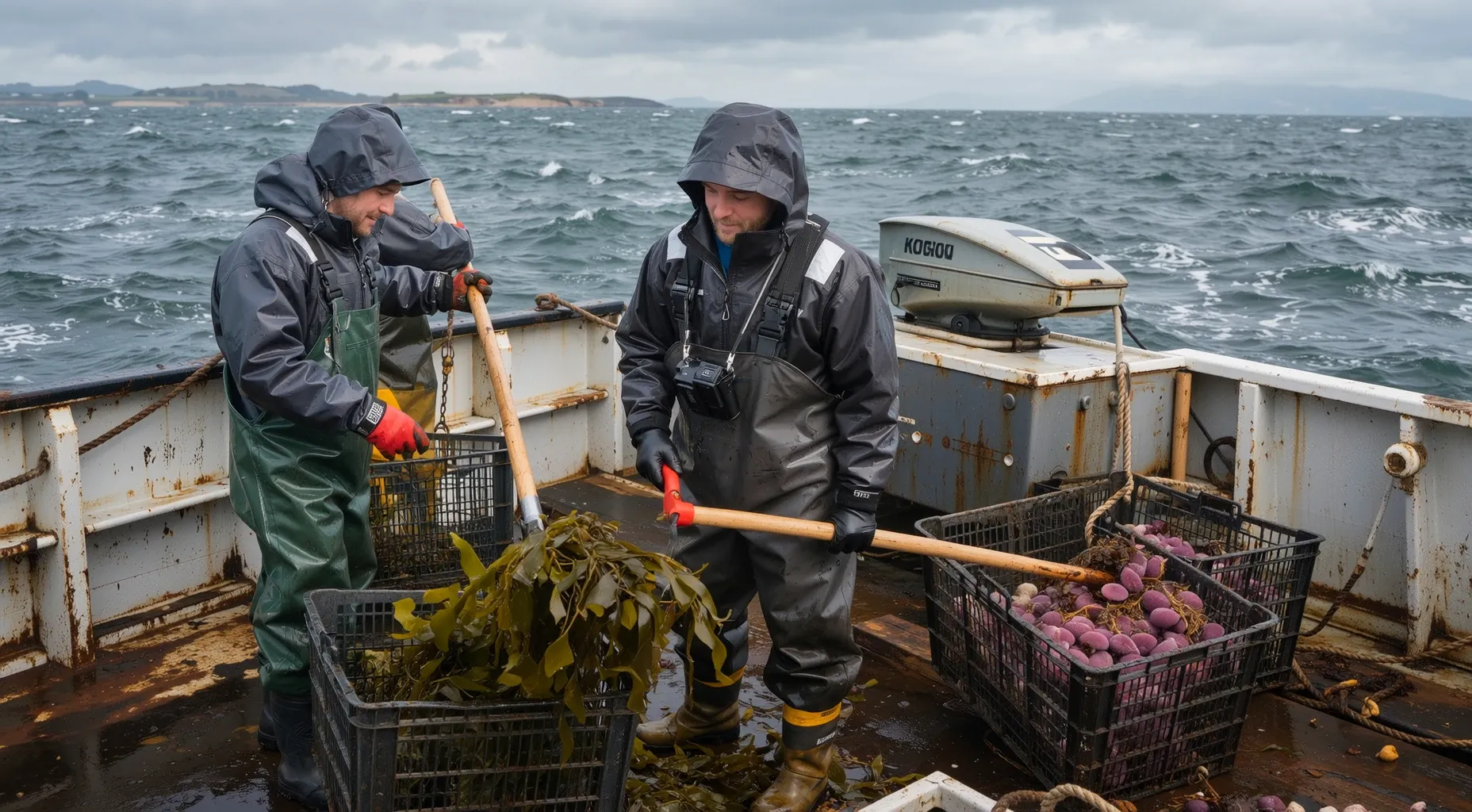
Establishments classified under this code are dedicated to the commercial harvesting of marine animals that do not fall into the finfish or shellfish categories. Their primary operation centers on catching species such as octopus, abalone, crabs, lobsters, mollusks, sponges, and various other crustaceans using specialized gear like longlines, pots, trawls, or dredges. These operators frequently work through contract fisheries, landing their catch at ports for further distribution, or managing their own fleet of vessels to ensure timely landings. Many facilities focus on aquaculture for sustainable growth rather than wild capture, involving controlled breeding and harvest within coastal or inland waters. The industry encompasses a diverse range of business sizes, from small family-owned operations using modest boats to large commercial enterprises managing extensive fleets. While some businesses concentrate on single species, others manage mixed catches to maximize economic efficiency. The scope of work extends from the initial capture to post-harvest processing, including cleaning, sorting, freezing, and packaging before sale to restaurants, supermarkets, and processors. This segment plays a critical role in seafood supply chains, providing essential protein sources while adapting to fluctuating market demands and sustainability regulations across the coastal regions of the nation.
Hierarchy
| Code | Title | Description |
|---|---|---|
| 11 | Agriculture, Forestry, Fishing and Hunting 2-digit sector | The Sector as a Whole The Agriculture, Forestry, Fishing and Hunting sector comprises establishments primarily engaged in growing crops, raising animals, harvesting timber, and harvesting fish and other animals from a farm, ranch, or their natural habitats. The establishments in this sector are often described as farms, ranches, dairies, greenhouses, nurseries, orchards, or hatcheries. A farm may consist of a single tract of land or a number of separate tracts which may be held under different tenures. For example, one tract may be owned by the farm operator and another rented. It may be operated by the operator alone or with the assistance of members of the household or hired employees, or it may be operated by a partnership, corporation, or other type of organization. When a landowner has one or more tenants, renters, croppers, or managers, the land operated by each is considered a farm. The sector distinguishes two basic activities: agricultural production and agricultural support activities. Agricultural production includes establishments performing the complete farm or ranch operation, such as farm owner-operators and tenant farm operators. Agricultural support activities include establishments that perform one or more activities associated with farm operation, such as soil preparation, planting, harvesting, and management, on a contract or fee basis. Excluded from the Agriculture, Forestry, Fishing and Hunting sector are establishments primarily engaged in agricultural research (e.g., experimental farms) and government establishments primarily engaged in administering programs for regulating and conserving land, mineral, wildlife, and forest use. These establishments are classified in Industry 54171, Research and Development in the Physical, Engineering, and Life Sciences; and Industry 92412, Administration of Conservation Programs, respectively. |
| 114 | Fishing, Hunting and Trapping 3-digit subsector | Industries in the Fishing, Hunting and Trapping subsector harvest fish and other wild animals from their natural habitats and are dependent upon a continued supply of the natural resource. The harvesting of fish is the predominant economic activity of this subsector and it usually requires specialized vessels that, by the nature of their size, configuration and equipment, are not suitable for any other type of production, such as transportation. Hunting and trapping activities utilize a wide variety of production processes and are classified in the same subsector as fishing because the availability of resources and the constraints imposed, such as conservation requirements and proper habitat maintenance, are similar. |
| 1141 | Fishing 4-digit industry group | Industries in the Fishing, Hunting and Trapping subsector harvest fish and other wild animals from their natural habitats and are dependent upon a continued supply of the natural resource. The harvesting of fish is the predominant economic activity of this subsector and it usually requires specialized vessels that, by the nature of their size, configuration and equipment, are not suitable for any other type of production, such as transportation. Hunting and trapping activities utilize a wide variety of production processes and are classified in the same subsector as fishing because the availability of resources and the constraints imposed, such as conservation requirements and proper habitat maintenance, are similar. |
| 11411 | Fishing 5-digit NAICS industry | This industry comprises establishments primarily engaged in the commercial catching or taking of finfish, shellfish, or miscellaneous marine products from a natural habitat, such as the catching of bluefish, eels, salmon, tuna, clams, crabs, lobsters, mussels, oysters, shrimp, frogs, sea urchins, and turtles. |
| 114119 | Other Marine Fishing 6-digit U.S. detail | Establishments classified under this code are dedicated to the commercial harvesting of marine animals that do not fall into the finfish or shellfish categories. Their primary operation centers on catching species such as octopus, abalone, crabs, lobsters, mollusks, sponges, and various other crustaceans using specialized gear like longlines, pots, trawls, or dredges. These operators frequently work through contract fisheries, landing their catch at ports for further distribution, or managing their own fleet of vessels to ensure timely landings. Many facilities focus on aquaculture for sustainable growth rather than wild capture, involving controlled breeding and harvest within coastal or inland waters. The industry encompasses a diverse range of business sizes, from small family-owned operations using modest boats to large commercial enterprises managing extensive fleets. While some businesses concentrate on single species, others manage mixed catches to maximize economic efficiency. The scope of work extends from the initial capture to post-harvest processing, including cleaning, sorting, freezing, and packaging before sale to restaurants, supermarkets, and processors. This segment plays a critical role in seafood supply chains, providing essential protein sources while adapting to fluctuating market demands and sustainability regulations across the coastal regions of the nation. |
Need a supply chain stack that maps to this industry?
Use this NAICS classification as the starting point, then connect it to Item workflows across inventory, warehousing, order management, fulfillment, and transportation.
Classification References
- 01Animal or plant aquaculture (except finfish and shellfish)--are classified in U.S. Industry 112519, Other Aquaculture;
- 02The commercial catching or taking of finfish from their natural habitat--are classified in U.S. Industry 114111, Finfish Fishing; and
- 03The commercial catching or taking of shellfish from their natural habitat--are classified in U.S. Industry 114112, Shellfish Fishing.
Index Items
Frog fishing
Seaweed gathering
Sponge gathering
Terrapin fishing
Turtle fishing
How Item Can Help
Optimizes freight routing for heavy, perishable seafood to minimize spoilage and fuel costs while ensuring compliance with maritime regulations.
Predicts supply shortages based on real-time global catch volumes to help procurement teams stock up on critical ingredients before prices rise.
Automates reordering and delivery scheduling for multi-location retail outlets to ensure fresh inventory is always available without overstocking.
Item.com Tools
External Resources
Census.gov NAICS Detail
Official US Census Bureau definition and scope for NAICS 114119.
National Marine Fisheries Service
The primary US government agency responsible for research and management of marine fisheries including small-scale operations.
American Fisheries Society
A non-profit organization dedicated to advancing the science of fisheries and aquaculture through education and research.
International Data Corporation Marine Sector
An industry directory and analytical resource providing detailed data on global marine fishing markets and trends.
