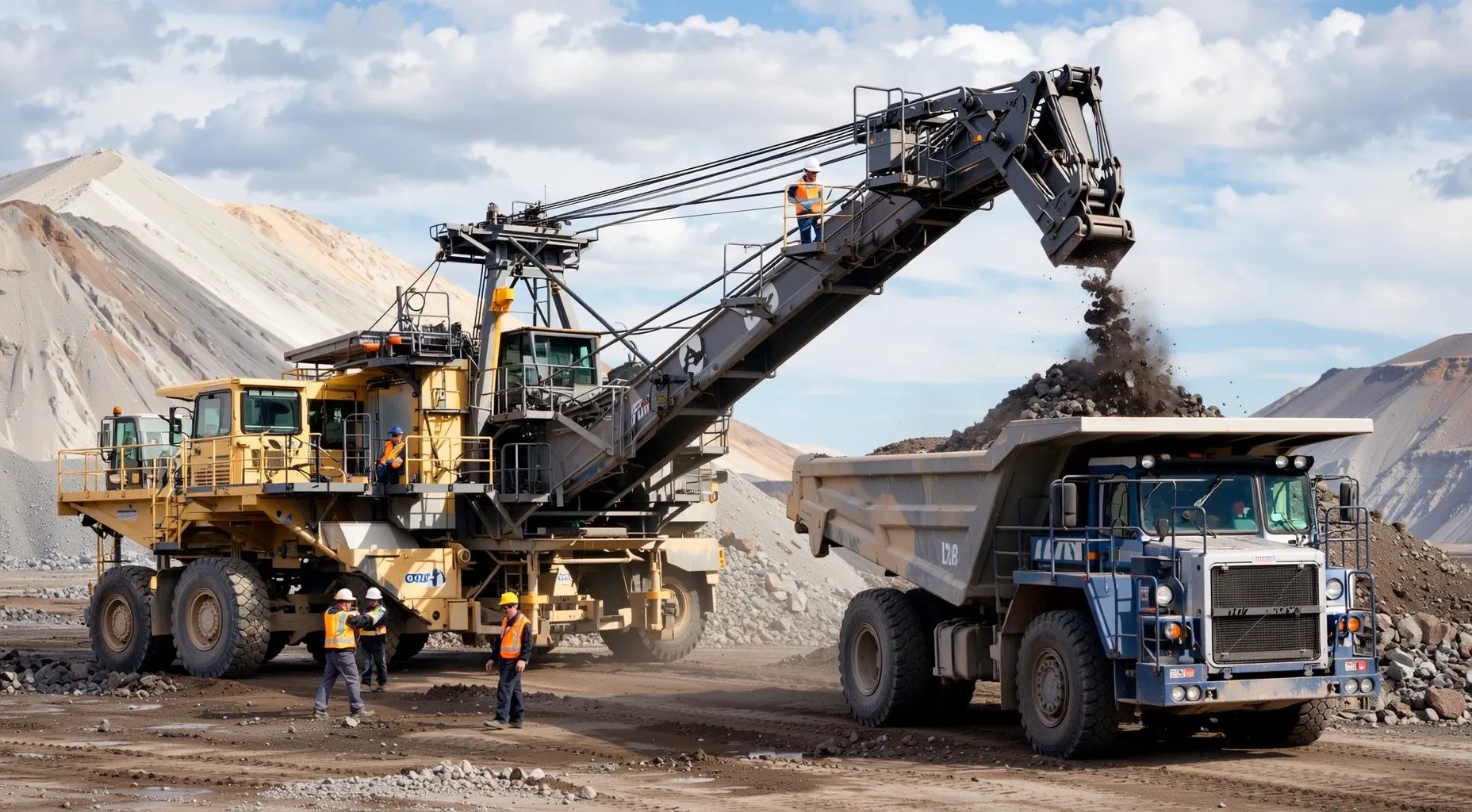
Other Metal Ore Mining
Description
This industry comprises establishments primarily engaged in developing the mine site, mining, and/or beneficiating (i.e., preparing) metal ores (except iron and manganiferous ores valued for their iron content, gold ore, silver ore, copper, nickel, lead, and zinc ore). Illustrative Examples: Antimony ores mining and/or beneficiating Tantalum ores mining and/or beneficiating Columbite ores mining and/or beneficiating Tungsten ores mining and/or beneficiating Ilmenite ores mining and/or beneficiating Uranium-radium-vanadium ores mining and/or beneficiating Molybdenum ores mining and/or beneficiating
Hierarchy
| Code | Title | Description |
|---|---|---|
| 21 | Mining, Quarrying, and Oil and Gas Extraction 2-digit sector | The Sector as a Whole The Mining, Quarrying, and Oil and Gas Extraction sector comprises establishments that extract naturally occurring mineral solids, such as coal and ores; liquid minerals, such as crude petroleum; and gases, such as natural gas. The term "mining" is used in the broad sense to include quarrying, well operations, beneficiating (e.g., crushing, screening, washing, and flotation), and other preparation customarily performed at the mine site, or as a part of mining activity. The Mining, Quarrying, and Oil and Gas Extraction sector distinguishes two basic activities: mine operation and mining support activities. Mine operation includes establishments operating mines, quarries, or oil and gas wells on their own account or for others on a contract or fee basis. Mining support activities include establishments that perform exploration (except geophysical surveying and mapping) on a contract or fee basis and/or other mining services on a contract or fee basis (except mine site preparation, construction, and transportation activities). Establishments in the Mining, Quarrying, and Oil and Gas Extraction sector are grouped and classified according to the natural resource mined or to be mined. Industries include establishments that develop and/or operate the mine site, extract the natural resources, beneficiate (i.e., prepare) the mineral mined, or provide mining support activities. Beneficiation is the process whereby the extracted material is reduced to particles that can be separated into mineral and waste, the former suitable for further processing or direct use. The operations that take place in beneficiation are primarily mechanical, such as grinding, washing, magnetic separation, and centrifugal separation. In contrast, manufacturing operations primarily use chemical and electrochemical processes, such as electrolysis and distillation. However, some treatments, such as heat treatments, take place in both the beneficiation and the manufacturing (i.e., smelting/refining) stages. The range of preparation activities varies by mineral and the purity of any given ore deposit. While some minerals, such as petroleum and natural gas, require little or no preparation, others are washed and screened, while yet others, such as gold and silver, can be transformed into bullion before leaving the mine site. Mining, beneficiating, and manufacturing activities often occur in a single location. Separate receipts will be collected for these activities whenever possible. When receipts cannot be broken out between mining and manufacturing, establishments that mine or quarry nonmetallic minerals, and then beneficiate the nonmetallic minerals into more finished manufactured products are classified based on the primary activity of the establishment. A mine that manufactures a small amount of finished products will be classified in Sector 21, Mining, Quarrying, and Oil and Gas Extraction. An establishment that mines whose primary output is a more finished manufactured product will be classified in Sector 31-33, Manufacturing. |
| 212 | Mining (except Oil and Gas) 3-digit subsector | Industries in the Mining (except Oil and Gas) subsector primarily engage in mining, mine site development, and beneficiating (i.e., preparing) metallic minerals and nonmetallic minerals, including coal. The term "mining" is used in the broad sense to include ore extraction, quarrying, and beneficiating (e.g., crushing, screening, washing, sizing, concentrating, and flotation), customarily done at the mine site. Beneficiation is the process whereby the extracted material is reduced to particles which can be separated into mineral and waste, the former suitable for further processing or direct use. The operations that take place in beneficiation are primarily mechanical, such as grinding, washing, magnetic separation, centrifugal separation, and so on. In contrast, manufacturing operations primarily use chemical and electrochemical processes, such as electrolysis, distillation, and so on. However, some treatments, such as heat treatments, take place in both stages: the beneficiation and the manufacturing (i.e., smelting/refining) stages. The range of preparation activities varies by mineral and the purity of any given ore deposit. While some minerals, such as petroleum and natural gas, require little or no preparation, others are washed and screened, while yet others, such as gold and silver, can be transformed into bullion before leaving the mine site. Establishments in the Mining (except Oil and Gas) subsector include those that have complete responsibility for operating mines and quarries (except oil and gas wells) and those that operate mines and quarries (except oil and gas wells) for others on a contract or fee basis. Establishments primarily engaged in providing support services, on a contract or fee basis (except geophysical surveying and mapping, mine site preparation, construction, and transportation activities), required for the mining and quarrying of minerals are classified in Subsector 213, Support Activities for Mining. |
| 2122 | Metal Ore Mining 4-digit industry group | This industry group comprises establishments primarily engaged in developing mine sites or mining metallic minerals, and establishments primarily engaged in ore dressing and beneficiating (i.e., preparing) operations, such as crushing, grinding, washing, drying, sintering, concentrating, calcining, and leaching. Beneficiating may be performed at mills operated in conjunction with the mines served or at mills, such as custom mills, operated separately. |
| 21229 | Other Metal Ore Mining 5-digit NAICS industry | See industry description for 212290. |
| 212290 | Other Metal Ore Mining 6-digit U.S. detail | This industry comprises establishments primarily engaged in developing the mine site, mining, and/or beneficiating (i.e., preparing) metal ores (except iron and manganiferous ores valued for their iron content, gold ore, silver ore, copper, nickel, lead, and zinc ore). Illustrative Examples: Antimony ores mining and/or beneficiating Tantalum ores mining and/or beneficiating Columbite ores mining and/or beneficiating Tungsten ores mining and/or beneficiating Ilmenite ores mining and/or beneficiating Uranium-radium-vanadium ores mining and/or beneficiating Molybdenum ores mining and/or beneficiating |
Need a supply chain stack that maps to this industry?
Use this NAICS classification as the starting point, then connect it to Item workflows across inventory, warehousing, order management, fulfillment, and transportation.
Classification References
- 01Developing the mine site, mining, and/or beneficiating iron and manganiferous ores valued chiefly for their iron content--are classified in Industry 212210, Iron Ore Mining;
- 02Developing the mine site, mining, and/or beneficiating ores valued chiefly for their gold or silver content--are classified in Industry 212220, Gold Ore and Silver Ore Mining;
- 03Developing the mine site, mining, and/or beneficiating ores valued chiefly for their copper, nickel, lead, or zinc content--are classified in Industry 212230, Copper, Nickel, Lead, and Zinc Mining;
- 04Enriching uranium--are classified in Industry 325180, Other Basic Inorganic Chemical Manufacturing; and
- 05Providing support activities (except geophysical surveying and mapping, site preparation, construction, and transportation) for the mining of metallic minerals and ores on a contract or fee basis--are classified in U.S. Industry 213114, Support Activities for Metal Mining.
Index Items
Antimony concentrates beneficiating
Antimony ores mining and/or beneficiating
Bastnaesite mining and/or beneficiating
Bauxite mining and/or beneficiating
Beryl mining and/or beneficiating
Beryllium concentrates beneficiating
Beryllium ores mining and/or beneficiating
Carnotite mining and/or beneficiating
Cerium concentrates beneficiating
Cerium ores mining and/or beneficiating
Chromite mining and/or beneficiating
Chromium concentrates beneficiating
Chromium ore mining and/or beneficiating
Cinnabar mining and/or beneficiating
Cobalt concentrates beneficiating
Cobalt ores mining and/or beneficiating
Columbite mining and/or beneficiating
Columbium ores mining and/or beneficiating
Ferberite ores and concentrates mining and/or beneficiating
Ferroalloy ores (e.g., chromium, columbium, molybdenum, tungsten) mining and/or beneficiating
Hafnium mining and/or beneficiating
Huebnerite mining and/or beneficiating
Ilmenite ores mining and/or beneficiating
Iridium mining and/or beneficiating
Leaching of uranium, radium, or vanadium ores
Manganese concentrates beneficiating
Manganese ores mining and/or beneficiating
Manganiferous ores (not valued for iron content) mining and/or beneficiating
Manganite mining and/or beneficiating
Mercury (quicksilver) mining and/or beneficiating
Mercury ores mining and/or beneficiating
Microlite mining and/or beneficiating
Molybdenite mining and/or beneficiating
Molybdenum ores mining and/or beneficiating
Molybdite mining and/or beneficiating
Monazite mining and/or beneficiating
Osmium mining and/or beneficiating
Palladium mining and/or beneficiating
Pitchblende mining and/or beneficiating
Platinum mining and/or beneficiating
Psilomelane mining and/or beneficiating
Pyrolusite mining and/or beneficiating
Quicksilver ores and metal mining and/or beneficiating
Radium ores mining and/or beneficiating
Rare earth metal concentrates beneficiating
Rare earth metal ores mining and/or beneficiating
Rhodium mining and/or beneficiating
Rhodochrosite mining and/or beneficiating
Roscoelite (vanadium hydromica) mining and/or beneficiating
Ruthenium ore mining and/or beneficiating
Rutile mining and/or beneficiating
Scheelite mining and/or beneficiating
Tantalite mining and/or beneficiating
Tantalum ores mining and/or beneficiating
Thallium mining and/or beneficiating
Thorite mining and/or beneficiating
Thorium ores mining and/or beneficiating
Tin metal concentrates beneficiating
Tin metal ores mining and/or beneficiating
Titaniferous-magnetite ores, valued chiefly for titanium content, mining and/or beneficiating
Titanium concentrates beneficiating
Titanium ores mining and/or beneficiating
Tungsten concentrates beneficiating
Tungsten ores mining and/or beneficiating
Tyuyamunite mining and/or beneficiating
Uraninite (pitchblende) mining and/or beneficiating
Uranium ores mining and/or beneficiating
Uranium-radium-vanadium ore mine site development for own account
Uranium-radium-vanadium ores mining and/or beneficiating
Vanadium ores mining and/or beneficiating
Wolframite mining and/or beneficiating
Wulfenite mining and/or beneficiating
Zirconium concentrates beneficiating
Zirconium ores mining and/or beneficiating
How Item Can Help
The WMS optimizes storage and retrieval of heavy machinery parts and raw ore materials within large underground or open-pit sites, reducing equipment downtime and improving first-out-of-strike efficiency.
OMS synchronizes orders from diverse suppliers and distributors, ensuring that critical mining equipment and safety supplies are delivered to remote locations exactly when needed to avoid production delays.
Data Intelligence predicts supply chain disruptions by analyzing real-time data on equipment maintenance needs and global logistics routes, allowing mining operations to proactively manage inventory and scheduling risks.
Item.com Tools
External Resources
Census.gov NAICS Detail
Official US Census Bureau definition and scope for NAICS 212290.
National Mining Association
A major US trade association representing the mining and oil and gas industries with advocacy and research resources.
U.S. Geological Survey Mining Industry
The official government portal providing free, comprehensive data on mineral resources and mining statistics across the United States.
Mining Association of Canada
Canada's largest mining industry association that sets standards and promotes sustainable mining practices.