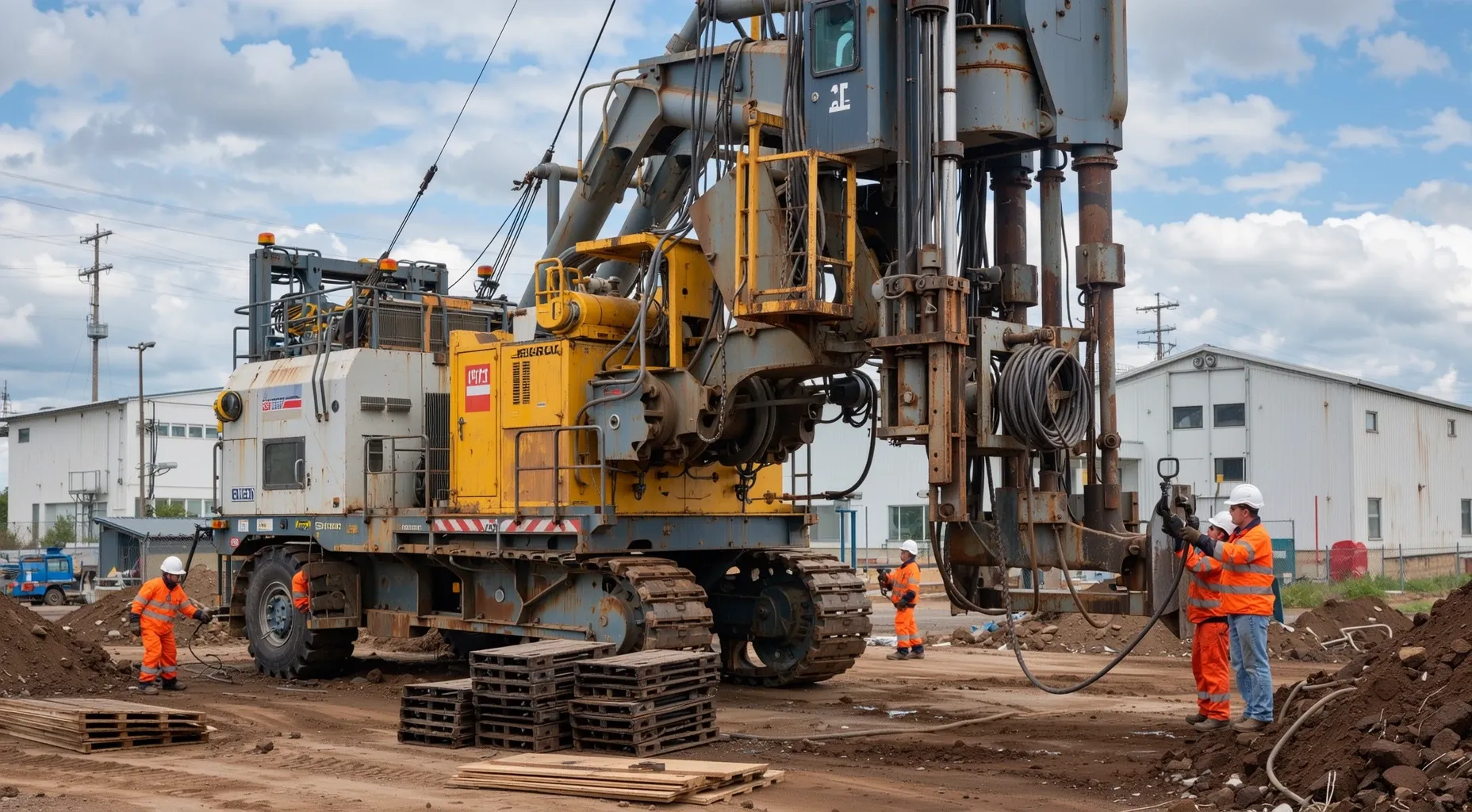
Drilling Oil and Gas Wells
Description
This U.S. industry comprises establishments primarily engaged in drilling oil and gas wells for others on a contract or fee basis. This industry includes contractors that specialize in spudding in, drilling in, redrilling, and directional drilling.
Hierarchy
| Code | Title | Description |
|---|---|---|
| 21 | Mining, Quarrying, and Oil and Gas Extraction 2-digit sector | The Sector as a Whole The Mining, Quarrying, and Oil and Gas Extraction sector comprises establishments that extract naturally occurring mineral solids, such as coal and ores; liquid minerals, such as crude petroleum; and gases, such as natural gas. The term "mining" is used in the broad sense to include quarrying, well operations, beneficiating (e.g., crushing, screening, washing, and flotation), and other preparation customarily performed at the mine site, or as a part of mining activity. The Mining, Quarrying, and Oil and Gas Extraction sector distinguishes two basic activities: mine operation and mining support activities. Mine operation includes establishments operating mines, quarries, or oil and gas wells on their own account or for others on a contract or fee basis. Mining support activities include establishments that perform exploration (except geophysical surveying and mapping) on a contract or fee basis and/or other mining services on a contract or fee basis (except mine site preparation, construction, and transportation activities). Establishments in the Mining, Quarrying, and Oil and Gas Extraction sector are grouped and classified according to the natural resource mined or to be mined. Industries include establishments that develop and/or operate the mine site, extract the natural resources, beneficiate (i.e., prepare) the mineral mined, or provide mining support activities. Beneficiation is the process whereby the extracted material is reduced to particles that can be separated into mineral and waste, the former suitable for further processing or direct use. The operations that take place in beneficiation are primarily mechanical, such as grinding, washing, magnetic separation, and centrifugal separation. In contrast, manufacturing operations primarily use chemical and electrochemical processes, such as electrolysis and distillation. However, some treatments, such as heat treatments, take place in both the beneficiation and the manufacturing (i.e., smelting/refining) stages. The range of preparation activities varies by mineral and the purity of any given ore deposit. While some minerals, such as petroleum and natural gas, require little or no preparation, others are washed and screened, while yet others, such as gold and silver, can be transformed into bullion before leaving the mine site. Mining, beneficiating, and manufacturing activities often occur in a single location. Separate receipts will be collected for these activities whenever possible. When receipts cannot be broken out between mining and manufacturing, establishments that mine or quarry nonmetallic minerals, and then beneficiate the nonmetallic minerals into more finished manufactured products are classified based on the primary activity of the establishment. A mine that manufactures a small amount of finished products will be classified in Sector 21, Mining, Quarrying, and Oil and Gas Extraction. An establishment that mines whose primary output is a more finished manufactured product will be classified in Sector 31-33, Manufacturing. |
| 213 | Support Activities for Mining 3-digit subsector | Industries in the Support Activities for Mining subsector group establishments primarily providing support services, on a contract or fee basis (except geophysical surveying and mapping, mine site preparation, construction, and transportation activities), required for the mining and quarrying of minerals and for the extraction of oil and gas. Establishments performing exploration for minerals, on a contract or fee basis, are included in this subsector. Exploration services include traditional prospecting methods, such as taking core samples and making geological observations at prospective sites. The activities performed on a contract or fee basis by establishments in the Support Activities for Mining subsector are also often performed in-house by mining operators. These activities include taking core samples, making geological observations at prospective sites, excavating slush pits and cellars, and such oil and gas operations as spudding in, drilling in, redrilling, directional drilling, and well surveying; running, cutting, and pulling casings, tubes, and rods; cementing and shooting wells; perforating well casings; acidizing and chemically treating wells; cleaning out, bailing, and swabbing wells; and operating oil and gas field gathering lines. Establishments primarily engaged in providing site preparation and related construction activities on a contract or fee basis are classified in Sector 23, Construction. Establishments primarily engaged in providing transportation activities in support of mining, quarrying, or oil and gas extraction are classified in Sector 48-49, Transportation and Warehousing, based on the primary activity. |
| 2131 | Support Activities for Mining 4-digit industry group | Industries in the Support Activities for Mining subsector group establishments primarily providing support services, on a contract or fee basis (except geophysical surveying and mapping, mine site preparation, construction, and transportation activities), required for the mining and quarrying of minerals and for the extraction of oil and gas. Establishments performing exploration for minerals, on a contract or fee basis, are included in this subsector. Exploration services include traditional prospecting methods, such as taking core samples and making geological observations at prospective sites. The activities performed on a contract or fee basis by establishments in the Support Activities for Mining subsector are also often performed in-house by mining operators. These activities include taking core samples, making geological observations at prospective sites, excavating slush pits and cellars, and such oil and gas operations as spudding in, drilling in, redrilling, directional drilling, and well surveying; running, cutting, and pulling casings, tubes, and rods; cementing and shooting wells; perforating well casings; acidizing and chemically treating wells; cleaning out, bailing, and swabbing wells; and operating oil and gas field gathering lines. Establishments primarily engaged in providing site preparation and related construction activities on a contract or fee basis are classified in Sector 23, Construction. Establishments primarily engaged in providing transportation activities in support of mining, quarrying, or oil and gas extraction are classified in Sector 48-49, Transportation and Warehousing, based on the primary activity. |
| 21311 | Support Activities for Mining 5-digit NAICS industry | This industry comprises establishments primarily engaged in providing support services, on a contract or fee basis (except geophysical surveying and mapping, mine site preparation, construction, and transportation activities), required for the mining and quarrying of minerals and for the extraction of oil and gas. Drilling, taking core samples, and making geological observations at prospective sites for minerals, on a contract or fee basis, are included in this industry. |
| 213111 | Drilling Oil and Gas Wells 6-digit U.S. detail | This U.S. industry comprises establishments primarily engaged in drilling oil and gas wells for others on a contract or fee basis. This industry includes contractors that specialize in spudding in, drilling in, redrilling, and directional drilling. |
Need a supply chain stack that maps to this industry?
Use this NAICS classification as the starting point, then connect it to Item workflows across inventory, warehousing, order management, fulfillment, and transportation.
Classification References
- 01Performing exploration (except geophysical surveying and mapping) services for oil and gas on a contract or fee basis--are classified in U.S. Industry 213112, Support Activities for Oil and Gas Operations; and
- 02Performing geophysical surveying and mapping services for oil and gas on a contract or fee basis--are classified in Industry 541360, Geophysical Surveying and Mapping Services.
Index Items
Directional drilling of oil and gas wells on a contract basis
Drilling directional oil and gas field wells on a contract basis
Drilling for gas on a contract basis
Drilling for oil on a contract basis
Drilling gas and oil field wells on a contract basis
Drilling oil and gas field service wells on a contract basis
Drilling water intake wells, oil and gas field on a contract basis
Gas well drilling on a contract basis
Oil and gas well drilling services (redrilling, spudding, tailing) on a contract basis
Oil well drilling on a contract basis
Reconditioning oil and gas field wells on a contract basis
Reworking oil and gas wells on a contract basis
Service well drilling on a contract basis
Spudding in oil and gas wells on a contract basis
Tailing in oil and gas field wells on a contract basis
Water intake well drilling, oil and gas field on a contract basis
Well drilling (i.e., oil, gas, water intake wells) on a contract basis
Workover of oil and gas wells on a contract basis
How Item Can Help
Data Intelligence analyzes historical well completion data and drilling logs to predict optimal drilling parameters and identify potential geological risks before a wellhead is set. This predictive capability helps Drilling Oil and Gas Wells companies reduce non-productive time and minimize operational costs associated with dry holes.
WMS manages the complex logistics of transporting large, heavy-duty drilling equipment and sensitive chemicals to remote well sites while ensuring precise inventory levels. By automating asset tracking and optimizing delivery routes, the system prevents delays in getting machinery to the drilling location on schedule.
TMS orchestrates the transportation of hazardous materials across vast distances to ensure compliance with strict safety regulations and environmental standards. Real-time visibility into freight shipments allows managers to quickly reroute loads around traffic or weather disruptions, maintaining continuous drilling operations.
Item.com Tools
External Resources
Census.gov NAICS Detail
Official US Census Bureau definition and scope for NAICS 213111.
Association of Oil & Gas Drilling Contractors
A trade association representing independent drilling contractors across the United States and Canada.
U.S. Department of Energy Oil and Natural Gas Platform
The official government portal for statistics, news, and analysis regarding oil and gas production and exploration.
U.S. Bureau of Economic Analysis
A source for economic data, productivity trends, and industry output related to oil and gas extraction.
