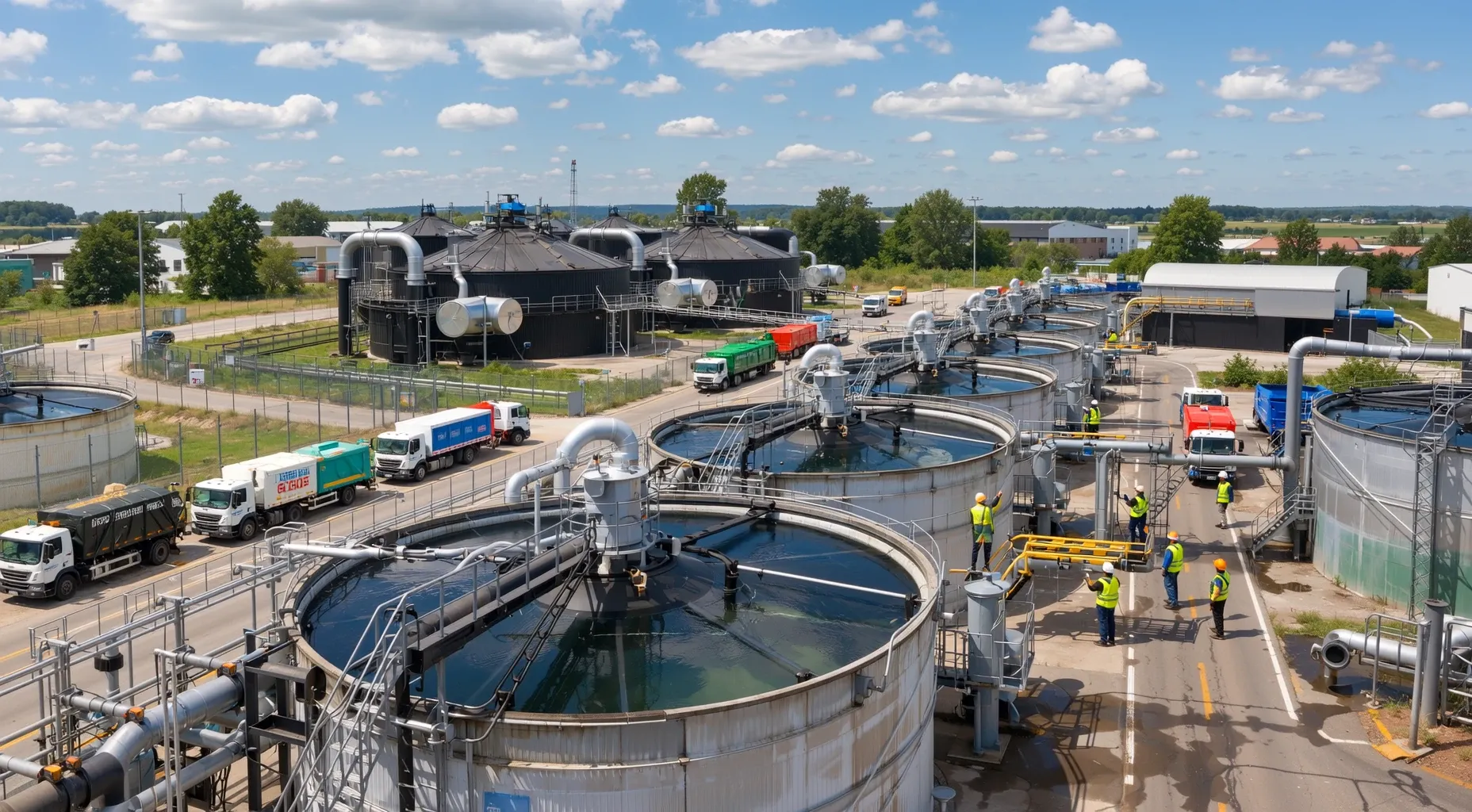
Sewage Treatment Facilities
Description
Utilities involved in sewage treatment facilities play a critical role in public health and environmental protection by managing the collection, treatment, and final disposal of municipal and industrial wastewater. These establishments utilize complex engineering processes to separate solids from liquids, remove harmful pathogens, and eliminate pollutants before safely discharging treated water into natural bodies or reusing it. The core business activities focus on maintaining mechanical infrastructure such as pumping stations, aeration tanks, and filtration systems while adhering to strict federal and state regulatory standards regarding water quality. Operators can range from independent private contractors running single-plant facilities to large municipal utilities managing extensive networks across entire metropolitan areas. Many organizations also handle sludge processing and disposal, ensuring hazardous residues are contained in landfills or incinerated. Some specialized firms may offer services related to groundwater remediation or environmental consulting for regulatory compliance. The industry operates on a continuous 24-hour basis to prevent infrastructure failure and contamination events. On a global scale, these operations protect ecosystems from pollution while safeguarding drinking water sources, requiring significant capital investment in modern technology to address aging infrastructure and increasing waste volumes.
Hierarchy
| Code | Title | Description |
|---|---|---|
| 22 | Utilities 2-digit sector | The Sector as a Whole The Utilities sector comprises establishments engaged in the provision of the following utility services: electric power, natural gas, steam supply, water supply, and sewage treatment and disposal. Within this sector, the specific activities associated with the utility services provided vary by utility: electric power includes generation, transmission, and distribution; natural gas includes distribution; steam supply includes provision and/or distribution; water supply includes treatment and distribution; and sewage removal includes collection, treatment, and disposal of waste through sewer systems and sewage treatment facilities. Excluded from this sector are establishments primarily engaged in waste management services classified in Subsector 562, Waste Management and Remediation Services. These establishments also collect, treat, and dispose of waste materials; however, they do not use sewer systems or sewage treatment facilities. |
| 221 | Utilities 3-digit subsector | Industries in the Utilities subsector provide electric power, natural gas, steam supply, water supply, and sewage treatment and disposal through a permanent infrastructure of lines, mains, and pipes. Establishments are grouped together based on the utility service provided and the particular system or facilities required to perform the service. |
| 2213 | Water, Sewage and Other Systems 4-digit industry group | This industry group comprises establishments primarily engaged in: (1) operating water treatment plants and/or water supply systems; (2) operating sewer systems or sewage treatment facilities; or (3) providing steam, heated air, or cooled air. |
| 22132 | Sewage Treatment Facilities 5-digit NAICS industry | See industry description for 221320. |
| 221320 | Sewage Treatment Facilities 6-digit U.S. detail | Utilities involved in sewage treatment facilities play a critical role in public health and environmental protection by managing the collection, treatment, and final disposal of municipal and industrial wastewater. These establishments utilize complex engineering processes to separate solids from liquids, remove harmful pathogens, and eliminate pollutants before safely discharging treated water into natural bodies or reusing it. The core business activities focus on maintaining mechanical infrastructure such as pumping stations, aeration tanks, and filtration systems while adhering to strict federal and state regulatory standards regarding water quality. Operators can range from independent private contractors running single-plant facilities to large municipal utilities managing extensive networks across entire metropolitan areas. Many organizations also handle sludge processing and disposal, ensuring hazardous residues are contained in landfills or incinerated. Some specialized firms may offer services related to groundwater remediation or environmental consulting for regulatory compliance. The industry operates on a continuous 24-hour basis to prevent infrastructure failure and contamination events. On a global scale, these operations protect ecosystems from pollution while safeguarding drinking water sources, requiring significant capital investment in modern technology to address aging infrastructure and increasing waste volumes. |
Need a supply chain stack that maps to this industry?
Use this NAICS classification as the starting point, then connect it to Item workflows across inventory, warehousing, order management, fulfillment, and transportation.
Classification References
- 01Operating waste treatment or disposal facilities (except sewer systems or sewage treatment facilities)--are classified in Industry 56221, Waste Treatment and Disposal;
- 02Operating water treatment plants and/or operating water supply systems--are classified in Industry 221310, Water Supply and Irrigation Systems;
- 03Pumping (i.e., cleaning) cesspools, portable toilets, and septic tanks or renting portable toilets--are classified in U.S. Industry 562991, Septic Tank and Related Services; and
- 04Cleaning and rodding sewers and catch basins--are classified in U.S. Industry 562998, All Other Miscellaneous Waste Management Services.
Index Items
Collection, treatment, and disposal of waste through a sewer system
Sewage disposal plants
Sewage treatment plants or facilities
Sewer systems
Waste collection, treatment, and disposal through a sewer system
How Item Can Help
It ensures compliance with strict environmental regulations by accurately logging inventory levels and movement within the facility.
It enables real-time coordination with vendors to secure shipments that meet federal transportation and safety standards.
It also identifies trends in chemical usage to reduce waste and improve the overall efficiency of treatment processes.
Item.com Tools
External Resources
Census.gov NAICS Detail
Official US Census Bureau definition and scope for NAICS 221320.
American Water Works Association
A leading non-profit trade association dedicated to improving the quality and reliability of water in the United States.
U.S. Environmental Protection Agency - Wastewater Management
A government resource providing information, regulations, and resources for managing and treating wastewater.
NACE - National Association of Sewer Service Companies
The premier industry association dedicated to the growth, development, and success of the sewer and wastewater industry.
