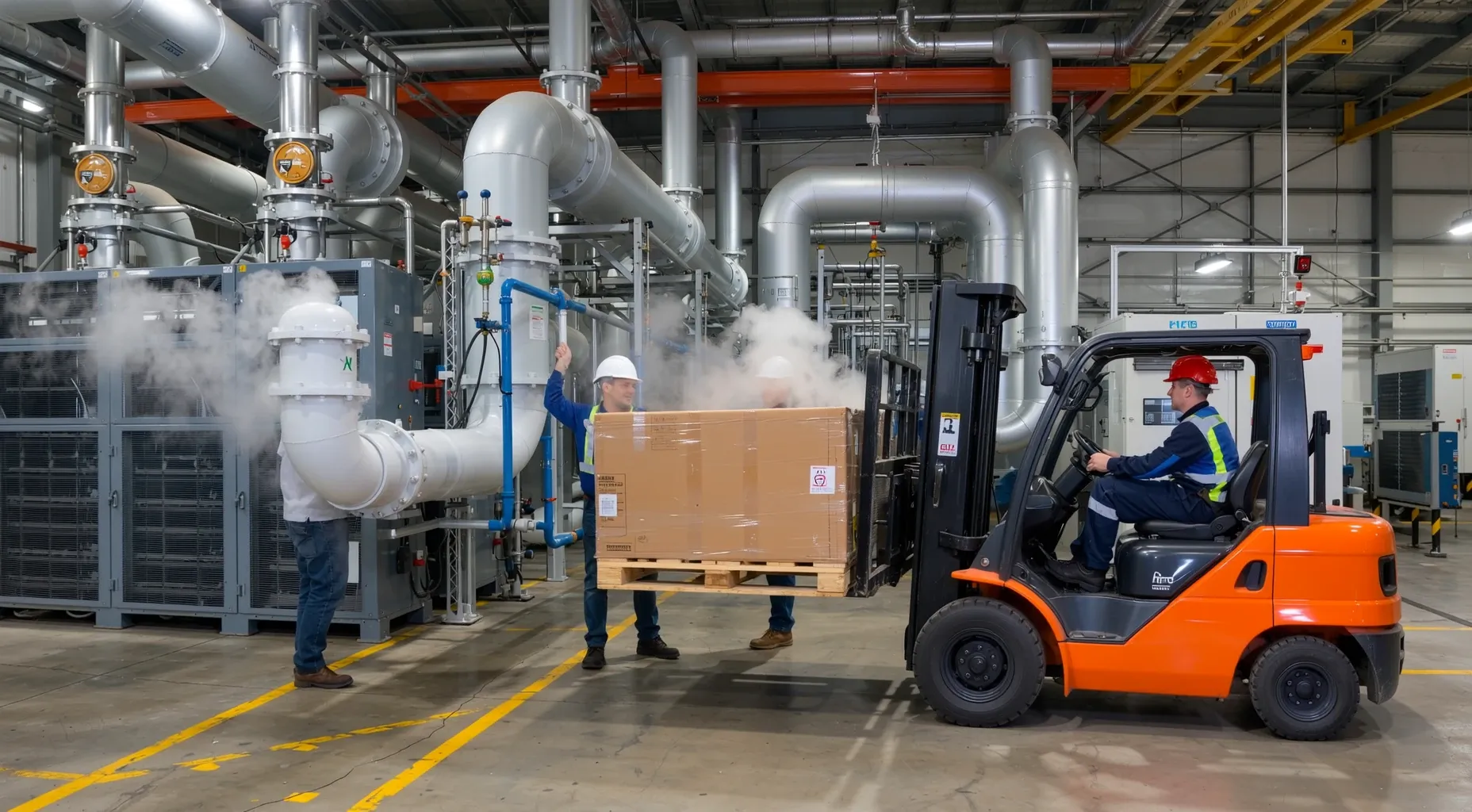
Suministro de Vapor y Aire Acondicionado
Description
Las empresas clasificadas en este sector se centran principalmente en la producción y distribución de aire calentado o enfriado, así como vapor, a clientes residenciales, comerciales e industriales. Estas empresas operan como proveedores de servicios esenciales, asegurando que los edificios mantengan temperaturas internas seguras a través de sistemas regulados. Las actividades típicas incluyen la construcción, el mantenimiento y la reparación de redes de distribución de vapor y tuberías, junto con la operación de enfriadores y hornos que generan y suministran aire acondicionado o calefacción. Los operadores van desde pequeñas municipalidades regionales que brindan servicios municipales básicos hasta grandes corporaciones de servicios públicos que atienden extensas áreas metropolitanas o complejos industriales específicos. Si bien algunas entidades funcionan estrictamente como distribuidores que entregan servicios desde plantas centralizadas, otras gestionan todo el ciclo de vida de su infraestructura, incluida la revisión periódica de calderas y torres de enfriamiento. La escala de las operaciones varía significativamente, con proveedores locales más pequeños que atienden unos pocos miles de cuentas en comparación con grandes empresas regionales que distribuyen vapor a cientos de miles de propiedades. Esta industria desempeña un papel crucial en el mercado energético más amplio al gestionar importantes cargas de energía y contribuir a los estándares de salud pública al prevenir el crecimiento de moho y daños estructurales en los espacios ocupados. Sus servicios son continuos y no discrecionales, lo que significa que las interrupciones o fallas tienen un impacto inmediato y costoso en la estabilidad de las comunidades y las empresas por igual.
Hierarchy
| Code | Title | Description |
|---|---|---|
| 22 | Utilities 2-digit sector | El Sector en su Conjunto El sector de Utilities comprende las empresas dedicadas a la prestación de los siguientes servicios de utilidad: electricidad, gas natural, suministro de vapor, suministro de agua y tratamiento y eliminación de aguas residuales. Dentro de este sector, las actividades específicas asociadas con los servicios de utilidad proporcionados varían según la utilidad: la electricidad incluye la generación, la transmisión y la distribución; el gas natural incluye la distribución; el suministro de vapor incluye la provisión y/o la distribución; el suministro de agua incluye el tratamiento y la distribución; y la eliminación de aguas residuales incluye la recolección, el tratamiento y la eliminación de residuos a través de sistemas de alcantarillado y plantas de tratamiento de aguas residuales. Se excluyen de este sector las empresas principalmente dedicadas a los servicios de gestión de residuos clasificados en el subsector 562, Servicios de Gestión y Remediación de Residuos. Estas empresas también recolectan, tratan y eliminan residuos; sin embargo, no utilizan sistemas de alcantarillado ni plantas de tratamiento de aguas residuales. |
| 221 | Utilities 3-digit subsector | Las industrias en el subsector de Utilities proporcionan electricidad, gas natural, suministro de vapor, suministro de agua y eliminación de aguas residuales a través de una infraestructura permanente de líneas, tuberías y sistemas. Las empresas se agrupan según el servicio de utilidad proporcionado y el sistema o las instalaciones particulares necesarias para realizar el servicio. |
| 2213 | Water, Sewage and Other Systems 4-digit industry group | Este grupo de industrias comprende las empresas principalmente dedicadas a: (1) operar plantas de tratamiento de agua y/o sistemas de suministro de agua; (2) operar sistemas de alcantarillado o plantas de tratamiento de aguas residuales; o (3) proporcionar vapor, aire caliente o aire frío. |
| 22133 | Steam and Air-Conditioning Supply 5-digit NAICS industry | Ver descripción de la industria para 221330. |
| 221330 | Suministro de Vapor y Aire Acondicionado 6-digit U.S. detail | Las empresas clasificadas en este sector se centran principalmente en la producción y distribución de aire calentado o enfriado, así como vapor, a clientes residenciales, comerciales e industriales. Estas empresas operan como proveedores de servicios esenciales, asegurando que los edificios mantengan temperaturas internas seguras a través de sistemas regulados. Las actividades típicas incluyen la construcción, el mantenimiento y la reparación de redes de distribución de vapor y tuberías, junto con la operación de enfriadores y hornos que generan y suministran aire acondicionado o calefacción. Los operadores van desde pequeñas municipalidades regionales que brindan servicios municipales básicos hasta grandes corporaciones de servicios públicos que atienden extensas áreas metropolitanas o complejos industriales específicos. Si bien algunas entidades funcionan estrictamente como distribuidores que entregan servicios desde plantas centralizadas, otras gestionan todo el ciclo de vida de su infraestructura, incluida la revisión periódica de calderas y torres de enfriamiento. La escala de las operaciones varía significativamente, con proveedores locales más pequeños que atienden unos pocos miles de cuentas en comparación con grandes empresas regionales que distribuyen vapor a cientos de miles de propiedades. Esta industria desempeña un papel crucial en el mercado energético más amplio al gestionar importantes cargas de energía y contribuir a los estándares de salud pública al prevenir el crecimiento de moho y daños estructurales en los espacios ocupados. Sus servicios son continuos y no discrecionales, lo que significa que las interrupciones o fallas tienen un impacto inmediato y costoso en la estabilidad de las comunidades y las empresas por igual. |
Need a supply chain stack that maps to this industry?
Use this NAICS classification as the starting point, then connect it to Item workflows across inventory, warehousing, order management, fulfillment, and transportation.
Classification References
- 01La instalación y venta de equipos de calefacción y aire acondicionado--se clasifican en la Industria 238220, Contratistas de plomería, calefacción y aire acondicionado; y
- 02La distribución al por mayor de equipos de calefacción y aire acondicionado--se clasifican en la Industria 423730, Mayoristas de equipos de calefacción y aire acondicionado; y
Index Items
Suministro de aire acondicionado
Distribución de aire refrigerado
Distribución de aire
Distribución de aire caliente
Distribución de calor
Producción de vapor geotérmico
Distribución de calor y vapor
Distribución de aire caliente
Proveedores de vapor de calefacción (proveedores de calor)
Distribución de vapor
Sistemas de calefacción de vapor (es decir, proveedores de calor)
Producción y distribución de vapor
Sistemas de suministro de vapor, incluyendo geotérmico
How Item Can Help
The Warehouse Management System optimizes the storage and flow of diverse equipment, such as large AC units, to maximize space in industrial facilities while minimizing pick-and-pack errors during high-volume orders.
Order Management System streamlines the processing of complex delivery windows, ensuring customers receive temperature-sensitive parts like refrigerants exactly when needed without unnecessary delays.
Transportation Management System selects the most efficient routes and carriers for hauling heavy machinery over long distances, significantly reducing fuel costs and ensuring on-time delivery of critical infrastructure components.
Item.com Tools
External Resources
Census.gov NAICS Detail
Official US Census Bureau definition and scope for NAICS 221330.
National Association of the Home Builder
Provides educational resources and guides on HVAC installation standards relevant to NAICS 221330.
U.S. Energy Information Administration
Contains government data and reports on commercial and residential mechanical services including steam and air-conditioning supply.
Frost & Sullivan HVAC Industry Report
A leading industry analysis site providing insights on trends, technologies, and market players in steam and air-conditioning supply.
