Tischler-Bauunternehmer
Beschreibung
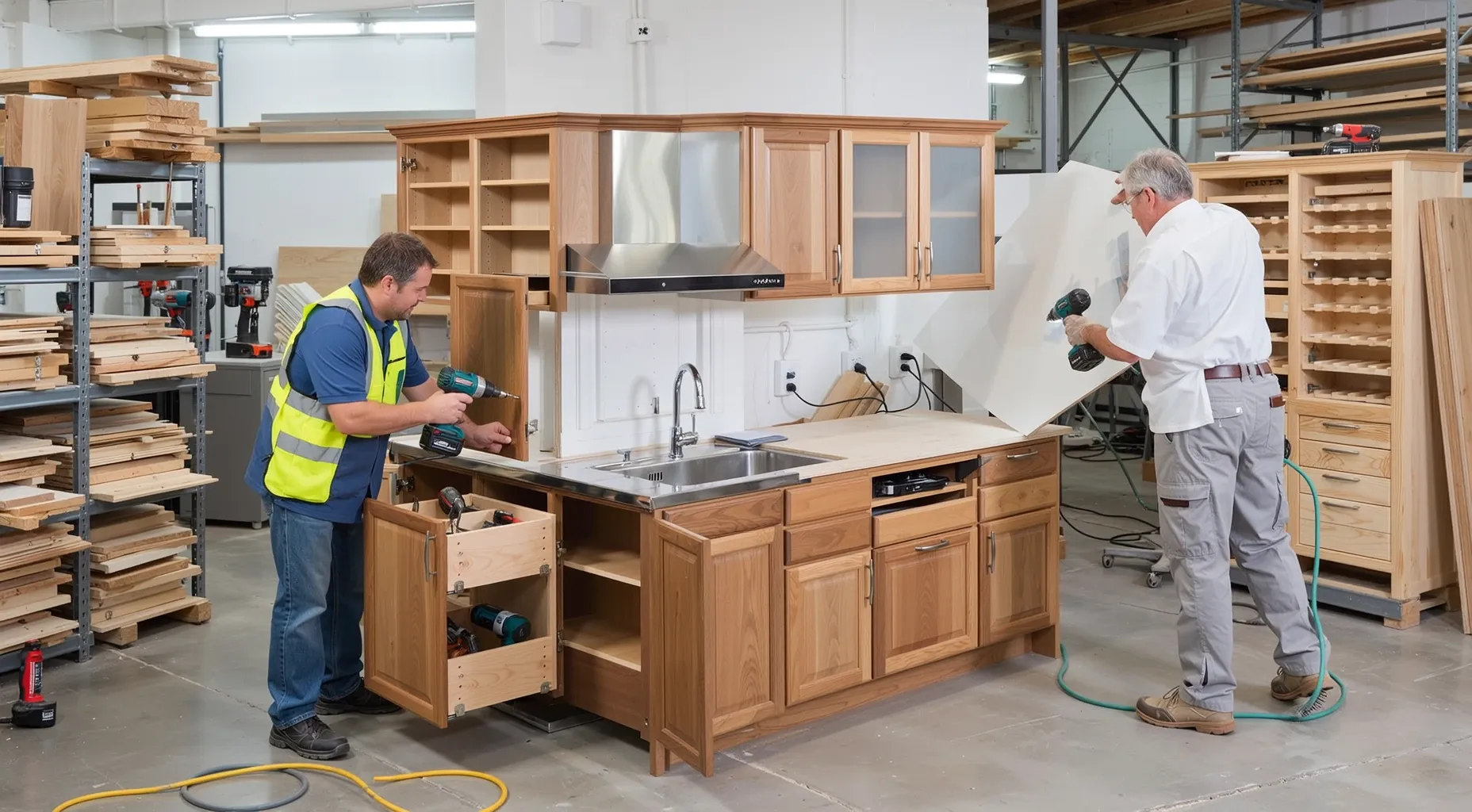
Diese Branche umfasst Betriebe, die sich hauptsächlich mit Tischlerarbeiten beschäftigen. Die durchgeführten Arbeiten können Neubauten, Anbauten, Umbauten, Wartungsarbeiten und Reparaturen umfassen. Beispielhafte Tätigkeiten: * Einbauholzschränke, vor Ort gefertigt * Montage von Leisten oder Zierleisten aus Holz oder Kunststoff * Montage von Arbeitsplatten (außer Keramikfliesen oder Stein), Wohnhausart * Verkleidungsmontage * Bau von Tür- und Fensterrahmen * Montage von Garagentoren, Wohnhausart * Montage von vorgefertigten Küchen- und Badezimmerschränken, Wohnhausart * Schiffsinnenausbau-Unternehmer * Montage von Holzwerk * Montage von Fenstern und Türen, Wohnhausart, aus jedem Material, vorgefertigt
Hierarchie
| Code | Titel | Beschreibung |
|---|---|---|
| 23 | Bauwesen 2-stelliger Sektor | Der Sektor als Ganzes Der Bausektor umfasst Betriebe, die hauptsächlich mit dem Bau von Gebäuden oder Ingenieurprojekten (z. B. Autobahnen und Versorgungsnetzen) beschäftigt sind. Auch Betriebe, die hauptsächlich mit der Vorbereitung von Grundstücken für Neubauten und Betriebe, die hauptsächlich mit der Aufteilung von Grundstücken zum Verkauf als Bauland beschäftigt sind, gehören zu diesem Sektor. Die ausgeführten Bauarbeiten können Neubauten, Erweiterungen, Umbauten oder Wartungs- und Reparaturarbeiten umfassen. Die Tätigkeiten dieser Betriebe werden im Allgemeinen an einem festen Geschäftsstandort verwaltet, sie führen jedoch in der Regel Bauarbeiten an mehreren Baustellen durch. Die Produktionsverantwortlichkeiten für Betriebe in diesem Sektor sind normalerweise in (1) Verträgen mit den Eigentümern der Bauprojekte (Hauptaufträge) oder (2) Verträgen mit anderen Baubetrieben (Subunteraufträge) festgelegt. Betriebe, die hauptsächlich mit Verträgen beschäftigt sind, die die Verantwortung für alle Aspekte einzelner Bauprojekte umfassen, sind allgemein als Generalunternehmer bekannt, können aber auch als Planer- und Bauträger, Bauleiter, Generalunternehmer mit Schlüsselübergabe oder (in Fällen, in denen zwei oder mehr Betriebe gemeinsam einen Generalvertrag abschließen) Joint-Venture-Unternehmer bezeichnet werden. Bauleiter, die nur die Aufsicht und Terminplanung übernehmen (d. h. Agentur), sowie Bauleiter, die für das gesamte Projekt verantwortlich sind (d. h. Risikoträger), werden als Betriebe vom Typ Generalunternehmer eingestuft. Betriebe vom „Typ Generalunternehmer“ organisieren häufig den Bau separater Teile ihrer Projekte durch Subunteraufträge mit anderen Baubetrieben. Betriebe, die hauptsächlich mit Tätigkeiten beschäftigt sind, um eine bestimmte Komponente (z. B. Maurerarbeiten, Malerarbeiten und Elektroarbeiten) eines Bauprojekts herzustellen, werden allgemein als Fachhandwerksunternehmer bezeichnet. Die Tätigkeiten von Fachhandwerksunternehmern werden in der Regel von anderen Baubetrieben subunterauftragt, insbesondere bei Renovierungs- und Reparaturarbeiten kann die Arbeit jedoch direkt für den Immobilieneigentümer ausgeführt werden. Betriebe, die hauptsächlich mit Tätigkeiten beschäftigt sind, um Gebäude auf Grundstücken zu errichten, die sie besitzen und verkaufen wollen, werden als Bauträger für den Verkauf bezeichnet, können aber auch als Spekulationsbauträger oder Handelsbauträger bekannt sein. Bauträger für den Verkauf errichten Gebäude auf eine Weise, die der von Generalunternehmern ähnelt, ihre Produktionsprozesse umfassen jedoch auch die Grundstückserwerbung und die Sicherung finanzieller Mittel. Bauträger für den Verkauf sind am häufigsten mit dem Bau von Wohngebäuden verbunden. Wie Generalunternehmer können sie alle oder einen Teil der eigentlichen Bauarbeiten an ihren Gebäuden subunterauftragen. Es gibt erhebliche Unterschiede in den Arten von Geräten, den Fähigkeiten der Arbeitskräfte und anderen Inputs, die von Betrieben in diesem Sektor benötigt werden. Um diese Unterschiede und Variationen in den zugrunde liegenden Produktionsfunktionen hervorzuheben, ist dieser Sektor in drei Untersektoren unterteilt. Untersektor 236, Bau von Gebäuden, umfasst Betriebe vom Typ Generalunternehmer und Bauträger für den Verkauf, die am Bau von Gebäuden beteiligt sind. Untersektor 237, Schwer- und Tiefbau, umfasst Betriebe, die an der Errichtung von Ingenieurprojekten beteiligt sind. Untersektor 238, Fachhandwerksunternehmer, umfasst Betriebe, die sich mit Fachhandwerksaktivitäten beschäftigen, die im Bau aller Arten von Gebäuden benötigt werden. Auftragsbau (Force account construction) ist Bauarbeit, die von einem Unternehmen ausgeführt wird, das sich hauptsächlich mit einem anderen Geschäft als dem Bau beschäftigt, zu eigenen Zwecken und unter Einsatz der Mitarbeiter des Unternehmens. Diese Tätigkeit ist nicht im Bausektor enthalten, es sei denn, die ausgeführte Bauarbeit ist die Haupttätigkeit eines separaten Betriebes des Unternehmens. Die Installation und die laufende Reparatur und Wartung von Telekommunikations- und Versorgungsnetzen sind vom Bauwesen ausgeschlossen, wenn die Arbeiten von unabhängigen Auftragnehmern ausgeführt werden. Obwohl ein wachsender Anteil dieser Arbeiten an unabhängige Auftragnehmer im Bausektor subunterauftragt wird, werden die Betriebseinheiten von Telekommunikations- und Versorgungsunternehmen, die diese Arbeiten ausführen, den Telekommunikations- oder Versorgungsaktivitäten zugeordnet. |
| 238 | Spezialisierte Handelsunternehmer 3-stelliger Teilsektor | Der Untersektor der Fachhandwerksunternehmer umfasst Betriebe, deren Haupttätigkeit die Durchführung spezifischer Tätigkeiten ist (z. B. Betonieren, Baustellenvorbereitung, Sanitärinstallation, Malerarbeiten und Elektroarbeiten), die im Rahmen des Bauwesens oder anderen ähnlichen Tätigkeiten für alle Arten von Bauvorhaben anfallen, für die diese Betriebe jedoch nicht für das gesamte Projekt verantwortlich sind. Die ausgeführten Arbeiten können Neubauten, Erweiterungen, Umbauten, Wartungsarbeiten und Reparaturen umfassen. Die Produktionsarbeit, die von Betrieben in diesem Untersektor geleistet wird, wird in der Regel von Betrieben des Generalunternehmer-Typs oder von Bauträgern unterauftragnehmerisch erbracht, insbesondere bei Renovierungs- und Reparaturbau, kann aber auch direkt für den Eigentümer der Immobilie ausgeführt werden. Fachhandwerksunternehmer führen ihre Arbeit normalerweise größtenteils auf der Baustelle durch, obwohl sie Werkstätten haben können, in denen sie Vorfertigungen und andere Arbeiten durchführen. Auch Betriebe, die sich hauptsächlich mit der Vorbereitung von Baustellen für Neubauten befassen, sind in diesen Untersektor eingegliedert. Es gibt erhebliche Unterschiede in den Arten von Geräten, den Fähigkeiten der Arbeitskräfte und anderen Betriebsmitteln, die von Fachhandwerksunternehmern benötigt werden. Betriebe in diesem Untersektor werden nach der zugrunde liegenden Produktionsfunktion des Fachhandwerks klassifiziert, in dem sie sich spezialisiert haben. Im gesamten Untersektor der Fachhandwerksunternehmer stellen die Betriebe üblicherweise sowohl die Teile als auch die Arbeitskraft bereit, die für die Fertigstellung der Arbeiten erforderlich sind. Beispielsweise liefern Elektroinstallateure die strom- und spannungsführenden sowie nicht spannungsführenden Verdrahtungselemente, die zur Installation eines Stromkreises benötigt werden. Sanitär-, Heizungs- und Klimaanlageninstallateure liefern ebenfalls die Teile, die zur Fertigstellung eines Auftrags erforderlich sind. Betriebe, die sich auf Tätigkeiten spezialisiert haben, die hauptsächlich mit dem schweren und zivilen Ingenieurbau zusammenhängen und die normalerweise nicht an Gebäuden durchgeführt werden, wie das Bemalen von Fahrbahnmarkierungen, werden in Untersektor 237, Schwer- und Tiefbau, eingestuft. Betriebe, die sich hauptsächlich mit dem Verkauf von Baumaterialien befassen, werden je nach Merkmalen der Verkaufsstelle in Sektor 42, Großhandel, oder Sektor 44-45, Einzelhandel, eingestuft. |
| 2383 | Bau- und Ausbaugewerbe 4-stellige Branchengruppe | Diese Industriegruppe umfasst Betriebe, die sich hauptsächlich mit den Spezialhandwerken befassen, die für die Fertigstellung von Gebäuden erforderlich sind. Die ausgeführten Arbeiten können Neubauten, Anbauten, Umbauten, Wartungen und Reparaturen umfassen. |
| 23835 | Tischler-Bauunternehmer 5-stellige NAICS-Branche | Siehe Branchenbeschreibung für 238350. |
| 238350 | Tischler-Bauunternehmer 6-stelliger US-Detailcode | Diese Branche umfasst Betriebe, die sich hauptsächlich mit Tischlerarbeiten beschäftigen. Die durchgeführten Arbeiten können Neubauten, Anbauten, Umbauten, Wartungsarbeiten und Reparaturen umfassen. Beispielhafte Tätigkeiten: * Einbauholzschränke, vor Ort gefertigt * Montage von Leisten oder Zierleisten aus Holz oder Kunststoff * Montage von Arbeitsplatten (außer Keramikfliesen oder Stein), Wohnhausart * Verkleidungsmontage * Bau von Tür- und Fensterrahmen * Montage von Garagentoren, Wohnhausart * Montage von vorgefertigten Küchen- und Badezimmerschränken, Wohnhausart * Schiffsinnenausbau-Unternehmer * Montage von Holzwerk * Montage von Fenstern und Türen, Wohnhausart, aus jedem Material, vorgefertigt |
Benötigen Sie eine Supply-Chain-Plattform, die zu dieser Branche passt?
Nutzen Sie diese NAICS-Klassifizierung als Ausgangspunkt und verbinden Sie sie anschließend mit Item-Workflows für Bestand, Lager, Auftragsverwaltung, Fulfillment und Transport.
Klassifizierungsreferenzen
- 01Die Installation von Keramikfliesen oder Steinarbeitsplatten wird in der Branche 238340, Fliesen- und Terrazzo-Bauunternehmer, klassifiziert;
- 02Die Installation von nicht-wohnwirtschaftlichen Metallarbeitsplatten und Schränken wird in der Branche 238390, Sonstige Bauausbauunternehmer, klassifiziert;
- 03Die Installation von Dachfenstern wird in der Branche 238160, Dachdecker, klassifiziert;
- 04Das Gerüstbau wird in der Branche 238130, Gerüstbauunternehmer, klassifiziert; und
- 05Die Herstellung von maßgefertigten Küchen- und Badezimmerschränken (außer freistehend) in einer Werkstatt wird in der Branche 337110, Herstellung von Holzküchenschränken und Arbeitsplatten, klassifiziert.
Indexeinträge
Aluminiumtür und Fenster, Wohnhausart, Installation
Auf Baustelle errichtete Einbauschränke
Schreinereiarbeiten auf der Baustelle
Schrankarbeiten auf der Baustelle
Schränke, Holz-Einbau, auf der Baustelle errichtet
Zimmerleute (außer Rohbau)
Tischlerarbeiten (außer Rohbau)
Arbeitsplatte (außer Keramikfliese oder Stein), Wohnhausart, Installation
Terrassenbau, Wohnhausart
Tür- und Fensterrahmenbau
Tür und Fenster, vorgefertigt, Installation
Schiebetür, Installation
Fertigschreinerei
Garagentor, Wohnhausart, Installation
Luftdichte Fenstereinheit, Wohnhausart, Installation
Küchenschränke und -arbeitsplatten, auf der Baustelle errichtet
Installationsarbeiten für Holzwerk
Leisten oder Zierleisten, Holz oder Kunststoff, Installation
Rolltor, Wohnhausart, Installation
Verkleidungsinstallation
Vorgefertigte Küchen- und Badezimmerschränke, Wohnhausart, Installation
Installation von vorgefertigten Rahmen und Türen
Holzregale, auf der Baustelle errichtet
Schiffsbaumeister
Treppenbau, Holz, Installation
Zier- und Fertigschreinerunternehmer
Fenster und Türen (Wohnhausart) aus jedem Material, vorgefertigt, Installation
Fensterinstallation
Fenster, Metallrahmen Wohnhausart, Installation
Fenster, Holz, Installation
Wie Item helfen kann
Tischlerbetriebe nutzen das Lagerverwaltungssystem, um kundenspezifische Bestände zu verfolgen, Materialabholungen auf Baustellen zu verwalten und eine präzise Bestellung von Holz und Beschlägen für komplexe Projekte sicherzustellen.
Transportmanagement-Systeme optimieren die Lieferrouten für die letzte Meile und koordinieren Frachtführer, um sperrige Baumaterialien effizient von Distributoren zu abgelegenen Baustellen zu transportieren.
Datenintelligenz-Tools analysieren Materialverbrauchs- und Projekthistorien, um die Nachfrage genau vorherzusagen, Verschwendung zu reduzieren und Engpässe während kritischer Endbearbeitungsphasen zu verhindern.
Item.com-Tools
Externe Ressourcen
Census.gov NAICS-Details
Offizielle Definition und Geltungsbereich des US Census Bureau für NAICS 238350.
Nationaler Verband der Hausbauer
Offizielle NHB-Ressourcen und -Werkzeuge speziell für das Tischlerhandwerk (Fertigbau)
US-Arbeitsministerium – Berufsausblickshandbuch
Regierungsdaten zur Berufsaussichten, Aufgaben und Fähigkeiten für Zimmerer, einschließlich Oberflächenbau
HomeAdvisor
Branchenverzeichnis, das Verbraucher mit lizenzierten Schreinern für Renovierungsprojekte verbindet
