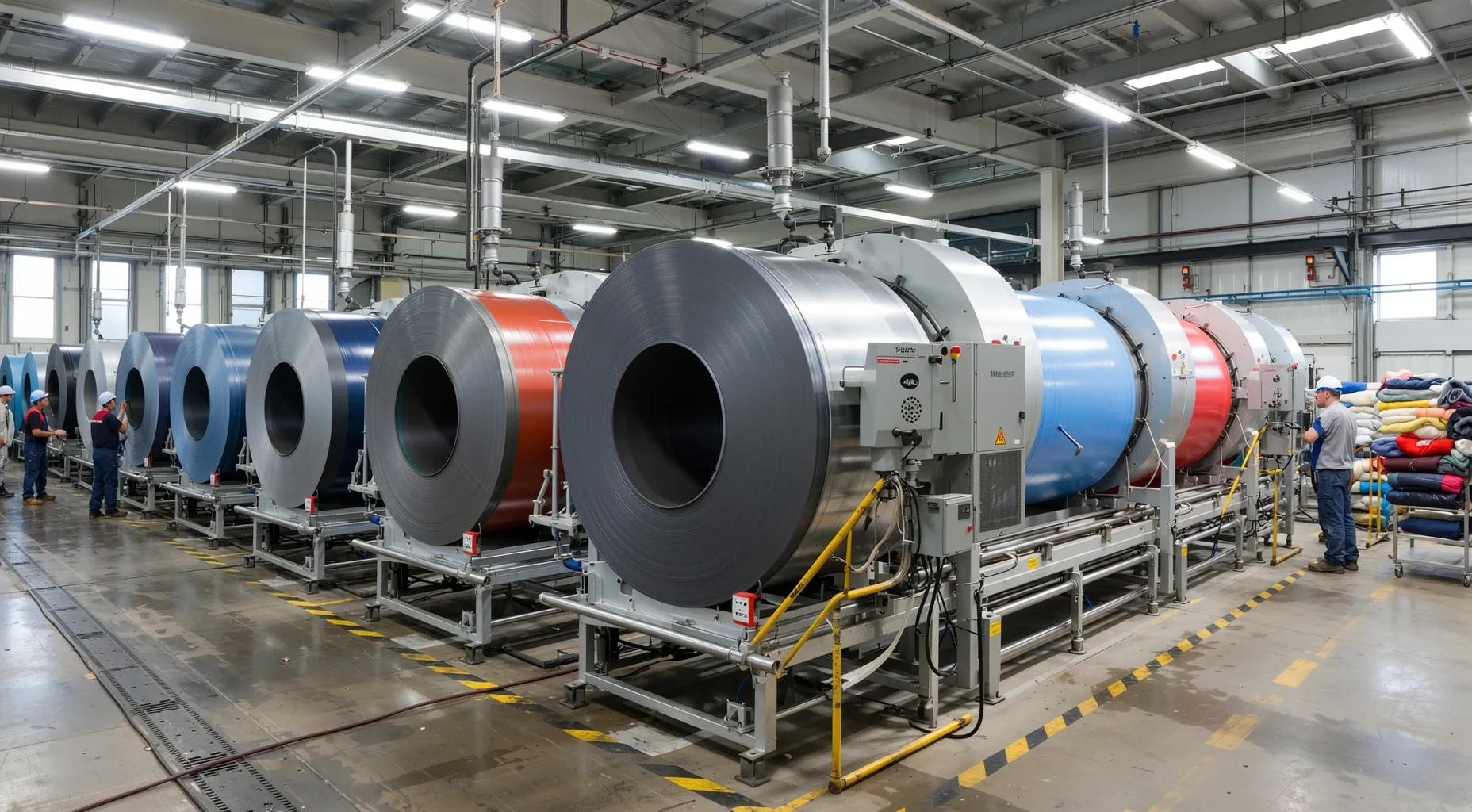
Fabric Coating Mills
Description
Establecimientos en este sector se especializan en la aplicación de capas protectoras y decorativas a diversos materiales textiles a través de procesos como recubrimiento, laminado, barnizado, encerado o elastomerización. Estas operaciones transforman los tejidos brutos en productos terminados diseñados para mejorar la durabilidad, la resistencia al agua o el atractivo estético para los bienes de consumo. Las actividades comerciales típicas incluyen la preparación de los textiles de sustrato, la aplicación de tratamientos químicos o películas poliméricas, el secado, la curación y el control de calidad para garantizar que el recubrimiento se adhiera correctamente al tejido. Los operadores van desde pequeñas talleres familiares que se centran en aplicaciones especializadas como tapicería o ropa personalizada, hasta instalaciones de fabricación más grandes que producen grandes cantidades para usos industriales. La industria sirve a un mercado diverso, suministrando fabricantes en los sectores del mobiliario, la construcción, la automoción y la ropa con tejidos pretratados que requieren un ensamblaje adicional antes de llegar a los consumidores finales. Si bien la mayoría de las instalaciones se ocupan únicamente de la etapa de acabado, algunas plantas integradas también pueden gestionar el lavado o el corte y sellado posteriores. El alcance a menudo incluye la producción nacional para la distribución regional y las exportaciones internacionales de materiales recubiertos especializados utilizados en tejidos de alto rendimiento. Las escalas de producción varían significativamente, con algunos sitios que procesan miles de yardas al día, mientras que otros manejan lotes más pequeños para pedidos personalizados. Esta sección sigue siendo crítica para las cadenas de suministro textiles modernas, añadiendo valor esencial a través de mejoras químicas y mecánicas que prolongan la vida útil y la funcionalidad de los productos.
Hierarchy
| Code | Title | Description |
|---|---|---|
| 31 | Manufacturing 2-digit sector | El sector en su conjunto El sector de la fabricación comprende establecimientos que participan en la transformación mecánica, física o química de materiales, sustancias o componentes en nuevos productos. La ensamblaje de componentes de productos manufacturados se considera fabricación, excepto en casos en que la actividad se clasifique adecuadamente en el Sector 23, Construcción. Los establecimientos del sector de la fabricación a menudo se describen como plantas, fábricas o molinos y utilizan típicamente máquinas y equipos de manipulación de materiales. Sin embargo, los establecimientos que transforman materiales o sustancias en nuevos productos a mano o en el hogar del trabajador y aquellos que venden productos fabricados en el mismo lugar desde donde se venden, como panaderías, tiendas de dulces y sastres a medida, también pueden incluirse en este sector. Las empresas de fabricación pueden procesar materiales o pueden contratar con otras empresas para que procesen sus materiales para ellos. Ambos tipos de empresas están incluidos en la fabricación. Las industrias seleccionadas en el sector de la fabricación están compuestas únicamente por empresas que procesan materiales para otras empresas en función de un contrato o tarifa. Además de estas industrias de fabricación de contrato dedicadas, las empresas que procesan materiales para otras empresas generalmente se clasifican en la industria de fabricación de los materiales procesados. Los materiales, sustancias o componentes transformados por las empresas de fabricación son materias primas que son productos de la agricultura, la silvicultura, la pesca, la minería o la extracción, así como productos de otras empresas de fabricación. Los materiales utilizados pueden adquirirse directamente de los productores, obtenerse a través de los canales comerciales habituales o obtenerse sin necesidad de recurrir al mercado transfiriendo el producto de una empresa a otra, bajo la misma propiedad. El nuevo producto de una empresa de fabricación puede estar terminado en el sentido de que esté listo para su utilización o consumo, o puede estar semiterminado para convertirse en una entrada para una empresa que está involucrada en una mayor fabricación. Por ejemplo, el producto de la refinería de alúmina es la entrada utilizada en la producción primaria de aluminio; el aluminio primario es la entrada para una planta de extrusión de alambre de aluminio; y el alambre de aluminio es la entrada para una empresa de fabricación de productos de alambre fabricado. Los subsectores en el sector de la fabricación generalmente reflejan procesos de producción distintos relacionados con las entradas de materiales, el equipo de producción y las habilidades de los empleados. En el área de maquinaria, donde el ensamblaje es una actividad clave, las piezas y los accesorios de los productos fabricados se clasifican en la industria del producto fabricado terminado cuando se fabrican para la venta por separado. Por ejemplo, un accesorio para una máquina de metal de trabajo se clasificaría con la maquinaria de metal de trabajo. Sin embargo, las entradas de componentes de otras empresas de fabricación se clasifican según la función de producción del fabricante del componente. Por ejemplo, los componentes electrónicos se clasifican en el subsector 334, Fabricación de productos informáticos y electrónicos, y los estampados se clasifican en el subsector 332, Fabricación de productos metálicos fabricados. Las empresas de fabricación a menudo realizan una o más actividades que se clasifican fuera del sector de la fabricación de NAICS. Por ejemplo, casi todas las actividades de fabricación tienen alguna operación de investigación y desarrollo o administrativa de captive, como contabilidad, nómina o gestión. Estas actividades de captive se tratan de la misma manera que las actividades de fabricación de captive. Cuando los servicios se brindan por establecimientos separados, se clasifican en el sector NAICS donde tales servicios son primarios, no en la fabricación. Los límites de la fabricación y los otros sectores del sistema de clasificación pueden ser algo difusos. Las empresas en el sector de la fabricación están involucradas en la transformación de materiales en nuevos productos. Su salida es un nuevo producto. Sin embargo, la definición de lo que constituye un nuevo producto puede ser algo subjetiva. Para aclarar, las siguientes actividades se consideran fabricación en NAICS: <table width=100%><tr><td width=10%> </td><td><dl><dt style='padding-left: 10px; text-indent: -10px;'>Embotellado y pasteurización de leche;</dt><dt style='padding-left: 10px; text-indent: -10px;'>Embotellado y procesamiento de agua;</dt><dt style='padding-left: 10px; text-indent: -10px;'>Envase de pescado fresco (descascarillado de ostras, fileteado de pescado);</dt><dt style='padding-left: 10px; text-indent: -10px;'>Trabajo de confección (asignación de materiales a fábricas o tiendas de contrato para fabricación u otras operaciones de contrato o contratación de materiales de propiedad de otros);</dt><dt style='padding-left: 10px; text-indent: -10px;'>Impresión y actividades relacionadas;</dt><dt style='padding-left: 10px; text-indent: -10px;'>Producción de hormigón premezclado;</dt><dt style='padding-left: 10px; text-indent: -10px;'>Conversión de cuero;</dt><dt style='padding-left: 10px; text-indent: -10px;'>Corte de lentes a<br/> prescripción;</dt><dt style='padding-left: 10px; text-indent: -10px;'>Conservación de madera;</dt><dt style='padding-left: 10px; text-indent: -10px;'>Trabajo de labrado para el comercio;</dt></dl></td><td width=10%> </td><td><dl><dt style='padding-left: 10px; text-indent: -10px;'>Electrogalvanizado, chapado, tratamiento térmico y<br/> pulido para el comercio;</dt><dt style='padding-left: 10px; text-indent: -10px;'>Fabricación de letreros y<br/> exhibiciones publicitarias;</dt><dt style='padding-left: 10px; text-indent: -10px;'>Reconstrucción o remanufactura<br/> de maquinaria (es decir, piezas<br/> de automóvil);</dt><dt style='padding-left: 10px; text-indent: -10px;'>Fabricación de viviendas<br/> (es decir, casas móviles)<br/> o edificios prefabricados,<br/> ya sea ensamblando/montando<br/> en el sitio del cliente;</dt><dt style='padding-left: 10px; text-indent: -10px;'>Reparación y renovación de barcos;</dt><dt style='padding-left: 10px; text-indent: -10px;'>Talleres de máquinas; y</dt><dt style='padding-left: 10px; text-indent: -10px;'>Retreadado de neumáticos.</dt></dl></td><td width=10%> </td></tr></table> Por el contrario, hay actividades que a veces se consideran fabricación, pero que para NAICS se clasifican en otro sector (es decir, no se clasifican como fabricación). Estos incluyen: 1. La tala, que se clasifica en el Sector 11, Agricultura, silvicultura, pesca y caza, se considera una operación de cosecha; 2. La beneficiación de minerales y otros, que se clasifica en el Sector 21, Minería, extracción de canteras y petróleo y gas, se considera parte de la actividad minera; 3. La construcción de estructuras, el ensamblaje de edificios prefabricados y la fabricación en el sitio por contratistas se clasifican en el Sector 23, Construcción; 4. La ruptura por volumen y la reventa en lotes más pequeños, incluida la envasado, el envasado o el embotellado de productos, como licores o productos químicos; el ensamblaje y la venta de computadoras a medida; la clasificación y la reventa de chatarra; la mezcla y la venta de pinturas a pedido de clientes; y el corte de metales a pedido de venta, se clasifican en el Sector 42, Comercio al por mayor, o en los Sectores 44-45, Comercio minorista; y 5. La publicación y la actividad combinada de publicación y impresión, que se clasifican en el Sector 51, Información, se clasifican en la información, ya que transforman la información en un producto, cuyo valor para el consumidor reside en el contenido de la información, no en el formato en que se distribuye (es decir, el libro o el disco compacto de software). |
| 313 | Textile Mills 3-digit subsector | Industries in the Textile Mills subsector group establishments that transform a basic fiber (natural or synthetic) into a product, such as yarn or fabric that is further manufactured into usable items, such as apparel, sheets, towels, and textile bags for individual or industrial consumption. The further manufacturing may be performed in the same establishment and classified in this subsector, or it may be performed at a separate establishment and be classified elsewhere in the Manufacturing sector. The main processes in this subsector include preparation and spinning of fiber, knitting or weaving of fabric, and the finishing of the textile. The NAICS structure follows and captures this process flow. Major industries in this flow, such as preparation of fibers, weaving of fabric, knitting of fabric, and fiber and fabric finishing, are uniquely identified. Texturizing, throwing, twisting, and winding of yarn contain aspects of both fiber preparation and fiber finishing and are classified with preparation of fibers rather than with finishing of fibers. NAICS separates the manufacturing of primary textiles and the manufacturing of textile products (except apparel) produced from purchased primary textiles, such as fabric. The manufacturing of textile products (except apparel) from purchased fabric is classified in Subsector 314, Textile Product Mills, and apparel from purchased fabric is classified in Subsector 315, Apparel Manufacturing. Excluded from this subsector are establishments that weave or knit fabric and make garments. These establishments are included in Subsector 315, Apparel Manufacturing. |
| 3133 | Textile and Fabric Finishing and Fabric Coating Mills 4-digit industry group | This industry group comprises establishments primarily engaged in one of the following: (1) finishing textiles, fabrics, and apparel; (2) converting fabrics and textiles by buying fabric goods in the grey, having them finished on contract, and selling them at wholesale; or (3) coating, laminating, varnishing, waxing, and rubberizing textiles and apparel. |
| 31332 | Fabric Coating Mills 5-digit NAICS industry | See industry description for 313320. |
| 313320 | Fabric Coating Mills 6-digit U.S. detail | Establecimientos en este sector se especializan en la aplicación de capas protectoras y decorativas a diversos materiales textiles a través de procesos como recubrimiento, laminado, barnizado, encerado o elastomerización. Estas operaciones transforman los tejidos brutos en productos terminados diseñados para mejorar la durabilidad, la resistencia al agua o el atractivo estético para los bienes de consumo. Las actividades comerciales típicas incluyen la preparación de los textiles de sustrato, la aplicación de tratamientos químicos o películas poliméricas, el secado, la curación y el control de calidad para garantizar que el recubrimiento se adhiera correctamente al tejido. Los operadores van desde pequeñas talleres familiares que se centran en aplicaciones especializadas como tapicería o ropa personalizada, hasta instalaciones de fabricación más grandes que producen grandes cantidades para usos industriales. La industria sirve a un mercado diverso, suministrando fabricantes en los sectores del mobiliario, la construcción, la automoción y la ropa con tejidos pretratados que requieren un ensamblaje adicional antes de llegar a los consumidores finales. Si bien la mayoría de las instalaciones se ocupan únicamente de la etapa de acabado, algunas plantas integradas también pueden gestionar el lavado o el corte y sellado posteriores. El alcance a menudo incluye la producción nacional para la distribución regional y las exportaciones internacionales de materiales recubiertos especializados utilizados en tejidos de alto rendimiento. Las escalas de producción varían significativamente, con algunos sitios que procesan miles de yardas al día, mientras que otros manejan lotes más pequeños para pedidos personalizados. Esta sección sigue siendo crítica para las cadenas de suministro textiles modernas, añadiendo valor esencial a través de mejoras químicas y mecánicas que prolongan la vida útil y la funcionalidad de los productos. |
Need a supply chain stack that maps to this industry?
Use this NAICS classification as the starting point, then connect it to Item workflows across inventory, warehousing, order management, fulfillment, and transportation.
Classification References
- 01Las empresas principalmente dedicadas al teñido y acabado de textiles se clasifican en la Industria 313310, Fábricas de acabado textil y de tejidos.
Index Items
Ropa, impermeabilización (es decir, tratamiento con aceite)
Aplicación de laminados a tejidos comprados
Cuero, artificial, fabricado a partir de tejidos comprados
Aplicación de metalización a tejidos comprados
Fabricación de tejidos de aceite
Aplicación de aceite y tratamiento a tejidos y ropa comprados
Recubrimiento de plásticos a tejidos y ropa
Impermeabilización de impermeables (es decir, tratamiento con aceite)
Elastómero de tejidos comprados
Elastómero de capuchas compradas
Elastómero de prendas de vestir compradas
Elastómero de abrigos comprados
Elastómero de tejidos y ropa comprados
Cintas, barnizadas y recubiertas (excepto magnéticas), fabricadas a partir de tejidos comprados
Impermeabilización de tejidos
Barnizado de tejidos y ropa comprados
Fabricación de tejidos con recubrimiento de vinilo
Impermeabilización de prendas, tejidos y productos textiles (por ejemplo, tratamiento con aceite, elastómero, cera, barnizado)
Cera de tejidos y ropa comprados
How Item Can Help
Optimizes the storage and movement of diverse fabric rolls and chemical reagents to prevent spoilage and ensure traceability during complex coating processes.
Streamlines the order-to-delivery process by coordinating intricate mix ratios and short lead times for high-value custom garment projects.
Predicts inventory shortages for specialty dyes and analyzes waste data to minimize environmental impact and reduce operational costs for large batch production.
Item.com Tools
External Resources
Census.gov NAICS Detail
Official US Census Bureau definition and scope for NAICS 313320.
Textile and Apparel Manufacturers Association
A major US industry association providing advocacy, research, and resources for the textile and apparel sector.
US Bureau of Labor Statistics Industry Page
Official government data on occupation wages, employment statistics, and industry details for Textile Coating Mill Workers.
MachineryMarkets Fabric Coating Equipment Directory
An industry directory listing manufacturers of equipment and machinery used in the fabric coating process.
