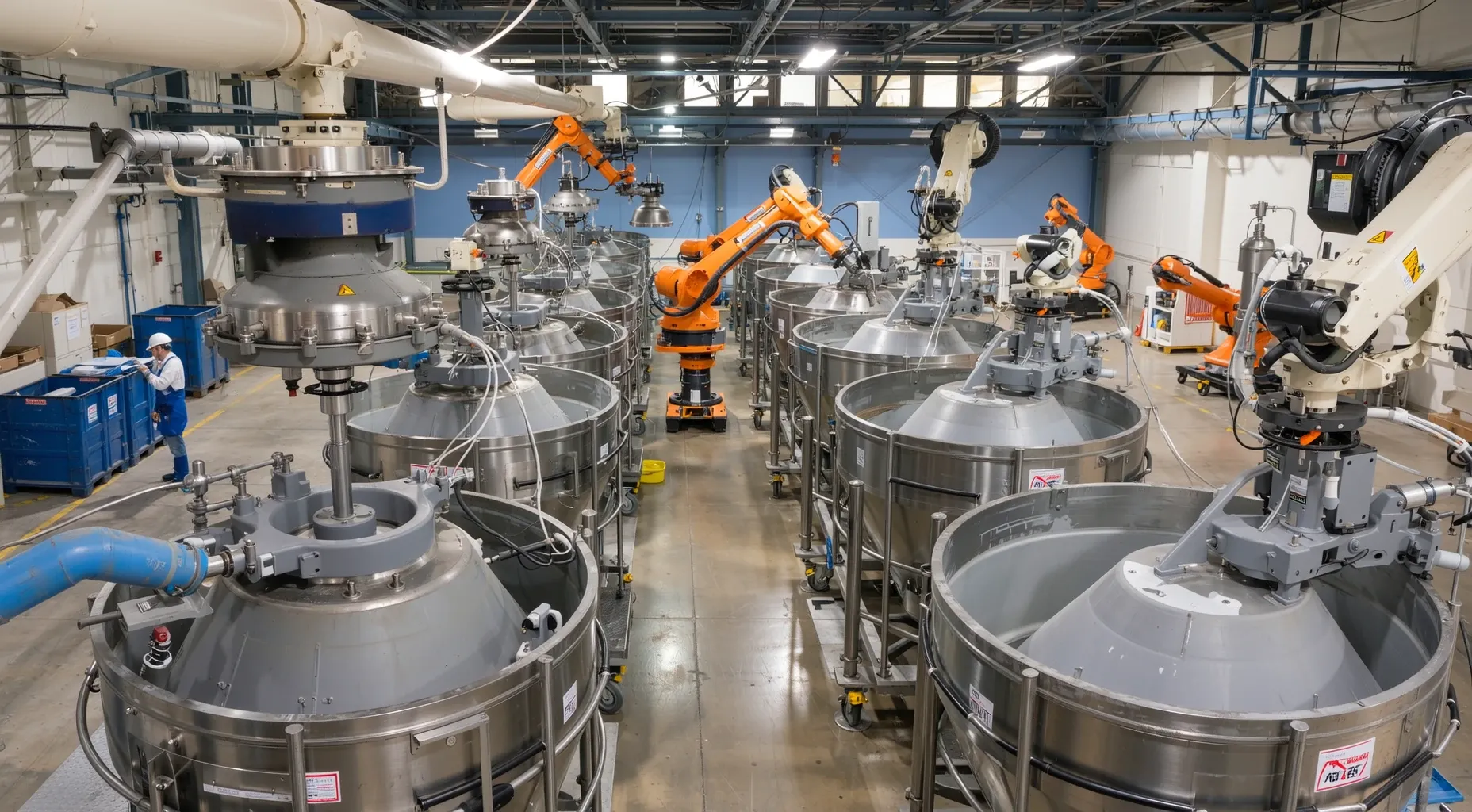
爆薬製造
Description
主に爆薬の製造に従事する企業は、化学製品の製造部門に分類されます。このセクターは、鉱業、建設、農業用耕作、および軍事用途で使用される、さまざまな材料の生産に焦点を当てています。典型的な事業活動には、主要および二次爆薬化合物の合成、混合、および配合が含まれ、多くの場合、厳格な安全プロトコルと特殊な機器を必要とする危険な化学物質を使用します。この業界のオペレーターは、大規模な産業企業から、大量の製品を重工業の契約に供給することに特化した、より小さな企業まで、さまざまな規模で存在します。これらの企業は、多くの場合、高度な訓練を受けた人員を雇用し、安全管理および化学物質の取り扱いに関する広範な資格を持っています。事業の範囲は世界的に広範囲に及び、インフラ開発および資源採掘セクターにおける爆薬の需要は依然として重要です。多くの企業は、潜在的な事故に関連するリスクを軽減するために、安全な工業地域または遠隔地に拠点を置いています。彼らの生産のすべての側面、原材料の調達から最終製品の包装および流通まで、厳格な規制遵守が求められます。この業界はニッチですが、その出力は世界中の多くの経済活動にとって不可欠であり、高度な技術的能力と揺るぎない安全基準のバランスを取る必要があります。規模は大きく異なりますが、すべてのオペレーターは、厳格な仕様を満たし、運用ライフサイクル全体を通じて環境責任を維持することを目指しています。
Hierarchy
| Code | Title | Description |
|---|---|---|
| 32 | Explosives Manufacturing 2-digit sector | The Sector as a Whole The Manufacturing sector comprises establishments engaged in the mechanical, physical, or chemical transformation of materials, substances, or components into new products. The assembling of component parts of manufactured products is considered manufacturing, except in cases where the activity is appropriately classified in Sector 23, Construction. Establishments in the Manufacturing sector are often described as plants, factories, or mills and characteristically use power-driven machines and material handling equipment. However, establishments that transform materials or substances into new products by hand or in the worker's home and those engaged in selling to the general public products made on the same premises from which they are sold, such as bakeries, candy stores, and custom tailors, may also be included in this sector. Manufacturing establishments may process materials or may contract with other establishments to process their materials for them. Both types of establishments are included in manufacturing. Selected industries in the Manufacturing sector are comprised solely of establishments that process materials for other establishments on a contract or fee basis. Beyond these dedicated contract manufacturing industries, establishments that process materials for other establishments are generally classified in the Manufacturing industry of the processed materials. The materials, substances, or components transformed by manufacturing establishments are raw materials that are products of agriculture, forestry, fishing, mining, or quarrying as well as products of other manufacturing establishments. The materials used may be purchased directly from producers, obtained through customary trade channels, or secured without recourse to the market by transferring the product from one establishment to another, under the same ownership. The new product of a manufacturing establishment may be finished in the sense that it is ready for utilization or consumption, or it may be semi-finished to become an input for an establishment engaged in further manufacturing. For example, the product of the alumina refinery is the input used in the primary production of aluminum; primary aluminum is the input to an aluminum wire drawing plant; and aluminum wire is the input for a fabricated wire product manufacturing establishment. The subsectors in the Manufacturing sector generally reflect distinct production processes related to material inputs, production equipment, and employee skills. In the machinery area, where assembling is a key activity, parts and accessories for manufactured products are classified in the industry of the finished manufactured item when they are made for separate sale. For example, an attachment for a piece of metalworking machinery would be classified with metalworking machinery. However, component inputs from other manufacturing establishments are classified based on the production function of the component manufacturer. For example, electronic components are classified in Subsector 334, Computer and Electronic Product Manufacturing, and stampings are classified in Subsector 332, Fabricated Metal Product Manufacturing. Manufacturing establishments often perform one or more activities that are classified outside the Manufacturing sector of NAICS. For instance, almost all manufacturing has some captive research and development or administrative operations, such as accounting, payroll, or management. These captive services are treated the same as captive manufacturing activities. When the services are provided by separate establishments, they are classified in the NAICS sector where such services are primary, not in manufacturing. The boundaries of manufacturing and the other sectors of the classification system can be somewhat blurry. The establishments in the Manufacturing sector are engaged in the transformation of materials into new products. Their output is a new product. However, the definition of what constitutes a new product can be somewhat subjective. As clarification, the following activities are considered manufacturing in NAICS: <table width=100%><tr><td width=10%> </td><td><dl><dt style='padding-left: 10px; text-indent: -10px;'>Milk bottling and pasteurizing;</dt><dt style='padding-left: 10px; text-indent: -10px;'>Water bottling and processing;</dt><dt style='padding-left: 10px; text-indent: -10px;'>Fresh fish packaging (oyster<br/> shucking, fish filleting);</dt><dt style='padding-left: 10px; text-indent: -10px;'>Apparel jobbing (assigning<br/> materials to contract<br/> factories or shops for<br/> fabrication or other contract<br/> operations) as well as<br/> contracting on materials<br/> owned by others;</dt><dt style='padding-left: 10px; text-indent: -10px;'>Printing and related activities;</dt><dt style='padding-left: 10px; text-indent: -10px;'>Ready-mix concrete production;</dt><dt style='padding-left: 10px; text-indent: -10px;'>Leather converting;</dt><dt style='padding-left: 10px; text-indent: -10px;'>Grinding lenses to<br/> prescription;</dt><dt style='padding-left: 10px; text-indent: -10px;'>Wood preserving;</dt><dt style='padding-left: 10px; text-indent: -10px;'>Lapidary work for the trade;</dt></dl></td><td width=10%> </td><td><dl><dt style='padding-left: 10px; text-indent: -10px;'>Electroplating, plating, metal<br/> heat treating, and<br/> polishing for the trade;</dt><dt style='padding-left: 10px; text-indent: -10px;'>Fabricating signs and<br/> advertising displays;</dt><dt style='padding-left: 10px; text-indent: -10px;'>Rebuilding or remanufacturing<br/> machinery (i.e., automotive<br/> parts);</dt><dt style='padding-left: 10px; text-indent: -10px;'>Making manufactured homes<br/> (i.e., mobile homes) or<br/> prefabricated buildings,<br/> whether or not assembling/<br/> erecting at the customers'<br/> site;</dt><dt style='padding-left: 10px; text-indent: -10px;'>Ship repair and renovation;</dt><dt style='padding-left: 10px; text-indent: -10px;'>Machine shops; and</dt><dt style='padding-left: 10px; text-indent: -10px;'>Tire retreading.</dt></dl></td><td width=10%> </td></tr></table> Conversely, there are activities that are sometimes considered manufacturing, but which for NAICS are classified in another sector (i.e., not classified as manufacturing). They include: 1. Logging, classified in Sector 11, Agriculture, Forestry, Fishing and Hunting, is considered a harvesting operation; 2. Beneficiating ores and other minerals, classified in Sector 21, Mining, Quarrying, and Oil and Gas Extraction, is considered part of the activity of mining; 3. Constructing structures, assembling prefabricated buildings, and fabricating at the construction site by contractors are classified in Sector 23, Construction; 4. Breaking bulk and reselling in smaller lots, including packaging, repackaging, or bottling products, such as liquors or chemicals; assembling and selling computers on a custom basis; sorting and reselling scrap; mixing and selling paints to customer order; and cutting metals to customer order for resale are classified in Sector 42, Wholesale Trade, or Sector 44-45, Retail Trade; and 5. Publishing and the combined activity of publishing and printing, classified in Sector 51, Information, transform information into a product for which the value to the consumer lies in the information content, not in the format in which it is distributed (i.e., the book or software compact disc). |
| 325 | Explosives Manufacturing 3-digit subsector | The Chemical Manufacturing subsector is based on the transformation of organic and inorganic raw materials by a chemical process and the formulation of products. This subsector distinguishes the production of basic chemicals that comprise the first industry group from the production of intermediate and end products produced by further processing of basic chemicals that make up the remaining industry groups. This subsector does not include all industries transforming raw materials by a chemical process. It is common for some chemical processing to occur during mining operations. These beneficiating operations, such as copper concentrating, are classified in Sector 21, Mining, Quarrying, and Oil and Gas Extraction. Furthermore, the production of explosives is generally classified under this subsector. |
| 3259 | Other Chemical Product and Preparation Manufacturing 4-digit industry group | This industry group comprises establishments primarily engaged in manufacturing chemical products (except basic chemicals; resins, synthetic rubber, cellulosic and noncellulosic fibers and filaments; pesticides, fertilizers, and other agricultural chemicals; pharmaceuticals and medicines; paints, coatings, and adhesives; soaps and cleaning compounds; and toilet preparations). |
| 32592 | Explosives Manufacturing 5-digit NAICS industry | This industry includes establishments primarily engaged in manufacturing explosives, such as dynamite, blasting caps, and detonators. |
| 325920 | 爆薬製造 6-digit U.S. detail | 主に爆薬の製造に従事する企業は、化学製品の製造部門に分類されます。このセクターは、鉱業、建設、農業用耕作、および軍事用途で使用される、さまざまな材料の生産に焦点を当てています。典型的な事業活動には、主要および二次爆薬化合物の合成、混合、および配合が含まれ、多くの場合、厳格な安全プロトコルと特殊な機器を必要とする危険な化学物質を使用します。この業界のオペレーターは、大規模な産業企業から、大量の製品を重工業の契約に供給することに特化した、より小さな企業まで、さまざまな規模で存在します。これらの企業は、多くの場合、高度な訓練を受けた人員を雇用し、安全管理および化学物質の取り扱いに関する広範な資格を持っています。事業の範囲は世界的に広範囲に及び、インフラ開発および資源採掘セクターにおける爆薬の需要は依然として重要です。多くの企業は、潜在的な事故に関連するリスクを軽減するために、安全な工業地域または遠隔地に拠点を置いています。彼らの生産のすべての側面、原材料の調達から最終製品の包装および流通まで、厳格な規制遵守が求められます。この業界はニッチですが、その出力は世界中の多くの経済活動にとって不可欠であり、高度な技術的能力と揺るぎない安全基準のバランスを取る必要があります。規模は大きく異なりますが、すべてのオペレーターは、厳格な仕様を満たし、運用ライフサイクル全体を通じて環境責任を維持することを目指しています。 |
Need a supply chain stack that maps to this industry?
Use this NAICS classification as the starting point, then connect it to Item workflows across inventory, warehousing, order management, fulfillment, and transportation.
Classification References
- 01弾薬、爆薬のトリガー、およびパーcussionキャップの製造--はU.S. Industry 332992、小銃弾薬製造に分類され、
- 02火薬の製造--はU.S. Industry 325998、その他の化学製品および製品製造に分類されます。
Index Items
Amatols 製造
Azides 爆発性物質の製造
爆破用アクセサリー(例:キャップ、火薬、点火装置、スキュブ)の製造
爆破用粉末の製造
キャップ、爆破および点火、製造
Cordite 爆発性物質の製造
点火キャップ、ワイヤー、火薬、およびプライマーの製造
点火装置(弾薬を除く)の製造
ダイナマイトの製造
爆薬の製造
火薬の製造
マンニトールヘキサニトレート爆発性物質の製造
水銀フルミネート爆発性物質の製造
ニトロセルロース爆発性物質の製造
ニトログリセリン爆発性物質の製造
ニトロスタッチ爆発性物質の製造
ペロライト爆発性物質の製造
ピリジン酸爆発性物質の製造
安全火薬、爆破、製造
ステフィニック酸爆発性物質の製造
テトライ爆発性物質の製造
TNT(トリニトロトルエン)の製造
トリニトロトルエン(TNT)の製造
How Item Can Help
Explosives manufacturing companies use the Warehouse Management System to maintain strict segregation zones for hazardous materials, ensuring real-time tracking of sensitive stock levels while automating safety compliance checks to prevent unauthorized access.
The Order Management System helps these businesses manage complex regulatory approvals and expedite the release of pre-mixed components only after specific safety inspections are digitally confirmed and verified by regulators.
By analyzing historical shipment patterns and traffic data, this tool identifies optimal routing for hazardous materials that minimizes exposure time and supports predictive modeling for potential containment risks during transport.
Item.com Tools
External Resources
Census.gov NAICS Detail
Official US Census Bureau definition and scope for NAICS 325920.
US Bureau of Labor Statistics
Official government page providing detailed industry statistics and employment data for the explosives manufacturing sector.
American Explosives Association
Trade association that advocates for the safety and regulation of the civilian and military explosives industry.
NSC Industry Directory
A non-profit industry consortium that maintains a directory of members and resources for the US explosives safety and education community.
