Upholstered Household Furniture Manufacturing
Description
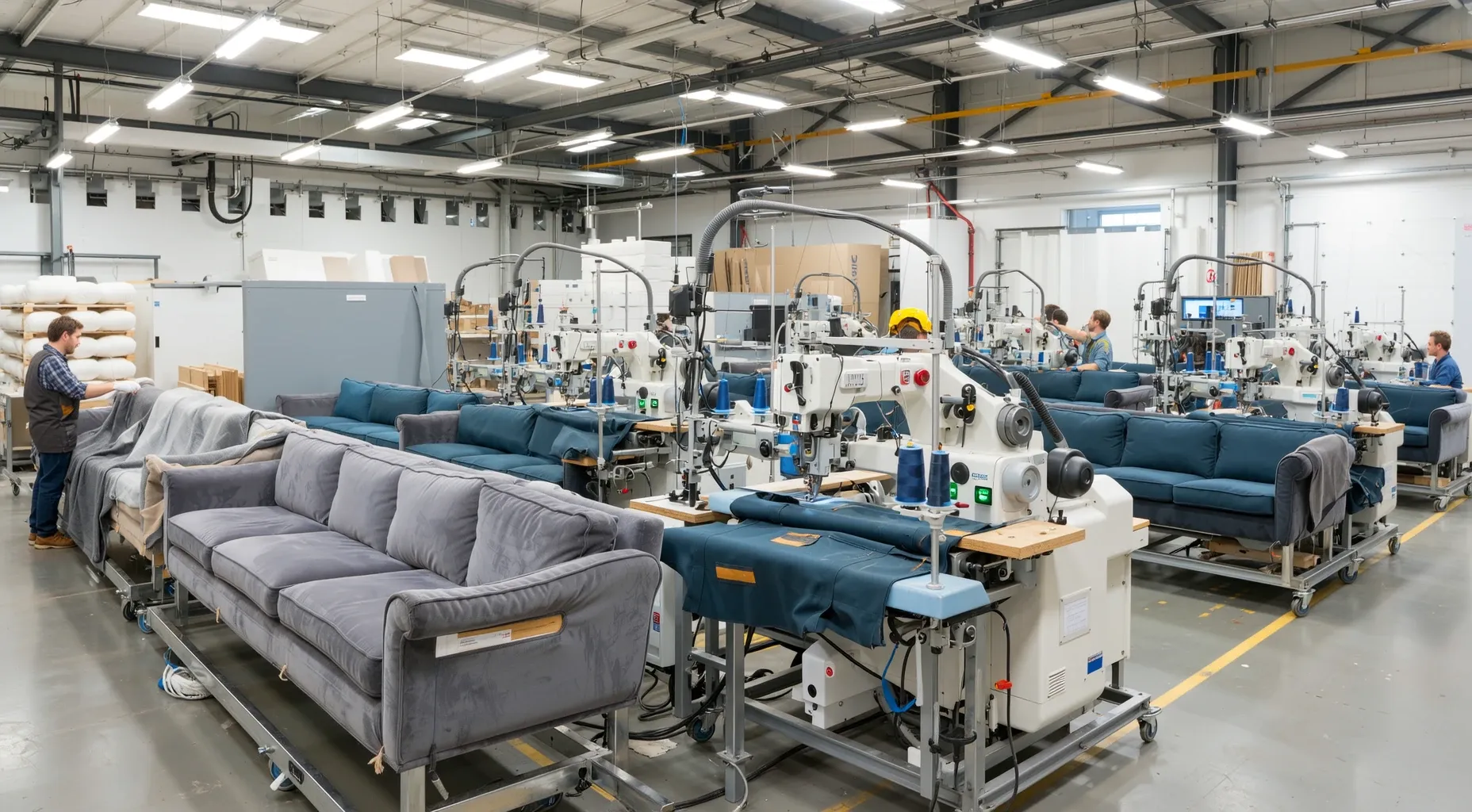
The Upholstered Household Furniture Manufacturing sector involves specialized companies dedicated to producing seating and other furniture pieces intended for private homes. These establishments transform raw materials such as wood, metal, glass, plastic, and textiles into finished goods like sofas, chairs, recliners, and ottomans. Production facilities operate continuously to meet diverse market demands, creating either stock items available immediately for purchase or custom pieces tailored to specific client requirements. Manufacturing processes typically include cutting and forming frame components, applying protective finishes, and assembling structures before attaching upholstery fabrics. Operators range from small, family-owned workshops focusing on niche designs to large industrial complexes utilizing automated injection molding and high-speed assembly lines. These businesses often serve a broad customer base, supplying retailers across the nation while also working directly with high-end interior designers and architectural firms. Many manufacturers have expanded their operational scope by incorporating advanced computer-aided design systems to streamline prototyping and ensure precise fitments. The industry contributes significantly to the regional economy by generating substantial employment in skilled trades. Additionally, many manufacturers engage in direct sales through their own websites, bypassing traditional retail intermediaries to capture a larger market share. This sector remains critical to the broader furniture manufacturing landscape due to its focus on comfort, aesthetics, and functional design for residential use.
Hierarchy
| Code | Title | Description |
|---|---|---|
| 33 | Manufacturing 2-digit sector | The Sector as a Whole The Manufacturing sector comprises establishments engaged in the mechanical, physical, or chemical transformation of materials, substances, or components into new products. The assembling of component parts of manufactured products is considered manufacturing, except in cases where the activity is appropriately classified in Sector 23, Construction. Establishments in the Manufacturing sector are often described as plants, factories, or mills and characteristically use power-driven machines and material handling equipment. However, establishments that transform materials or substances into new products by hand or in the worker's home and those engaged in selling to the general public products made on the same premises from which they are sold, such as bakeries, candy stores, and custom tailors, may also be included in this sector. Manufacturing establishments may process materials or may contract with other establishments to process their materials for them. Both types of establishments are included in manufacturing. Selected industries in the Manufacturing sector are comprised solely of establishments that process materials for other establishments on a contract or fee basis. Beyond these dedicated contract manufacturing industries, establishments that process materials for other establishments are generally classified in the Manufacturing industry of the processed materials. The materials, substances, or components transformed by manufacturing establishments are raw materials that are products of agriculture, forestry, fishing, mining, or quarrying as well as products of other manufacturing establishments. The materials used may be purchased directly from producers, obtained through customary trade channels, or secured without recourse to the market by transferring the product from one establishment to another, under the same ownership. The new product of a manufacturing establishment may be finished in the sense that it is ready for utilization or consumption, or it may be semi-finished to become an input for an establishment engaged in further manufacturing. For example, the product of the alumina refinery is the input used in the primary production of aluminum; primary aluminum is the input to an aluminum wire drawing plant; and aluminum wire is the input for a fabricated wire product manufacturing establishment. The subsectors in the Manufacturing sector generally reflect distinct production processes related to material inputs, production equipment, and employee skills. In the machinery area, where assembling is a key activity, parts and accessories for manufactured products are classified in the industry of the finished manufactured item when they are made for separate sale. For example, an attachment for a piece of metalworking machinery would be classified with metalworking machinery. However, component inputs from other manufacturing establishments are classified based on the production function of the component manufacturer. For example, electronic components are classified in Subsector 334, Computer and Electronic Product Manufacturing, and stampings are classified in Subsector 332, Fabricated Metal Product Manufacturing. Manufacturing establishments often perform one or more activities that are classified outside the Manufacturing sector of NAICS. For instance, almost all manufacturing has some captive research and development or administrative operations, such as accounting, payroll, or management. These captive services are treated the same as captive manufacturing activities. When the services are provided by separate establishments, they are classified in the NAICS sector where such services are primary, not in manufacturing. The boundaries of manufacturing and the other sectors of the classification system can be somewhat blurry. The establishments in the Manufacturing sector are engaged in the transformation of materials into new products. Their output is a new product. However, the definition of what constitutes a new product can be somewhat subjective. As clarification, the following activities are considered manufacturing in NAICS: <table width=100%><tr><td width=10%> </td><td><dl><dt style='padding-left: 10px; text-indent: -10px;'>Milk bottling and pasteurizing;</dt><dt style='padding-left: 10px; text-indent: -10px;'>Water bottling and processing;</dt><dt style='padding-left: 10px; text-indent: -10px;'>Fresh fish packaging (oyster<br/> shucking, fish filleting);</dt><dt style='padding-left: 10px; text-indent: -10px;'>Apparel jobbing (assigning<br/> materials to contract<br/> factories or shops for<br/> fabrication or other contract<br/> operations) as well as<br/> contracting on materials<br/> owned by others;</dt><dt style='padding-left: 10px; text-indent: -10px;'>Printing and related activities;</dt><dt style='padding-left: 10px; text-indent: -10px;'>Ready-mix concrete production;</dt><dt style='padding-left: 10px; text-indent: -10px;'>Leather converting;</dt><dt style='padding-left: 10px; text-indent: -10px;'>Grinding lenses to<br/> prescription;</dt><dt style='padding-left: 10px; text-indent: -10px;'>Wood preserving;</dt><dt style='padding-left: 10px; text-indent: -10px;'>Lapidary work for the trade;</dt></dl></td><td width=10%> </td><td><dl><dt style='padding-left: 10px; text-indent: -10px;'>Electroplating, plating, metal<br/> heat treating, and<br/> polishing for the trade;</dt><dt style='padding-left: 10px; text-indent: -10px;'>Fabricating signs and<br/> advertising displays;</dt><dt style='padding-left: 10px; text-indent: -10px;'>Rebuilding or remanufacturing<br/> machinery (i.e., automotive<br/> parts);</dt><dt style='padding-left: 10px; text-indent: -10px;'>Making manufactured homes<br/> (i.e., mobile homes) or<br/> prefabricated buildings,<br/> whether or not assembling/<br/> erecting at the customers'<br/> site;</dt><dt style='padding-left: 10px; text-indent: -10px;'>Ship repair and renovation;</dt><dt style='padding-left: 10px; text-indent: -10px;'>Machine shops; and</dt><dt style='padding-left: 10px; text-indent: -10px;'>Tire retreading.</dt></dl></td><td width=10%> </td></tr></table> Conversely, there are activities that are sometimes considered manufacturing, but which for NAICS are classified in another sector (i.e., not classified as manufacturing). They include: 1. Logging, classified in Sector 11, Agriculture, Forestry, Fishing and Hunting, is considered a harvesting operation; 2. Beneficiating ores and other minerals, classified in Sector 21, Mining, Quarrying, and Oil and Gas Extraction, is considered part of the activity of mining; 3. Constructing structures, assembling prefabricated buildings, and fabricating at the construction site by contractors are classified in Sector 23, Construction; 4. Breaking bulk and reselling in smaller lots, including packaging, repackaging, or bottling products, such as liquors or chemicals; assembling and selling computers on a custom basis; sorting and reselling scrap; mixing and selling paints to customer order; and cutting metals to customer order for resale are classified in Sector 42, Wholesale Trade, or Sector 44-45, Retail Trade; and 5. Publishing and the combined activity of publishing and printing, classified in Sector 51, Information, transform information into a product for which the value to the consumer lies in the information content, not in the format in which it is distributed (i.e., the book or software compact disc). |
| 337 | Furniture and Related Product Manufacturing 3-digit subsector | Industries in the Furniture and Related Product Manufacturing subsector make furniture and related articles, such as mattresses, window blinds, cabinets, and fixtures. The processes used in the manufacture of furniture include the cutting, bending, molding, laminating, and assembly of such materials as wood, metal, glass, plastics, and rattan. However, the production process for furniture is not solely bending metal, cutting and shaping wood, or extruding and molding plastics. Design and fashion trends play an important part in the production of furniture. The integrated design of the article for both esthetic and functional qualities is also a major part of the process of manufacturing furniture. Design services may be performed by the furniture establishment's work force or may be purchased from industrial designers. Furniture may be made of any material, but the most common ones used in North America are metal and wood. Furniture manufacturing establishments may specialize in making articles primarily from one material. Some of the equipment required to make a wooden table, for example, is different from that used to make a metal one. However, furniture is usually made from several materials. A wooden table might have metal brackets, and a wooden chair a fabric or plastics seat. Therefore, in NAICS, furniture initially is classified based on the type of furniture (application for which it is designed) rather than the material used. For example, an upholstered sofa is treated as household furniture, although it may also be used in hotels or offices. When classifying furniture according to the component material from which it is made, furniture made from more than one material is classified based on the material used in the frame, or if there is no frame, the predominant component material. Upholstered household furniture (excluding kitchen and dining room chairs with upholstered seats) is classified without regard to the frame material. Kitchen or dining room chairs with upholstered seats are classified according to the frame material. Furniture may be made on a stock or custom basis and may be shipped assembled or unassembled (i.e., knockdown). The manufacture of furniture parts and frames is included in this subsector. Some of the processes used in furniture manufacturing are similar to processes that are used in other segments of manufacturing. For example, cutting and assembly occurs in the production of wood trusses that are classified in Subsector 321, Wood Product Manufacturing. However, the multiple processes that distinguish wood furniture manufacturing from wood product manufacturing warrant inclusion of wooden furniture manufacturing in the Furniture and Related Product Manufacturing subsector. Metal furniture manufacturing uses techniques that are also employed in the manufacturing of roll formed products classified in Subsector 332, Fabricated Metal Product Manufacturing. The molding process for plastics furniture is similar to the molding of other plastics products. However, plastics furniture producing establishments tend to specialize in furniture. NAICS attempts to keep furniture manufacturing together, but there are notable exceptions: concrete, ceramic, or stone furniture; seating for transportation equipment; and specialized hospital furniture (e.g., hospital beds and operating tables). These are classified in Subsector 327, Nonmetallic Mineral Product Manufacturing; Subsector 336, Transportation Equipment Manufacturing; and Subsector 339, Miscellaneous Manufacturing, respectively. |
| 3371 | Household and Institutional Furniture and Kitchen Cabinet Manufacturing 4-digit industry group | This industry group comprises establishments manufacturing household-type furniture, such as living room, kitchen and bedroom furniture and institutional (i.e., public building) furniture, such as furniture for schools, theaters, and churches. |
| 33712 | Household and Institutional Furniture Manufacturing 5-digit NAICS industry | This industry comprises establishments primarily engaged in manufacturing household-type and public building furniture (e.g., library, school, theater, and church furniture). This industry includes establishments that manufacture general purpose hospital, laboratory, and/or dental furniture (e.g., stools, tables, benches). The furniture may be made on a stock or custom basis and may be assembled or unassembled (i.e., knockdown). |
| 337121 | Upholstered Household Furniture Manufacturing 6-digit U.S. detail | The Upholstered Household Furniture Manufacturing sector involves specialized companies dedicated to producing seating and other furniture pieces intended for private homes. These establishments transform raw materials such as wood, metal, glass, plastic, and textiles into finished goods like sofas, chairs, recliners, and ottomans. Production facilities operate continuously to meet diverse market demands, creating either stock items available immediately for purchase or custom pieces tailored to specific client requirements. Manufacturing processes typically include cutting and forming frame components, applying protective finishes, and assembling structures before attaching upholstery fabrics. Operators range from small, family-owned workshops focusing on niche designs to large industrial complexes utilizing automated injection molding and high-speed assembly lines. These businesses often serve a broad customer base, supplying retailers across the nation while also working directly with high-end interior designers and architectural firms. Many manufacturers have expanded their operational scope by incorporating advanced computer-aided design systems to streamline prototyping and ensure precise fitments. The industry contributes significantly to the regional economy by generating substantial employment in skilled trades. Additionally, many manufacturers engage in direct sales through their own websites, bypassing traditional retail intermediaries to capture a larger market share. This sector remains critical to the broader furniture manufacturing landscape due to its focus on comfort, aesthetics, and functional design for residential use. |
Need a supply chain stack that maps to this industry?
Use this NAICS classification as the starting point, then connect it to Item workflows across inventory, warehousing, order management, fulfillment, and transportation.
Classification References
- 01Reupholstering furniture or upholstering frames to individual order--are classified in Industry 811420, Reupholstery and Furniture Repair;
- 02Manufacturing wood kitchen and dining room chairs with upholstered seats or backs--are classified in U.S. Industry 337122, Nonupholstered Wood Household Furniture Manufacturing; and
- 03Manufacturing kitchen and dining room chairs (except wood) with upholstered seats or backs--are classified in U.S. Industry 337126, Household Furniture (except Wood and Upholstered) Manufacturing.
Index Items
Chair and couch springs, assembled, manufacturing
Chairs, upholstered household-type (except dining room, kitchen), manufacturing
Convertible sofas (except futons) manufacturing
Cot springs, assembled, manufacturing
Couch springs, assembled, manufacturing
Couches, upholstered, manufacturing
Cushion springs, assembled, manufacturing
Furniture, household-type, upholstered on frames of any material, manufacturing
Futons with frames manufacturing
Household-type furniture, upholstered, manufacturing
Juvenile furniture, upholstered, manufacturing
Living room furniture, upholstered, manufacturing
Metal framed furniture, household-type, upholstered, manufacturing
Ottomans, upholstered, manufacturing
Recliners, upholstered, manufacturing
Rockers, upholstered, manufacturing
Sofa beds and chair beds, upholstered, manufacturing
Sofas, convertible (except futons), manufacturing
Sofas, upholstered, manufacturing
Upholstered furniture, household-type, custom, manufacturing
Upholstered furniture, household-type, on frames of any material, manufacturing
Wood framed furniture, upholstered, household-type, manufacturing
How Item Can Help
The Warehouse Management System optimizes the storage and retrieval of bulky upholstered frames and fabric rolls, reducing peak-season shipping delays and storage costs.
The Order Management System unifies data from brick-and-mortar retailers and e-commerce channels to prevent overselling high-demand custom sofa sets while managing complex return exchanges.
The Transportation Management System plans efficient multi-leg routes for freight carriers moving heavy furniture, minimizing damage during transit and lowering last-mile delivery costs.
Item.com Tools
External Resources
Census.gov NAICS Detail
Official US Census Bureau definition and scope for NAICS 337121.
U.S. Furniture Manufacturers Association
The primary industry association representing the full furniture manufacturing sector, including upholstered household furniture.
U.S. Bureau of Labor Statistics - Occupations
Official government data detailing the employment and wage statistics for upholstered household furniture manufacturers.
NAICS Classification System - NAICS 337121
The U.S. Census Bureau provides the official definition and manufacturing statistics for this specific NAICS code.
