423210 Furniture Merchant Wholesalers
6-digit U.S. detail
423210

Furniture Merchant Wholesalers

Description

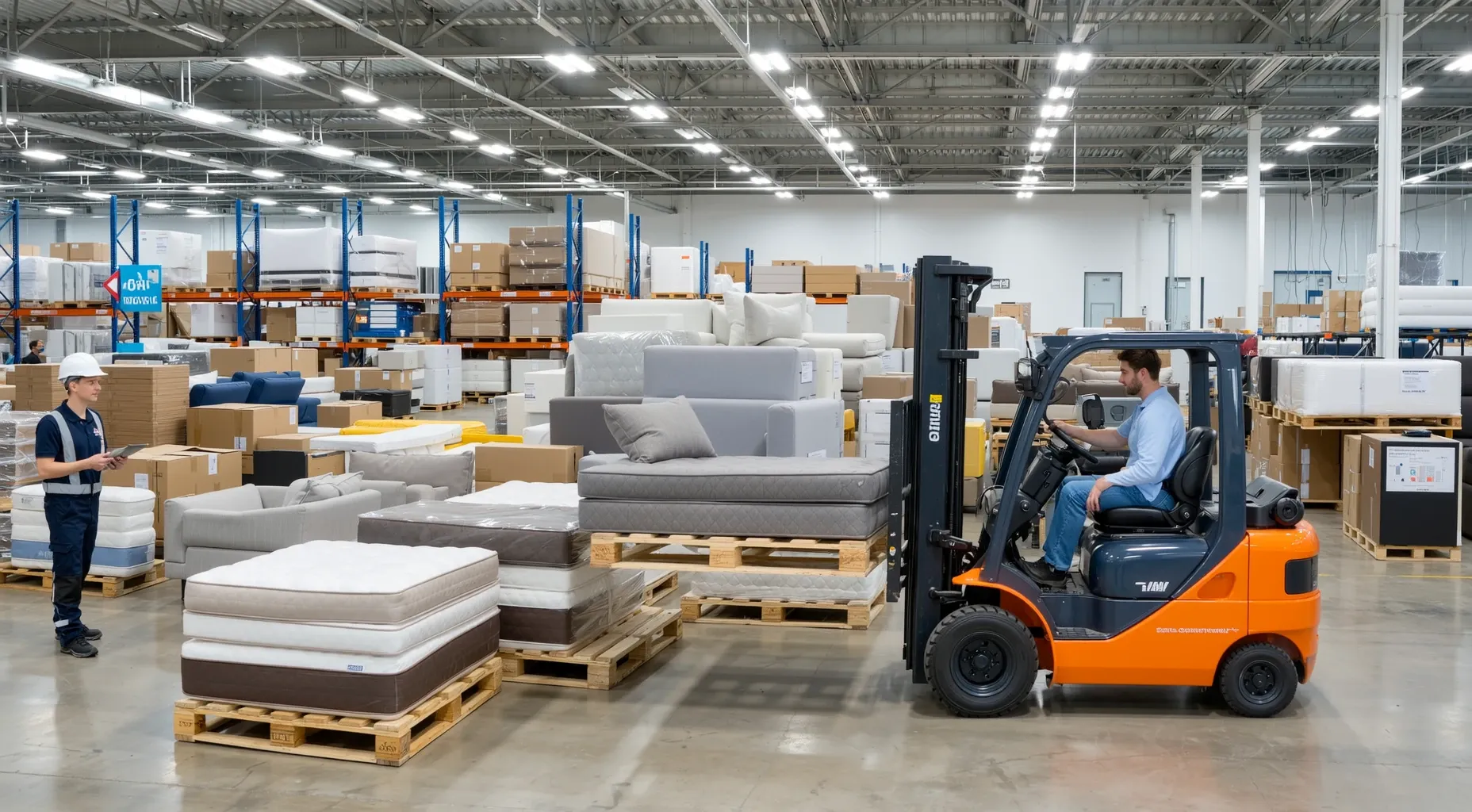
This industry comprises establishments primarily engaged in the merchant wholesale distribution of furniture (except hospital beds, medical furniture, and drafting tables). Illustrative Examples: Household-type furniture merchant wholesalers Outdoor furniture merchant wholesalers Mattresses merchant wholesalers Public building furniture merchant wholesalers Office furniture merchant wholesalers Religious furniture merchant wholesalers

Hierarchy

CodeTitleDescription
42
Wholesale Trade
2-digit sector
The Sector as a Whole The Wholesale Trade sector comprises establishments engaged in wholesaling merchandise, generally without transformation, and rendering services incidental to the sale of merchandise. The merchandise described in this sector includes the outputs of agriculture, mining, manufacturing, and certain information industries, such as publishing. The wholesaling process is an intermediate step in the distribution of merchandise. Wholesalers are organized to sell or arrange the purchase or sale of (a) goods for resale (i.e., goods sold to other wholesalers or retailers), (b) capital or durable nonconsumer goods, and (c) raw and intermediate materials and supplies used in production. Wholesalers sell merchandise to other businesses and normally operate from a warehouse or office. These warehouses and offices are characterized by having little or no display of merchandise. In addition, neither the design nor the location of the premises is intended to solicit walk-in traffic. Wholesalers do not normally use advertising directed to the general public. Customers are generally reached initially via telephone, in-person marketing, or by specialized advertising that may include Internet and other electronic means. Follow-up orders are either vendor-initiated or client-initiated, generally based on previous sales, and typically exhibit strong ties between sellers and buyers. In fact, transactions are often conducted between wholesalers and clients that have long-standing business relationships. This sector comprises two main types of wholesalers: merchant wholesalers that sell goods on their own account and agents and brokers that arrange sales and purchases for others generally for a commission or fee. (1) Establishments that sell goods on their own account are known as wholesale merchants, distributors, jobbers, drop shippers, and import/export merchants. Also included as wholesale merchants are sales offices and sales branches (but not retail stores) maintained by manufacturing, refining, or mining enterprises apart from their plants or mines for the purpose of marketing their products, and group purchasing organizations primarily purchasing and selling goods on their own account. Merchant wholesale establishments typically maintain their own warehouse, where they receive and handle goods for their customers. Goods are generally sold without transformation, but may include integral functions, such as sorting, packaging, labeling, and other marketing services. (2) Establishments arranging for the purchase or sale of goods owned by others or purchasing goods, generally on a commission basis are known as business-to-business electronic markets, agents and brokers, commission merchants, import/export agents and brokers, auction companies, group purchasing organizations (acting as agents), and manufacturers' representatives. These establishments operate from offices and generally do not own or handle the goods they sell. Some wholesale establishments may be connected with a single manufacturer and promote and sell the particular manufacturer's products to a wide range of other wholesalers or retailers. Other wholesalers may be connected to a retail chain, or limited number of retail chains, and only provide a variety of products needed by that particular retail operation(s). These wholesalers may obtain the products from a wide range of manufacturers. Still other wholesalers may not take title to the goods, but act as agents and brokers for a commission. Although, in general, wholesaling normally denotes sales in large volumes, durable nonconsumer goods may be sold in single units. Sales of capital or durable nonconsumer goods used in the production of goods and services, such as farm machinery, medium- and heavy-duty trucks, and industrial machinery, are always included in wholesale trade.
423
Merchant Wholesalers, Durable Goods
3-digit subsector
Industries in the Merchant Wholesalers, Durable Goods subsector sell capital or durable goods to other businesses. Merchant wholesalers generally take title to the goods that they sell; in other words, they buy and sell goods on their own account. Durable goods are new or used items generally with a normal life expectancy of three years or more. Durable goods merchant wholesale trade establishments are engaged in wholesaling products, such as motor vehicles, furniture, construction materials, machinery and equipment (including household-type appliances), metals and minerals (except petroleum), sporting goods, toys and hobby goods, recyclable materials, and parts. Agents and brokers primarily engaged in wholesaling durable goods, generally on a commission or fee basis, are classified in Subsector 425, Wholesale Trade Agents and Brokers.
4232
Furniture and Home Furnishing Merchant Wholesalers
4-digit industry group
This industry group comprises establishments primarily engaged in the merchant wholesale distribution of furniture (except hospital beds, medical furniture, and drafting tables), home furnishings, and/or housewares.
42321
Furniture Merchant Wholesalers
5-digit NAICS industry
See industry description for 423210.
423210
Furniture Merchant Wholesalers
6-digit U.S. detail
This industry comprises establishments primarily engaged in the merchant wholesale distribution of furniture (except hospital beds, medical furniture, and drafting tables). Illustrative Examples: Household-type furniture merchant wholesalers Outdoor furniture merchant wholesalers Mattresses merchant wholesalers Public building furniture merchant wholesalers Office furniture merchant wholesalers Religious furniture merchant wholesalers

Need a supply chain stack that maps to this industry?

Use this NAICS classification as the starting point, then connect it to Item workflows across inventory, warehousing, order management, fulfillment, and transportation.

Classification References

  1. 01Merchant wholesale distribution of partitions, shelving, lockers, and store fixtures--are classified in Industry 423440, Other Commercial Equipment Merchant Wholesalers;
  2. 02Merchant wholesale distribution of hospital beds and medical furniture--are classified in Industry 423450, Medical, Dental, and Hospital Equipment and Supplies Merchant Wholesalers; and
  3. 03Merchant wholesale distribution of drafting tables--are classified in Industry 423490, Other Professional Equipment and Supplies Merchant Wholesalers.

Index Items

Antique furniture merchant wholesalers

Baby furniture merchant wholesalers

Beds (except hospital) merchant wholesalers

Box springs merchant wholesalers

Cabinets, kitchen, freestanding, merchant wholesalers

Furniture (except drafting tables, hospital beds, medical furniture) merchant wholesalers

Furniture parts merchant wholesalers

Hotel furniture merchant wholesalers

Household-type furniture merchant wholesalers

Mattresses merchant wholesalers

Office furniture merchant wholesalers

Outdoor furniture merchant wholesalers

Public building furniture merchant wholesalers

Religious furniture merchant wholesalers

Restaurant furniture merchant wholesalers

School furniture merchant wholesalers

Store furniture merchant wholesalers

Theater seats merchant wholesalers

How Item Can Help

Furniture wholesalers use WMS to manage the bulky inventory of finished goods and raw materials, optimizing warehouse space while streamlining the complex picking and shipping of palletized furniture sets.

OMS enables real-time order orchestration across multiple sales channels, allowing furniture merchants to instantly fulfill high-volume requests for custom-sized items without manual coordination delays.

Predictive analytics from data intelligence tools forecast seasonal trends in specific furniture styles, helping wholesalers strategically stock their warehouses to prevent overage or stockouts during peak remodeling seasons.

External Resources

← Back to NAICS Explorer