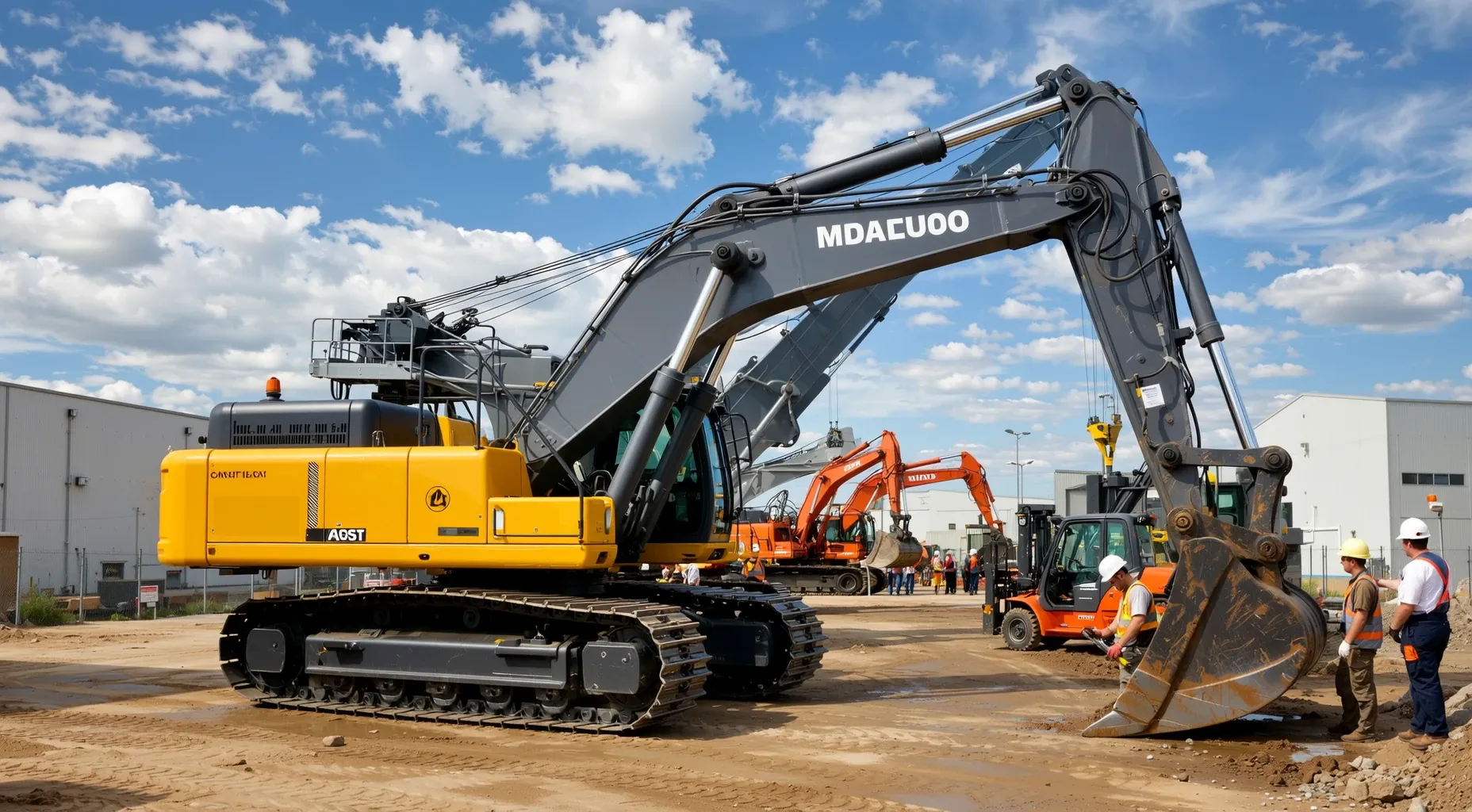
Maquinaria y equipos para la construcción y la minería (excepto pozos de petróleo)
Description
Este sector comprende establecimientos principalmente dedicados a la distribución mayorista especializada de maquinaria, equipos y piezas relacionadas, generalmente utilizados en actividades de construcción, minería (excepto pozos de petróleo) y tala. Ejemplos ilustrativos: Mayoristas de maquinaria y equipos para excavación Mayoristas de maquinaria y equipos para la construcción y el mantenimiento de carreteras Mayoristas de maquinaria y equipos forestales Mayoristas de andamios Mayoristas de grúas mineras
Hierarchy
| Code | Title | Description |
|---|---|---|
| 42 | Comercio Mayorista 2-digit sector | El Sector en su Conjunto El sector del Comercio Mayorista comprende establecimientos que participan en la comercialización de mercancías, generalmente sin transformación, y en la prestación de servicios incidentales a la venta de mercancías. Las mercancías descritas en este sector incluyen las salidas de la agricultura, la minería, la manufactura y ciertas industrias de información, como la publicación. El proceso de comercialización es un paso intermedio en la distribución de mercancías. Los comercializadores están organizados para vender o facilitar la compra o venta de (a) bienes para la reventa (es decir, bienes vendidos a otros comercializadores o minoristas), (b) capital o bienes duraderos no de consumo, y (c) materias primas e insumos utilizados en la producción. Los comercializadores venden mercancías a otras empresas y normalmente operan desde un almacén o oficina. Estos almacenes y oficinas se caracterizan por tener poco o ningún tipo de exhibición de mercancías. Además, ni el diseño ni la ubicación de las instalaciones están diseñadas para atraer a los clientes. Los comercializadores normalmente no utilizan publicidad dirigida al público en general. Los clientes se alcanzan normalmente inicialmente a través de teléfono, marketing personal o mediante publicidad especializada que puede incluir Internet y otros medios electrónicos. Los pedidos de seguimiento son iniciados por el proveedor o por el cliente, generalmente basándose en las ventas anteriores, y normalmente presentan fuertes vínculos entre vendedores y compradores. De hecho, las transacciones a menudo se realizan entre comercializadores y clientes que tienen relaciones comerciales a largo plazo. Este sector comprende dos tipos principales de comercializadores: los comercializadores que venden bienes en su propio nombre y los agentes y intermediarios que organizan la compra y venta de bienes, generalmente por una comisión o tarifa. (1) Los establecimientos que venden bienes en su propio nombre se conocen como comercializadores mayoristas, distribuidores, intermediarios, proveedores de entrega y comerciantes de importación/exportación. También se incluyen como comercializadores mayoristas las oficinas y sucursales de ventas mantenidas por empresas manufactureras, refinadoras o mineras, aparte de sus plantas o minas, con el propósito de comercializar sus productos, y las organizaciones de compra grupal que compran y venden bienes principalmente en su propio nombre. Los establecimientos mayoristas normalmente mantienen su propio almacén, donde reciben y manejan las mercancías para sus clientes. Las mercancías se venden generalmente sin transformación, pero pueden incluir funciones integrales, como clasificación, embalaje, etiquetado y otros servicios de marketing. (2) Los establecimientos que organizan la compra o venta de bienes propiedad de otros o que compran bienes, generalmente en base a una comisión, se conocen como mercados electrónicos B2B, agentes y intermediarios, comerciantes de comisiones, agentes y intermediarios de importación/exportación, empresas de subastas, organizaciones de compra grupal (como agentes), y representantes de fabricantes. Estos establecimientos operan desde oficinas y generalmente no poseen ni manejan los bienes que venden. Algunos establecimientos mayoristas pueden estar conectados con un único fabricante y promocionar y vender los productos específicos del fabricante a una amplia gama de otros comercializadores o minoristas. Otros comercializadores pueden estar conectados con una cadena minorista, o un número limitado de cadenas minoristas, y solo proporcionar una variedad de productos necesarios para esa operación minorista(s) específica(s). Estos comercializadores pueden obtener los productos de una amplia gama de fabricantes. Otros comercializadores pueden no tomar posesión de los bienes, sino actuar como agentes y intermediarios por una comisión. Aunque, en general, el comercio minorista normalmente denota ventas en grandes volúmenes, los bienes duraderos no de consumo pueden venderse en unidades individuales. Las ventas de capital o bienes duraderos no de consumo utilizados en la producción de bienes y servicios, como maquinaria agrícola, camiones de medio y pesado, y maquinaria industrial, siempre se incluyen en el comercio minorista. |
| 423 | Comercializadores Mayoristas, Bienes Duraderos 3-digit subsector | Las industrias en el subsector de los Comercializadores Mayoristas, Bienes Duraderos venden bienes de capital o duraderos a otras empresas. Los comercializadores mayoristas generalmente toman posesión de los bienes que venden; es decir, compran y venden bienes en su propio nombre. Los bienes duraderos son artículos nuevos o usados generalmente con una vida útil normal de tres años o más. Los establecimientos de comercio minorista de bienes duraderos están involucrados en la distribución de productos como vehículos, muebles, materiales de construcción, maquinaria y equipos (incluidos electrodomésticos), metales y minerales (excepto petróleo), artículos deportivos, juguetes y bienes para aficiones, materiales reciclables y piezas. Los agentes y intermediarios que participan principalmente en el comercio minorista de bienes duraderos, generalmente en base a una comisión o tarifa, se clasifican en el subsector 425, Comercio Mayorista de Agentes y Intermediarios. |
| 4238 | Comercializadores de Maquinaria, Equipos y Suministros 4-digit industry group | Este grupo de industrias comprende establecimientos principalmente involucrados en la distribución mayorista de maquinaria, equipos y suministros de construcción, minería, agricultura, jardinería, industrial, establecimientos de servicios y transporte. |
| 42381 | Maquinaria y Equipos de Construcción y Minería (excepto Pozos de Petróleo) 5-digit NAICS industry | Ver descripción de la industria para 423810. |
| 423810 | Maquinaria y equipos para la construcción y la minería (excepto pozos de petróleo) 6-digit U.S. detail | Este sector comprende establecimientos principalmente dedicados a la distribución mayorista especializada de maquinaria, equipos y piezas relacionadas, generalmente utilizados en actividades de construcción, minería (excepto pozos de petróleo) y tala. Ejemplos ilustrativos: Mayoristas de maquinaria y equipos para excavación Mayoristas de maquinaria y equipos para la construcción y el mantenimiento de carreteras Mayoristas de maquinaria y equipos forestales Mayoristas de andamios Mayoristas de grúas mineras |
Need a supply chain stack that maps to this industry?
Use this NAICS classification as the starting point, then connect it to Item workflows across inventory, warehousing, order management, fulfillment, and transportation.
Classification References
- 01Las empresas principalmente dedicadas a la distribución al por mayor de maquinaria y equipos para pozos de petróleo se clasifican en la Industria 423830, Mayoristas de maquinaria e equipos industriales.
Index Items
Mayoristas de equipos de procesamiento de hormigón
Mayoristas de maquinaria e equipos de construcción
Mayoristas de grúas (excepto industriales)
Mayoristas de grúas mineras
Mayoristas de maquinaria para triturar, pulverizar y tamizar, construcción y minería
Mayoristas de dragas (excepto barcos)
Mayoristas de maquinaria y equipos de excavación
Mayoristas de maquinaria e equipos forestales
Mayoristas de maquinaria para la preparación del terreno, construcción
Mayoristas de cargadores
Mayoristas de equipos de tala
Mayoristas de grúas mineras
Mayoristas de maquinaria e equipos mineros (excepto petróleo)
Mayoristas de mezcladoras, construcción y minería
Mayoristas de compactadoras
Mayoristas de maquinaria para canteras
Mayoristas de maquinaria para la construcción y el mantenimiento de carreteras
Mayoristas de andamios
Mayoristas de palas de nieve
Mayoristas de quitanieves (excepto de tipo doméstico)
Mayoristas de equipos para la limpieza de calles
How Item Can Help
The WMS optimizes storage and picking of heavy machinery by maximizing space utilization in large warehouses and ensuring accurate inventory counts for diverse equipment sizes.
The OMS consolidates orders from multiple channels to streamline fulfillment of high-value equipment sales, reducing order cycle times and preventing shipping errors.
This tool analyzes procurement patterns to predict demand spikes for seasonal mining or construction machinery, helping merchants proactively stock up on critical equipment before shortages occur.
External Resources
Census.gov NAICS Detail
Official US Census Bureau definition and scope for NAICS 423810.
Construction Industry Institute (CII)
The primary U.S. trade association for the construction industry providing data and advocacy for machinery manufacturers.
U.S. Department of Energy - Construction Machinery Market Statistics
A government report offering market analysis and statistics specifically for construction equipment buyers.
MachineryMarketReports
An industry directory and data provider specializing in market research for mining and construction equipment.
