Mayoristas de Pollo y Productos de Pollo
Description
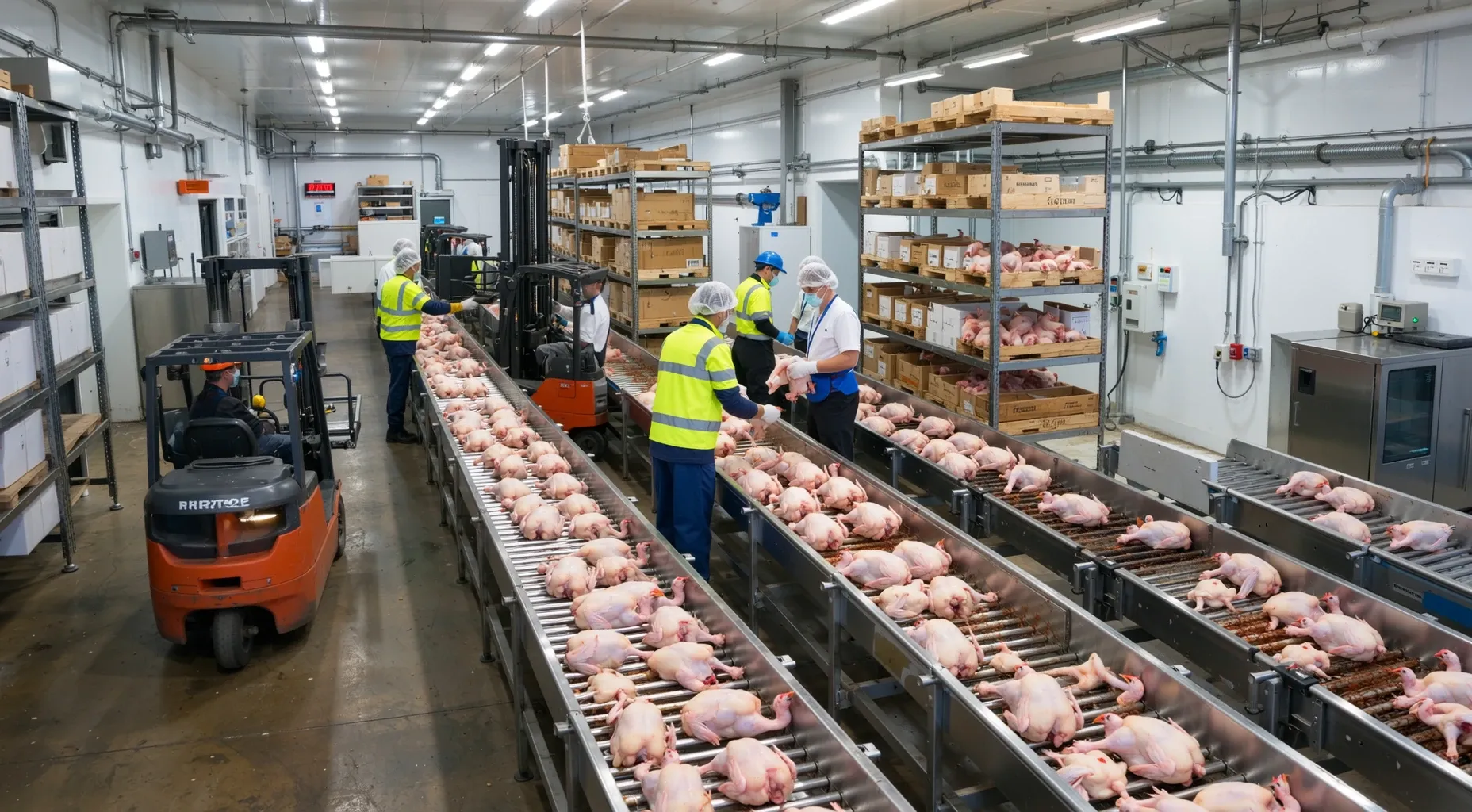
Este sector abarca empresas que actúan como intermediarios, comprando y vendiendo aves vivas y procesadas sin la propiedad del ganado subyacente. Su función principal consiste en la redistribución a gran escala de la carne de pollo de los procesadores a restaurantes, hoteles, escuelas, compradores institucionales y otros minoristas que no pueden adquirir en tales volúmenes. Las operaciones diarias típicas incluyen la recepción de envíos de aves vivas, cadáveres congelados y aves enteras o troceadas, seguida de una inspección rigurosa para garantizar la calidad, la higiene y el peso. Los trabajadores a menudo realizan tareas de clasificación, despiece, porcionado y embalaje para preparar los productos según los pedidos específicos de los clientes antes de transportarlos por camión o por ferrocarril. Los operadores van desde pequeños intermediarios independientes que manejan cuentas individuales hasta grandes centros de distribución que gestionan redes regionales. Estas empresas facilitan el flujo esencial de productos alimenticios ricos en proteínas dentro de la cadena de suministro. La escala varía significativamente, con algunas instalaciones que manejan solo unos pocos miles de libras por semana, mientras que otras mueven millones de dólares anualmente a través de varios estados. Al conectar a los productores con diversas entidades minoristas y de servicios de alimentos, esta industria garantiza la disponibilidad constante de productos de pollo frescos o congelados en el mercado, al mismo tiempo que se cumplen estrictas regulaciones de seguridad.
Hierarchy
| Code | Title | Description |
|---|---|---|
| 42 | Comercio al por mayor 2-digit sector | El Sector en su conjunto El sector del Comercio al por mayor comprende establecimientos que participan en la comercialización de mercancías, generalmente sin transformación, y en la prestación de servicios incidentales a la venta de mercancías. Las mercancías descritas en este sector incluyen las salidas de la agricultura, la minería, la fabricación y ciertas industrias de información, como la publicación. El proceso de comercialización al por mayor es un paso intermedio en la distribución de mercancías. Los comercializadores están organizados para vender o facilitar la compra o venta de (a) bienes para la reventa (es decir, bienes vendidos a otros comercializadores o minoristas), (b) capital o bienes duraderos no de consumo y (c) materias primas e insumos utilizados en la producción. Los comercializadores venden mercancías a otras empresas y normalmente operan desde un almacén o oficina. Estos almacenes y oficinas se caracterizan por tener poco o ningún tipo de exhibición de mercancías. Además, ni el diseño ni la ubicación de las instalaciones están diseñadas para atraer tráfico peatonal. Los comercializadores normalmente no utilizan publicidad dirigida al público en general. Los clientes se alcanzan normalmente inicialmente a través de teléfono, marketing en persona o mediante publicidad especializada que puede incluir Internet y otros medios electrónicos. Los pedidos de seguimiento se inician ya sea por el proveedor o por el cliente, generalmente basándose en las ventas anteriores, y normalmente presentan fuertes vínculos entre vendedores y compradores. De hecho, las transacciones a menudo se realizan entre comercializadores y clientes que tienen relaciones comerciales a largo plazo. Este sector comprende dos tipos principales de comercializadores: los comercializadores que venden bienes en su propio nombre y los agentes y intermediarios que organizan ventas y compras para otros, generalmente por una comisión o tarifa. (1) Los establecimientos que venden bienes en su propio nombre se conocen como comercializadores al por mayor, distribuidores, intermediarios, proveedores y comerciantes de importación/exportación. También se incluyen como comercializadores al por mayor las oficinas y sucursales de ventas mantenidas por empresas manufactureras, refinadoras o mineras, aparte de sus plantas o minas, con el fin de comercializar sus productos, y las organizaciones de compra grupal que compran y venden principalmente bienes en su propio nombre. Los establecimientos de comercialización al por mayor suelen mantener su propio almacén, donde reciben y manipulan mercancías para sus clientes. Las mercancías se venden generalmente sin transformación, pero pueden incluir funciones integrales, como clasificación, embalaje, etiquetado y otros servicios de marketing. (2) Los establecimientos que organizan la compra o venta de bienes de otros o que compran bienes, generalmente en base a una comisión, se conocen como mercados electrónicos B2B, agentes y intermediarios, comerciantes con comisión, agentes y intermediarios de importación/exportación, empresas de subastas, organizaciones de compra grupal (que actúan como agentes) y representantes de fabricantes. Estos establecimientos operan desde oficinas y generalmente no poseen ni manipulan los bienes que venden. Algunos establecimientos de comercialización al por mayor pueden estar conectados con un único fabricante y promocionar y vender los productos específicos de ese fabricante a una amplia gama de otros comercializadores o minoristas. Otros comercializadores pueden estar conectados con una cadena de minoristas o con un número limitado de cadenas de minoristas, y solo proporcionan una variedad de productos necesarios para esa operación de minoristas específica(s). Estos comercializadores pueden obtener los productos de una amplia gama de fabricantes. Otros comercializadores pueden no tomar posesión de los bienes, sino que actuar como agentes y intermediarios por una comisión. Aunque, en general, la comercialización al por mayor normalmente denota ventas en grandes volúmenes, los bienes duraderos no de consumo pueden venderse en unidades individuales. Las ventas de capital o bienes duraderos no de consumo utilizados en la producción de bienes y servicios, como maquinaria agrícola, camiones de medio y pesado y maquinaria industrial, siempre se incluyen en el comercio al por mayor. |
| 424 | Comercializadores al por mayor, bienes no duraderos 3-digit subsector | Las industrias en el subsector de los Comercializadores al por mayor, bienes no duraderos, venden bienes no duraderos a otras empresas. Los bienes no duraderos son artículos que generalmente tienen una vida útil normal de menos de tres años. Los establecimientos de comercio al por mayor de bienes no duraderos están involucrados en la comercialización de productos, como papel y productos de papel, productos químicos y productos químicos, medicamentos, textiles y productos textiles, prendas de vestir, calzado, alimentos, productos agrícolas, productos petroleros y productos petroleros, bebidas alcohólicas, libros, revistas, periódicos, flores y viveros, y productos de tabaco. Las industrias detalladas dentro del subsector están organizadas en la estructura de clasificación en función de los productos vendidos. Los agentes y intermediarios que participan principalmente en la comercialización de bienes no duraderos, generalmente en base a una comisión o tarifa, se clasifican en el subsector 425, Comercio al por mayor, agentes y intermediarios. |
| 4244 | Productos alimenticios y productos relacionados con el comercio minorista 4-digit industry group | Este grupo de industrias comprende establecimientos que participan principalmente en la distribución minorista al por mayor de (1) una línea general de alimentos; (2) alimentos congelados envasados; (3) productos lácteos; (4) aves de corral y productos de aves de corral; (5) dulces y productos de confitería; (6) pescado y productos del mar; (7) carnes y productos cárnicos; (8) frutas y verduras frescas; y (9) otros productos alimenticios y relacionados. |
| 42444 | Pavo y productos de pavo minoristas 5-digit NAICS industry | Ver descripción de la industria para 424440. |
| 424440 | Mayoristas de Pollo y Productos de Pollo 6-digit U.S. detail | Este sector abarca empresas que actúan como intermediarios, comprando y vendiendo aves vivas y procesadas sin la propiedad del ganado subyacente. Su función principal consiste en la redistribución a gran escala de la carne de pollo de los procesadores a restaurantes, hoteles, escuelas, compradores institucionales y otros minoristas que no pueden adquirir en tales volúmenes. Las operaciones diarias típicas incluyen la recepción de envíos de aves vivas, cadáveres congelados y aves enteras o troceadas, seguida de una inspección rigurosa para garantizar la calidad, la higiene y el peso. Los trabajadores a menudo realizan tareas de clasificación, despiece, porcionado y embalaje para preparar los productos según los pedidos específicos de los clientes antes de transportarlos por camión o por ferrocarril. Los operadores van desde pequeños intermediarios independientes que manejan cuentas individuales hasta grandes centros de distribución que gestionan redes regionales. Estas empresas facilitan el flujo esencial de productos alimenticios ricos en proteínas dentro de la cadena de suministro. La escala varía significativamente, con algunas instalaciones que manejan solo unos pocos miles de libras por semana, mientras que otras mueven millones de dólares anualmente a través de varios estados. Al conectar a los productores con diversas entidades minoristas y de servicios de alimentos, esta industria garantiza la disponibilidad constante de productos de pollo frescos o congelados en el mercado, al mismo tiempo que se cumplen estrictas regulaciones de seguridad. |
Need a supply chain stack that maps to this industry?
Use this NAICS classification as the starting point, then connect it to Item workflows across inventory, warehousing, order management, fulfillment, and transportation.
Classification References
- 01Distribución mayorista de aves de corral envasadas y congeladas--se clasifican en la Industria 424420, Mayoristas de alimentos congelados envasados;
- 02Distribución mayorista de aves de corral enlatadas--se clasifican en la Industria 424490, Mayoristas de otros productos alimenticios y relacionados;
- 03Distribución mayorista de pollitos vivos--se clasifican en la Industria 424590, Mayoristas de otros productos agrícolas brutos;
- 04Sacrificio y procesamiento de aves de corral--se clasifican en la Industria 311615, de EE. UU., Procesamiento de aves de corral.
Index Items
Mayoristas de aves de corral y productos (excepto enlatados y congelados)
Mayoristas de embutidos, aves de corral
Mayoristas de huevos
Mayoristas de aves de corral frescas
Mayoristas de aves de corral congeladas (excepto envasadas)
Mayoristas de aves de corral envasadas (excepto enlatadas y congeladas)
Mayoristas de aves de corral y productos (excepto enlatados, congelados)
Mayoristas de pasteles de pollo (excepto congelados envasados)
Mayoristas de aves de corral, vivas y procesadas
Mayoristas de productos de pollo procesados (p. ej., para almuerzo)
Mayoristas de pavo y productos de pavo (excepto enlatados y congelados)
How Item Can Help
Item.com's Warehouse Management System tracks live inventory of perishable chicken and turkey parts across regional facilities, ensuring rapid order fulfillment and minimizing waste due to expiration dates.
The Order Management System optimizes the routing of live birds and processed cuts from farms to local grocery distributors, allowing businesses to handle real-time demand spikes without delays.
Transportation Management Software monitors temperature-controlled shipments of fresh poultry in transit, providing compliance reporting and alerts for any deviations that could affect product quality.
External Resources
Census.gov NAICS Detail
Official US Census Bureau definition and scope for NAICS 424440.
Poultry Producers Association of Canada
A leading trade association providing resources for Canadian poultry producers and wholesalers.
USDA National Agricultural Statistics Service - Poultry
Official government database offering comprehensive statistics on US poultry production and wholesale prices.
National Chicken Council
A major trade organization dedicated to supporting the US chicken industry and its wholesale operations.
