Flower, Nursery Stock, and Florists' Supplies Merchant Wholesalers
Description
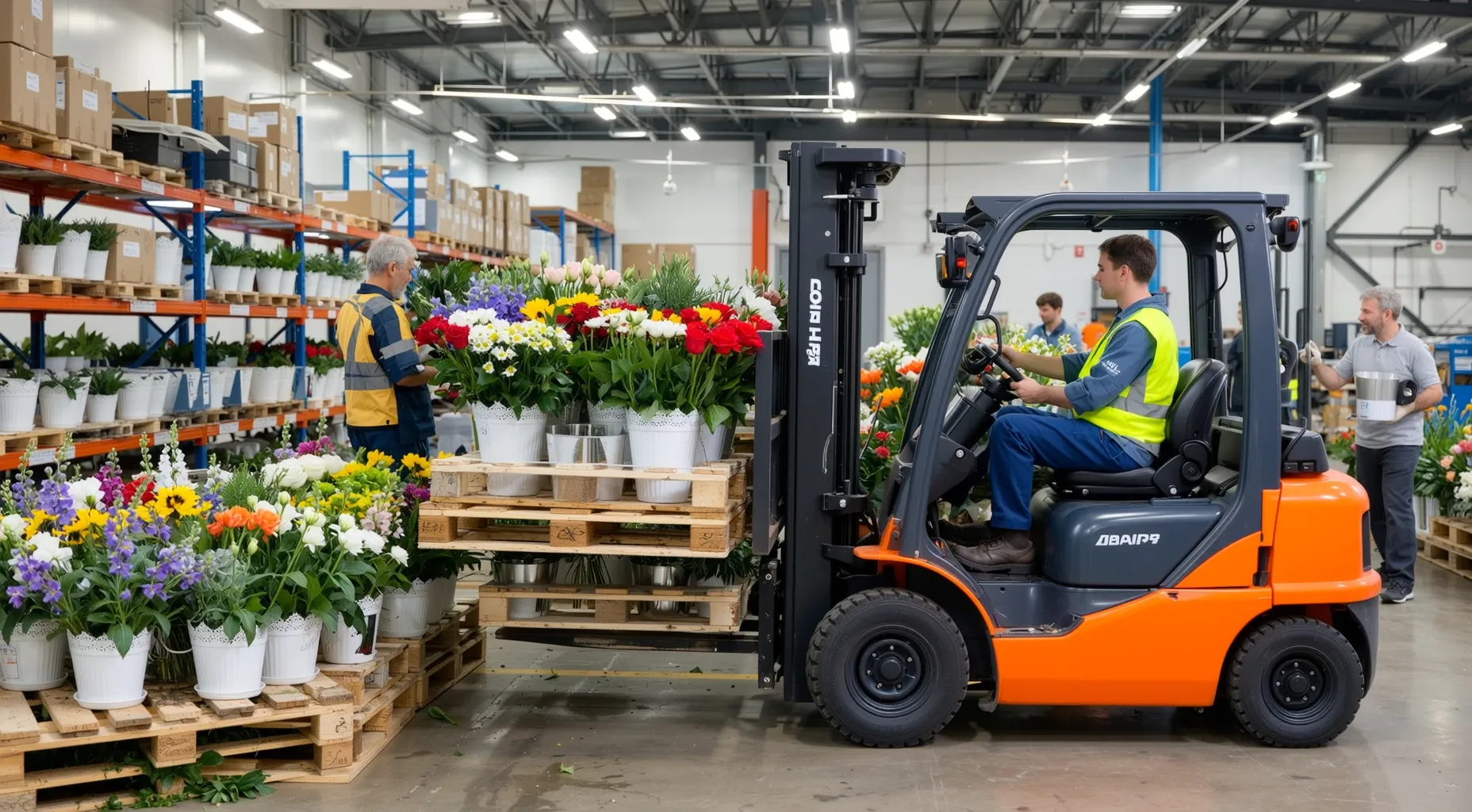
This sector encompasses businesses that specialize in the wholesale distribution of flowers, ornamental plants, and specialized supplies used within the floral industry. Unlike retail florists who serve end consumers, these wholesalers act as the primary supply chain intermediaries connecting agricultural producers with large-scale buyers such as hotels, restaurants, wedding planners, and chain flower shops. Their core operational activities involve purchasing bulk quantities of blooms, cuttings, and related materials like vases, pots, fertilizers, and preservation agents from growers and suppliers, then transporting and stocking these goods for onward sale. Operators within this space vary significantly in scale, ranging from small regional distributors with limited product lines to massive national corporations managing complex logistics networks across multiple states. These entities often operate out of large distribution centers equipped with climate-controlled storage facilities to maintain the freshness and quality of perishable inventory during transit. The scope of their business is broad, covering everything from exotic orchids and tropical palms to seasonal cut flowers and the necessary tools required for professional floristry. By facilitating efficient movement and bulk transactions of these goods, they play a critical role in ensuring that fresh botanical products are readily available for commercial events and hospitality sectors throughout the year.
Hierarchy
| Code | Title | Description |
|---|---|---|
| 42 | Wholesale Trade 2-digit sector | The Sector as a Whole The Wholesale Trade sector comprises establishments engaged in wholesaling merchandise, generally without transformation, and rendering services incidental to the sale of merchandise. The merchandise described in this sector includes the outputs of agriculture, mining, manufacturing, and certain information industries, such as publishing. The wholesaling process is an intermediate step in the distribution of merchandise. Wholesalers are organized to sell or arrange the purchase or sale of (a) goods for resale (i.e., goods sold to other wholesalers or retailers), (b) capital or durable nonconsumer goods, and (c) raw and intermediate materials and supplies used in production. Wholesalers sell merchandise to other businesses and normally operate from a warehouse or office. These warehouses and offices are characterized by having little or no display of merchandise. In addition, neither the design nor the location of the premises is intended to solicit walk-in traffic. Wholesalers do not normally use advertising directed to the general public. Customers are generally reached initially via telephone, in-person marketing, or by specialized advertising that may include Internet and other electronic means. Follow-up orders are either vendor-initiated or client-initiated, generally based on previous sales, and typically exhibit strong ties between sellers and buyers. In fact, transactions are often conducted between wholesalers and clients that have long-standing business relationships. This sector comprises two main types of wholesalers: merchant wholesalers that sell goods on their own account and agents and brokers that arrange sales and purchases for others generally for a commission or fee. (1) Establishments that sell goods on their own account are known as wholesale merchants, distributors, jobbers, drop shippers, and import/export merchants. Also included as wholesale merchants are sales offices and sales branches (but not retail stores) maintained by manufacturing, refining, or mining enterprises apart from their plants or mines for the purpose of marketing their products, and group purchasing organizations primarily purchasing and selling goods on their own account. Merchant wholesale establishments typically maintain their own warehouse, where they receive and handle goods for their customers. Goods are generally sold without transformation, but may include integral functions, such as sorting, packaging, labeling, and other marketing services. (2) Establishments arranging for the purchase or sale of goods owned by others or purchasing goods, generally on a commission basis are known as business-to-business electronic markets, agents and brokers, commission merchants, import/export agents and brokers, auction companies, group purchasing organizations (acting as agents), and manufacturers' representatives. These establishments operate from offices and generally do not own or handle the goods they sell. Some wholesale establishments may be connected with a single manufacturer and promote and sell the particular manufacturer's products to a wide range of other wholesalers or retailers. Other wholesalers may be connected to a retail chain, or limited number of retail chains, and only provide a variety of products needed by that particular retail operation(s). These wholesalers may obtain the products from a wide range of manufacturers. Still other wholesalers may not take title to the goods, but act as agents and brokers for a commission. Although, in general, wholesaling normally denotes sales in large volumes, durable nonconsumer goods may be sold in single units. Sales of capital or durable nonconsumer goods used in the production of goods and services, such as farm machinery, medium- and heavy-duty trucks, and industrial machinery, are always included in wholesale trade. |
| 424 | Merchant Wholesalers, Nondurable Goods 3-digit subsector | Industries in the Merchant Wholesalers, Nondurable Goods subsector sell nondurable goods to other businesses. Nondurable goods are items generally with a normal life expectancy of less than three years. Nondurable goods merchant wholesale trade establishments are engaged in wholesaling products, such as paper and paper products, chemicals and chemical products, drugs, textiles and textile products, apparel, footwear, groceries, farm products, petroleum and petroleum products, alcoholic beverages, books, magazines, newspapers, flowers and nursery stock, and tobacco products. The detailed industries within the subsector are organized in the classification structure based on the products sold. Agents and brokers primarily engaged in wholesaling nondurable goods, generally on a commission or fee basis, are classified in Subsector 425, Wholesale Trade Agents and Brokers. |
| 4249 | Miscellaneous Nondurable Goods Merchant Wholesalers 4-digit industry group | This industry group comprises establishments primarily engaged in the merchant wholesale distribution of nondurable goods, such as farm supplies; books, periodicals, and newspapers; flowers; nursery stock; paints; varnishes; tobacco and tobacco products; and other miscellaneous nondurable goods, such as cut Christmas trees and pet supplies. |
| 42493 | Flower, Nursery Stock, and Florists' Supplies Merchant Wholesalers 5-digit NAICS industry | See industry description for 424930. |
| 424930 | Flower, Nursery Stock, and Florists' Supplies Merchant Wholesalers 6-digit U.S. detail | This sector encompasses businesses that specialize in the wholesale distribution of flowers, ornamental plants, and specialized supplies used within the floral industry. Unlike retail florists who serve end consumers, these wholesalers act as the primary supply chain intermediaries connecting agricultural producers with large-scale buyers such as hotels, restaurants, wedding planners, and chain flower shops. Their core operational activities involve purchasing bulk quantities of blooms, cuttings, and related materials like vases, pots, fertilizers, and preservation agents from growers and suppliers, then transporting and stocking these goods for onward sale. Operators within this space vary significantly in scale, ranging from small regional distributors with limited product lines to massive national corporations managing complex logistics networks across multiple states. These entities often operate out of large distribution centers equipped with climate-controlled storage facilities to maintain the freshness and quality of perishable inventory during transit. The scope of their business is broad, covering everything from exotic orchids and tropical palms to seasonal cut flowers and the necessary tools required for professional floristry. By facilitating efficient movement and bulk transactions of these goods, they play a critical role in ensuring that fresh botanical products are readily available for commercial events and hospitality sectors throughout the year. |
Need a supply chain stack that maps to this industry?
Use this NAICS classification as the starting point, then connect it to Item workflows across inventory, warehousing, order management, fulfillment, and transportation.
Classification References
- 01Merchant wholesale distribution of cut Christmas trees--are classified in Industry 424990, Other Miscellaneous Nondurable Goods Merchant Wholesalers;
- 02Merchant wholesale distribution of plant seeds and plant bulbs--are classified in Industry 424910, Farm Supplies Merchant Wholesalers; and
- 03Growing nursery products, nursery stock, and short rotation woody trees (i.e., growing and harvesting cycle is 10 years or less)--are classified in U.S. Industry 111421, Nursery and Tree Production.
Index Items
Artificial flowers and plants merchant wholesalers
Bedding plants merchant wholesalers
Florist's supplies merchant wholesalers
Flowers merchant wholesalers
Nursery stock (except plant bulbs, seeds) merchant wholesalers
Ornamental plants and flowers merchant wholesalers
Plants, potted, merchant wholesalers
Soil, top and potting, merchant wholesalers
Trees merchant wholesalers
How Item Can Help
The Flower, Nursery Stock, and Florists' Supplies Merchant Wholesalers WMS optimizes inventory levels for perishable goods and manages complex multi-sku plant varieties to reduce spoilage and maximize shelf-life efficiency.
OMS enables real-time inventory visibility and rapid order fulfillment across diverse sales channels, ensuring customers receive fresh bouquets, seedlings, or bulk supplies without delays.
Data Intelligence provides predictive analytics on seasonal demand fluctuations for specific flower types or nursery stock, allowing wholesalers to adjust procurement strategies and minimize overstocking risks.
External Resources
Census.gov NAICS Detail
Official US Census Bureau definition and scope for NAICS 424930.
National Gardening Association
A trade association providing resources and advocacy for the nursery and landscaping sector.
NAICS 424930 Official Description
The official US Census Bureau definition and breakdown of this specific wholesale merchant classification.
Nursery Stock Suppliers Association
A trade group representing companies that supply plant stock to garden centers and professional growers.
