Other Building Material Dealers
Description
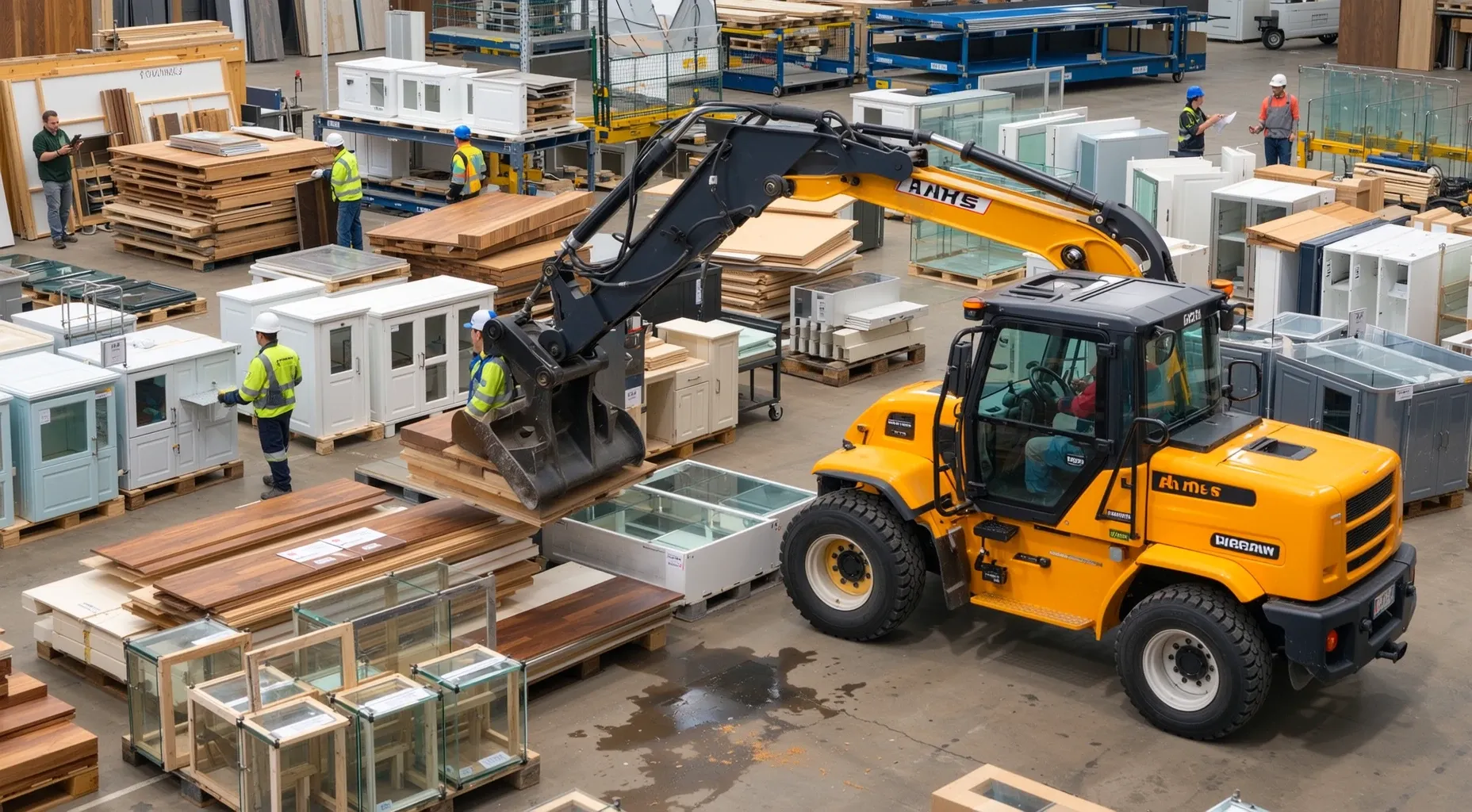
This industry comprises establishments (except home centers, paint and wallpaper retailers, and hardware retailers) primarily engaged in retailing specialized lines of new building materials, such as lumber, fencing, glass, doors, plumbing fixtures and supplies, electrical supplies, prefabricated buildings and kits, and kitchen and bath cabinets and countertops to be installed. Illustrative Examples: Electrical supply retailers Kitchen cabinet (except custom) retailers Fencing dealers Lumber yards, retail Floor covering retailers, hardwood or ceramic tile only Plumbing supply retailers Garage door dealers Prefabricated building (except manufactured home) dealers Glass (except automotive) retailers
Hierarchy
| Code | Title | Description |
|---|---|---|
| 44 | Retail Trade 2-digit sector | The Sector as a Whole The Retail Trade sector comprises establishments primarily engaged in retailing merchandise, generally without transformation, and rendering services incidental to the sale of merchandise. The retailing process is the final step in the distribution of merchandise; retailers are, therefore, organized to sell merchandise in small quantities to the general public. Retail stores are fixed point-of-sale locations, located and designed to attract a high volume of walk-in customers. In general, retail stores have extensive displays of merchandise and use mass-media advertising to attract customers. Retailers often reach customers and market merchandise with methods other than, or in addition to, physical stores, such as Internet websites, the broadcasting of "infomercials," the broadcasting and publishing of direct-response advertising, the publishing of paper and electronic catalogs, door-to-door solicitation, in-home demonstration, selling from portable stalls (street vendors, except food), and distribution through vending machines. Establishments engaged in the direct sale and home delivery of products, such as home heating oil dealers and home delivery newspaper routes, are included here. Retail establishments typically sell merchandise to the general public for personal or household consumption, but some also serve business and institutional clients. These include office supply retailers, computer and software retailers, building materials dealers, plumbing supply retailers, and electrical supply retailers. In addition to retailing merchandise, some retailers are also engaged in the provision of after-sales services, such as repair and installation. For example, new automobile dealers, electronics and appliance retailers, and musical instrument and supplies retailers often provide repair services. As a general rule, establishments engaged in retailing merchandise and providing after-sales services are classified in this sector. Retail trade establishments are grouped into industries and industry groups typically based on one or more of the following criteria: (a) The merchandise line or lines carried; for example, specialty retailers are distinguished from general-line retailers. (b) The usual trade designation of the establishments. This criterion applies in cases where a retailer is well recognized by the industry and the public, but difficult to define strictly in terms of merchandise lines carried; for example, pharmacies and department stores. (c) Human resource requirements in terms of expertise; for example, the staff of an automobile dealer requires knowledge in financing, registering, and licensing issues that are not necessary in other retail industries. The buying of goods for resale is a characteristic of retail trade establishments that particularly distinguishes them from establishments in the agriculture, manufacturing, and construction industries. For example, farms that sell their products at or from the point of production are not classified in retail, but rather in agriculture. Similarly, establishments that both manufacture and sell their products to the general public are not classified in retail, but rather in manufacturing. However, establishments that engage in processing activities incidental to retailing are classified in retail. This includes optical goods retailers that grind lenses, and meat and seafood retailers that process carcasses into cuts. Wholesalers also engage in the buying of goods for resale, but they are not usually organized to serve the general public. They typically operate from a warehouse or office, and neither the design nor the location of these premises is intended to solicit a high volume of walk-in traffic. Wholesalers supply institutional, industrial, wholesale, and retail clients; their operations are, therefore, generally organized to purchase, sell, and deliver merchandise in larger quantities. However, dealers of durable nonconsumer goods, such as farm machinery and heavy-duty trucks, are included in wholesale trade even if they often sell these products in single units. |
| 444 | Building Material and Garden Equipment and Supplies Dealers 3-digit subsector | Industries in the Building Material and Garden Equipment and Supplies Dealers subsector retail new building materials, hardware, paint, and garden and outdoor power equipment and supplies. Establishments in this subsector with fixed point-of-sale locations, including home centers and retail lumber yards, may display merchandise either indoors or outdoors under covered areas. The staff is usually knowledgeable in the use of the specific products being retailed in the construction, repair, and maintenance of the home and associated grounds. |
| 4441 | Building Material and Supplies Dealers 4-digit industry group | This industry group comprises establishments primarily engaged in retailing new building materials and supplies. |
| 44418 | Other Building Material Dealers 5-digit NAICS industry | See industry description for 444180. |
| 444180 | Other Building Material Dealers 6-digit U.S. detail | This industry comprises establishments (except home centers, paint and wallpaper retailers, and hardware retailers) primarily engaged in retailing specialized lines of new building materials, such as lumber, fencing, glass, doors, plumbing fixtures and supplies, electrical supplies, prefabricated buildings and kits, and kitchen and bath cabinets and countertops to be installed. Illustrative Examples: Electrical supply retailers Kitchen cabinet (except custom) retailers Fencing dealers Lumber yards, retail Floor covering retailers, hardwood or ceramic tile only Plumbing supply retailers Garage door dealers Prefabricated building (except manufactured home) dealers Glass (except automotive) retailers |
Need a supply chain stack that maps to this industry?
Use this NAICS classification as the starting point, then connect it to Item workflows across inventory, warehousing, order management, fulfillment, and transportation.
Classification References
- 01Retailing used building materials--are classified in Industry 459510, Used Merchandise Retailers;
- 02Providing carpentry/installation services for products--are classified in Industry 238350, Finish Carpentry Contractors;
- 03Installing plumbing fixtures and supplies--are classified in Industry 238220, Plumbing, Heating, and Air-Conditioning Contractors;
- 04Installing electrical supplies, such as lighting fixtures and ceiling fans--are classified in Industry 238210, Electrical Contractors and Other Wiring Installation Contractors;
- 05Making custom furniture (e.g., kitchen cabinets)--are classified in Subsector 337, Furniture and Related Product Manufacturing;
- 06Retailing a general line of new hardware items--are classified in Industry 444140, Hardware Retailers;
- 07Retailing paint and wallpaper--are classified in Industry 444120, Paint and Wallpaper Retailers;
- 08Retailing floor coverings (except hardwood or ceramic tile only)--are classified in U.S. Industry 449121, Floor Covering Retailers; and
- 09Retailing a general line of home repair and improvement materials and supplies, generally known as home centers--are classified in Industry 444110, Home Centers.
Index Items
Building materials supply dealers
Cabinet stores, kitchen (except custom), to be installed
Ceiling fan stores
Ceramic tile stores
Door stores
Electrical supply stores
Fencing dealers
Floor covering stores, hardwood or ceramic tile only
Garage door dealers
Glass (except automotive) stores
Hardwood flooring dealers
Kitchen cabinet (except custom) stores
Lighting fixture (except electric lamps) stores
Lumber retailing yards
Masonry (e.g., block, brick, stone) dealers
Plumbing supply stores
Prefabricated building (except manufactured home) dealers
Prefabricated shed dealers
Roofing material dealers
Siding dealers
Tile stores, ceramic
Window stores
How Item Can Help
Item.com's Warehouse Management System optimizes inventory visibility for diverse building materials like lumber and bricks, reducing stockouts and shrinkage through automated tracking.
The Order Management System streamlines complex multi-warehouse fulfillment for retailers dealing with varying product SKUs, ensuring faster delivery to home improvement centers and contractors.
Transportation Management System solutions provide real-time route planning for heavy loads of construction supplies, cutting fuel costs and improving on-time delivery rates across wide geographic regions.
External Resources
Census.gov NAICS Detail
Official US Census Bureau definition and scope for NAICS 444180.
National Association of Home Builders
A major trade association supporting the broader homebuilding industry, including building material supply chains.
U.S. Census Bureau - NAICS Code 444180
Official government data page detailing the definition, statistics, and breakdown of the Other Building Material Dealers sector.
Building Materials Association International
An industry portal providing resources, news, and connections for businesses in the building materials trade.
