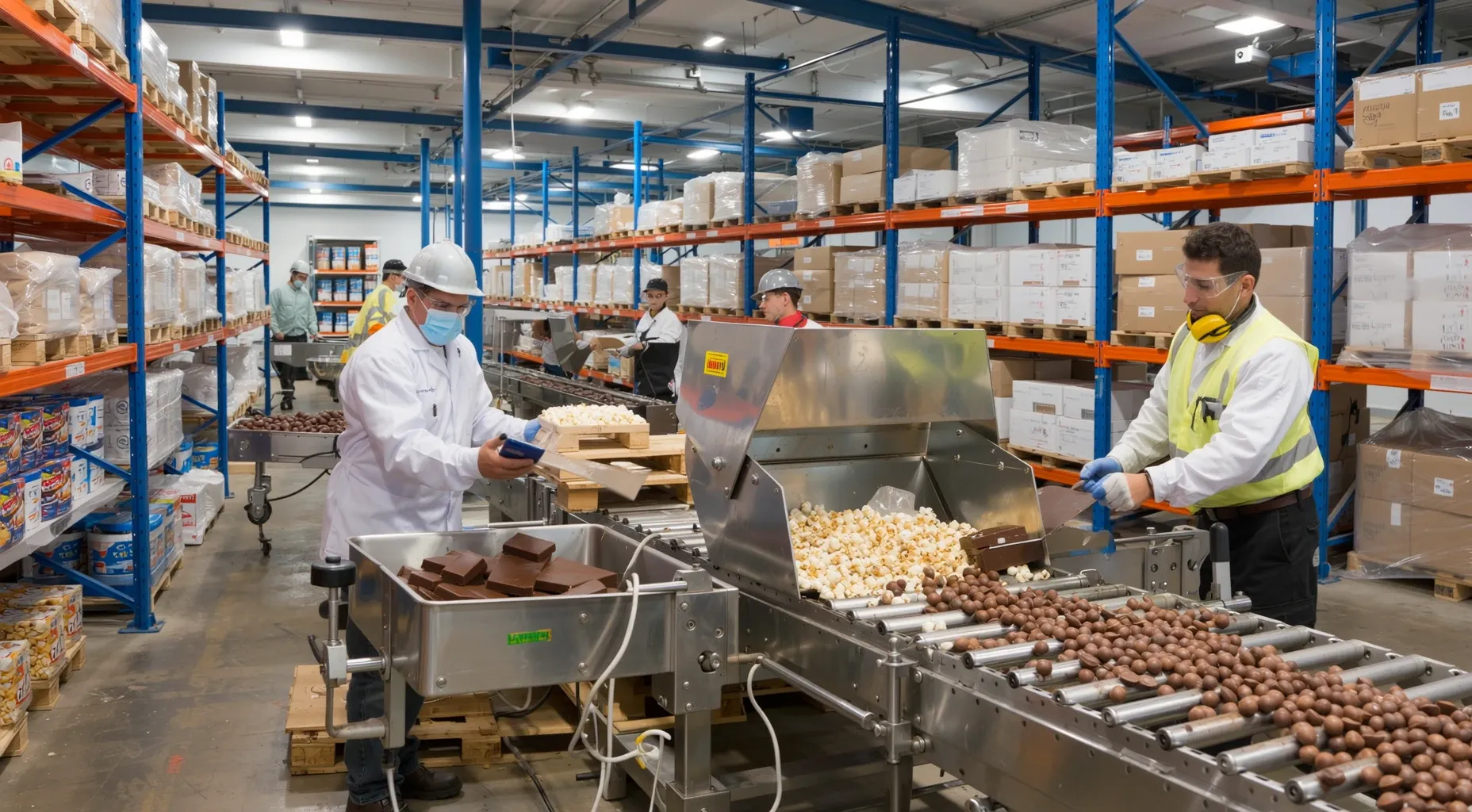
Confectionery and Nut Retailers
Description
The confectionery and nut retail industry focuses on the sale of finished sweet treats, including hard candies, chocolates, gum, and various forms of nuts and popcorn intended for storage or gift giving rather than immediate on-site consumption. These establishments operate primarily as standalone stores where vendors purchase merchandise from manufacturers or wholesalers and display it for customer selection and purchase. Typical business activities involve inventory management, shelf stocking, point-of-sale transactions, and often include the operation of a small parking lot or delivery area for larger orders. Operators are typically small-to-mid-sized businesses ranging from single-location convenience stores to chain retailers with multiple branches. Many of these outlets are located in high-traffic areas such as shopping malls, grocery stores, or near schools and offices to capture family and adult shoppers seeking quick indulgences. The scale of these businesses varies, with some serving as minor components of larger food service operations while others exist as independent entities specializing solely in sweets. They often extend their reach through local delivery services or online ordering platforms during peak seasons. This sector plays a vital role in the broader food and beverage landscape by providing accessible options for festive gifting, office treats, and personal snacking habits throughout the year. Their revenue depends heavily on sales volume and product mix, reflecting changing consumer preferences regarding sugar content and healthy alternatives.
Hierarchy
| Code | Title | Description |
|---|---|---|
| 44 | Retail Trade 2-digit sector | The Sector as a Whole The Retail Trade sector comprises establishments primarily engaged in retailing merchandise, generally without transformation, and rendering services incidental to the sale of merchandise. The retailing process is the final step in the distribution of merchandise; retailers are, therefore, organized to sell merchandise in small quantities to the general public. Retail stores are fixed point-of-sale locations, located and designed to attract a high volume of walk-in customers. In general, retail stores have extensive displays of merchandise and use mass-media advertising to attract customers. Retailers often reach customers and market merchandise with methods other than, or in addition to, physical stores, such as Internet websites, the broadcasting of "infomercials," the broadcasting and publishing of direct-response advertising, the publishing of paper and electronic catalogs, door-to-door solicitation, in-home demonstration, selling from portable stalls (street vendors, except food), and distribution through vending machines. Establishments engaged in the direct sale and home delivery of products, such as home heating oil dealers and home delivery newspaper routes, are included here. Retail establishments typically sell merchandise to the general public for personal or household consumption, but some also serve business and institutional clients. These include office supply retailers, computer and software retailers, building materials dealers, plumbing supply retailers, and electrical supply retailers. In addition to retailing merchandise, some retailers are also engaged in the provision of after-sales services, such as repair and installation. For example, new automobile dealers, electronics and appliance retailers, and musical instrument and supplies retailers often provide repair services. As a general rule, establishments engaged in retailing merchandise and providing after-sales services are classified in this sector. Retail trade establishments are grouped into industries and industry groups typically based on one or more of the following criteria: (a) The merchandise line or lines carried; for example, specialty retailers are distinguished from general-line retailers. (b) The usual trade designation of the establishments. This criterion applies in cases where a retailer is well recognized by the industry and the public, but difficult to define strictly in terms of merchandise lines carried; for example, pharmacies and department stores. (c) Human resource requirements in terms of expertise; for example, the staff of an automobile dealer requires knowledge in financing, registering, and licensing issues that are not necessary in other retail industries. The buying of goods for resale is a characteristic of retail trade establishments that particularly distinguishes them from establishments in the agriculture, manufacturing, and construction industries. For example, farms that sell their products at or from the point of production are not classified in retail, but rather in agriculture. Similarly, establishments that both manufacture and sell their products to the general public are not classified in retail, but rather in manufacturing. However, establishments that engage in processing activities incidental to retailing are classified in retail. This includes optical goods retailers that grind lenses, and meat and seafood retailers that process carcasses into cuts. Wholesalers also engage in the buying of goods for resale, but they are not usually organized to serve the general public. They typically operate from a warehouse or office, and neither the design nor the location of these premises is intended to solicit a high volume of walk-in traffic. Wholesalers supply institutional, industrial, wholesale, and retail clients; their operations are, therefore, generally organized to purchase, sell, and deliver merchandise in larger quantities. However, dealers of durable nonconsumer goods, such as farm machinery and heavy-duty trucks, are included in wholesale trade even if they often sell these products in single units. |
| 445 | Food and Beverage Retailers 3-digit subsector | Industries in the Food and Beverage Retailers subsector primarily retail general or specialized lines of food and beverage products. Establishments in this subsector with fixed point-of-sale locations have special equipment (e.g., freezers, refrigerated display cases, refrigerators) for displaying food and beverage products and have staff trained in the processing of food products to guarantee the proper storage and sanitary conditions required by regulatory authority. Vending machine operators are also included in this subsector. |
| 4452 | Specialty Food Retailers 4-digit industry group | This industry group comprises establishments primarily engaged in retailing specialized lines of food not for immediate consumption. |
| 44529 | Other Specialty Food Retailers 5-digit NAICS industry | This industry comprises establishments primarily engaged in retailing specialty foods (except fruits and vegetables, meat, fish, and seafood) not for immediate consumption and not made on the premises. Illustrative Examples: Baked goods (not made on premises) retailers Dairy product retailers Coffee and tea (i.e., packaged) retailers Gourmet food retailers Confectionery (i.e., packaged) retailers Nut (i.e., packaged) retailers |
| 445292 | Confectionery and Nut Retailers 6-digit U.S. detail | The confectionery and nut retail industry focuses on the sale of finished sweet treats, including hard candies, chocolates, gum, and various forms of nuts and popcorn intended for storage or gift giving rather than immediate on-site consumption. These establishments operate primarily as standalone stores where vendors purchase merchandise from manufacturers or wholesalers and display it for customer selection and purchase. Typical business activities involve inventory management, shelf stocking, point-of-sale transactions, and often include the operation of a small parking lot or delivery area for larger orders. Operators are typically small-to-mid-sized businesses ranging from single-location convenience stores to chain retailers with multiple branches. Many of these outlets are located in high-traffic areas such as shopping malls, grocery stores, or near schools and offices to capture family and adult shoppers seeking quick indulgences. The scale of these businesses varies, with some serving as minor components of larger food service operations while others exist as independent entities specializing solely in sweets. They often extend their reach through local delivery services or online ordering platforms during peak seasons. This sector plays a vital role in the broader food and beverage landscape by providing accessible options for festive gifting, office treats, and personal snacking habits throughout the year. Their revenue depends heavily on sales volume and product mix, reflecting changing consumer preferences regarding sugar content and healthy alternatives. |
Need a supply chain stack that maps to this industry?
Use this NAICS classification as the starting point, then connect it to Item workflows across inventory, warehousing, order management, fulfillment, and transportation.
Classification References
- 01Selling confectionery goods and nuts made on the premises and not packaged for immediate consumption--are classified in Industry Group 3113, Sugar and Confectionery Product Manufacturing;
- 02Preparing and/or serving snack foods (e.g., doughnuts, bagels, ice cream, popcorn) for immediate consumption on or near the premises--are classified in U.S. Industry 722515, Snack and Nonalcoholic Beverage Bars; and
- 03Retailing baked goods made on the premises but not for immediate consumption--are classified in U.S. Industry 311811, Retail Bakeries.
Index Items
Candy stores, packaged, retailing only
Confectionery stores, packaged, retailing only
Nut (i.e., packaged) stores
How Item Can Help
Manages inventory levels for perishable ingredients and multi-format SKUs to reduce waste and ensure product availability.
Synchronizes orders from diverse channels to optimize order routing and improve fulfillment speed during peak sales periods.
Tracks temperature-sensitive shipments of perishable goods to prevent spoilage and maintain regulatory compliance.
External Resources
Census.gov NAICS Detail
Official US Census Bureau definition and scope for NAICS 445292.
National Confectioners Association
A major trade organization representing over 3,600 confectionery manufacturers and retailers.
NAICS Database - US Census Bureau
Official government source providing detailed definitions and data for NAICS code 445292.
Mishcon De Reama Law Directory
Industry directory entry highlighting legal compliance and commercial matters for confectionery and nut retailers.
