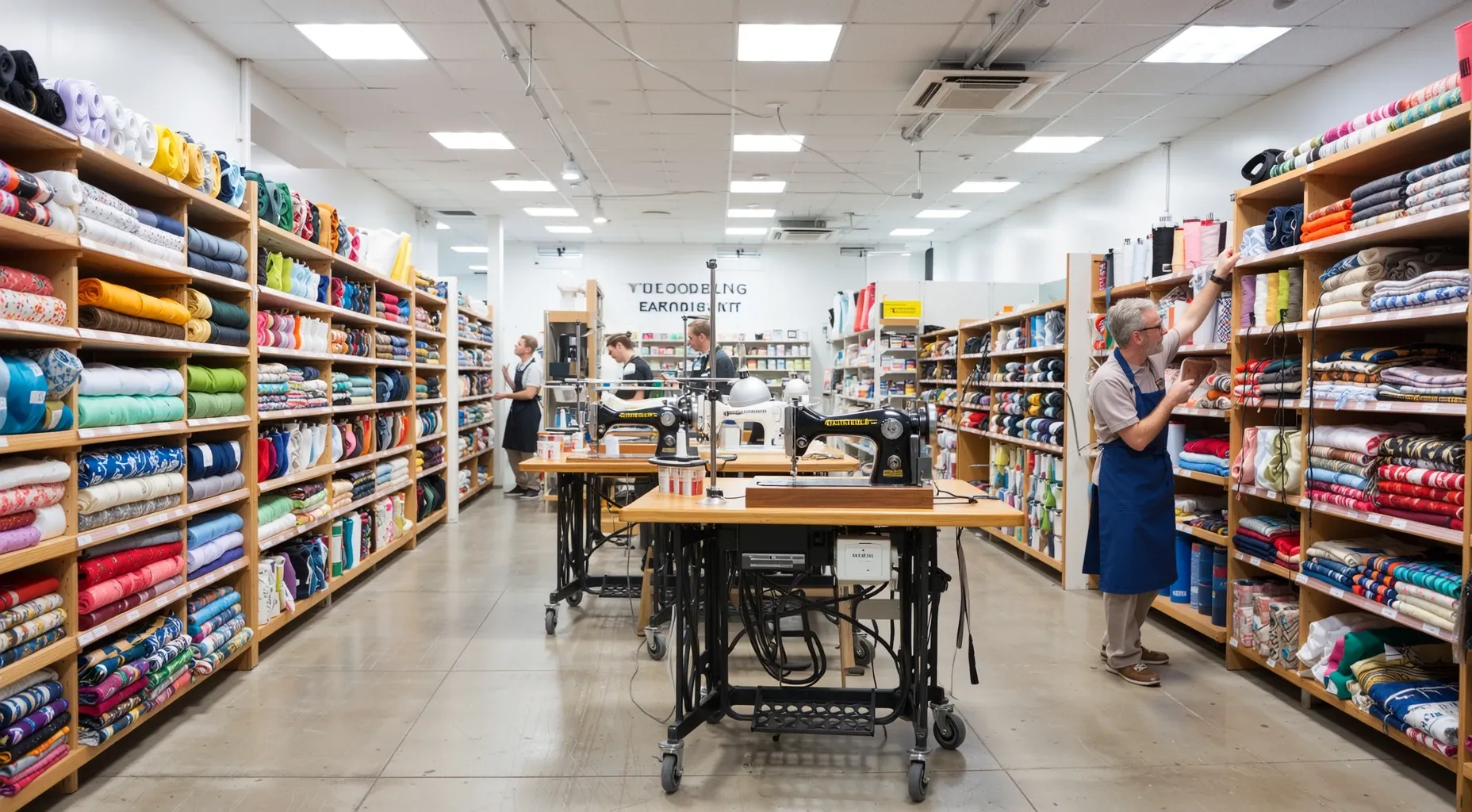
Venta al por menor de artículos de costura, bordado y telas
Description
Este sector comprende establecimientos principalmente dedicados a la venta al por menor de nuevos suministros para costura, telas, patrones, hilos y otros accesorios para el bordado, o a la venta de estos productos en combinación con nuevas máquinas de coser. Ejemplos ilustrativos: Tiendas de venta al por menor de telas Tiendas de venta al por menor de suministros para costura Tiendas de venta al por menor de suministros para bordado Tiendas de venta al por menor de materiales para tapicería Tiendas de venta al por menor de suministros para patchwork
Hierarchy
| Code | Title | Description |
|---|---|---|
| 45 | Comercio al por menor 2-digit sector | El Sector en su conjunto El sector del Comercio al por menor comprende establecimientos principalmente dedicados a la venta de mercancías, generalmente sin transformación, y a la prestación de servicios incidentales a la venta de mercancías. El proceso de venta es el último paso en la distribución de mercancías; los minoristas están, por lo tanto, organizados para vender mercancías en pequeñas cantidades al público en general. Las tiendas minoristas son ubicaciones fijas de venta, ubicadas y diseñadas para atraer un alto volumen de clientes que pasan por allí. En general, las tiendas minoristas tienen una amplia variedad de mercancías y utilizan la publicidad en los medios masivos para atraer a los clientes. Los minoristas a menudo alcanzan a los clientes y comercializan las mercancías utilizando métodos además de, o en combinación con, las tiendas físicas, como sitios web, la transmisión de "infomerciales", la transmisión y publicación de publicidad de respuesta directa, la publicación de catálogos en papel y electrónicos, la prospección puerta a puerta, la demostración en el hogar, la venta desde puestos móviles (vendedores ambulantes, excepto alimentos) y la distribución a través de máquinas expendedoras. Los establecimientos que participan en la venta directa y la entrega a domicilio de productos, como los minoristas de aceite para calefacción y las rutas de entrega de periódicos, también están incluidos aquí. Los establecimientos minoristas suelen vender mercancías al público en general para el consumo personal o doméstico, pero algunos también atienden a clientes empresariales e institucionales. Estos incluyen minoristas de suministros de oficina, minoristas de ordenadores y software, minoristas de materiales de construcción, minoristas de suministro de fontanería y minoristas de suministro eléctrico. Además de la venta de mercancías, algunos minoristas también participan en la prestación de servicios postventa, como reparación e instalación. Por ejemplo, los concesionarios de automóviles nuevos, los minoristas de electrónica y electrodomésticos y los minoristas de instrumentos musicales y suministros a menudo ofrecen servicios de reparación. Como regla general, los establecimientos que participan en la venta de mercancías y la prestación de servicios postventa se clasifican en este sector. Los establecimientos minoristas se agrupan en industrias y grupos de industrias, normalmente en función de uno o más de los siguientes criterios: (a) La línea de mercancías o líneas que se venden; por ejemplo, los minoristas especializados se distinguen de los minoristas de gama general. (b) La denominación comercial habitual de los establecimientos. Este criterio se aplica en los casos en los que un minorista es bien conocido por la industria y el público, pero difícil de definir estrictamente en términos de líneas de mercancías que se venden; por ejemplo, las farmacias y los grandes almacenes. (c) Los requisitos de recursos humanos en términos de experiencia; por ejemplo, el personal de un concesionario de automóviles requiere conocimientos sobre cuestiones de financiación, registro y licencias, lo que no es necesario en otras industrias minoristas. La compra de mercancías para la reventa es una característica de los establecimientos minoristas que los distingue particularmente de los establecimientos en las industrias de agricultura, fabricación y construcción. Por ejemplo, las granjas que venden sus productos en el punto de producción o desde allí no se clasifican como minoristas, sino como agricultura. De forma similar, los establecimientos que fabrican y venden sus productos al público en general no se clasifican como minoristas, sino como fabricantes. Sin embargo, los establecimientos que participan en actividades de procesamiento incidentales al comercio minorista se clasifican como minoristas. Esto incluye los minoristas de artículos ópticos que mecanizan lentes y los minoristas de carne y mariscos que procesan cadáveres en cortes. Los mayoristas también participan en la compra de mercancías para la reventa, pero normalmente no están organizados para atender al público en general. Normalmente operan desde un almacén o oficina, y ni el diseño ni la ubicación de estos locales están diseñados para atraer un alto volumen de clientes que pasan por allí. Los mayoristas suministran a clientes institucionales, industriales, mayoristas y minoristas; sus operaciones están, por lo tanto, normalmente organizadas para comprar, vender y entregar mercancías en cantidades más grandes. Sin embargo, los minoristas de bienes duraderos no de consumo, como maquinaria agrícola y camiones pesados, también se incluyen en el comercio minorista, incluso si a menudo venden estos productos en unidades individuales. |
| 459 | Tiendas de artículos deportivos, de hobby, musicales y libros, así como artículos diversos 3-digit subsector | Los subsectores de tiendas de artículos deportivos, de hobby, musicales y libros, así como artículos diversos, incluyen el comercio minorista de nuevos artículos deportivos, nuevos juguetes, juegos y suministros de hobby, nuevos suministros de costura y accesorios de bordado, nuevos instrumentos musicales, nuevos libros, periódicos, revistas y otros periódicos, así como otras líneas de mercancías especializadas, como flores y arreglos florales, nuevos suministros de oficina y papelería, nuevos regalos, mercancía novedosa y recuerdos, mercancía usada, mascotas y suministros para mascotas, arte, nuevos o usados, viviendas móviles, y tabaco, cigarrillos electrónicos y otros productos para fumar, suministros electrónicos y otros productos para fumar. |
| 4591 | Tiendas de artículos deportivos, de hobby y musicales 4-digit industry group | Este grupo de industrias comprende establecimientos principalmente dedicados al comercio minorista de nuevos artículos deportivos, juguetes, juegos, suministros de hobby, suministros de costura, accesorios de bordado e instrumentos musicales. |
| 45913 | Costura, bordado y telas 5-digit NAICS industry | Ver descripción de la industria para 459130. |
| 459130 | Venta al por menor de artículos de costura, bordado y telas 6-digit U.S. detail | Este sector comprende establecimientos principalmente dedicados a la venta al por menor de nuevos suministros para costura, telas, patrones, hilos y otros accesorios para el bordado, o a la venta de estos productos en combinación con nuevas máquinas de coser. Ejemplos ilustrativos: Tiendas de venta al por menor de telas Tiendas de venta al por menor de suministros para costura Tiendas de venta al por menor de suministros para bordado Tiendas de venta al por menor de materiales para tapicería Tiendas de venta al por menor de suministros para patchwork |
Need a supply chain stack that maps to this industry?
Use this NAICS classification as the starting point, then connect it to Item workflows across inventory, warehousing, order management, fulfillment, and transportation.
Classification References
- 01La venta al por menor de máquinas de coser nuevas y en combinación con la venta al por menor de otros electrodomésticos nuevos se clasifica en la Industria 449210, Vendedores minoristas de electrónica y electrodomésticos;
- 02La venta al por menor de máquinas de coser, materiales de bordado y telas--se clasifica en la Industria 459510, Vendedores minoristas de mercancías usadas; y
- 03La prestación de servicios de reparación de tapicería de muebles se clasifica en la Industria 811420, Reparación y tapicería de muebles.
Index Items
Tiendas de telas
Tiendas de suministros para costura y bordado
Tiendas de telas
Tiendas de suministros para quilting
Tiendas de suministros para costura
Tiendas de materiales de tapicería
How Item Can Help
Manages complex inventory of small, high-value needlework supplies while integrating real-time stock levels across multiple retail locations to prevent overselling.
Automates order routing and fulfillment strategies tailored to diverse customer delivery options often required by piece goods retail shops.
Predicts seasonal demand spikes for specific sewing patterns and raw materials by analyzing historical sales data to optimize procurement cycles.
External Resources
Census.gov NAICS Detail
Official US Census Bureau definition and scope for NAICS 459130.
National Association of Textile Merchants
A trade organization representing retailers of fabrics, yarns, and needlework products.
US Census Bureau Industry Data
Official government database providing detailed descriptions and statistics for NAICS 459130.
Furniture Retailers Directory
A comprehensive industry directory of physical sewing and needlework retail stores in the Greater Seattle area.
