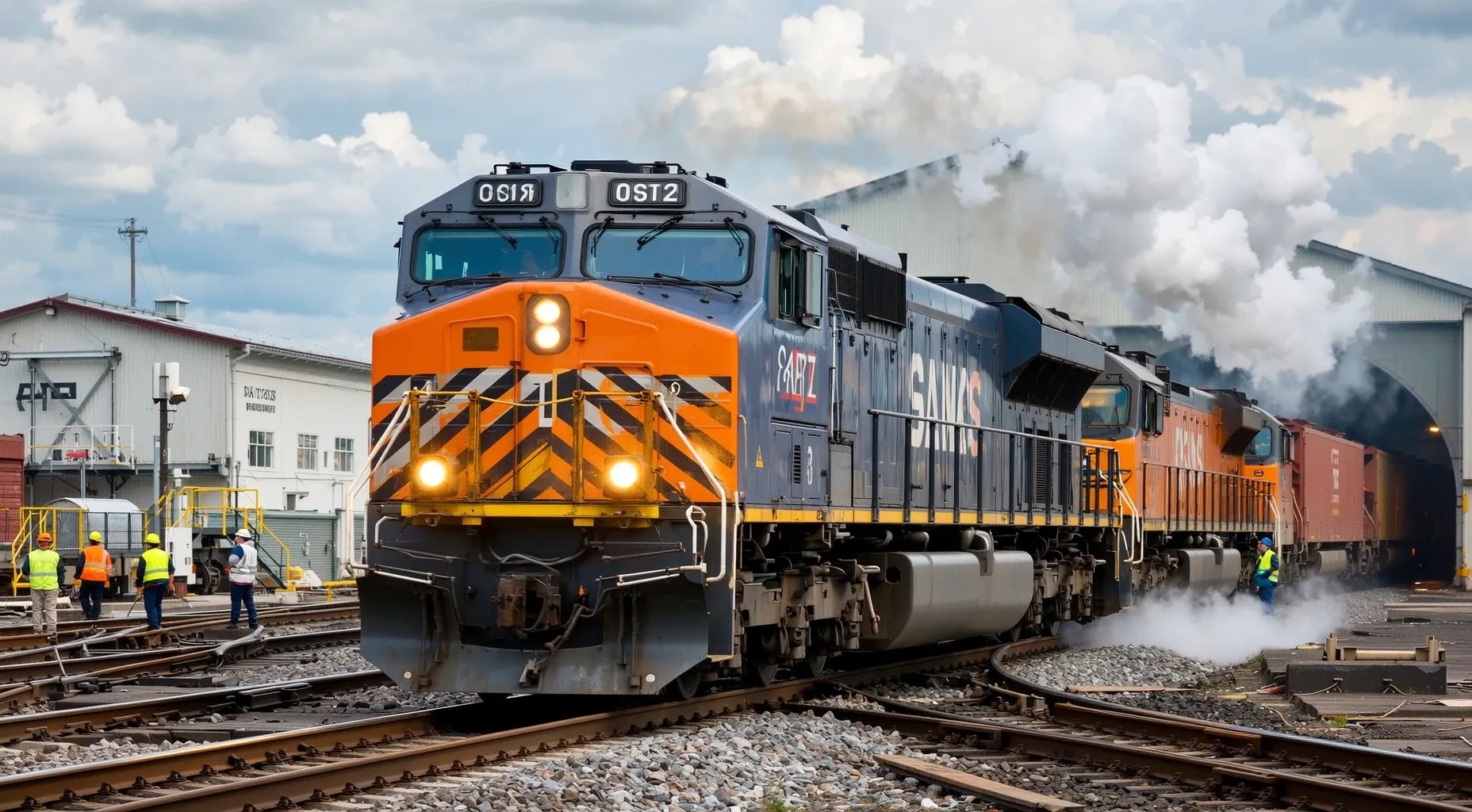
Ferrocarriles de Línea
Description
Este sector industrial de EE. UU. comprende establecimientos conocidos como ferrocarriles de línea, principalmente dedicados a la operación de ferrocarriles para el transporte de pasajeros y/o mercancías a larga distancia dentro de una red ferroviaria. Estos establecimientos proporcionan el movimiento interurbano de trenes entre terminales y estaciones en las líneas principales y secundarias de una red ferroviaria de línea.
Hierarchy
| Code | Title | Description |
|---|---|---|
| 48 | Transporte y Almacenamiento 2-digit sector | El Sector en su Conjunto El sector de Transporte y Almacenamiento incluye industrias que proporcionan el transporte de pasajeros y mercancías, el almacenamiento y el almacenamiento de bienes, el transporte turístico y de ocio, y las actividades de apoyo relacionadas con los modos de transporte. Las empresas en estas industrias utilizan equipos de transporte o instalaciones relacionadas con el transporte como un activo productivo. El tipo de equipo depende del modo de transporte. Los modos de transporte son el aire, el ferrocarril, el agua, la carretera y el oleoducto. El sector de Transporte y Almacenamiento distingue tres tipos básicos de actividades: subsectores para cada modo de transporte, un subsector para el almacenamiento y el almacenamiento, y un subsector para las empresas que proporcionan actividades de apoyo para el transporte. Además, existen subsectores para las empresas que proporcionan transporte de pasajeros con fines turísticos y de ocio, servicios postales y servicios de mensajería. Se establece un subsector separado para las actividades de apoyo en el subsector de Actividades de Apoyo para el Transporte porque, en primer lugar, las actividades de apoyo para el transporte son inherentemente multimodales, como la organización del transporte de mercancías, o tienen aspectos multimodales. En segundo lugar, existen similitudes en los procesos de producción de las industrias de actividades de apoyo. Una de las actividades de apoyo identificadas en el subsector de Actividades de Apoyo para el Transporte es la reparación y el mantenimiento rutinario de los equipos de transporte (por ejemplo, aviones en un aeropuerto, locomotoras en un terminal ferroviario o barcos en un puerto o instalación portuaria). Las empresas que realizan este tipo de actividades no realizan una reparación o reconstrucción completa de los equipos de transporte (es decir, la restauración periódica de los equipos de transporte a las especificaciones de diseño originales) o la conversión de equipos de transporte (es decir, la modificación importante de los sistemas). Una empresa que realiza principalmente la reparación, la reconstrucción o la conversión de fábrica (o astillero) de aviones, locomotoras o barcos es clasificada en el subsector 336, Fabricación de Equipos de Transporte, según el tipo de equipo. Muchas de las empresas en este sector a menudo operan en redes, con instalaciones, fuerzas laborales y equipos extendidos en un área geográfica extensa. Las empresas de almacenamiento en este sector se distinguen de la distribución al por mayor en el hecho de que las empresas de almacenamiento no venden los bienes. Se excluyen de este sector las empresas que proporcionan principalmente servicios de agencia de viajes, de organización de viajes y de reserva que apoyan a las empresas de transporte, hoteles y otras empresas y agencias gubernamentales. Estas empresas están clasificadas en el Sector 56, Servicios Administrativos y de Apoyo y Gestión de Residuos y Remediación. Las empresas que proporcionan principalmente el alquiler y el arrendamiento de equipos de transporte sin operador están clasificadas en el subsector 532, Servicios de Alquiler y Arrendamiento. Las empresas que proporcionan principalmente atención médica con transporte están clasificadas en el Sector 62, Atención Médica y Asistencia Social. |
| 482 | Transporte Ferroviario 3-digit subsector | Las industrias en el subsector de Transporte Ferroviario proporcionan el transporte ferroviario de pasajeros y/o mercancías utilizando locomotoras. Las compañías de ferrocarril en este subsector operan principalmente en redes, con instalaciones, fuerza laboral y equipos extendidos en un área geográfica extensa, o operan en una distancia corta en una línea ferroviaria local. El transporte ferroviario turístico y de ocio, las líneas de ferrocarril de vía estrecha, el ferrocarril suburbano y el transporte rápido no están incluidos en este subsector, sino que están incluidos en el subsector 487, Transporte Turístico y de Ocio, y el subsector 485, Transporte Terrestre y de Pasajeros, respectivamente. Aunque estas actividades utilizan locomotoras, son diferentes de las actividades incluidas en el transporte ferroviario. Las líneas de ferrocarril turísticas no suelen implicar el transporte de un lugar a otro; el viaje del pasajero suele comenzar y terminar en el mismo lugar. Los ferrocarriles suburbanos operan de manera más consistente con el transporte local y urbano y a menudo forman parte de sistemas de transporte integrados. |
| 4821 | Transporte Ferroviario 4-digit industry group | Las industrias en el subsector de Transporte Ferroviario proporcionan el transporte ferroviario de pasajeros y/o mercancías utilizando locomotoras. Las compañías de ferrocarril en este subsector operan principalmente en redes, con instalaciones, fuerza laboral y equipos extendidos en un área geográfica extensa, o operan en una distancia corta en una línea ferroviaria local. El transporte ferroviario turístico y de ocio, las líneas de ferrocarril de vía estrecha, el ferrocarril suburbano y el transporte rápido no están incluidos en este subsector, sino que están incluidos en el subsector 487, Transporte Turístico y de Ocio, y el subsector 485, Transporte Terrestre y de Pasajeros, respectivamente. Aunque estas actividades utilizan locomotoras, son diferentes de las actividades incluidas en el transporte ferroviario. Las líneas de ferrocarril turísticas no suelen implicar el transporte de un lugar a otro; el viaje del pasajero suele comenzar y terminar en el mismo lugar. Los ferrocarriles suburbanos operan de manera más consistente con el transporte local y urbano y a menudo forman parte de sistemas de transporte integrados. |
| 48211 | Transporte Ferroviario 5-digit NAICS industry | Este sector comprende las empresas que están principalmente dedicadas a operar ferrocarriles (excepto ferrocarriles de vía estrecha, ferrocarriles suburbanos, transporte rápido urbano y trenes turísticos). Se incluyen los ferrocarriles de línea larga y los ferrocarriles de corta distancia. |
| 482111 | Ferrocarriles de Línea 6-digit U.S. detail | Este sector industrial de EE. UU. comprende establecimientos conocidos como ferrocarriles de línea, principalmente dedicados a la operación de ferrocarriles para el transporte de pasajeros y/o mercancías a larga distancia dentro de una red ferroviaria. Estos establecimientos proporcionan el movimiento interurbano de trenes entre terminales y estaciones en las líneas principales y secundarias de una red ferroviaria de línea. |
Need a supply chain stack that maps to this industry?
Use this NAICS classification as the starting point, then connect it to Item workflows across inventory, warehousing, order management, fulfillment, and transportation.
Classification References
- 01Operar instalaciones de conexión y terminales como establecimientos separados--se clasifican en la Industria 488210, Actividades de apoyo para el transporte ferroviario;
- 02Operar ferrocarriles a corta distancia en líneas ferroviarias locales--se clasifican en la Industria estadounidense 482112, Ferrocarriles de corta distancia;
- 03Operar sistemas de ferrocarriles de transporte de pasajeros--se clasifican en la Industria estadounidense 485112, Ferrocarriles de transporte de pasajeros.
Index Items
Ferrocarriles de carga, transporte de larga distancia
Ferrocarriles de pasajeros, transporte de larga distancia
Transporte ferroviario, transporte de larga distancia
Ferrocarriles, transporte de larga distancia
Transporte ferroviario, transporte de larga distancia
How Item Can Help
By digitizing yard and terminal operations, the system provides a unified view of container and bulk cargo inventories, allowing for faster loading, unloading, and car interchange processes.
Advanced analytics predict maintenance needs and forecast market demand fluctuations, enabling logistics leaders to proactively adjust scheduling strategies for maximum efficiency.
External Resources
Census.gov NAICS Detail
Official US Census Bureau definition and scope for NAICS 482111.
American Railway Employees' Association
Represents workers in the line-haul railroad industry including engineers, conductors, and dispatchers.
United States Department of Transportation, Bureau of Transportation Statistics
Provides official government data and reports on rail transportation performance and regulations.
American Society of Civil Engineers, Rail Committee
Offers industry resources, research, and standards related to civil engineering for railroads.
