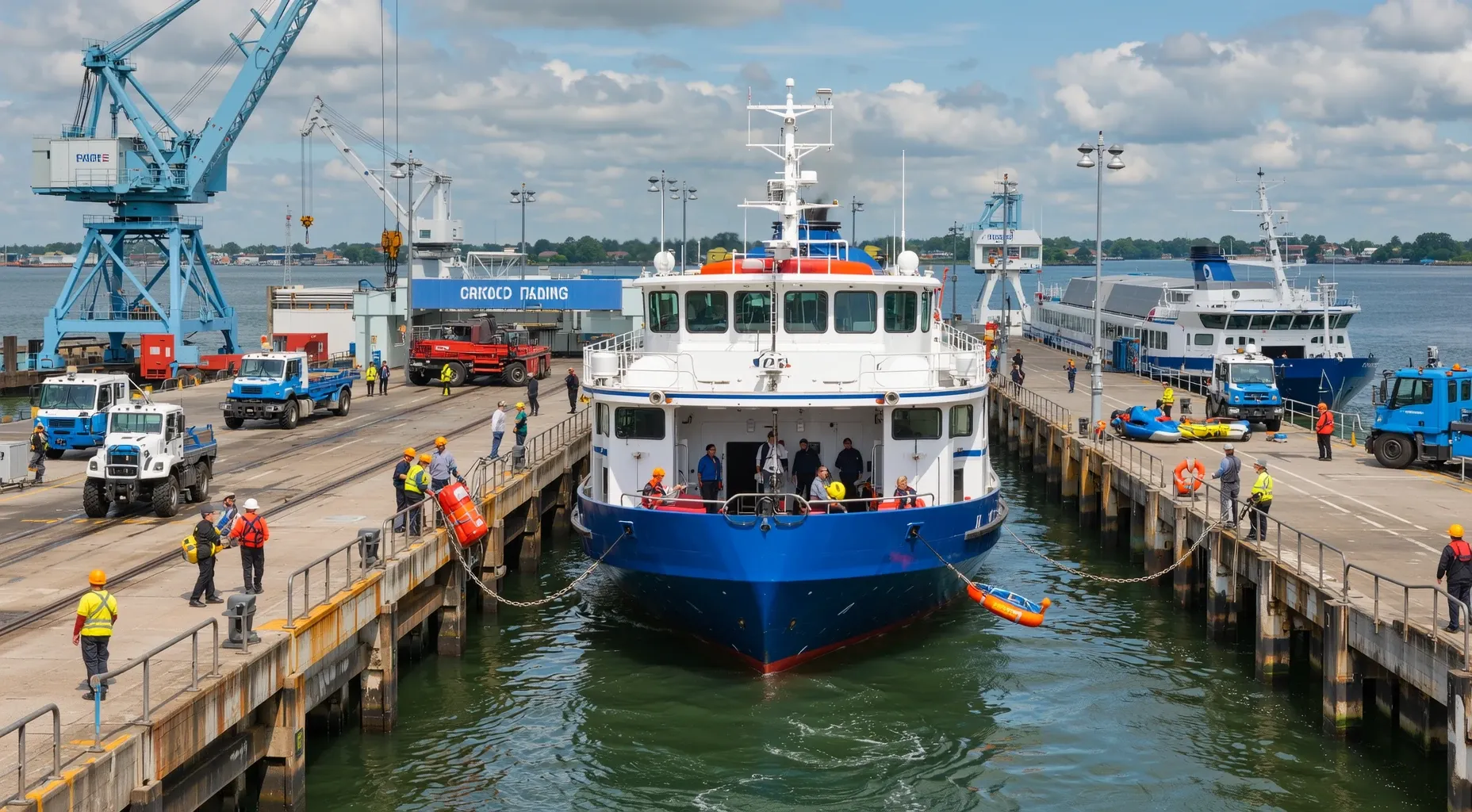
Inland Water Passenger Transportation
Description
Establishments in this sector primarily provide inland water transportation services for tourists and pleasure passengers across lakes, rivers, and intracoastal waterways, specifically excluding operations on the Great Lakes System. The core business activity involves operating various types of vessels designed for recreational travel, ensuring passenger safety while offering sightseeing experiences, dining options, or overnight lodging. Operators often include private yacht companies, independent charter firms, state-sponsored park boat programs, and commercial tourism enterprises that maintain fleets of motorboats, paddlewheelers, and sailboats. These businesses are scattered throughout the nation's coastal regions and major waterways, serving as vital connectors between cities, towns, and scenic landmarks. The scale of operations ranges from small, privately owned boats accommodating dozens of people to larger public utility vessels that handle hundreds of passengers on seasonal routes. Unlike freight or cargo transport, this field focuses exclusively on human travel for leisure or special events rather than economic logistics. Revenue generation relies heavily on direct passenger fares, ticket sales for events, and ancillary services such as onboard food, merchandise, and guided tours. The industry thrives on the combination of natural beauty and community access, creating economic opportunities in regions where alternative land-based transportation is less appealing.
Hierarchy
| Code | Title | Description |
|---|---|---|
| 48 | Transportation and Warehousing 2-digit sector | The Sector as a Whole The Transportation and Warehousing sector includes industries providing transportation of passengers and cargo, warehousing and storage for goods, scenic and sightseeing transportation, and support activities related to modes of transportation. Establishments in these industries use transportation equipment or transportation-related facilities as a productive asset. The type of equipment depends on the mode of transportation. The modes of transportation are air, rail, water, road, and pipeline. The Transportation and Warehousing sector distinguishes three basic types of activities: subsectors for each mode of transportation, a subsector for warehousing and storage, and a subsector for establishments providing support activities for transportation. In addition, there are subsectors for establishments that provide passenger transportation for scenic and sightseeing purposes, postal services, and courier services. A separate subsector for support activities is established in the sector because, first, support activities for transportation are inherently multimodal, such as freight transportation arrangement, or have multimodal aspects. Secondly, there are production process similarities among the support activity industries. One of the support activities identified in the Support Activities for Transportation subsector is the routine repair and maintenance of transportation equipment (e.g., aircraft at an airport, railroad rolling stock at a railroad terminal, or ships at a harbor or port facility). Such establishments do not perform complete overhauling or rebuilding of transportation equipment (i.e., periodic restoration of transportation equipment to original design specifications) or transportation equipment conversion (i.e., major modification to systems). An establishment that primarily performs factory (or shipyard) overhauls, rebuilding, or conversions of aircraft, railroad rolling stock, or ships is classified in Subsector 336, Transportation Equipment Manufacturing, according to the type of equipment. Many of the establishments in this sector often operate on networks, with physical facilities, labor forces, and equipment spread over an extensive geographic area. Warehousing establishments in this sector are distinguished from merchant wholesaling in that the warehouse establishments do not sell the goods. Excluded from this sector are establishments primarily engaged in providing travel agent, travel arrangement, and reservation services that support transportation establishments, hotels, other businesses, and government agencies. These establishments are classified in Sector 56, Administrative and Support and Waste Management and Remediation Services. Establishments primarily engaged in providing rental and leasing of transportation equipment without operator are classified in Subsector 532, Rental and Leasing Services. Establishments primarily engaged in providing medical care with transportation are classified in Sector 62, Health Care and Social Assistance. |
| 483 | Water Transportation 3-digit subsector | Industries in the Water Transportation subsector provide water transportation of passengers and cargo using watercraft, such as ships, barges, and boats. The subsector is composed of two industry groups: (1) one for deep sea, coastal, and Great Lakes water transportation; and (2) one for inland water transportation. This split typically reflects the difference in equipment used. Scenic and sightseeing water transportation services are not included in this subsector but are included in Subsector 487, Scenic and Sightseeing Transportation. Although these activities use watercraft, they are different from the activities included in water transportation. Water sightseeing does not usually involve place-to-place transportation; the passenger's trip starts and ends at the same location. |
| 4832 | Inland Water Transportation 4-digit industry group | Industries in the Water Transportation subsector provide water transportation of passengers and cargo using watercraft, such as ships, barges, and boats. The subsector is composed of two industry groups: (1) one for deep sea, coastal, and Great Lakes water transportation; and (2) one for inland water transportation. This split typically reflects the difference in equipment used. Scenic and sightseeing water transportation services are not included in this subsector but are included in Subsector 487, Scenic and Sightseeing Transportation. Although these activities use watercraft, they are different from the activities included in water transportation. Water sightseeing does not usually involve place-to-place transportation; the passenger's trip starts and ends at the same location. |
| 48321 | Inland Water Transportation 5-digit NAICS industry | This industry comprises establishments primarily engaged in providing inland water transportation of passengers and/or cargo on lakes, rivers, or intracoastal waterways (except on the Great Lakes System). |
| 483212 | Inland Water Passenger Transportation 6-digit U.S. detail | Establishments in this sector primarily provide inland water transportation services for tourists and pleasure passengers across lakes, rivers, and intracoastal waterways, specifically excluding operations on the Great Lakes System. The core business activity involves operating various types of vessels designed for recreational travel, ensuring passenger safety while offering sightseeing experiences, dining options, or overnight lodging. Operators often include private yacht companies, independent charter firms, state-sponsored park boat programs, and commercial tourism enterprises that maintain fleets of motorboats, paddlewheelers, and sailboats. These businesses are scattered throughout the nation's coastal regions and major waterways, serving as vital connectors between cities, towns, and scenic landmarks. The scale of operations ranges from small, privately owned boats accommodating dozens of people to larger public utility vessels that handle hundreds of passengers on seasonal routes. Unlike freight or cargo transport, this field focuses exclusively on human travel for leisure or special events rather than economic logistics. Revenue generation relies heavily on direct passenger fares, ticket sales for events, and ancillary services such as onboard food, merchandise, and guided tours. The industry thrives on the combination of natural beauty and community access, creating economic opportunities in regions where alternative land-based transportation is less appealing. |
Need a supply chain stack that maps to this industry?
Use this NAICS classification as the starting point, then connect it to Item workflows across inventory, warehousing, order management, fulfillment, and transportation.
Classification References
- 01Providing deep sea transportation of passengers to and from foreign ports--are classified in U.S. Industry 483112, Deep Sea Passenger Transportation;
- 02Operating floating casinos (i.e., gambling cruises, riverboat gambling casinos)--are classified in Industry 713210, Casinos (except Casino Hotels);
- 03Operating cruise ships or ferries in coastal waters or on the Great Lakes System--are classified in U.S. Industry 483114, Coastal and Great Lakes Passenger Transportation;
- 04Providing scenic and sightseeing water transportation, such as harbor cruises and charter fishing boat operations--are classified in Industry 487210, Scenic and Sightseeing Transportation, Water;
- 05Renting yachts and pleasure boats, such as houseboats and sailboats, without crew--are classified in U.S. Industry 532284, Recreational Goods Rental; and
- 06Renting or leasing commercial boats (including vessel supply services), without crew--are classified in U.S. Industry 532411, Commercial Air, Rail, and Water Transportation Equipment Rental and Leasing.
Index Items
Canal passenger transportation
Car lighters (i.e., ferries), inland waters (except on Great Lakes system)
Intracoastal transportation of passengers
Lake passenger transportation (except on Great Lakes system)
Passenger transportation, inland waters (except on Great Lakes system)
River passenger transportation
Ship chartering with crew, passenger transportation, inland waters (except on Great Lakes system)
Water shuttle services
Water taxi services
How Item Can Help
Optimizes onshore storage and dock management by tracking cargo manifests and managing inventory for vessels transiting inland waterways. This reduces waiting times and ensures accurate loading schedules for scheduled passenger ferries.
Streamlines real-time passenger booking and boarding management for boat services operating through river systems and canals. The system integrates ticketing with vessel departure data to prevent overcrowding and optimize fleet utilization.
Plans fuel-efficient transit routes for passenger barges navigating complex inland waterways while coordinating with traffic management centers. This minimizes fuel costs and delays by dynamically adjusting departure times based on waterway conditions.
External Resources
Census.gov NAICS Detail
Official US Census Bureau definition and scope for NAICS 483212.
Inland Steamboat Association
Leading trade association representing operators of recreational and commercial passenger vessels on US inland waterways.
Federal Highway Administration Inland Waterways Data
Government resource providing statistics and safety guidelines for recreational boating and waterway infrastructure.
US Army Corps of Engineers Waterways Experiment Station
Official agency page offering regulations, permit requirements, and educational materials for inland water sports activities.