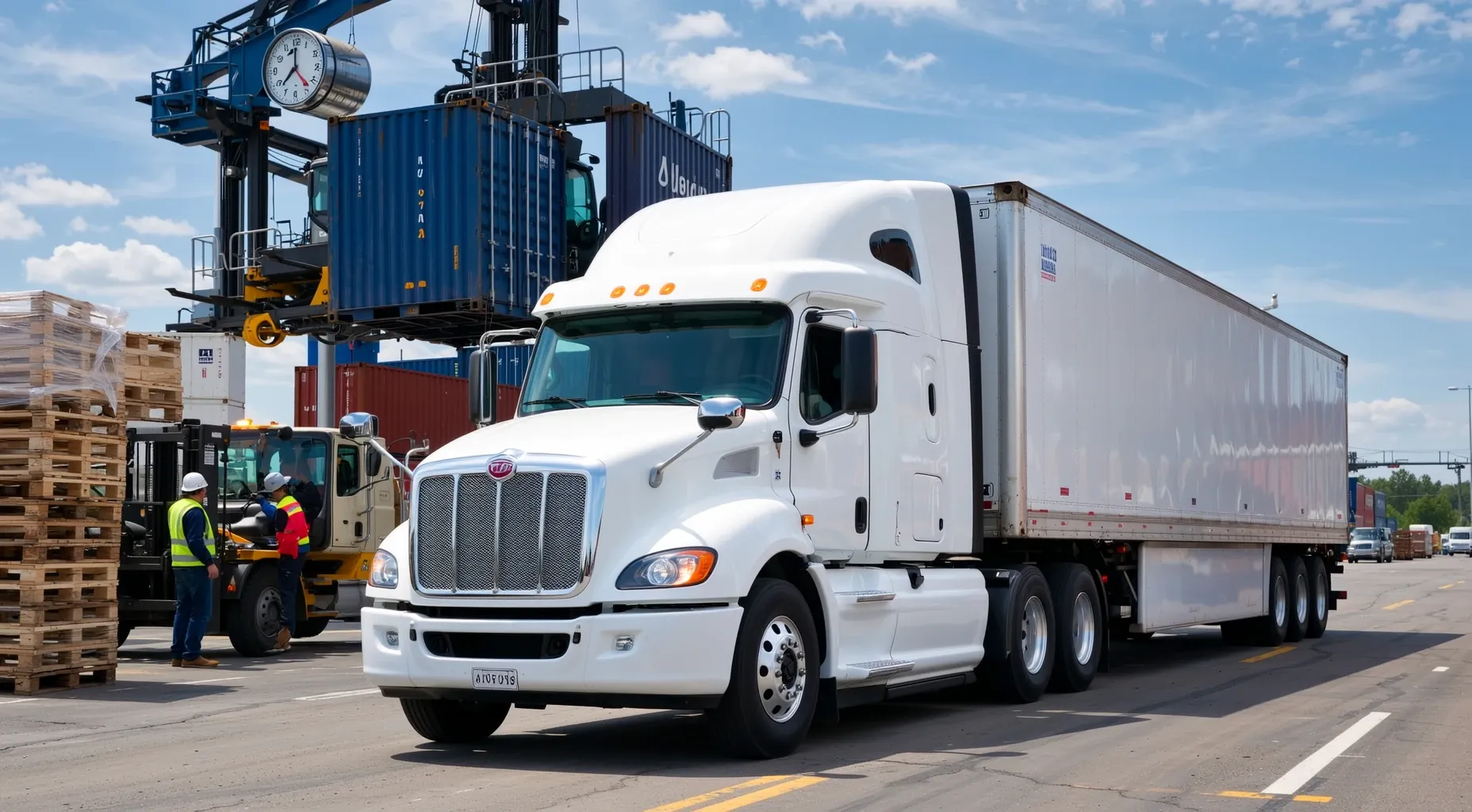
Transporte de Camiones de Carga General, a Larga Distancia, Carga Completa
Description
Este sector industrial de EE. UU. comprende establecimientos principalmente dedicados a proporcionar transporte de carga general a larga distancia por camión. Estas empresas de transporte de carga general a larga distancia proporcionan el movimiento completo de camión de carga desde el origen hasta el destino. El envío de carga en un camión se considera una carga única que no se combina con otras cargas.
Hierarchy
| Code | Title | Description |
|---|---|---|
| 48 | Transporte y Almacenamiento 2-digit sector | El Sector en su Conjunto El sector de Transporte y Almacenamiento incluye industrias que proporcionan el transporte de pasajeros y mercancías, el almacenamiento y el almacenamiento de bienes, el transporte y el turismo, y las actividades de apoyo relacionadas con los modos de transporte. Las empresas en estas industrias utilizan equipos de transporte o instalaciones relacionadas con el transporte como un activo productivo. El tipo de equipo depende del modo de transporte. Los modos de transporte son el aire, el ferrocarril, el agua, la carretera y el oleoducto. El sector de Transporte y Almacenamiento distingue tres tipos básicos de actividades: subsectores para cada modo de transporte, un subsector para el almacenamiento y el almacenamiento, y un subsector para las empresas que proporcionan actividades de apoyo para el transporte. Además, existen subsectores para las empresas que proporcionan transporte de pasajeros para fines turísticos y de ocio, servicios postales y servicios de mensajería. Se establece un subsector separado para las actividades de apoyo en el subsector de Actividades de Apoyo para el Transporte porque, en primer lugar, las actividades de apoyo para el transporte son inherentemente multimodales, como la organización del transporte de mercancías, o tienen aspectos multimodales. En segundo lugar, existen similitudes en los procesos de producción de las industrias de actividades de apoyo. Una de las actividades de apoyo identificadas en el subsector de Actividades de Apoyo para el Transporte es la reparación y el mantenimiento rutinario de los equipos de transporte (por ejemplo, aviones en un aeropuerto, vehículos ferroviarios en un terminal ferroviario o barcos en un puerto o instalación portuaria). Estas empresas no realizan una reparación o reconstrucción completa de los equipos de transporte (es decir, la restauración periódica de los equipos de transporte a las especificaciones de diseño originales) o la conversión de equipos de transporte (es decir, la modificación importante de los sistemas). Una empresa que realiza principalmente la reparación, la reconstrucción o la conversión de fábrica (o astillero) de aviones, vehículos ferroviarios o barcos es clasificada en el subsector 336, Fabricación de Equipos de Transporte, según el tipo de equipo. Muchas de las empresas en este sector a menudo operan en redes, con instalaciones, fuerzas laborales y equipos distribuidos en un área geográfica extensa. Las empresas de almacenamiento en este sector se distinguen de la distribución al por mayor en el sentido de que las empresas de almacenamiento no venden los bienes. Se excluyen de este sector las empresas que se dedican principalmente a proporcionar servicios de agencia de viajes, organización de viajes y reservas que apoyan a las empresas de transporte, hoteles, otras empresas y agencias gubernamentales. Estas empresas están clasificadas en el Sector 56, Servicios Administrativos y de Apoyo y Gestión de Residuos y Remediación. Las empresas que se dedican principalmente al alquiler y la concesión de equipos de transporte sin operador están clasificadas en el subsector 532, Servicios de Alquiler y Concesión. Las empresas que se dedican principalmente a la prestación de atención médica con transporte están clasificadas en el Sector 62, Atención Médica y Asistencia Social. |
| 484 | Transporte por Camión 3-digit subsector | Las industrias en el subsector de Transporte por Camión proporcionan el transporte de mercancías por carretera utilizando vehículos, como camiones y camiones de remolque. El subsector se subdivide en el transporte de mercancías generales y el transporte de mercancías especializadas. Esta distinción refleja las diferencias en el equipo utilizado, el tipo de carga transportada, la programación, las terminales y otros servicios de red. Las empresas de transporte de mercancías generales manejan una amplia variedad de mercancías, generalmente paletizadas, y transportadas en un contenedor o remolque. El transporte de mercancías especializado es el transporte de mercancías que, debido a su tamaño, peso, forma u otras características inherentes, requiere equipos especializados para el transporte. Cada uno de estos grupos de industrias se subdivide aún más en función de la distancia recorrida. Las empresas de transporte local principalmente transportan bienes dentro de una sola zona metropolitana y sus áreas no urbanas adyacentes. Las empresas de transporte de larga distancia transportan bienes entre zonas metropolitanas. El grupo de industrias de Transporte de Mercancías Especializadas incluye una industria separada para el transporte de mercancías domésticas y de oficina. Los transportistas de mercancías domésticas y de oficina se separan debido a la extensa red de empresas que ha surgido para tratar con el transporte local y de larga distancia y el almacenamiento asociado. En esta área, la misma empresa proporciona tanto servicios locales como de larga distancia, mientras que otras empresas de transporte especializado generalmente limitan sus servicios a la carga local o de larga distancia. |
| 4841 | Transporte de Mercancías Generales por Camión 4-digit industry group | Este grupo de industrias comprende las empresas que se dedican principalmente al transporte de mercancías generales por camión. Las empresas de transporte de mercancías generales manejan una amplia variedad de mercancías, generalmente paletizadas, y transportadas en un contenedor o remolque. Las empresas de este grupo de industrias proporcionan una combinación de las siguientes actividades de red: recogida local, clasificación y operaciones de terminal local, transporte de larga distancia, clasificación y operaciones de terminal de destino y entrega local. |
| 48412 | Transporte de Mercancías Generales por Camión, Larga Distancia 5-digit NAICS industry | Esta industria comprende las empresas que se dedican principalmente al transporte de mercancías generales por camión de larga distancia. Las empresas de transporte de mercancías generales manejan una amplia variedad de mercancías, generalmente paletizadas y transportadas en un contenedor o remolque. Las empresas de transporte de mercancías generales de larga distancia suelen proporcionar el transporte entre zonas metropolitanas que pueden cruzar las fronteras nacionales de América del Norte. Incluidas en esta industria están las empresas que operan como transportistas de carga (TL) o menos de carga (LTL). |
| 484121 | Transporte de Camiones de Carga General, a Larga Distancia, Carga Completa 6-digit U.S. detail | Este sector industrial de EE. UU. comprende establecimientos principalmente dedicados a proporcionar transporte de carga general a larga distancia por camión. Estas empresas de transporte de carga general a larga distancia proporcionan el movimiento completo de camión de carga desde el origen hasta el destino. El envío de carga en un camión se considera una carga única que no se combina con otras cargas. |
Need a supply chain stack that maps to this industry?
Use this NAICS classification as the starting point, then connect it to Item workflows across inventory, warehousing, order management, fulfillment, and transportation.
Classification References
- 01Providing general freight long-distance, less than truckload trucking--are classified in U.S. Industry 484122, General Freight Trucking, Long-Distance, Less Than Truckload;
- 02Providing specialized freight trucking--are classified in Industry Group 4842, Specialized Freight Trucking;
- 03Operating independent trucking terminals--are classified in Industry 488490, Other Support Activities for Road Transportation;
- 04Providing local general freight trucking services--are classified in Industry 484110, General Freight Trucking, Local; and
- 05Providing independent truck driving services (except owner-operators)--are classified in Industry 488490, Other Support Activities for Road Transportation.
Index Items
Transporte de correo en camión, contrato, a larga distancia (TL)
Servicios de transporte de contenedores, a larga distancia (TL)
Transporte de mercancías generales, a larga distancia, camión (TL)
Transportista de mercancías generales, general, a larga distancia, camión (TL)
Transporte de mercancías generales, a larga distancia, camión (TL)
How Item Can Help
The TMS optimizes long-haul truckload routing to minimize fuel consumption and reduce delivery times across vast distances. It also provides real-time visibility into the fleet, allowing dispatchers to quickly reroute vehicles around traffic or delays.
The WMS ensures high-accuracy load planning by organizing goods to maximize space utilization within truck containers. This efficiency directly lowers shipping costs and reduces the likelihood of damage during transit.
Data Intelligence predicts demand fluctuations in remote markets to enable proactive freight booking and inventory positioning. By analyzing historical shipping patterns, it helps companies avoid costly last-mile delays and optimize their overall network design.
External Resources
Census.gov NAICS Detail
Official US Census Bureau definition and scope for NAICS 484121.
National Truck Loading and Transportation Association
A leading trade association providing resources, advocacy, and certification programs for the truckload freight industry.
United States Department of Transportation – Office of Freight Analysis
The official government portal offering data, statistics, and reports on domestic and international freight transportation.
FreightWaves
A premier industry news and directory site covering trends, regulations, and business profiles for long-distance trucking.
