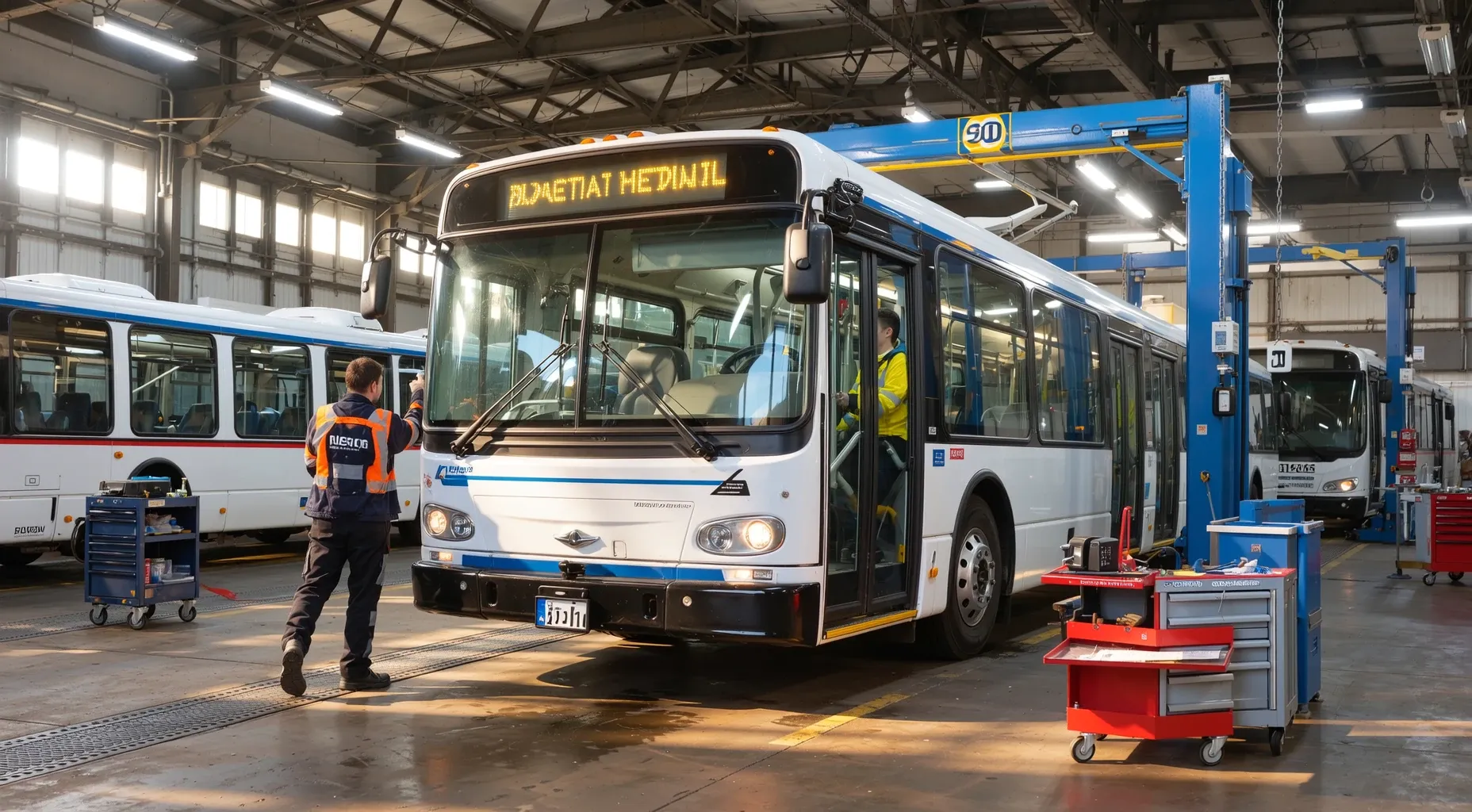
Bus and Other Motor Vehicle Transit Systems
Description
This U.S. industry comprises establishments primarily engaged in operating local and suburban passenger transportation systems using buses or other motor vehicles over regular routes and on regular schedules within a metropolitan area and its adjacent nonurban areas.
Hierarchy
| Code | Title | Description |
|---|---|---|
| 48 | Transportation and Warehousing 2-digit sector | The Sector as a Whole The Transportation and Warehousing sector includes industries providing transportation of passengers and cargo, warehousing and storage for goods, scenic and sightseeing transportation, and support activities related to modes of transportation. Establishments in these industries use transportation equipment or transportation-related facilities as a productive asset. The type of equipment depends on the mode of transportation. The modes of transportation are air, rail, water, road, and pipeline. The Transportation and Warehousing sector distinguishes three basic types of activities: subsectors for each mode of transportation, a subsector for warehousing and storage, and a subsector for establishments providing support activities for transportation. In addition, there are subsectors for establishments that provide passenger transportation for scenic and sightseeing purposes, postal services, and courier services. A separate subsector for support activities is established in the sector because, first, support activities for transportation are inherently multimodal, such as freight transportation arrangement, or have multimodal aspects. Secondly, there are production process similarities among the support activity industries. One of the support activities identified in the Support Activities for Transportation subsector is the routine repair and maintenance of transportation equipment (e.g., aircraft at an airport, railroad rolling stock at a railroad terminal, or ships at a harbor or port facility). Such establishments do not perform complete overhauling or rebuilding of transportation equipment (i.e., periodic restoration of transportation equipment to original design specifications) or transportation equipment conversion (i.e., major modification to systems). An establishment that primarily performs factory (or shipyard) overhauls, rebuilding, or conversions of aircraft, railroad rolling stock, or ships is classified in Subsector 336, Transportation Equipment Manufacturing, according to the type of equipment. Many of the establishments in this sector often operate on networks, with physical facilities, labor forces, and equipment spread over an extensive geographic area. Warehousing establishments in this sector are distinguished from merchant wholesaling in that the warehouse establishments do not sell the goods. Excluded from this sector are establishments primarily engaged in providing travel agent, travel arrangement, and reservation services that support transportation establishments, hotels, other businesses, and government agencies. These establishments are classified in Sector 56, Administrative and Support and Waste Management and Remediation Services. Establishments primarily engaged in providing rental and leasing of transportation equipment without operator are classified in Subsector 532, Rental and Leasing Services. Establishments primarily engaged in providing medical care with transportation are classified in Sector 62, Health Care and Social Assistance. |
| 485 | Transit and Ground Passenger Transportation 3-digit subsector | Industries in the Transit and Ground Passenger Transportation subsector include a variety of passenger transportation activities, such as urban transit systems; chartered bus, school bus, and interurban bus transportation; and taxis. These activities are distinguished based primarily on such production process factors as vehicle types, routes, and schedules. In this subsector, the principal splits identify scheduled transportation as separate from nonscheduled transportation. The scheduled transportation industry groups are Urban Transit Systems, Interurban and Rural Bus Transportation, and School and Employee Bus Transportation. The nonscheduled industry groups are the Charter Bus Industry and Taxi and Limousine Service. The Other Transit and Ground Passenger Transportation industry group includes both scheduled and nonscheduled transportation. Scenic and sightseeing ground transportation services are not included in this subsector but are included in Subsector 487, Scenic and Sightseeing Transportation. Sightseeing does not usually involve place-to-place transportation; the passenger's trip starts and ends at the same location. |
| 4851 | Urban Transit Systems 4-digit industry group | Industries in the Transit and Ground Passenger Transportation subsector include a variety of passenger transportation activities, such as urban transit systems; chartered bus, school bus, and interurban bus transportation; and taxis. These activities are distinguished based primarily on such production process factors as vehicle types, routes, and schedules. In this subsector, the principal splits identify scheduled transportation as separate from nonscheduled transportation. The scheduled transportation industry groups are Urban Transit Systems, Interurban and Rural Bus Transportation, and School and Employee Bus Transportation. The nonscheduled industry groups are the Charter Bus Industry and Taxi and Limousine Service. The Other Transit and Ground Passenger Transportation industry group includes both scheduled and nonscheduled transportation. Scenic and sightseeing ground transportation services are not included in this subsector but are included in Subsector 487, Scenic and Sightseeing Transportation. Sightseeing does not usually involve place-to-place transportation; the passenger's trip starts and ends at the same location. |
| 48511 | Urban Transit Systems 5-digit NAICS industry | This industry comprises establishments primarily engaged in operating local and suburban passenger transit systems over regular routes and on regular schedules within a metropolitan area and its adjacent nonurban areas. Such transportation systems involve the use of one or more modes of transport including light rail, commuter rail, subways, and streetcars, as well as buses and other motor vehicles. |
| 485113 | Bus and Other Motor Vehicle Transit Systems 6-digit U.S. detail | This U.S. industry comprises establishments primarily engaged in operating local and suburban passenger transportation systems using buses or other motor vehicles over regular routes and on regular schedules within a metropolitan area and its adjacent nonurban areas. |
Need a supply chain stack that maps to this industry?
Use this NAICS classification as the starting point, then connect it to Item workflows across inventory, warehousing, order management, fulfillment, and transportation.
Classification References
- 01Operating local and suburban passenger transportation systems using both a bus or other motor vehicle and another mode of transport--are classified in U.S. Industry 485111, Mixed Mode Transit Systems;
- 02Providing interurban and rural bus transportation--are classified in Industry 485210, Interurban and Rural Bus Transportation;
- 03Providing bus transportation for students and employees--are classified in Industry 485410, School and Employee Bus Transportation;
- 04Providing scenic and sightseeing transportation using buses or other motor vehicles--are classified in Industry 487110, Scenic and Sightseeing Transportation, Land; and
- 05Providing bus shuttle services (except school and employee bus)--are classified in U.S. Industry 485999, All Other Transit and Ground Passenger Transportation.
Index Items
Bus line, local (except mixed mode)
Bus services, urban and suburban (except mixed mode)
Bus transit systems (except mixed mode)
City bus services (except mixed mode)
Commuter bus operation (except mixed mode)
Local bus services (except mixed mode)
Suburban bus line services (except mixed mode)
Urban bus line services (except mixed mode)
How Item Can Help
Data Intelligence analyzes passenger flow patterns and historical maintenance records to predict route demand spikes and prevent costly mechanical failures during transit seasons.
External Resources
Census.gov NAICS Detail
Official US Census Bureau definition and scope for NAICS 485113.
National Association of Freight & Truck Carriers
A major trade association representing freight, trucking, and transportation businesses, including transit systems.
Federal Transit Administration
The US government agency responsible for administering federal transit grants and funding to local transit agencies.
American Public Transportation Association
A trade association representing public transit agencies in North America to advocate for their interests.