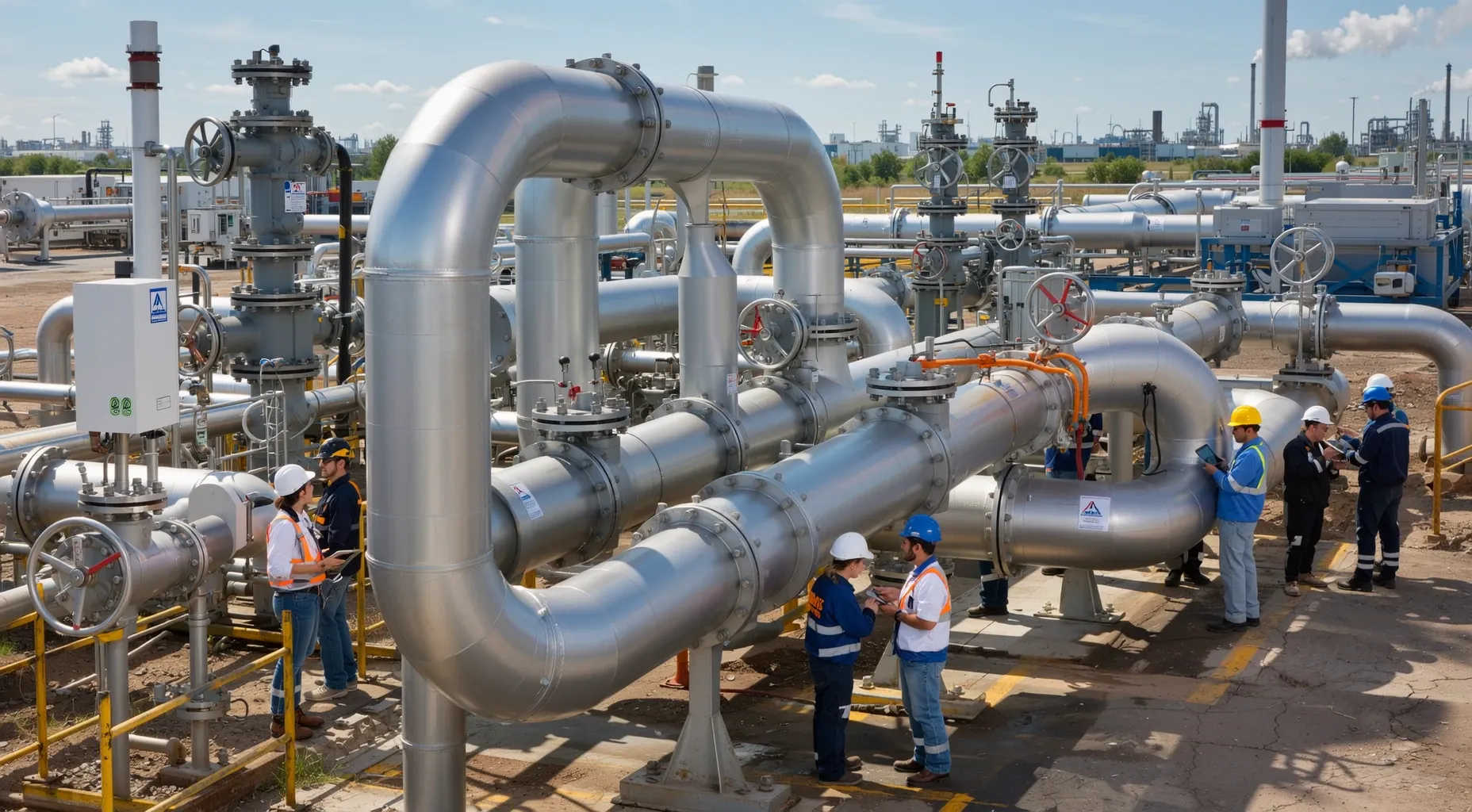
Pipeline Transportation of Refined Petroleum Products
Description
Pipeline Transportation of Refined Petroleum Products constitutes a specialized segment of the logistics sector dedicated to moving refined fuels such as gasoline, diesel, and jet fuel over extensive distances. Unlike crude oil transport, which often occurs through dedicated mainlines, this industry focuses on shorter, regional distribution networks that connect refineries with terminals and fuel stations. The core business activity involves the continuous flow of liquid commodities through underground or above-ground pipes, ensuring safe and efficient delivery to end-users without direct loading and unloading of vehicles at intermediate points. Major operators typically function as independent middlemen who lease pipe infrastructure, contracting maintenance with third-party service providers rather than owning the physical pipes themselves. These companies manage complex operational metrics including flow rates, pressure management, and environmental compliance to prevent spills and leaks. In terms of scale, the sector covers vast geographic areas but utilizes relatively low capital intensity compared to other energy transport methods. While some regions feature numerous small local lines, national networks are often consolidated under larger corporate entities. The industry plays a critical role in the daily energy supply chain, bridging the gap between production hubs and retail outlets while minimizing time and cost barriers in fuel distribution.
Hierarchy
| Code | Title | Description |
|---|---|---|
| 48 | Transportation and Warehousing 2-digit sector | The Sector as a Whole The Transportation and Warehousing sector includes industries providing transportation of passengers and cargo, warehousing and storage for goods, scenic and sightseeing transportation, and support activities related to modes of transportation. Establishments in these industries use transportation equipment or transportation-related facilities as a productive asset. The type of equipment depends on the mode of transportation. The modes of transportation are air, rail, water, road, and pipeline. The Transportation and Warehousing sector distinguishes three basic types of activities: subsectors for each mode of transportation, a subsector for warehousing and storage, and a subsector for establishments providing support activities for transportation. In addition, there are subsectors for establishments that provide passenger transportation for scenic and sightseeing purposes, postal services, and courier services. A separate subsector for support activities is established in the sector because, first, support activities for transportation are inherently multimodal, such as freight transportation arrangement, or have multimodal aspects. Secondly, there are production process similarities among the support activity industries. One of the support activities identified in the Support Activities for Transportation subsector is the routine repair and maintenance of transportation equipment (e.g., aircraft at an airport, railroad rolling stock at a railroad terminal, or ships at a harbor or port facility). Such establishments do not perform complete overhauling or rebuilding of transportation equipment (i.e., periodic restoration of transportation equipment to original design specifications) or transportation equipment conversion (i.e., major modification to systems). An establishment that primarily performs factory (or shipyard) overhauls, rebuilding, or conversions of aircraft, railroad rolling stock, or ships is classified in Subsector 336, Transportation Equipment Manufacturing, according to the type of equipment. Many of the establishments in this sector often operate on networks, with physical facilities, labor forces, and equipment spread over an extensive geographic area. Warehousing establishments in this sector are distinguished from merchant wholesaling in that the warehouse establishments do not sell the goods. Excluded from this sector are establishments primarily engaged in providing travel agent, travel arrangement, and reservation services that support transportation establishments, hotels, other businesses, and government agencies. These establishments are classified in Sector 56, Administrative and Support and Waste Management and Remediation Services. Establishments primarily engaged in providing rental and leasing of transportation equipment without operator are classified in Subsector 532, Rental and Leasing Services. Establishments primarily engaged in providing medical care with transportation are classified in Sector 62, Health Care and Social Assistance. |
| 486 | Pipeline Transportation 3-digit subsector | Industries in the Pipeline Transportation subsector use transmission pipelines to transport products, such as crude oil, natural gas, refined petroleum products, and slurry. Industries are identified based on the products transported (i.e., pipeline transportation of crude oil, natural gas, refined petroleum products, and other products). The Pipeline Transportation of Natural Gas industry includes the storage of natural gas because the storage is usually done by the pipeline establishment and because a pipeline is inherently a network in which all the nodes are interdependent. |
| 4869 | Other Pipeline Transportation 4-digit industry group | This industry group comprises establishments primarily engaged in the pipeline transportation of products (except crude oil and natural gas). |
| 48691 | Pipeline Transportation of Refined Petroleum Products 5-digit NAICS industry | See industry description for 486910. |
| 486910 | Pipeline Transportation of Refined Petroleum Products 6-digit U.S. detail | Pipeline Transportation of Refined Petroleum Products constitutes a specialized segment of the logistics sector dedicated to moving refined fuels such as gasoline, diesel, and jet fuel over extensive distances. Unlike crude oil transport, which often occurs through dedicated mainlines, this industry focuses on shorter, regional distribution networks that connect refineries with terminals and fuel stations. The core business activity involves the continuous flow of liquid commodities through underground or above-ground pipes, ensuring safe and efficient delivery to end-users without direct loading and unloading of vehicles at intermediate points. Major operators typically function as independent middlemen who lease pipe infrastructure, contracting maintenance with third-party service providers rather than owning the physical pipes themselves. These companies manage complex operational metrics including flow rates, pressure management, and environmental compliance to prevent spills and leaks. In terms of scale, the sector covers vast geographic areas but utilizes relatively low capital intensity compared to other energy transport methods. While some regions feature numerous small local lines, national networks are often consolidated under larger corporate entities. The industry plays a critical role in the daily energy supply chain, bridging the gap between production hubs and retail outlets while minimizing time and cost barriers in fuel distribution. |
Need a supply chain stack that maps to this industry?
Use this NAICS classification as the starting point, then connect it to Item workflows across inventory, warehousing, order management, fulfillment, and transportation.
Index Items
Booster pumping station, refined petroleum products transportation
Gasoline pipeline transportation
Natural gas liquids pipeline transportation
Petroleum pipelines, refined
Pipeline transportation, gasoline and other refined petroleum products
Refined petroleum products pipeline transportation
How Item Can Help
Item.com Data Intelligence analyzes historical shipment patterns and market fluctuations to forecast refined product demand with greater accuracy. These insights allow logistics planners to proactively adjust transport routes and inventory levels, reducing unnecessary costs and preventing shortages.
